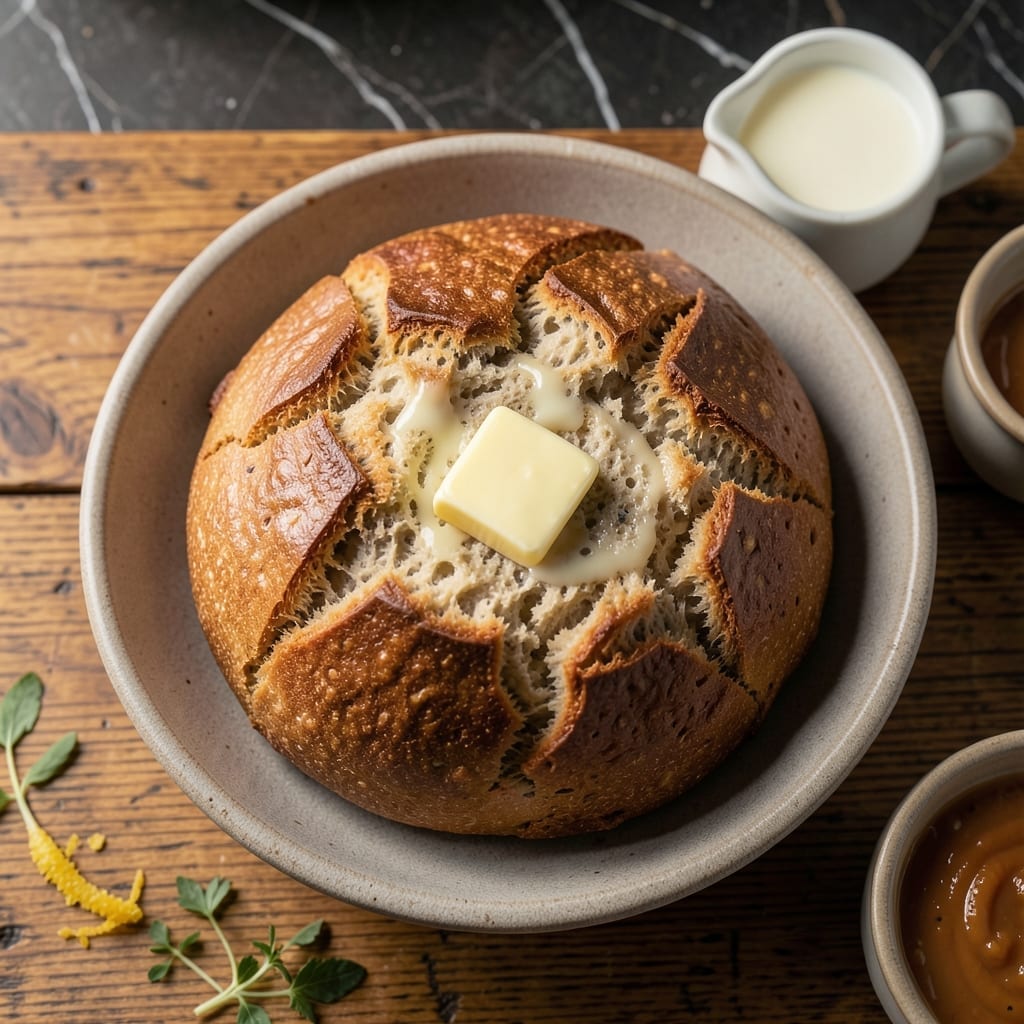
Traditional Irish soda bread achieves its signature moist texture through buttermilk’s natural acidity reacting with baking soda. This chemical process creates a tender crumb without yeast.
I developed this version after testing multiple ratios to perfect the balance between density and moisture. The key is using fresh, cold buttermilk and handling the dough minimally to maintain its rustic character.
The result is a loaf with a crisp crust giving way to a dense, moist interior that stays fresh for days. The cross scored on top isn’t just decorative—it helps the bread bake evenly.
Serve warm with butter or alongside hearty stews. This bread improves with age, developing deeper flavor overnight.
Ingredients for Moist Irish Soda Bread Recipe with Buttermilk
Simple pantry staples create this rustic, dense loaf with minimal effort.
| Ingredient | Amount | Notes |
|---|---|---|
| All-Purpose Flour 🌾 | 4 cups | Plus extra for dusting |
| Baking Soda 🧂 | 1 tsp | Fresh for best rise |
| Salt 🧂 | 1 tsp | Fine sea salt preferred |
| Cold Buttermilk 🥛 | 1 ¾ cups | Full-fat for moisture |
| Unsalted Butter 🧈 | 2 tbsp | Melted and cooled |
| Large Egg 🥚 | 1 whole | For structure and richness |
| Raisins 🍇 | ¾ cup | Optional for sweetness |
| Old-Fashioned Oats 🥣 | ¼ cup | For texture on top |
| Honey 🍯 | 1 tbsp | For slight sweetness |
| Vanilla Extract 🌿 | ½ tsp | Pure extract recommended |
[recipe_ingredient_scaler]
The buttermilk is non-negotiable here—fresh, cold, full-fat gives you that signature moisture and tang. Whole Foods and most grocery stores carry it, but if you can’t find it, make your own with milk and lemon juice (though fresh is better). The flour should be all-purpose; no need for bread flour. I always grab King Arthur if it’s on the shelf.
No buttermilk? Milk plus lemon juice or vinegar (1 tbsp acid per cup milk) works in a pinch. Out of raisins? Dried currants or chopped dates add similar sweetness. Want it sweeter? Bump the honey to 2 tbsp. The egg can be skipped for a denser crumb, but it helps with structure. Don’t overmix the dough—just bring it together gently.
This bread stays fresh for 3-4 days wrapped in a towel at room temp. For longer storage, slice and freeze for up to 3 months. The flavor actually improves overnight, so don’t rush to eat it warm. Reheat slices in a toaster or oven.
Why You’ll Love This Recipe
- No Yeast Needed: I love that this comes together without waiting for dough to rise—just mix, shape, and bake.
- Buttery Richness: The cold buttermilk and butter create a crumb so tender it melts in your mouth.
- Breakfast to Dinner: Honestly, it’s as good toasted with jam in the morning as it is served with stew at night.
- Budget Baking: Five pantry staples and under an hour—this is my go-to when I need fresh bread without the fuss.
Step-by-Step Instructions for Moist Irish Soda Bread With Buttermilk
This foolproof method guarantees a tender, dense crumb with rustic texture every time.
Step 1: Combine Dry Ingredients and Prepare Wet Mixture
In a large mixing bowl, whisk together the 4 cups All-Purpose Flour, 1 tsp Baking Soda, and 1 tsp Salt until evenly distributed. I like to sift my flour first to prevent lumps, but a good whisk works just as well for this rustic bread.
In a separate bowl, combine the 1.75 cups Cold Buttermilk, 2 tbsp Unsalted Butter (melted and cooled), 1 whole Large Egg, 1 tbsp Honey, and 0.5 tsp Vanilla Extract. Whisk until the mixture is smooth and homogeneous. The buttermilk should be cold—this reacts with the baking soda to create lift.
Step 2: Form the Dough Gently
Make a well in the center of the dry ingredients and pour in the wet mixture. Add the 0.75 cup Raisins at this stage. Using a wooden spoon or silicone spatula, gently fold the ingredients together until just combined. The dough will be sticky and shaggy—that’s exactly what you want.
Here’s the thing—overworking the dough develops gluten, which makes the bread tough. Stop mixing as soon as the flour is mostly incorporated. If there are a few streaks of flour, that’s fine; they’ll hydrate as the dough rests.
Step 3: Shape and Prepare for Baking
Turn the dough out onto a lightly floured surface. Dust the top with a bit of the extra All-Purpose Flour to prevent sticking. Gently pat the dough into a 7-8 inch round loaf, about 2 inches thick. Don’t knead—just shape it with your hands.
Transfer the loaf to a parchment-lined baking sheet. Using a sharp knife, score an “X” into the top of the dough, about ½ inch deep. This helps the bread expand evenly and gives it that traditional soda bread appearance. Sprinkle the 0.25 cup Old-Fashioned Oats evenly over the top, pressing lightly to adhere.
Step 4: Bake Until Golden and Hollow-Sounding
Preheat your oven to 375°F. Bake the loaf on the center rack for 45-50 minutes until the top is deep golden brown and the bread sounds hollow when tapped on the bottom. The oats will toast during baking, adding a delightful crunch.
If the top begins to brown too quickly, tent the loaf loosely with aluminum foil for the remaining bake time. The internal temperature should reach 190-200°F when measured with an instant-read thermometer inserted into the center.
Step 5: Cool Properly for Optimal Texture
Remove the bread from the oven and transfer it to a wire rack. Let it cool for at least 30 minutes before slicing. I know it’s tempting to cut into it right away, but this resting period allows the crumb to set properly.
Real talk: if you slice too early, the bread can be gummy inside. The steam needs time to escape, and the structure needs to firm up. Once cooled, the bread will have that signature dense, moist crumb with a slightly crisp crust. Serve warm or at room temperature with plenty of butter.
Pro Tips For Making Moist Irish Soda Bread Recipe With Buttermilk
- Chill Your Buttermilk: Use the coldest buttermilk straight from the fridge—this keeps the butter from melting too fast and guarantees a flakier, moister crumb.
- Work the Dough Fast: I learned this the hard way—mix just until the dough comes together, about 30 seconds, or the soda will overreact and toughen the bread.
- Cut Butter Pea-Sized: Dice the unsalted butter into pea-sized pieces before rubbing it in; this creates little pockets that steam open for a tender texture.
- Bake Hot and Quick: Crank the oven to 425°F and get the loaf in fast—this gives the soda its kickstart for maximum rise and a golden crust.
Perfect Pairings for This moist irish soda bread recipe with buttermilk
Breakfast Pairings
This bread makes an outstanding breakfast when toasted and slathered with Irish Kerrygold butter and a drizzle of local honey. I love it with a soft-boiled egg on the side—the yolk soaks into the dense crumb beautifully. A cup of Earl Grey tea complements the subtle sweetness perfectly. 💛
Soup Companions
Serve warm slices alongside beef and Guinness stew or a creamy potato leek soup. The bread’s density holds up to hearty broths, and its mild tang cuts through rich flavors. I always make extra for soup night at our Sunday family dinners.
Cheese Pairings
Create a simple board with sharp aged cheddar, Dubliner cheese, and a spread of apple butter. The bread’s texture stands up to bold cheeses while letting their flavors shine. Add sliced pears for a refreshing contrast.
Sweet Treats
Transform it into a dessert by toasting slices and topping with mascarpone cheese and fresh berries. A sprinkle of cinnamon sugar adds warmth. I learned this trick from my grandmother in Sicily—simple but elegant. ✨
Beverage Matches
Pair with hot Irish coffee for a cozy afternoon treat. The whiskey notes complement the bread’s rustic character. For non-alcoholic options, try spiced chai or warm apple cider—both enhance the bread’s subtle sweetness.
Nutrition Facts
Frequently Asked Questions
Why does buttermilk make the bread moist?
The acidity in buttermilk reacts with baking soda, creating carbon dioxide for lift. This reaction also tenderizes the gluten, resulting in a dense, moist crumb that stays fresh longer.
Can I make this without raisins?
Omit them entirely or swap for 0.75 cup of dried currants, chopped dates, or nuts. The bread remains delicious with a more savory profile.
What if my dough is too sticky?
Don’t add more flour. Wet your hands lightly when shaping to prevent sticking. The dough should be tacky but manageable for a rustic texture.
How do I store leftovers?
Wrap cooled bread in a clean towel and keep at room temp for 3-4 days. For longer storage, slice and freeze for up to 3 months.

Trained in classic French technique but raised on slow-cooked ribs and spicy rubs, she blends culinary skill with smoke and soul.
- Recipe for Boneless Pork Chops in Cast Iron Skillet: Sear and Baste to Juicy Perfection - October 3, 2026
- Recipe for Boneless Cross Rib Roast: Slow-Roasted Beef with Herb Crust - October 3, 2026
- Hamburgers in Sauce Recipe Crock Pot: Slow-Cooked Savory Delight - October 3, 2026