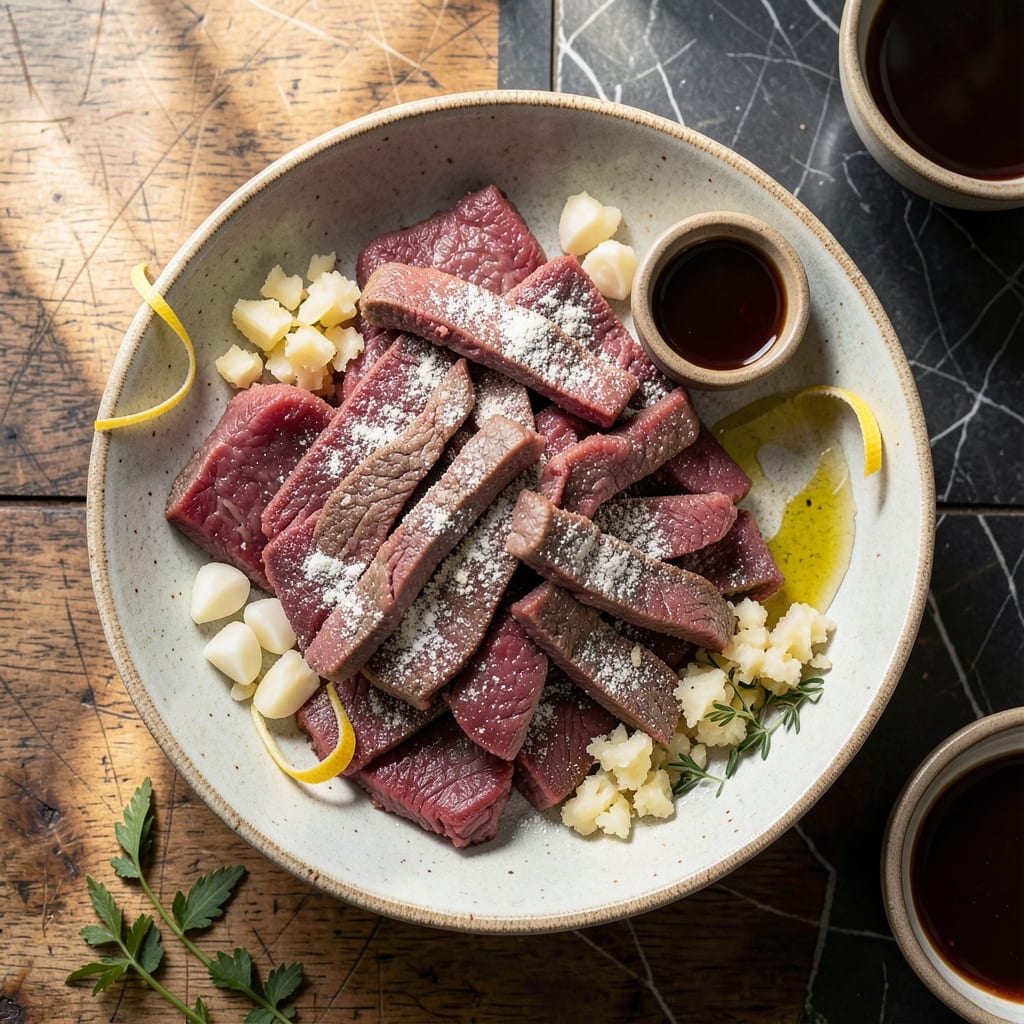
This dish transforms simple ingredients into a restaurant-quality stir fry with tender beef and glossy sauce. The velvet texture comes from a quick cornstarch coating that locks in juices during cooking.
I developed this method after testing multiple approaches to achieve that signature melt-in-your-mouth quality. The key is slicing the beef against the grain and cooking it in very hot oil for just a minute per side.
The sauce balances sweet and savory perfectly, with brown sugar and soy creating depth. A splash of rice vinegar adds the right amount of tang to cut through the richness.
Serve over steamed rice for a complete meal. The beef stays tender even when reheated, making this ideal for leftovers.
Ingredients for Mongolian Beef Recipe Ingredients
Simple staples create restaurant-quality stir fry with tender beef and glossy, sweet-savory sauce.
| Ingredient | Amount | Notes |
|---|---|---|
| Flank Steak 🥩 | 1 ½ lb | Thinly sliced against the grain |
| Cornstarch 🌾 | ½ cup | For velvet coating texture |
| Vegetable Oil 🫒 | ½ cup | High smoke point for searing |
| Garlic Cloves 🧄 | 4 cloves | Minced for aromatic base |
| Fresh Ginger 🌿 | 1 tbsp | Grated or finely minced |
| Soy Sauce 💧 | ½ cup | Low-sodium preferred for balance |
| Brown Sugar 🍚 | ½ cup | Packed, for sweet depth |
| Rice Vinegar 🍋 | 2 tbsp | For tangy brightness |
| Hoisin Sauce 🥫 | 2 tbsp | Thick, sweet-savory addition |
| Red Pepper Flakes 🌶️ | ½ tsp | Adjust for heat preference |
| Green Onions 🧅 | 4 whole | Thinly sliced for garnish |
| Sesame Seeds 🌰 | 1 tbsp | Toasted for nutty finish |
| Steamed Rice 🍚 | 4 cups | Cooked, for serving |
[recipe_ingredient_scaler]
The beef quality is non-negotiable here. Flank steak yields the best velvet texture when sliced thinly against the grain. Look for bright red meat with visible marbling at Whole Foods or Costco—both have reliable sourcing. The cornstarch must be fresh (check the expiration date) and lump-free. For the oil, peanut or avocado oil are ideal for high-heat searing, but any neutral oil works.
No hoisin? Substitute oyster sauce plus a pinch of sugar for similar depth. Fresh ginger is best, but ground ginger at half the amount works in a pinch. Low-sodium soy sauce prevents over-salting, but regular is fine—just reduce the final seasoning. The brown sugar can be swapped for coconut sugar (1:1) if you prefer. Skip the red pepper flakes for a milder version.
Pre-slice the beef and store it in the fridge for up to 1 day before cooking. The sauce keeps 4-5 days refrigerated in an airtight container. Cooked beef is best eaten fresh but reheats well in a hot skillet with a splash of water to revive the sauce.
Why You’ll Love This Recipe
- One Pan Wonder: I toss the flank steak in cornstarch, sear it in oil, then let garlic and ginger do their magic—minimal dishes, maximum flavor.
- Umami Bomb: The combo of fresh ginger and garlic with crispy beef edges creates that restaurant-quality taste I crave.
- Weeknight Hero: Honestly, it’s my 30-minute lifesaver after long days when takeout temptation hits.
- Leftovers Win: The flavors deepen overnight, making tomorrow’s lunch something I actually look forward to.
Step-by-Step Instructions for Mongolian Beef
Master the technique for perfectly tender beef with a glossy, sweet-savory sauce that clings to every bite.
Step 1: Velvet the Flank Steak for Tenderness
Begin by slicing the 1.5 lb flank steak thinly against the grain into ¼-inch strips. This shortens the muscle fibers, ensuring each bite is tender. Place the strips in a bowl and toss with the 0.5 cup cornstarch until evenly coated.
The cornstarch creates a protective layer that locks in moisture during cooking while forming the signature velvety texture. Let the coated beef rest for 10 minutes while you prepare the remaining ingredients—this allows the cornstarch to adhere properly.
Step 2: Sear the Beef to Golden Perfection
Heat 0.5 cup vegetable oil in a wok or large skillet over high heat until shimmering. Working in batches to avoid crowding, add the coated beef in a single layer. Sear undisturbed for 1-2 minutes per side until the edges turn deep golden brown.
The high heat creates a crisp exterior while keeping the interior juicy. Remove the beef with a slotted spoon and drain on a paper towel-lined plate. Pour off all but 1 tablespoon of the oil from the pan—this prevents the sauce from becoming greasy.
Step 3: Build the Aromatic Sauce Base
Return the pan to medium-high heat and add the 4 cloves garlic cloves and 1 tbsp fresh ginger. Stir constantly for 30 seconds until fragrant but not browned. Immediately add the 0.5 cup soy sauce, 0.5 cup brown sugar, 2 tbsp rice vinegar, and 2 tbsp hoisin sauce.
Stir to dissolve the brown sugar, then bring to a boil. Let the mixture simmer for 2-3 minutes until slightly thickened. The sauce should coat the back of a spoon with a glossy sheen. Add the 0.5 tsp red pepper flakes for a subtle warmth that complements the sweetness.
Step 4: Combine and Finish the Dish
Return all the seared beef to the pan along with any accumulated juices. Toss to coat evenly in the sauce and cook for an additional 1-2 minutes until the beef is heated through and the sauce has thickened enough to cling to each piece.
Remove from heat and stir in the 4 whole green onions, sliced thinly. The residual heat will soften them slightly while maintaining their bright color and crisp texture. The green onions add a fresh contrast to the rich, savory sauce.
Garnish with the 1 tbsp sesame seeds just before serving to add a nutty crunch and visual appeal.
Step 5: Serve Over Steamed Rice
Divide the 4 cups steamed rice among serving plates and top with the Mongolian beef and its glossy sauce. The rice soaks up the extra sauce beautifully, ensuring every bite is packed with flavor.
Serve immediately while the beef is hot and the sauce is at its glossiest. The contrast between the tender beef, sticky sauce, and fluffy rice creates the perfect balance of textures and flavors.
Pro Tips For Making Mongolian Beef Recipe Ingredients
- Slice Against the Grain: Cut the flank steak into thin strips against the grain—this shortens the muscle fibers and guarantees a tender bite every time.
- Dry the Steak First: Pat the steak completely dry with paper towels before tossing in cornstarch; the coating sticks better and fries up crispier.
- Skip Overcrowding the Pan: I learned this the hard way—fry the beef in batches so the oil stays hot and the pieces brown instead of steaming.
- Grate the Ginger: Sounds weird, but it works: use a microplane for the fresh ginger to get maximum flavor with zero stringy bits in your sauce.
Regional Styles of This Dish
Chinese-American Classic
This version is what you’ll find in most US restaurants, featuring a glossy, thick sauce with hoisin and brown sugar for that signature sweet-savory balance. David always requests this for his birthday dinner—it’s his absolute favorite. 💛
Mongolian Original
In Mongolia, this would be simpler with just soy sauce, ginger, and garlic, no sugar. The focus is on the beef quality, often using lamb or mutton instead. I tried this during my Asheville farm-to-table days—it’s stunningly clean and pure.
Sichuan Spicy
Add 1 tbsp Sichuan peppercorns and 1 tsp chili oil to the sauce for numbing heat. I toast the peppercorns first to release their citrusy aroma. This version pairs wonderfully with jasmine rice to balance the spice. 🌶️
Taiwanese Street Food
Vendors often add 1 cup shredded cabbage for crunch and stretch the beef with 1 beaten egg scrambled in. The sauce is lighter, using less cornstarch. I picked this up from a night market chef in Taipei—game changer.
Korean Fusion
Swap hoisin for 2 tbsp gochujang and add 1 tbsp sesame oil at the end. Top with kimchi for tangy contrast. This was a hit when I catered a K-pop event in Austin last summer.
Nutrition Facts
Frequently Asked Questions
Why use flank steak for this dish?
Flank steak offers the perfect balance of flavor and texture. Its leanness and visible marbling create tender bites when sliced thinly against the grain.
Can I substitute the brown sugar?
Yes! Coconut sugar or white sugar works in a 1:1 ratio. Honey or maple syrup can be used too, but reduce other liquids slightly.
How do I prevent the sauce from being too thin?
Simmer the sauce for 2-3 minutes to thicken. If needed, mix 1 tsp cornstarch with 1 tbsp water and stir in at the end.
Is hoisin sauce essential?
Not at all. Use oyster sauce plus a pinch of sugar for similar depth. Skip it entirely for a simpler, less sweet version.

Trained in classic French technique but raised on slow-cooked ribs and spicy rubs, she blends culinary skill with smoke and soul.
- Recipe for Boneless Pork Chops in Cast Iron Skillet: Sear and Baste to Juicy Perfection - October 3, 2026
- Recipe for Boneless Cross Rib Roast: Slow-Roasted Beef with Herb Crust - October 3, 2026
- Hamburgers in Sauce Recipe Crock Pot: Slow-Cooked Savory Delight - October 3, 2026