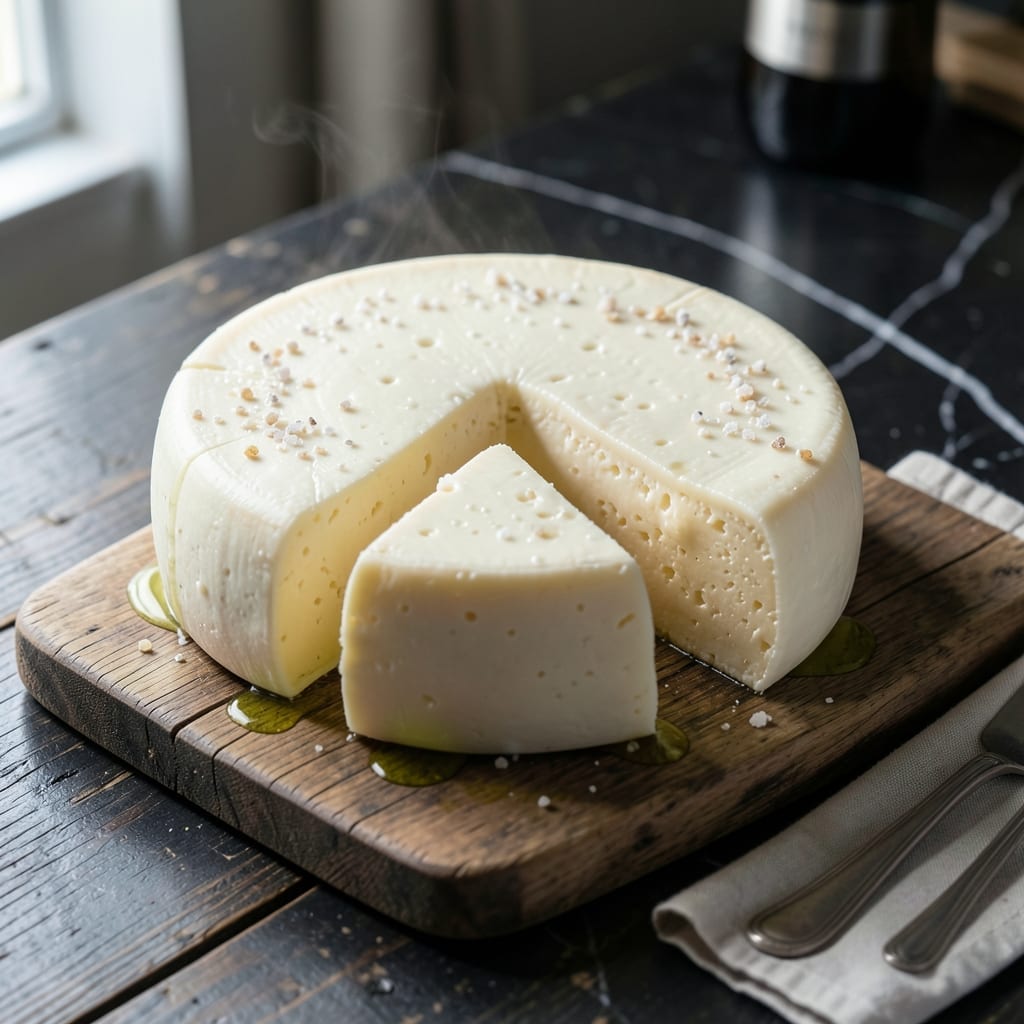
Making homemade cheese at home is simpler than you might think, and Monterey Jack is one of the easiest to master. This recipe delivers a creamy, mild cheese with excellent melting properties, perfect for all your favorite dishes.
With just a few basic ingredients and precise temperature control, you can create a smooth, semi-soft cheese that rivals store-bought versions. The process involves curdling milk, cooking the curds, and pressing them into shape.
What I love most is the satisfaction of transforming liquid milk into a solid cheese in under an hour. The result is a fresh, versatile cheese that’s ready to use immediately.
This method works reliably in any standard kitchen, using tools you likely already own. The texture is consistently smooth and slightly elastic, exactly what you want from Monterey Jack.
Ingredients for Monterey Jack Cheese
Just six ingredients transform into this smooth, meltable cheese at home.
| Ingredient | Amount | Notes |
|---|---|---|
| Whole Milk 🥛 | 1 gallon | Not ultra-pasteurized for best results |
| Citric Acid 🧪 | 1 ½ tsp | Dissolved in cool water |
| Rennet 🧀 | ¼ tsp | Vegetarian rennet tablets dissolved |
| Cheese Salt 🧂 | 1 tsp | Non-iodized for pure flavor |
| Cold Water 💧 | ½ cup | For dissolving citric acid |
| Calcium Chloride 🧪 | ¼ tsp | Optional for store-bought milk |
[recipe_ingredient_scaler]
The milk is everything here. Whole milk from a local dairy gives the creamiest results—avoid ultra-pasteurized, it won’t curdle right. I grab mine from Whole Foods or a farmers market. For rennet, vegetarian tablets work perfectly and are easy to find online. Citric acid is in the canning section of most grocery stores, but Amazon has it in bulk if you’re making cheese often.
No rennet? Lemon juice or vinegar can work in a pinch, but the flavor won’t be as clean. Skip the calcium chloride if using raw milk (it’s naturally present). The salt is flexible—kosher or sea salt both work, just avoid iodized. For a stronger flavor, you can add a pinch more, but don’t overdo it. The citric acid amount can be eyeballed, but the rennet needs to be precise.
Fresh cheese keeps for 1 week in brine in the fridge, or 1 month vacuum-sealed. Freeze for up to 3 months if you’ve got more than you can use. The texture changes slightly after freezing, but it still melts beautifully on nachos or grilled cheese.
Why You’ll Love This Recipe
- One Pot Wonder: I just need whole milk, a few pantry staples, and one pot to make this melt-in-your-mouth cheese.
- Mild and Buttery: The creamy, slightly tangy flavor from the citric acid and whole milk is just right—not too sharp, not too bland.
- Endless Uses: Honestly, I shred it on tacos, melt it in quesadillas, or just snack on it straight from the fridge.
Step-by-Step Instructions for Monterey Jack Cheese
Here’s my tested method for achieving that signature creamy, melt-in-your-mouth texture at home.
Step 1: Prepare and Acidify the Milk
Pour the 1 gallon Whole Milk into a large stainless steel pot. I use non-ultra-pasteurized milk for the best results. Stir in the 1.5 tsp Citric Acid that you’ve dissolved in the 0.5 cup Cold Water.
Heat the mixture over medium-low heat while stirring gently until it reaches 90°F. You’ll notice the milk starting to look slightly thickened. This acidification step is crucial for creating the right curd structure for your cheese.
Step 2: Add Rennet and Form Curds
Once the milk reaches 90°F, remove it from heat and stir in the dissolved 0.25 tsp Rennet. If you’re using store-bought milk, this is when you’d add the 0.25 tsp Calcium Chloride to help with coagulation.
Cover the pot and let it sit undisturbed for 30-45 minutes. You’ll know it’s ready when you see a clean break in the curds – insert a clean knife at an angle and lift; the curds should separate cleanly from the whey with clear liquid in the gap.
Step 3: Cut and Cook the Curds
Once you have a clean break, cut the curds into ½-inch cubes using a long knife. Return the pot to medium-low heat and warm the curds to 105°F while stirring gently to prevent them from sticking.
Maintain this temperature for 30-45 minutes, stirring occasionally. You’ll see the curds begin to shrink and the whey become clearer. The curds should feel like firm tofu when pressed between your fingers – this is your signal they’re ready for draining.
Step 4: Drain and Press the Curds
Line a colander with cheesecloth and place it over a large bowl or sink. Gently ladle the curds into the colander, allowing the whey to drain away. Once all the curds are in, gather the cheesecloth edges and tie them together.
Hang the cheesecloth bundle for 5-10 minutes to allow more whey to drain. Then, transfer the curds to a cheese mold. Press at 10 pounds of pressure for 15 minutes, then increase to 20 pounds for another 30 minutes.
Step 5: Salt and Age the Cheese
Remove the cheese from the mold and unwrap it from the cheesecloth. Sprinkle the 1 tsp Cheese Salt evenly over all surfaces. I use non-iodized salt for the purest flavor in my cheese.
Let the cheese air-dry at room temperature for 1-2 hours until the surface is dry to the touch. Then, wrap it in cheese paper or wax paper and refrigerate for at least 2 weeks to develop its full flavor. For best results, age it for 1-3 months, turning it every few days to ensure even aging.
Pro Tips For Making Monterey Jack Cheese
- Heat Milk Slowly: Aim for 90°F when adding citric acid—rushing with high heat can scorch the milk and ruin the curds. I learned this the hard way after two batches turned grainy.
- Dissolve Rennet Properly: Mix rennet in cold water first (about 1/4 cup) before adding to milk, or it won’t distribute evenly. Sounds weird, but it works.
- Cut Curds Uniformly: Slice the curds into 1/2-inch cubes—smaller pieces release too much moisture, making the cheese dry. My grandmother swore by this, and she was right.
- Press with Patience: Let the cheese press for at least 30 minutes under steady pressure—skipping this step gives you a crumbly mess instead of smooth Monterey Jack.
Dietary Considerations for This Dish
Lactose Considerations
The aging process reduces lactose content significantly, making this cheese easier to digest for those with mild lactose intolerance. A 2-week aged wheel contains about 1-2g lactose per ounce, compared to 12g in whole milk. I find most of my lactose-sensitive friends can enjoy it without issues. 💪
Vegetarian Friendly
This recipe uses vegetarian rennet (available as tablets or liquid) instead of traditional animal rennet, making it suitable for vegetarians. I always stock New England Cheesemaking Supply Company rennet—it’s reliable and easy to find online. The citric acid and salt are also vegetarian by nature.
Gluten-Free
All ingredients in this recipe are naturally gluten-free, so it’s safe for anyone avoiding gluten. Just ensure your equipment, like the cheesecloth and mold, hasn’t been cross-contaminated with gluten-containing foods. I keep a dedicated set just for cheesemaking.
Sodium Content
With 1 tsp cheese salt for the entire recipe, the sodium content is moderate. Each 1-ounce serving contains roughly 180-200mg sodium. For a lower-sodium version, reduce the salt by half or use a salt-free brine for aging. 💡
Dairy Allergy Warning
This contains dairy and is not suitable for those with a dairy allergy. The proteins in milk, like casein and whey, remain present even after aging. Always check with your doctor if you have severe dairy allergies.
Calcium Boost
Monterey Jack is a good source of calcium, providing about 200mg per ounce. The calcium chloride optional additive adds even more, but even without it, this cheese contributes to daily calcium needs. Perfect for growing kids or anyone looking to strengthen bones.
Nutrition Facts
Frequently Asked Questions
What kind of milk works best?
Use fresh whole milk that isn’t ultra-pasteurized for the creamiest texture. Raw milk works too but isn’t required. Avoid skim or 2% as they produce less yield and drier curds.
Can I make this without rennet?
Yes, but the texture will differ. Substitute with 1/4 cup lemon juice or vinegar per gallon of milk. The flavor may be tangier, and the curds won’t hold together as firmly.
How long does it last?
Fresh cheese keeps 1 week in brine in the fridge. For longer storage, vacuum-seal and refrigerate for up to 1 month, or freeze for 3 months.
Why didn’t my curds form?
This usually happens with ultra-pasteurized milk or incorrect temperatures. Ensure milk reaches 90°F before adding rennet, and check your rennet’s expiration date.

Trained in classic French technique but raised on slow-cooked ribs and spicy rubs, she blends culinary skill with smoke and soul.
- Recipe for Boneless Pork Chops in Cast Iron Skillet: Sear and Baste to Juicy Perfection - October 3, 2026
- Recipe for Boneless Cross Rib Roast: Slow-Roasted Beef with Herb Crust - October 3, 2026
- Hamburgers in Sauce Recipe Crock Pot: Slow-Cooked Savory Delight - October 3, 2026