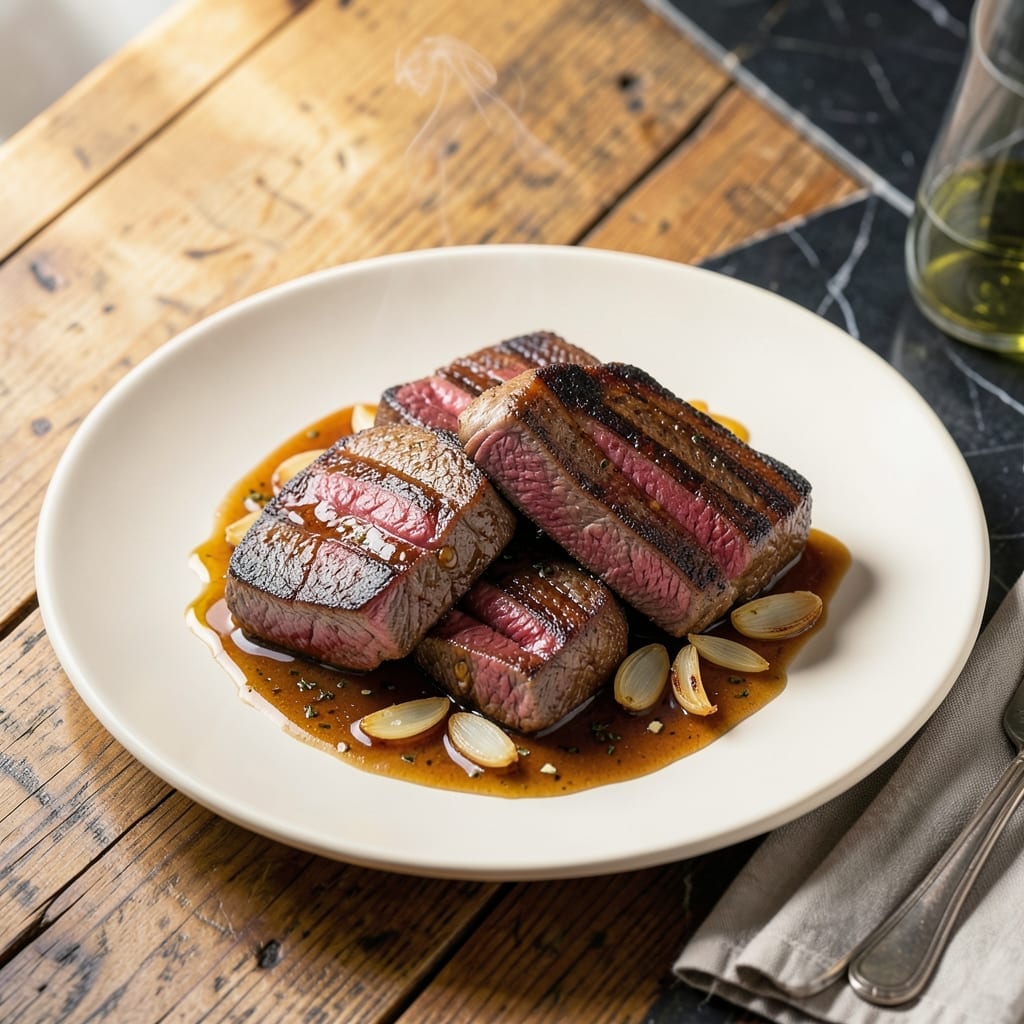
This recipe transforms affordable sirloin into restaurant-quality medallions with a rich wine sauce that comes together in 20 minutes. The key is proper searing and deglazing to build layers of flavor.
I developed this method after testing countless variations in my small Boston kitchen, focusing on techniques that guarantee tender meat and a velvety sauce. The pan sauce captures all the caramelized bits from searing.
You’ll achieve perfectly cooked steak with a glossy, wine-reduced sauce that elevates the dish from simple to sophisticated. The sauce clings beautifully to each medallion and pairs well with mashed potatoes or crusty bread.
This works for weeknight dinners or special occasions when you want impressive results with minimal effort. The technique is forgiving and delivers consistent excellence.
Ingredients for Sirloin Medallions
Affordable sirloin becomes restaurant-worthy with these rich, flavorful components ready in minutes.
| Ingredient | Amount | Notes |
|---|---|---|
| Sirloin Steak 🥩 | 1 ½ lb | Cut into 1-inch thick medallions |
| Kosher Salt 🧂 | 1 ½ tsp | Diamond Crystal preferred |
| Freshly Ground Black Pepper 🌶️ | 1 tsp | Coarse grind ideal |
| Olive Oil 🫒 | 2 tbsp | High smoke point preferred |
| Unsalted Butter 🧈 | 2 tbsp | For finishing sauce |
| Shallots 🧅 | 2 whole | Finely minced |
| Garlic Cloves 🧄 | 3 cloves | Minced for sauce |
| Dry Red Wine 🍷 | ¾ cup | Bold variety like Cabernet |
| Beef Stock 🥩 | ½ cup | Low-sodium preferred |
| Dijon Mustard 🟡 | 1 tbsp | Smooth, not grainy |
| Fresh Thyme Sprigs 🌿 | 2 whole | Leaves stripped from stems |
| Fresh Rosemary Sprig 🌿 | 1 whole | Leaves chopped finely |
[recipe_ingredient_scaler]
The sirloin needs good marbling for tenderness—ask your butcher to cut it into 1-inch medallions or do it yourself at home. Whole Foods and Trader Joe’s carry quality sirloin with consistent fat distribution. For the wine, a bold Cabernet or Merlot works best (save that expensive Pinot for drinking). The beef stock should be low-sodium so you can control the seasoning.
No red wine? Substitute beef broth with 1 tbsp balsamic vinegar. Out of shallots? Yellow onion at half the amount is fine. Dried herbs can replace fresh at one-third the quantity, but fresh makes a difference here. The Dijon mustard adds depth—whole grain works too if that’s what you have.
Cooked medallions keep 3-4 days in the fridge, but the sauce is best fresh. Reheat gently in a pan with a splash of stock. The herbs can be prepped 1 day ahead—store wrapped in damp paper towels.
Why You’ll Love This Recipe
- 20-Minute Meal: Honestly, I can sear these medallions faster than it takes to decide what to order for takeout.
- Buttery Richness: The butter and olive oil combo gives that restaurant-quality crust with almost no effort.
- Date Night Ready: I’ve served this for both weeknight dinners and anniversary celebrations—it’s that adaptable.
- Budget Steakhouse: Sirloin medallions give me that high-end steak taste without the fancy price tag.
Step-by-Step Instructions for Sirloin Medallions
Here’s the method I’ve perfected for tender medallions with a rich, wine-infused pan sauce.
Step 1: Season and Sear the Sirloin Medallions
Pat the sirloin steak dry with paper towels and cut it into 1-inch thick medallions. Season both sides generously with the 1.5 tsp kosher salt and 1 tsp freshly ground black pepper. This aggressive seasoning ensures every bite is flavorful.
Heat the 2 tbsp olive oil in a large skillet over medium-high heat until it shimmers but doesn’t smoke. Add the medallions in a single layer, being careful not to overcrowd the pan. Sear undisturbed for 3-4 minutes per side until a deep brown crust forms.
You’ll know they’re ready to flip when they release easily from the pan. Transfer the seared medallions to a plate, leaving all those beautiful browned bits behind for the sauce.
Step 2: Build the Aromatic Foundation
Reduce heat to medium and add the 2 tbsp unsalted butter to the same skillet. Once melted, add the 2 whole finely minced shallots and cook for 2-3 minutes, stirring frequently, until they turn translucent and just begin to caramelize around the edges.
Add the 3 minced garlic cloves, the chopped leaves from the 1 whole fresh rosemary sprig, and the stripped leaves from the 2 whole fresh thyme sprigs. Cook for 30-45 seconds until fragrant, being careful not to let the garlic brown.
This aromatic base is where the sauce’s depth develops. The butter helps extract the essential oils from the herbs while the shallots and garlic create a sweet, savory foundation.
Step 3: Deglaze and Reduce the Wine
Pour in the 0.75 cup dry red wine, using a wooden spoon to scrape up all those flavorful browned bits from the bottom of the pan. This deglazing step is crucial for maximum flavor extraction. Increase heat to medium-high and let the wine simmer vigorously for 4-5 minutes.
You want to reduce the wine by about half, until it takes on a syrupy consistency and the alcohol smell has mostly cooked off. The wine should coat the back of a spoon with a slight sheen. This reduction concentrates the flavor and creates the perfect base for your sauce.
Step 4: Finish the Pan Sauce
Reduce heat to medium-low and stir in the 0.5 cup beef stock and 1 tbsp Dijon mustard. Simmer for 3-4 minutes until the sauce thickens slightly and can coat the back of a spoon. The mustard adds a subtle tang that balances the richness of the wine and butter.
Return the medallions to the pan along with any accumulated juices. Spoon the sauce over the meat and simmer for 1-2 minutes to heat through and allow the flavors to meld. The sauce should have a glossy appearance and cling beautifully to the medallions.
Taste and adjust seasoning if needed, though the initial seasoning on the meat should be sufficient. The sauce should be rich, with a perfect balance of wine acidity, beefy depth, and herbal notes.
Pro Tips For Making Sirloin Medallions
- Sear on Screaming Heat: Get your pan ripping hot before adding the medallions—about 2 minutes on medium-high with olive oil. I learned this the hard way after too many gray, sad steaks.
- Dry the Steak Well: Pat the sirloin medallions bone-dry with paper towels before seasoning; even a little moisture prevents that coveted brown crust.
- Skip the Cold Butter: Take the unsalted butter out of the fridge 15 minutes early so it melts smoothly into the pan without seizing up.
- Rest Before Serving: Give them a solid 5-10 minutes under loose foil after cooking—this keeps the juices from pooling on your plate instead of in the meat.
Essential Equipment for This Recipe
Perfect Searing Pan
A heavy 12-inch cast iron skillet from Lodge is my go-to—its even heat retention sears medallions flawlessly without hot spots. I avoid nonstick for this recipe because you need those browned bits for the sauce. A stainless steel skillet works too if that’s what you have. 🔥
Wooden Spoon Essential
Use a flat wooden spoon to scrape up fond during deglazing—it won’t scratch your pan like metal utensils. I keep one dedicated to my cast iron. The wide surface helps incorporate all those flavorful browned bits into your sauce.
Instant-Read Thermometer
For perfect doneness every time, invest in a ThermoWorks ThermoPop. I pull medallions at 130°F for medium-rare, knowing they’ll rise to 135°F while resting. This takes the guesswork out of timing, especially in my small Boston kitchen.
Tongs for Flipping
Long 12-inch locking tongs give you control when searing and turning medallions. I prefer the OXO Good Grips version—the silicone heads won’t scratch your pan, and the locking mechanism saves drawer space in tight kitchens.
They also help when spooning sauce over the meat in the final minutes.
Fine Mesh Strainer
If you want ultra-smooth sauce, strain it through a fine mesh sieve before serving. This catches any herb stems or shallot bits. I skip this step for rustic texture, but it’s nice for special occasions. A 3-inch strainer fits perfectly over most saucepans.
Nutrition Facts
Frequently Asked Questions
What’s the best way to cut the sirloin for medallions?
Trim excess fat first, then slice against the grain into 1-inch thick rounds. This ensures tender bites. Use a sharp knife and cut evenly for consistent cooking.
Can I use a different wine for the sauce?
Yes! A bold Merlot or Malbec works well. Avoid cooking wines—they lack depth. For non-alcoholic, use beef broth with 1 tbsp balsamic vinegar.
How do I know when the medallions are done?
Use an instant-read thermometer: 130°F for medium-rare, 140°F for medium. They’ll rise 5°F while resting. The meat should feel slightly firm but springy.
What if my sauce is too thin?
Simmer uncovered for 2-3 extra minutes to reduce. If still thin, mix 1 tsp cornstarch with cold water, stir into the sauce, and cook for 1 minute.

Trained in classic French technique but raised on slow-cooked ribs and spicy rubs, she blends culinary skill with smoke and soul.
- Recipe for Boneless Pork Chops in Cast Iron Skillet: Sear and Baste to Juicy Perfection - October 3, 2026
- Recipe for Boneless Cross Rib Roast: Slow-Roasted Beef with Herb Crust - October 3, 2026
- Hamburgers in Sauce Recipe Crock Pot: Slow-Cooked Savory Delight - October 3, 2026