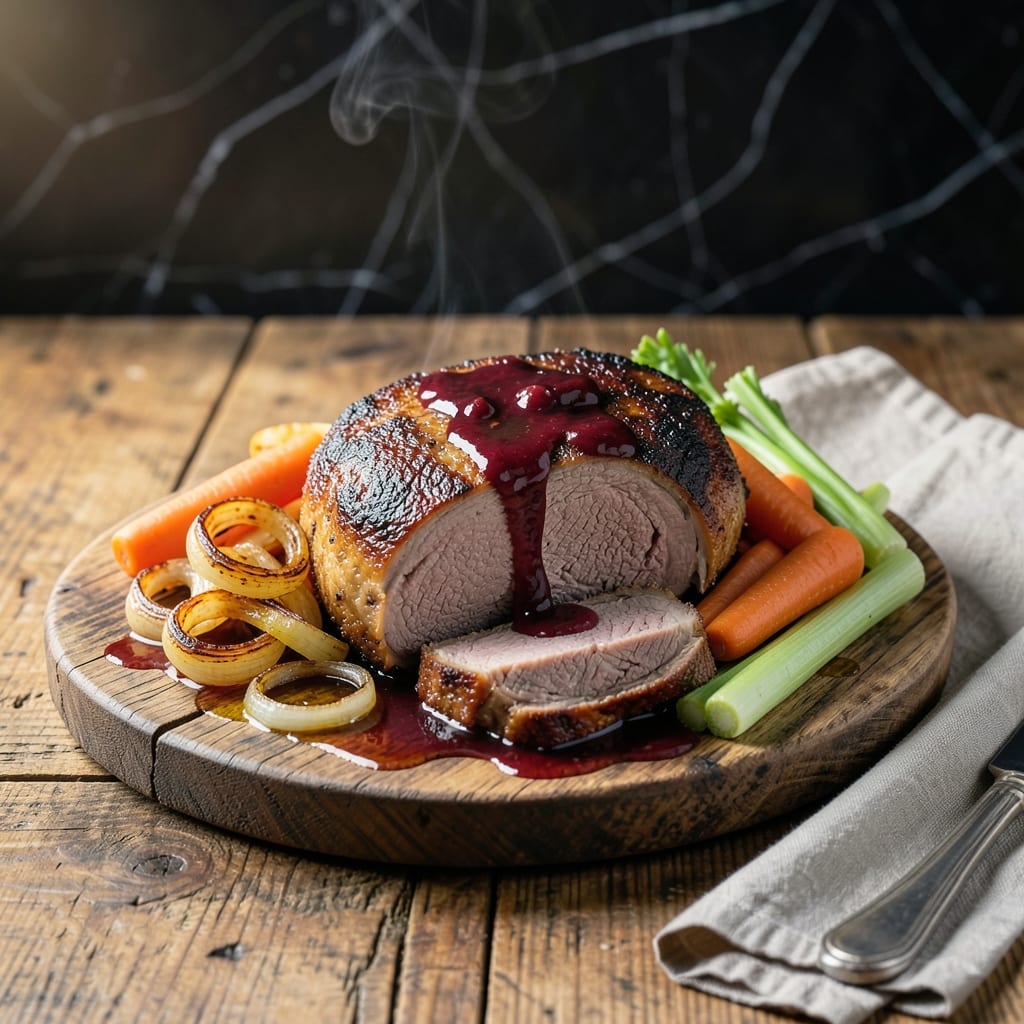
This slow cooker method transforms tough moose roast into tender, fall-apart meat with minimal effort. The long, gentle cooking process breaks down the wild game’s fibers while preserving its rich, natural flavor.
I’ve perfected this technique through years of hunting and cooking. The key is using low heat and a flavorful liquid base to prevent the lean meat from drying out. Aromatic vegetables and herbs add depth without overpowering the moose.
What emerges after 8 hours is a roast so tender it shreds easily with a fork. The meat absorbs the savory cooking liquid, resulting in a dish that’s both hearty and deeply satisfying.
Perfect for Sunday dinners or feeding a crowd after a hunting trip. Let’s walk through the process.
Ingredients for Moose Roast Recipe Slow Cooker
Wild game and pantry staples combine for a hearty slow cooker meal.
| Ingredient | Amount | Notes |
|---|---|---|
| Moose Roast 🥩 | 3 lb | Shoulder or rump cut preferred |
| Beef Broth 🥣 | 2 cups | Low-sodium preferred for control |
| Red Wine 🍷 | 1 cup | Dry variety like Cabernet Sauvignon |
| Yellow Onion 🧅 | 1 whole | Large, roughly chopped |
| Carrots 🥕 | 3 whole | Peeled, cut into chunks |
| Celery Stalks 🌿 | 3 whole | Cut into large pieces |
| Garlic Cloves 🧄 | 4 cloves | Smashed for bold flavor |
| Tomato Paste 🍅 | 2 tbsp | For depth and richness |
| Worcestershire Sauce 💧 | 1 tbsp | Adds umami complexity |
| Dried Thyme 🌿 | 1 tsp | Crushed between fingers |
| Dried Rosemary 🌿 | 1 tsp | Crushed to release oils |
| Bay Leaves 🍃 | 2 whole | Remove before serving |
| Olive Oil 🫒 | 2 tbsp | For searing roast |
| Kosher Salt 🧂 | 1 ½ tsp | Adjust to taste at end |
| Black Pepper 🌶️ | 1 tsp | Freshly ground preferred |
[recipe_ingredient_scaler]
The moose roast is everything here. Shoulder or rump cuts have the connective tissue that breaks down beautifully in a slow cooker. Look for meat with a deep red color and minimal fat (moose is naturally lean). Most hunters process their own, but if you’re buying, specialty butchers or Alaskan meat suppliers often carry it. Avoid pre-frozen roasts if possible—fresh handles the long cook better.
No red wine? Extra beef broth with a splash of vinegar works in a pinch. Out of Worcestershire? Soy sauce plus a dash of brown sugar mimics the depth. The aromatic veggies can be swapped—parsnips for carrots, leeks for onions. If you’re missing tomato paste, ketchup in a 1:1 ratio adds similar sweetness and acidity. The herbs are flexible too—poultry seasoning covers thyme and rosemary in one go.
Cooked moose keeps 4-5 days refrigerated and freezes beautifully for 3 months. Slice or shred before freezing for easy portioning. The cooking liquid makes an incredible base for gravy or soup—don’t toss it. Leftovers reheat gently to prevent drying out this lean meat.
Why You’ll Love This Recipe
- Set and Forget: I toss everything in the slow cooker before work and come home to a tender, fall-apart moose roast.
- Rich and Deep: The red wine and beef broth braise the meat into this ridiculously good, savory masterpiece.
- Feeds the Crew: One roast, a pile of carrots and onions, and suddenly I’ve got a hearty meal for the whole family.
- Leftovers for Days: Honestly, it tastes even better the next day—sandwiches, tacos, you name it.
Step-by-Step Instructions for Moose Roast Slow Cooker
This hands-off method transforms tough wild game into fall-apart tender perfection with minimal effort.
Step 1: Sear the Moose Roast for Depth of Flavor
Pat the 3 lb Moose Roast dry with paper towels and season generously with the 1.5 tsp Kosher Salt and 1 tsp Black Pepper. Heat the 2 tbsp Olive Oil in a large skillet over medium-high heat until shimmering.
Sear the roast on all sides for 3-4 minutes per side until deeply browned. This creates a flavorful crust and locks in juices. Don’t rush this step—the fond (browned bits) left in the pan will add incredible depth to the final dish.
Step 2: Build the Aromatic Base
In your slow cooker, combine the roughly chopped 1 whole Yellow Onion, 3 whole Carrots, and 3 whole Celery Stalks. Add the 4 cloves Garlic Cloves, 2 tbsp Tomato Paste, 1 tbsp Worcestershire Sauce, 1 tsp Dried Thyme, and 1 tsp Dried Rosemary.
Crush the dried herbs between your fingers as you add them to release their essential oils. Pour in the 1 cup Red Wine and 2 cups Beef Broth, then stir to combine all the ingredients at the bottom.
Step 3: Slow Cook to Tenderness
Place the seared roast on top of the vegetables in the slow cooker. Add the 2 whole Bay Leaves to the liquid. Cover and cook on low heat for 8-10 hours or on high heat for 5-6 hours.
The roast is done when it shreds easily with a fork and reaches an internal temperature of 195-200°F. The long, slow cooking process breaks down the tough connective tissues in the wild game, resulting in incredibly tender meat.
Step 4: Rest and Serve
Carefully remove the roast from the slow cooker and transfer it to a cutting board. Discard the bay leaves from the cooking liquid. Let the roast rest for 10-15 minutes before slicing or shredding—this allows the juices to redistribute throughout the meat.
Serve the moose roast with the vegetables and some of the cooking liquid spooned over the top. The liquid can be thickened into a gravy if desired, or served as-is for a rustic presentation.
Pro Tips For Making Moose Roast Recipe Slow Cooker
- Sear the Moose: I learned this the hard way—browning the roast in a hot pan with a little oil for 3-4 minutes per side locks in flavor before it hits the slow cooker.
- Deglaze the Pan: After searing, pour in ½ cup of the red wine to scrape up those browned bits, then add it all to the slow cooker—waste not, want not.
- Skip the Boiling Broth: Use room-temperature beef broth instead of cold or boiling to prevent shocking the meat, which can toughen it up.
- Cut Carrots Evenly: Slice carrots into 2-inch chunks so they cook at the same rate as the onions and don’t turn to mush by the time the roast is done.
Make-Ahead Tips for This moose roast recipe slow cooker
Prep the Night Before
I always prep my moose roast the evening before cooking. Trim any visible fat or silver skin from the 3 lb roast, then season it with the 1.5 tsp Kosher Salt and 1 tsp Black Pepper. Store it in the fridge overnight to let the seasoning penetrate deeply. 💪
Veggie Prep in Advance
Chop all your vegetables—1 whole Yellow Onion, 3 whole Carrots, and 3 whole Celery Stalks—and store them in an airtight container in the fridge. This saves 20-30 minutes on cooking day. I use glass containers to prevent plastic odors.
Searing Station Setup
Measure out your 2 tbsp Olive Oil, 4 cloves Garlic, and all herbs the night before. Keeping everything pre-measured means you can sear the roast immediately when you start cooking. This prevents the meat from sitting out too long.
Slow Cooker Liner
For easiest cleanup, I line my slow cooker with a slow cooker liner bag (like Reynolds Kitchens). Add your prepped veggies and liquids the morning of, then just add the seared roast when ready. No scrubbing required afterward.
Make-Ahead Gravy
After cooking, strain the liquid and refrigerate it. The next day, skim off any solidified fat and thicken with a cornstarch slurry (2 tbsp cornstarch + 2 tbsp water). This makes a rich gravy to serve over reheated meat.
Freezing for Later
Shred the cooked moose and portion it into quart-size freezer bags with some cooking liquid. It freezes beautifully for up to 3 months. Thaw overnight in the fridge before reheating gently on the stove. ❄️
Nutrition Facts
Frequently Asked Questions
What’s the best cut for slow cooking?
Shoulder or rump cuts work best. Their connective tissue breaks down beautifully during the 8-10 hours of low heat, creating tender results.
Can I cook it on high instead of low?
Yes, but 5-6 hours on high may yield slightly less tender meat. Low heat gives the most consistent, fall-apart texture.
How do I know when it’s done?
It’s ready when it shreds easily with a fork and reaches 195-200°F internally. Don’t rely on time alone.
What if I don’t have red wine?
Use extra beef broth with 1 tbsp vinegar for acidity. The depth of flavor will be slightly different but still delicious.

Trained in classic French technique but raised on slow-cooked ribs and spicy rubs, she blends culinary skill with smoke and soul.
- Recipe for Boneless Pork Chops in Cast Iron Skillet: Sear and Baste to Juicy Perfection - October 3, 2026
- Recipe for Boneless Cross Rib Roast: Slow-Roasted Beef with Herb Crust - October 3, 2026
- Hamburgers in Sauce Recipe Crock Pot: Slow-Cooked Savory Delight - October 3, 2026