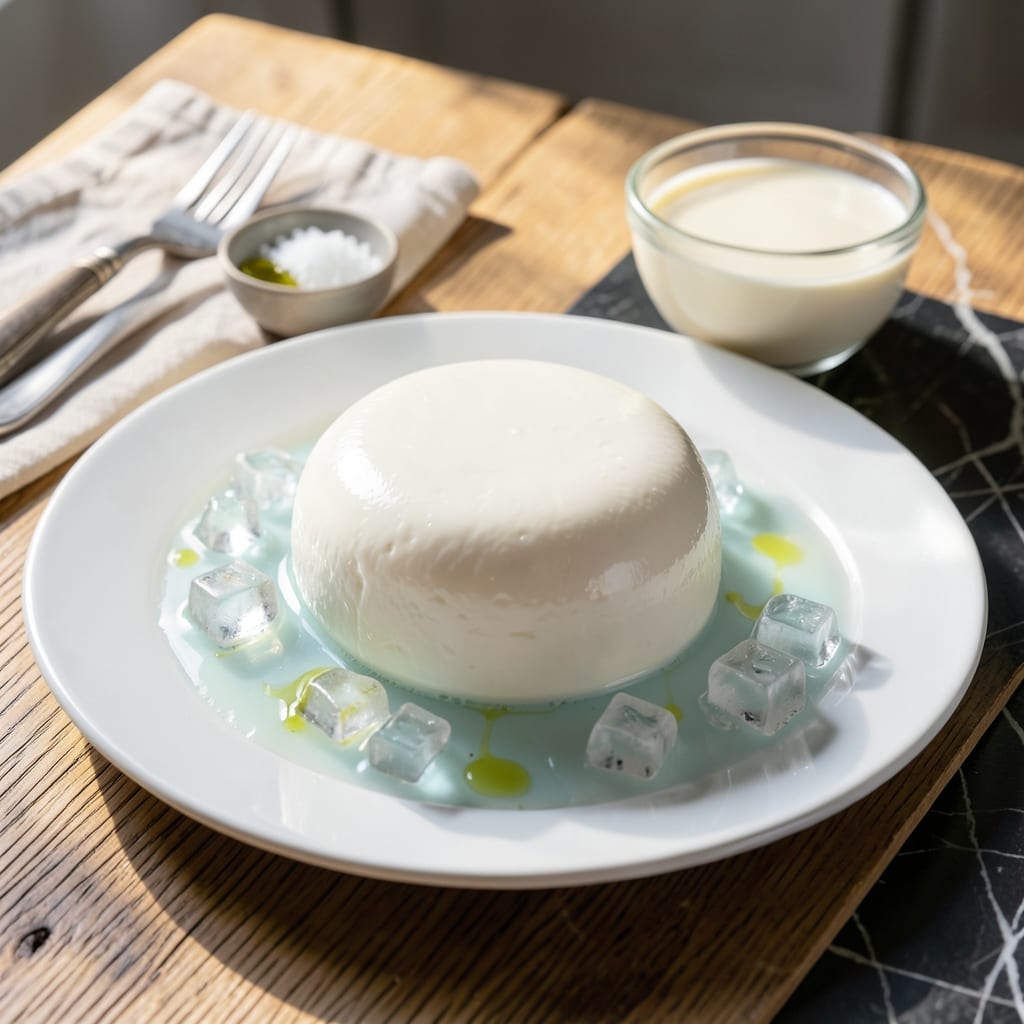
Making fresh mozzarella at home without rennet is entirely possible with common kitchen ingredients. This method uses citric acid and vinegar to achieve the same curdling effect, creating that signature stretchy texture.
The process takes about one hour from start to finish, with most of that time dedicated to gentle heating and resting. You’ll need just milk, citric acid, and vinegar to create homemade cheese that rivals store-bought versions.
What emerges is soft, milky mozzarella with the perfect balance of elasticity and moisture. The cheese pulls into beautiful strands when warm, making it ideal for caprese salads or fresh eating.
No special equipment required—just a thermometer and patience. The results are worth the effort.
Ingredients for Mozzarella Cheese Recipe Without Rennet
Six simple ingredients yield creamy, stretchy homemade mozzarella with no special tools required.
| Ingredient | Amount | Notes |
|---|---|---|
| Whole Milk 🥛 | 1 gal | Not ultra-pasteurized, cold |
| Citric Acid 🧪 | 1 ½ tsp | Powdered form, food-grade |
| White Vinegar 💧 | ¼ cup | Distilled, 5% acidity |
| Kosher Salt 🧂 | 1 tsp | Diamond Crystal preferred |
| Ice Cubes ❄️ | 4 cups | For cooling curds |
| Cold Water 💦 | 1 cup | For ice bath |
[recipe_ingredient_scaler]
The milk is critical—avoid ultra-pasteurized as it won’t curdle properly. Look for whole milk from local dairies at Whole Foods or Trader Joe’s. The label should say ‘pasteurized’ not ‘ultra-pasteurized.’ Citric acid is found in the canning section of most supermarkets. Ball or Mrs. Wages are reliable brands that work consistently.
No citric acid? Lemon juice at double the amount (3 tsp instead of 1.5) can substitute in a pinch. White vinegar is non-negotiable—apple cider vinegar adds unwanted flavor. The salt should be non-iodized; table salt can make the cheese taste metallic. For best texture, use the ice bath exactly as specified—don’t skip it (this sets the curds).
Fresh mozzarella keeps submerged in lightly salted whey or water for 5 days in the fridge. Don’t freeze—it ruins the texture. Best used within 48 hours for that perfect stretch. The whey can be saved for cooking (great in bread or soups).
Why You’ll Love This Recipe
- No Fuss Curds: I just heat the milk, add citric acid and vinegar, and watch the curds form—no special equipment or hard-to-find rennet needed.
- Fresh & Mild: The taste is clean and creamy, with just a hint of tang from the vinegar that makes it taste like the real deal.
- Weeknight Project: Honestly, it’s a fun little weekend experiment that turns into a fridge staple for pizzas, caprese, or snacking.
- Pantry Friendly: Between us, whole milk and vinegar are already in my kitchen, so making this costs less than buying pre-shredded.
Step-by-Step Instructions for Mozzarella Cheese Without Rennet
This method transforms simple ingredients into fresh cheese using precise temperature control and timing.
Step 1: Acidify and Heat the Milk
Pour the 1 gal Whole Milk into a large stainless steel pot. Stir in the 1.5 tsp Citric Acid until completely dissolved. Place the pot over medium heat and slowly warm the milk to 90°F, stirring gently to distribute the acid evenly.
At this temperature, you’ll notice the milk beginning to thicken slightly. This acidification step is crucial—it prepares the milk proteins to form curds when we add the next ingredient. Maintain the heat and continue stirring to prevent scorching on the bottom of the pot.
Step 2: Add Vinegar and Form Curds
Once the milk reaches 90°F, add the 0.25 cup White Vinegar and stir gently for 30 seconds. You’ll see the milk start to separate into curds and whey almost immediately. The curds will look like soft, white blobs floating in a yellowish liquid.
Continue heating the mixture slowly to 105°F. At this point, let the milk sit undisturbed for 5 minutes to allow the curds to fully develop and separate from the whey. The curds should be distinct and hold their shape when gently pressed.
Step 3: Cut and Cook the Curds
Using a long knife or a whisk, cut the curds into ½-inch cubes. This increases the surface area, helping them release more whey. Return the pot to medium-low heat and warm the curds to 105°F again, stirring gently to prevent sticking.
Cook the curds at this temperature for 5-10 minutes, stirring occasionally. You’ll notice the curds becoming firmer and the whey clearer. The curds are ready when they hold together when pressed but still spring back slightly.
Step 4: Drain and Cool the Curds
Line a colander with cheesecloth and place it over a large bowl or the sink. Gently ladle the curds into the colander, allowing the whey to drain completely. Reserve some whey if you’d like to use it for cooking later.
Rinse the curds under cool water for 1 minute to remove any residual acidity. Meanwhile, combine the 4 cups Ice Cubes and 1 cup Cold Water in a large bowl to create an ice bath. Transfer the drained curds to the ice bath and let them cool for 10 minutes.
Step 5: Knead and Shape the Mozzarella
Drain the curds again and transfer them to a microwave-safe bowl. Microwave for 30 seconds to warm them slightly. Sprinkle the 1 tsp Kosher Salt over the curds and knead gently with your hands or a spoon until the salt is fully incorporated and the curds come together into a smooth, elastic mass.
If the cheese is too cool to stretch, microwave for an additional 15-20 seconds and knead again. Once it reaches the right consistency, shape it into a ball or log. Your homemade mozzarella is now ready to use or store in the refrigerator for up to 1 week.
Pro Tips For Making Mozzarella Cheese Recipe Without Rennet
- Heat Milk Slowly: Bring the milk to 90°F first—any hotter and the curds will form too fast, making them tough and hard to stretch later.
- Use Fresh Whole Milk: Skip the ultra-pasteurized stuff; fresh whole milk yields softer, more pliable curds that actually melt in your mouth.
- Avoid Over-Acidifying: Stick to 1.5 teaspoons citric acid per gallon of milk—too much turns the curds grainy, and I learned this the hard way.
- Shock with Ice: Plunge the curds into ice water for 2 minutes to stop cooking instantly—this keeps them loose enough to stretch into smooth mozzarella.
Health Benefits of This mozzarella cheese recipe without rennet
Rich in Calcium
This homemade cheese delivers a significant calcium boost, with 1 ounce providing about 20% of your daily needs. Calcium is essential for strong bones and teeth, and it also plays a role in muscle function and nerve transmission. I love knowing exactly how much calcium I’m getting.
High-Quality Protein
You’ll get about 6 grams of protein per ounce from this fresh creation. Protein is vital for building and repairing tissues, and it helps keep you feeling full and satisfied. The protein in cheese is complete, meaning it contains all nine essential amino acids.
B Vitamin Source
This dish is a good source of vitamin B12 and riboflavin (B2). Vitamin B12 supports brain function and red blood cell production, while riboflavin helps convert food into energy. Just 1 ounce provides a meaningful portion of these important nutrients. 💪
Probiotics for Gut Health
Fresh, homemade versions contain live cultures that act as probiotics, supporting a healthy gut microbiome. These beneficial bacteria can improve digestion and boost your immune system. The cultures develop naturally during the cheese-making process.
Low in Carbohydrates
With less than 1 gram of carbs per ounce, this is an excellent option for those watching their carbohydrate intake. It fits well into low-carb or keto eating plans, providing rich flavor without the carbs found in many other foods.
Rich in Phosphorus
Phosphorus works with calcium to build strong bones and teeth. An ounce of this cheese provides about 15% of your daily phosphorus needs. This mineral also helps your body produce energy and supports kidney function. ✨
Nutrition Facts
Frequently Asked Questions
Can I use lemon juice instead of citric acid?
Yes, substitute 3 tsp lemon juice for 1.5 tsp citric acid. The extra volume compensates for lemon juice’s lower acidity. Use fresh juice for best results.
Why won’t my curds form properly?
This usually happens with ultra-pasteurized milk. Check your label—it must say only “pasteurized.” Also ensure you reached 105°F before resting the mixture.
How do I get the perfect stretchy texture?
Knead the curds while warm (105°F). If too cool, microwave for 15-20 seconds and try again. The cheese should stretch like taffy when ready.
What’s the best way to store homemade mozzarella?
Keep it submerged in lightly salted whey or water in the fridge for up to 5 days. Change the liquid daily for freshness.

Trained in classic French technique but raised on slow-cooked ribs and spicy rubs, she blends culinary skill with smoke and soul.
- Recipe for Boneless Pork Chops in Cast Iron Skillet: Sear and Baste to Juicy Perfection - October 3, 2026
- Recipe for Boneless Cross Rib Roast: Slow-Roasted Beef with Herb Crust - October 3, 2026
- Hamburgers in Sauce Recipe Crock Pot: Slow-Cooked Savory Delight - October 3, 2026