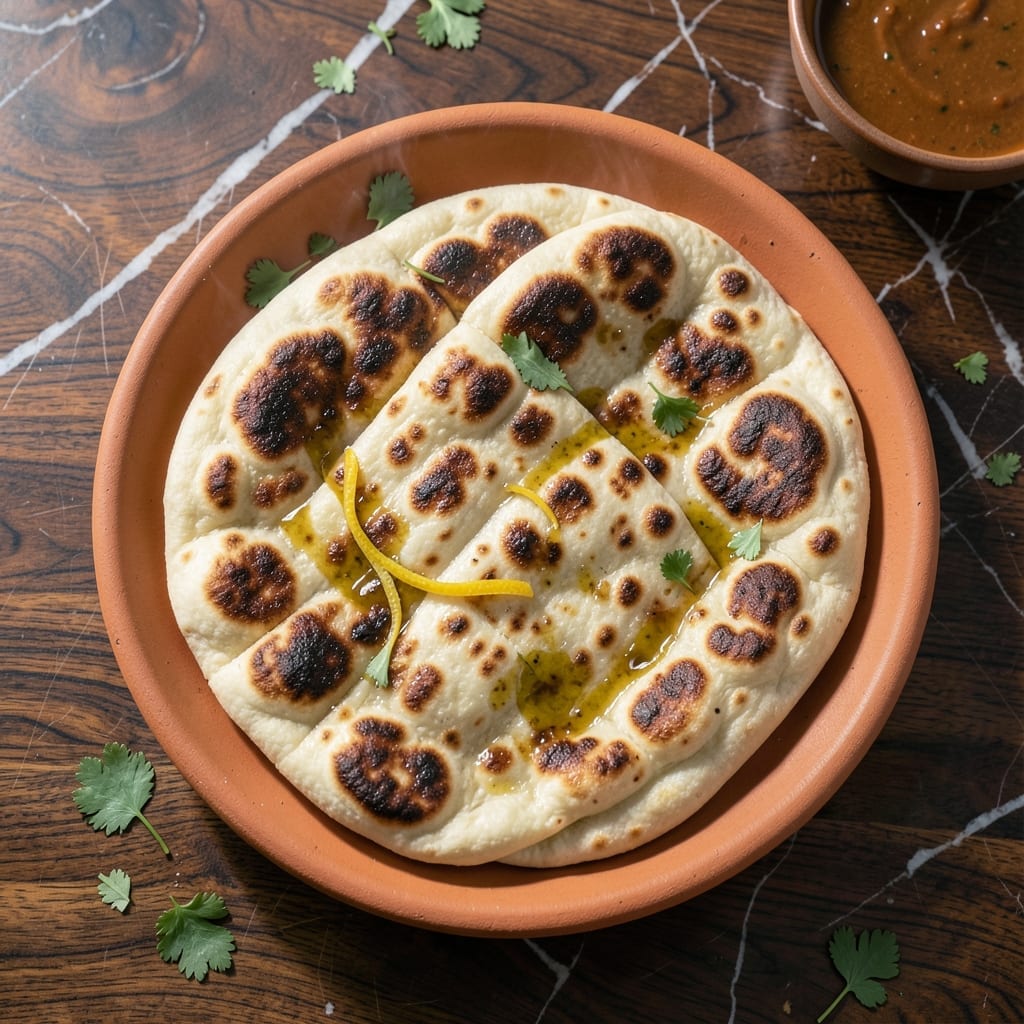
This yeast-free naan delivers the same soft, pillowy texture as traditional versions, with a fraction of the effort. The secret lies in a simple combination of baking powder and yogurt, which creates the perfect rise without waiting for dough to proof.
You’ll achieve fluffy, slightly charred flatbread in under 20 minutes, ideal for pairing with curries or enjoying on its own. The method stays true to authentic techniques while making the process accessible to any home cook.
Ingredients for Naan Recipe Without Yeast
A handful of pantry staples yields soft, pillowy flatbread in record time.
| Ingredient | Amount | Notes |
|---|---|---|
| All-Purpose Flour 🌾 | 2 cups | Plus extra for dusting |
| Plain Yogurt 🥛 | ¾ cup | Full-fat for best texture |
| Baking Powder 🧂 | 2 tsp | Ensures proper rise |
| Salt 🧂 | ½ tsp | Fine sea salt preferred |
| Sugar 🍚 | 1 tsp | Balances acidity of yogurt |
| Olive Oil 🫒 | 2 tbsp | For dough and cooking |
| Garlic Cloves 🧄 | 2 cloves | Minced for flavor |
| Fresh Cilantro 🌿 | ¼ cup | Chopped for garnish |
| Water 💧 | ¼ cup | As needed for dough consistency |
[recipe_ingredient_scaler]
The yogurt is non-negotiable here—full-fat Greek or plain yogurt gives the dough its tender crumb and slight tang. Whole Foods 365 or Fage are reliable brands with consistent thickness. For the flour, any all-purpose works, but King Arthur or Gold Medal deliver predictable results. Baking powder is your leavening agent, so check the expiration date (old baking powder = flat naan).
No yogurt? Sour cream thinned with a splash of milk works in a pinch, though the flavor will differ slightly. For a dairy-free version, unsweetened coconut yogurt is the best substitute. Out of fresh cilantro? Dried mint or parsley at half the amount adds a similar freshness. The garlic can be skipped if you prefer, but I’d strongly recommend keeping it.
Dough can be made 1 day ahead and refrigerated—just bring it to room temperature before cooking. Cooked naan stays soft for 2-3 days in an airtight container, but it’s best served warm. Reheat in a dry skillet or wrap in foil and warm in the oven at 350°F for 5-10 minutes.
Why You’ll Love This Recipe
- Ready in 20: No yeast means no waiting for dough to rise—I mix the yogurt, flour and baking powder and it’s ready to cook almost immediately.
- That Yogurt Tang: The plain yogurt gives it this subtle, creamy sharpness that makes every bite feel fresh and homemade.
- Dinner’s Sidekick: I serve it with curries, soups, or even as a wrap for leftovers—it’s my go-to for turning any meal into something special.
- Pantry Staples Only: Honestly, I always have flour, yogurt, and baking powder on hand, so I can make this without a last-minute store run.
Step-by-Step Instructions for Yeast-Free Naan
This method delivers soft, pillowy flatbreads with minimal effort and maximum flavor.
Step 1: Combine Dry Ingredients for the Base
In a large mixing bowl, whisk together the 2 cups All-Purpose Flour, 2 tsp Baking Powder, 0.5 tsp Salt, and 1 tsp Sugar. The baking powder is your leavening agent here, so ensure it’s fresh for optimal rise.
I always sift these dry ingredients first to eliminate lumps and create a uniform texture. This step ensures even distribution of the leavening agent, which is crucial for consistent results across all your flatbreads.
Step 2: Incorporate Wet Ingredients to Form the Dough
Add the 0.75 cup Plain Yogurt and 2 tbsp Olive Oil to the dry mixture. The full-fat yogurt provides both moisture and acidity, which reacts with the baking powder to create lift.
Mix with a wooden spoon until it forms a shaggy dough, then use your hands to bring it together. If the mixture feels too dry, add the 0.25 cup Water gradually—you likely won’t need it all. The dough should be soft but not sticky.
Step 3: Knead and Rest the Dough
Turn the dough onto a lightly floured surface and knead for 3-4 minutes until smooth and elastic. Dust with additional All-Purpose Flour as needed to prevent sticking, but avoid adding too much as it can make the naan dense.
Shape the dough into a ball, place it back in the bowl, and cover with a damp towel. Let it rest at room temperature for 20-30 minutes. This rest period allows the baking powder to activate fully and the gluten to relax, making the dough easier to roll out.
Step 4: Shape and Cook the Naan
Divide the dough into 4 equal portions and roll each into a ball. On a floured surface, roll each ball into an oval or round shape, about ¼-inch thick. The thickness is key—too thin and they’ll cook too quickly; too thick and they won’t cook through.
Heat a heavy skillet or griddle over medium-high heat until hot. Cook each naan for 1-2 minutes per side, until puffed in spots and golden brown with charred spots. Press down gently with a spatula if needed to ensure even cooking.
Step 5: Finish with Aromatics and Serve
While still hot, brush the cooked naan with the remaining Olive Oil and rub with the minced 2 cloves Garlic Cloves. This infuses the bread with aromatic flavor that complements the slight tang from the yogurt.
Sprinkle with the chopped 0.25 cup Fresh Cilantro and serve immediately. The naan is best enjoyed fresh and warm, when it’s at its most pliable and flavorful. Stack them and cover with a towel to keep soft if serving all at once.
Pro Tips For Making Naan Recipe Without Yeast
- Heat the Pan First: Crank your skillet to medium-high before the dough hits it—I learned this the hard way after ending up with pale, gummy naan. A screaming-hot pan guarantees those signature charred bubbles.
- Use Full-Fat Yogurt: Sounds weird, but it works: Greek yogurt or thick, full-fat plain yogurt makes the dough softer and more pliable. The low-fat stuff just doesn’t give the same stretch or richness.
- Skip Over-Kneading: Mix just until the dough comes together, then stop. Overworking it develops gluten, turning your naan tough instead of tender—my first few batches were like hockey pucks.
- Press Thin Evenly: Roll or press each piece to about ¼-inch thick, no thicker. Uneven spots mean some parts stay raw while others burn—after burning three batches, I finally figured out consistency is everything.
Dietary Considerations for This Dish
Gluten-Free Adaptation
For a gluten-free version, replace 2 cups All-Purpose Flour with 1.5 cups gluten-free flour blend plus ½ cup almond flour. I recommend King Arthur Gluten-Free Measure for Measure for best texture. Add 1 tsp xanthan gum if your blend doesn’t include it.
The dough may feel slightly stickier, so use extra flour for rolling. Cook as usual, but watch closely—gluten-free versions brown faster. 💪
Vegan Modifications
Swap 0.75 cup Plain Yogurt with unsweetened coconut yogurt (I like So Delicious brand). The acidity works the same way with baking powder. Use flax eggs (1 tbsp ground flax + 3 tbsp water) if you want extra binding.
Replace garlic-infused oil with olive oil plus a pinch of garlic powder if avoiding fresh garlic. The flavor remains bright and authentic.
Dairy-Free Options
Any plant-based yogurt works, but coconut yogurt gives the closest texture. Avoid almond yogurt—it’s often too thin. For brushing, use melted vegan butter or extra olive oil with minced garlic.
I’ve found Kite Hill almond-based yogurt works in a pinch, but it may require 1-2 tbsp extra water for the right consistency.
Lower-Carb Version
Use 1 cup almond flour and 1 cup coconut flour instead of all-purpose. Note that coconut flour absorbs more liquid, so add ¼ cup extra water gradually. The texture will be denser but still delicious.
Cook on slightly lower heat to prevent burning—the natural sugars in these flours caramelize quickly. ✨
Nutrition Facts
Frequently Asked Questions
Why does this recipe use yogurt instead of yeast?
The yogurt reacts with baking powder to create lift and tender texture. It also adds a subtle tang that mimics traditional naan flavor perfectly.
Can I use baking soda instead of baking powder?
No, baking powder is essential here. It contains both acid and base, while baking soda needs an acid to activate. Using just soda would make the bread taste bitter.
How do I get my naan to puff up more?
Roll the dough slightly thicker (¼-inch) and cook on medium-high heat. Press gently with a spatula if it resists puffing.
What’s the best way to store leftovers?
Keep in an airtight container for 2-3 days. Reheat in a dry skillet or wrap in foil at 350°F for 5-10 minutes.

Trained in classic French technique but raised on slow-cooked ribs and spicy rubs, she blends culinary skill with smoke and soul.
- Recipe for Boneless Pork Chops in Cast Iron Skillet: Sear and Baste to Juicy Perfection - October 3, 2026
- Recipe for Boneless Cross Rib Roast: Slow-Roasted Beef with Herb Crust - October 3, 2026
- Hamburgers in Sauce Recipe Crock Pot: Slow-Cooked Savory Delight - October 3, 2026