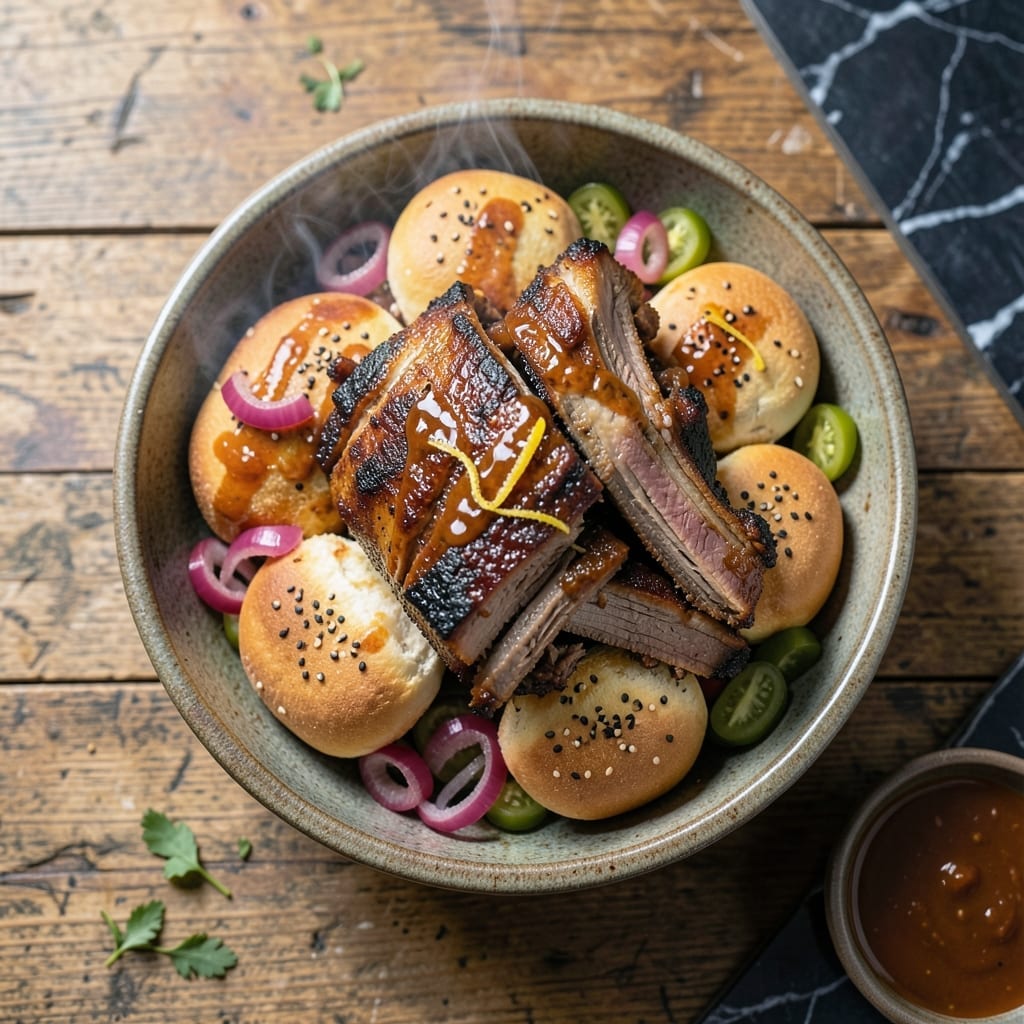
Mastering smoked pulled pork requires patience and precision, but the reward is fall-off-the-bone tender meat with a perfect bark. This proven method delivers consistent results every time.
Using a smoker at 225°F for 12-14 hours transforms tough pork shoulder into a perfect dish with deep smoky flavor. The key is maintaining steady temperature and choosing the right wood chips.
Ingredients for Smoked Pulled Pork Recipe Smoker
Patience and precision start with these twelve essential ingredients for smoky perfection.
| Ingredient | Amount | Notes |
|---|---|---|
| Pork Shoulder 🥩 | 4 lb | Bone-in, well marbled for tenderness |
| Brown Sugar 🍚 | ½ cup | Light or dark variety |
| Kosher Salt 🧂 | 2 tbsp | Diamond Crystal preferred |
| Black Pepper 🌶️ | 2 tbsp | Freshly ground for best flavor |
| Paprika 🌶️ | 1 tbsp | Sweet or smoked variety |
| Garlic Powder 🧄 | 1 tbsp | Not garlic salt |
| Onion Powder 🧅 | 1 tbsp | Fresh ground preferred |
| Cayenne Pepper 🔥 | ½ tsp | Adjust for heat preference |
| Yellow Mustard 🟡 | ¼ cup | Binder for dry rub |
| Apple Cider Vinegar 🍏 | ½ cup | For spritzing during smoking |
| Hickory Wood Chips 🪵 | 2 cups | Soaked in water for 1 hour |
| Apple Juice 🍎 | 1 cup | For moisture in smoker pan |
[recipe_ingredient_scaler]
The pork shoulder is non-negotiable here. Bone-in, well-marbled cuts yield the most tender results—look for pieces with visible fat streaks throughout. Costco and Sam’s Club often carry high-quality pork shoulders in bulk. Avoid pre-trimmed cuts; the fat cap is essential for maintaining moisture during the long cook. For competition-level bark, ensure the skin is intact and unblemished.
No hickory chips? Apple or cherry wood provides excellent sweet smoke flavor. Liquid smoke at one teaspoon per cup of water can substitute in a pinch for indoor cooking. Brown sugar can be swapped with turbinado or coconut sugar for a deeper caramel note. If apple cider vinegar isn’t available, white vinegar with a teaspoon of sugar mimics the tang. The mustard binder can be replaced with olive oil if preferred.
Store the pork shoulder in the coldest part of your refrigerator for up to 5 days before cooking. Dry rub ingredients keep indefinitely in airtight containers. Once smoked, pulled pork stays optimal for 4-5 days refrigerated or 3 months frozen. Always bring meat to room temperature before applying the rub for even seasoning distribution.
Why You’ll Love This Recipe
- I’ll be real: this recipe gives me enough pulled pork for sandwiches, tacos, and leftovers for days.
- Set It and Forget: The smoker does all the work—just rub the pork shoulder with brown sugar, salt, and spices, then let it smoke low and slow.
- Sweet & Smoky: That perfect balance of paprika warmth and brown sugar caramelization makes every bite ridiculously good.
- Feeds a Crowd: I’ll be real: this recipe gives me enough pulled pork for sandwiches, tacos, and leftovers for days.
Step-by-Step Instructions for Smoked Pulled Pork
Master the technique for achieving competition-quality bark and fall-apart tenderness with this method.
Step 1: Prepare and Season the Pork Shoulder
Pat the 4 lb Pork Shoulder dry with paper towels to ensure the rub adheres properly. Trim any large fat caps, leaving a thin layer for flavor and moisture. In a bowl, combine 0.5 cup Brown Sugar, 2 tbsp Kosher Salt, 2 tbsp Black Pepper, 1 tbsp Paprika, 1 tbsp Garlic Powder, 1 tbsp Onion Powder, and 0.5 tsp Cayenne Pepper.
Brush the 0.25 cup Yellow Mustard over the entire surface of the pork as a binder—this helps the dry rub stick and forms the foundation for your bark. Apply the spice mixture generously, pressing it into the meat so it adheres completely. Let the seasoned shoulder sit at room temperature for 30-45 minutes while you prepare the smoker.
Step 2: Set Up the Smoker with Wood and Moisture
Soak the 2 cups Hickory Wood Chips in water for at least 1 hour to ensure they smolder and produce clean smoke rather than burn quickly. Fill your smoker’s water pan with the 1 cup Apple Juice—this adds subtle sweetness and maintains humidity during the long cook.
Preheat the smoker to a steady 225-250°F. Once at temperature, add the soaked wood chips to the smoker box or directly onto the coals. You want thin, blue smoke, not thick white smoke, which can impart a bitter flavor. Place the pork shoulder fat-side up on the grates, as far from direct heat as possible.
Step 3: Smoke Low and Slow with Occasional Spritzing
Smoke the pork undisturbed for the first 4 hours. After this initial period, begin spritzing the meat every 45-60 minutes with the 0.5 cup Apple Cider Vinegar diluted with an equal amount of water in a spray bottle. This keeps the surface moist and builds layers of flavor in the bark.
Monitor the smoker temperature closely, adjusting vents as needed to maintain that 225-250°F range. The pork is ready for the next phase when the internal temperature reaches 165-170°F, typically after 8-10 hours for a shoulder of this size.
Step 4: Wrap and Finish to Perfection
Once the pork hits 165-170°F, it will stall as moisture evaporates. Wrap the shoulder tightly in pink butcher paper or aluminum foil to push through this phase. Return it to the smoker and continue cooking until the internal temperature reaches 200-205°F.
At this stage, the meat should probe like butter with no resistance. The total cook time will be approximately 12-14 hours, depending on your smoker’s consistency. Remove the pork from the smoker and let it rest wrapped in a towel-lined cooler for at least 1 hour to allow the juices to redistribute.
Step 5: Shred and Serve
Unwrap the pork and transfer it to a large cutting board or pan. Using two forks or meat claws, shred the pork into your desired consistency. Discard any large fat chunks or connective tissue. The bark should be dark, crispy, and packed with smoky flavor, while the interior should be moist and tender.
Serve immediately with your favorite barbecue sauce, pickles, and buns. The resting period ensures every bite is juicy and flavorful, with that perfect balance of smoky depth and spice from the rub.
Pro Tips For Making Smoked Pulled Pork Recipe Smoker
- Trim the Fat: Leave a thin layer of fat on the pork shoulder for moisture, but trim any thick chunks—otherwise they’ll render unevenly and leave greasy pockets in your pulled pork.
- Low and Slow: Smoke at 225°F and resist the urge to rush it; pulled pork needs 1.5 hours per pound to break down properly without drying out.
- Rest Before Pulling: Let the pork rest wrapped in foil for at least 30 minutes after smoking—this gives the juices time to redistribute so they don’t all end up on the cutting board.
- Double the Rub: Use more brown sugar and spices than you think you need; the long cook time mellows the flavors, and a heavy crust (bark) is what makes pulled pork special.
Regional Styles of smoked pulled pork recipe smoker
Carolina Style
In North Carolina, vinegar-based sauces reign supreme. I use a mix of apple cider vinegar, water, red pepper flakes, and brown sugar for a tangy kick. The pork is typically pulled finer here and served on a bun with coleslaw on top. 💛
Texas Tradition
Everything’s bigger in Texas, including the bark. They prefer a coarse black pepper-heavy rub and often skip the sauce entirely. I’ve seen pitmasters use post oak wood for a more robust smoke flavor. The meat is usually chopped rather than pulled.
Memphis Dry Rub
Memphis is famous for its dry rubs. I add extra paprika and garlic powder to the mix for depth. The pork is often served sliced or pulled, with sauce on the side. This style lets the smoky meat flavor shine through.
Kansas City Sweet
Kansas City combines the best of both worlds with a sweet, thick sauce. I brush the pork with a mix of ketchup, molasses, and brown sugar during the last hour. The result is sticky, sweet, and irresistibly smoky. 🔥
Alabama White
Alabama’s unique white sauce is a must-try. I whisk together mayonnaise, apple cider vinegar, and horse radish for a creamy, tangy topping. It’s unexpected but pairs perfectly with the smoky pork.
Nutrition Facts
Frequently Asked Questions
What’s the ideal internal temperature for tenderness?
Remove the pork when it hits 200-205°F internally. At this point, the collagen breaks down, making the meat probe-tender like butter.
Can I use a different type of wood?
Apple or cherry wood adds sweetness, while pecan offers a mild, nutty flavor. Avoid softwoods like pine—they create bitter smoke.
How long should I rest the pork before pulling?
Rest it wrapped in a towel-lined cooler for at least 1 hour. This keeps it hot while juices redistribute for maximum moisture.
Why does my bark turn out too soft?
This usually happens if the smoker runs too cool or you spritz too much. Maintain 225-250°F and spritz lightly after the first 4 hours.

Trained in classic French technique but raised on slow-cooked ribs and spicy rubs, she blends culinary skill with smoke and soul.
- Recipe for Boneless Pork Chops in Cast Iron Skillet: Sear and Baste to Juicy Perfection - October 3, 2026
- Recipe for Boneless Cross Rib Roast: Slow-Roasted Beef with Herb Crust - October 3, 2026
- Hamburgers in Sauce Recipe Crock Pot: Slow-Cooked Savory Delight - October 3, 2026