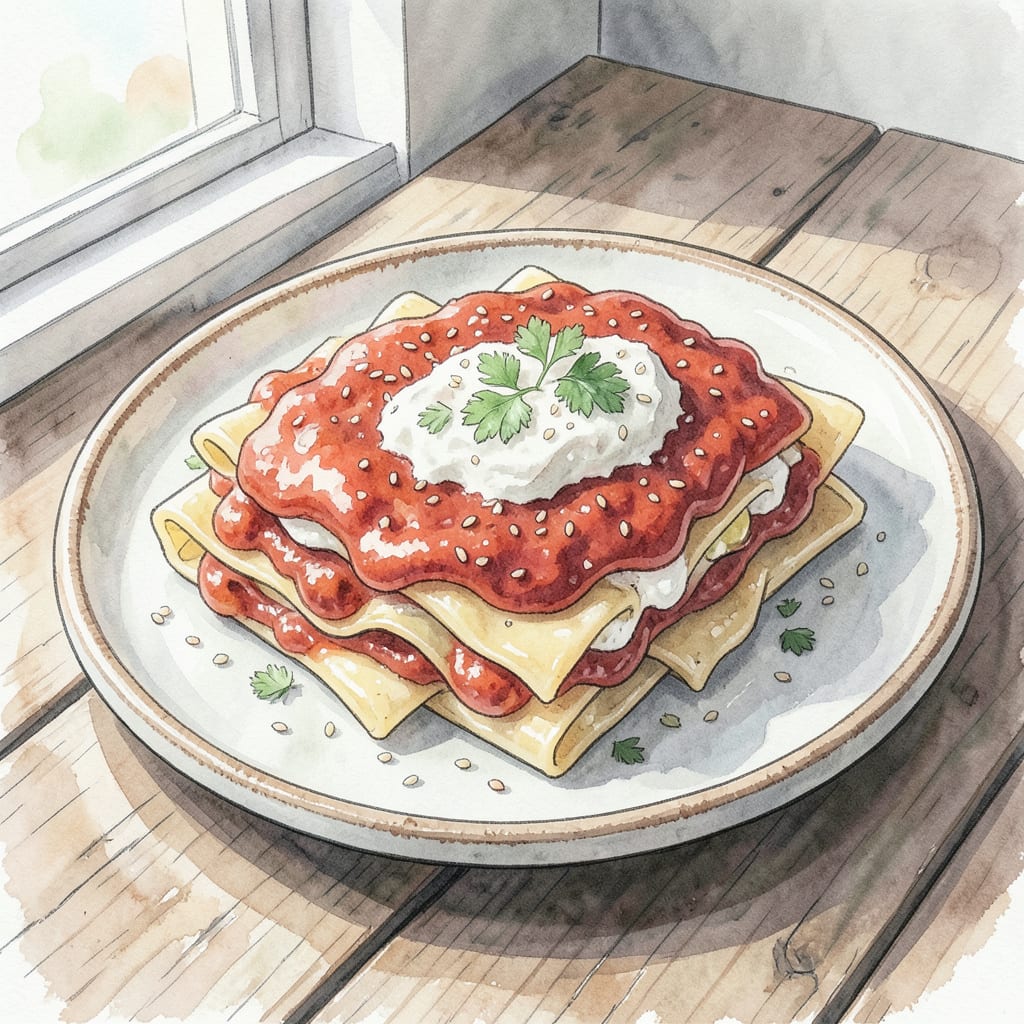
I’ve perfected a quick and easy no-bake lasagna noodles recipe that’s ready in just 15 minutes. This homemade pasta solution eliminates the need for boiling, making it perfect for busy weeknights or when you need a stress-free meal.
The result is tender, delicious noodles that layer perfectly with your favorite lasagna ingredients. Let’s simplify your pasta game!
Ingredients for No Bake Lasagna Noodles
Quick homemade pasta solution with just 6 ingredients. No boiling required, ready in 15 minutes.
| Ingredient | Amount | Notes |
|---|---|---|
| All-Purpose Flour 🌾 | 2 cups | Unbleached, all-purpose variety |
| Semolina Flour 🌾 | ½ cup | Durum wheat semolina for authenticity |
| Large Eggs 🥚 | 2 whole | Room temperature for better dough |
| Olive Oil 🫒 | 2 tbsp | Extra-virgin for richness |
| Salt 🧂 | 1 tsp | Kosher salt preferred |
| Water 💧 | ¼ cup | Cold water for dough |
[recipe_ingredient_scaler]
For the best texture, use a mix of all-purpose and semolina flour. King Arthur or Caputo are great brands for semolina. If you don’t have semolina, all-purpose works too. The eggs should be at room temperature—this helps create a more tender dough.
No stand mixer? No problem. Knead by hand for about 10 minutes until you get a smooth dough. If the dough feels too dry, add a tablespoon of water at a time until it comes together. For a more tender noodle, let the dough rest for 5-10 minutes before rolling.
These noodles keep well in an airtight container for up to 2 days in the fridge. You can also freeze them on a baking sheet and transfer to a freezer bag once frozen. They’ll keep for 3 months in the freezer.
Step-by-Step Instructions for No Bake Lasagna Noodles
Here’s the method to create these convenient noodles from scratch, quickly and easily.
👨🍳 Step 1: Combine Dry Ingredients and Create a Well
In a large mixing bowl, whisk together the 2 cups All-Purpose Flour and 0.5 cup Semolina Flour until well combined. I like to use a balloon whisk for this task as it incorporates air and ensures even distribution of ingredients. Create a well in the center of the flour mixture, making sure it’s large enough to hold the wet ingredients.
The well should be deep enough that the flour comes up to the edges but doesn’t spill over when you add the wet ingredients. This helps contain the eggs and prevents a mess during mixing.
👨🍳 Step 2: Mix Wet Ingredients and Form the Dough
In the well, add the 2 whole Large Eggs, 2 tbsp Olive Oil, 1 tsp Salt, and 0.25 cup Water. Using a fork, gently incorporate the wet ingredients, gradually pulling in the flour from the sides of the well. Start mixing in a circular motion, working from the inside out.
As you mix, you’ll notice the dough coming together. It should form a ball and pull away from the sides of the bowl. If the dough feels too dry, you can add a little more water, 1 tablespoon at a time, until it reaches the right consistency.
🥘 Step 3: Knead and Rest the Dough
Turn the dough out onto a lightly floured surface and knead for about 5-7 minutes until it becomes smooth and elastic. You’ll know it’s ready when it springs back when pressed gently. Wrap the dough in plastic wrap or a damp cloth and let it rest for at least 30 minutes.
During this resting period, the gluten relaxes, making the dough easier to roll out later. I like to let it rest for 1 hour if I have the time, as it makes the dough even more pliable.
🔪 Step 4: Roll Out and Cut the Noodles
Divide the rested dough into 4 equal pieces to make it more manageable. Using a pasta machine or a rolling pin, roll out each piece of dough to a thickness of about 1/16 inch. If using a pasta machine, start at the thickest setting and gradually decrease the thickness as you roll.
Once rolled out, cut the dough into lasagna noodle widths, typically about 3-4 inches wide. You can use a sharp knife or a pasta cutter for this task. Handle the noodles gently to prevent them from tearing.
Troubleshooting This Dish
Common Issues with No-Bake Noodles
One of the most common problems with no-bake lasagna noodles is that they can become too soggy or fall apart during cooking. This often happens when the noodles aren’t rested long enough or if they’re not layered properly in the lasagna. To prevent this,
Fixing Sogginess
If you notice your noodles becoming soggy, try adjusting your layering technique. Start with a thin layer of sauce on the bottom of your baking dish to prevent sticking, then add your noodles. I like to use a thick, meat-based sauce that helps keep the noodles intact. Make sure not to over-soak the noodles in sauce before layering.
Dough Too Sticky
If your dough feels too sticky during preparation, add a small amount of flour (1 tablespoon at a time) until it reaches a workable consistency. The ideal dough should be smooth and slightly firm to the touch. I prefer using semolina flour for its coarser texture that helps reduce stickiness.
Noodle Thickness
Aim for a consistent thickness of about 1/16 inch when rolling out your noodles. If they’re too thick, they might not cook properly in the lasagna. If they’re too thin, they may break during layering. Using a pasta machine can help achieve uniform thickness. I start at the thickest setting and gradually decrease it.
Freezing Issues
When freezing your no-bake noodles,
Reheating Tips
For best results when reheating leftover lasagna, cover it with foil and bake at 350°F for 20-25 minutes. This helps retain moisture and prevents the noodles from drying out. You can also add a splash of water or extra sauce before reheating to keep everything moist.
Nutrition Facts

Trained in classic French technique but raised on slow-cooked ribs and spicy rubs, she blends culinary skill with smoke and soul.
- Recipe for Boneless Pork Chops in Cast Iron Skillet: Sear and Baste to Juicy Perfection - October 3, 2026
- Recipe for Boneless Cross Rib Roast: Slow-Roasted Beef with Herb Crust - October 3, 2026
- Hamburgers in Sauce Recipe Crock Pot: Slow-Cooked Savory Delight - October 3, 2026