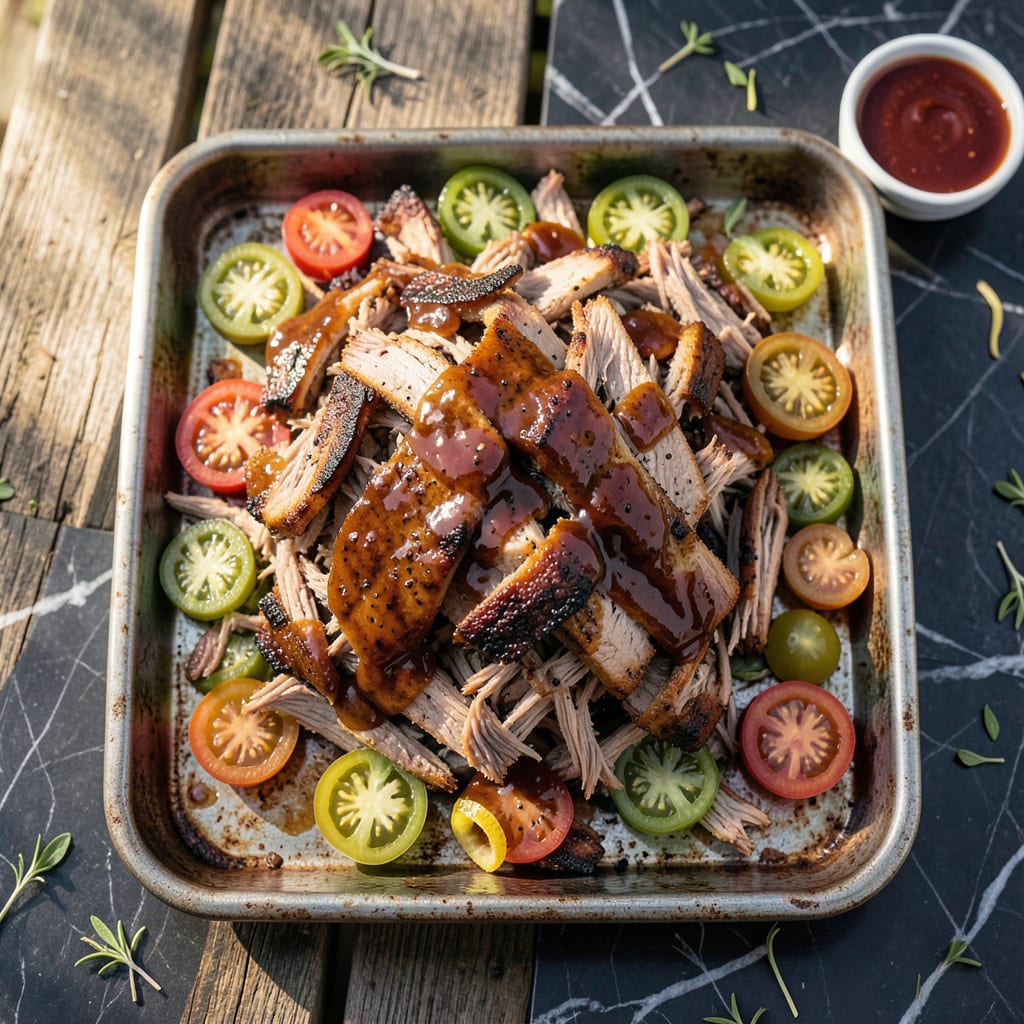
Getting my first whiff of hickory smoke at my family backyard cookout inspired this recipe. It delivers tender pulled pork with that signature vinegar tang North Carolina is known for.
Slow-smoked over low heat, the pork shoulder becomes melt-in-your-mouth tender while the vinegar-based sauce cuts through the richness with bright, tangy flavor. This method stays true to tradition.
Ingredients for North Carolina Pork Bbq
Pantry staples and a pork shoulder transform into that classic backyard cookout magic.
| Ingredient | Amount | Notes |
|---|---|---|
| Pork Shoulder 🥩 | 4 lb | Bone-in, well-marbled preferred |
| Hickory Wood Chips 🪵 | 2 cups | Soaked in water for 30 minutes |
| Apple Cider Vinegar 🍏 | 2 cups | For sauce and spritzing |
| White Vinegar 🧂 | ½ cup | For tangy balance |
| Brown Sugar 🍚 | ½ cup | Light or dark variety |
| Ketchup 🍅 | ½ cup | For sauce base |
| Yellow Mustard 🟡 | 2 tbsp | For tangy depth |
| Worcestershire Sauce 🫒 | 1 tbsp | Adds umami complexity |
| Crushed Red Pepper Flakes 🌶️ | 1 tsp | Adjust for heat preference |
| Kosher Salt 🧂 | 2 tbsp | Plus more to taste |
| Ground Black Pepper 🌶️ | 1 tbsp | Freshly ground preferred |
| Garlic Powder 🧄 | 1 tbsp | For dry rub |
| Onion Powder 🧅 | 1 tbsp | For dry rub |
| Hamburger Buns 🍞 | 8 pieces | For serving, lightly toasted |
| Coleslaw Mix 🥬 | 4 cups | Pre-shredded or fresh cabbage |
[recipe_ingredient_scaler]
The pork shoulder is non-negotiable here. Bone-in, well-marbled pieces from Costco or your local butcher give you that fall-apart texture. Hickory wood chips are traditional, but apple or cherry wood adds a nice sweetness. Soak them for at least 30 minutes before smoking—prevents bitter flavor. I grab my wood chips from Home Depot (yes, really) or Lowe’s—cheaper than grocery stores and just as good.
No pork shoulder? Pork butt works the same (yes, it’s the same cut, just different names). Out of hickory? Pecan or oak chips are solid backups. If you want to skip the wood entirely, a liquid smoke splash in the sauce gets you close. The vinegar ratio matters—2:1 apple cider to white keeps the tang bright but balanced. Brown sugar can be swapped for turbinado or coconut sugar if that’s your preference.
Leftovers keep for 4-5 days in the fridge, but honestly, it’s even better the next day. Freezes for 3 months (portion before freezing for easy reheating). The sauce separates when stored—just stir it back together. And yes, you can make the whole thing in a slow cooker if you’re short on time (don’t tell the purists).
Why You’ll Love This Recipe
- Set It and Forget: I toss the pork shoulder on the smoker with hickory chips and let it do its thing for hours—no babysitting required.
- Tangy Sweet Balance: The mix of apple cider vinegar, white vinegar, and brown sugar gives that signature NC vinegar sauce that’s sharp, sweet, and totally addictive.
- Feeds a Hungry Crowd: One pork shoulder makes enough pulled pork for a weekend gathering, game day, or meal prep for the week.
- Leftovers for Days: Honestly, it tastes even better the next day—pile it on sandwiches, nachos, or straight from the fridge at 2 a.m.
Step-by-Step Instructions for North Carolina Pork BBQ
Here’s the method I use to achieve fall-apart tender meat with that signature vinegar tang.
Step 1: Prepare and Season the Pork Shoulder
Start by patting the 4 lb Pork Shoulder completely dry with paper towels. This ensures the dry rub adheres properly and creates a good bark. In a small bowl, mix together the 2 tbsp Kosher Salt, 1 tbsp Ground Black Pepper, 1 tbsp Garlic Powder, and 1 tbsp Onion Powder.
Rub this mixture all over the pork shoulder, pressing it into the meat so it sticks. I like to do this the night before and let it sit covered in the fridge, but if you’re short on time, even 30 minutes at room temperature makes a difference. The longer it sits, the deeper the flavor penetration.
Step 2: Smoke the Pork Low and Slow
Soak the 2 cups Hickory Wood Chips in water for 30 minutes before starting. Preheat your smoker to 225°F and add the drained wood chips once it’s up to temperature. Place the pork shoulder fat-side up on the grill grates.
Smoke the pork undisturbed for 6-8 hours, spritzing with apple cider vinegar every 1-2 hours after the first 3 hours. You want the internal temperature to reach 165°F before wrapping. This spritzing keeps the meat moist and builds that classic bark.
Step 3: Wrap and Finish the Cook
When the pork hits 165°F internally, wrap it tightly in butcher paper or foil. Return it to the smoker and continue cooking until the internal temperature reaches 200-203°F and the meat is probe-tender—this usually takes another 2-4 hours.
The wrap helps power through the stall while keeping the meat juicy. I prefer butcher paper because it breathes better, preserving that beautiful bark you’ve worked so hard to build. The pork is done when a probe slides in like butter with no resistance.
Step 4: Make the Vinegar-Based BBQ Sauce
While the pork rests, combine the 2 cups Apple Cider Vinegar, 0.5 cup White Vinegar, 0.5 cup Brown Sugar, 0.5 cup Ketchup, 2 tbsp Yellow Mustard, 1 tbsp Worcestershire Sauce, and 1 tsp Crushed Red Pepper Flakes in a saucepan.
Simmer over medium heat for 10-15 minutes until the sugar dissolves and the flavors meld. Taste and adjust seasoning if needed. This tangy, thin sauce is the hallmark of North Carolina BBQ—don’t be tempted to thicken it.
Step 5: Shred, Sauce, and Serve
Once the pork is cool enough to handle, shred it using two forks, discarding any large fat chunks. Toss the shredded pork with about 1 cup of the warm vinegar sauce—just enough to coat it without making it soggy.
Serve the pulled pork on the 8 pieces Hamburger Buns with the remaining sauce on the side. Top with 4 cups Coleslaw Mix for that perfect crunch and tang contrast. The pork should be so tender it melts in your mouth, with just the right amount of smoky, vinegary kick.
Pro Tips For Making North Carolina Pork Bbq
- Smoke Low and Slow: Keep your smoker between 225-250°F and give the pork shoulder at least 8 hours—rushing it with higher heat just makes the meat tough.
- Soak the Wood Chips: I learned this the hard way—soak hickory chips in water for 30 minutes before adding them to the smoker to prevent bitter, acrid smoke.
- Skip the Sugar Rush: Resist the urge to overdo the brown sugar in your vinegar sauce; North Carolina style leans tangy, so 2 tablespoons per cup of vinegar is plenty.
- Rest Before Pulling: After smoking, let the pork shoulder rest wrapped in foil for 30 minutes—it makes shredding easier and keeps all the juices inside.
Storing and Reheating This north carolina pork bbq
Refrigerator Storage
Let your pulled pork cool to room temperature—about 2 hours max—before transferring to airtight containers. Store in the fridge for up to 4-5 days. Honestly, the flavors deepen overnight as the vinegar sauce works its magic. ❄️
Freezer Storage
Portion the pork and sauce separately in freezer-safe bags or containers. It freezes beautifully for up to 3 months without losing quality. I recommend quart-sized bags for easy single-serving reheating. Leave 1 inch headspace for expansion.
Stovetop Reheating
This is my go-to method. Heat the pork and sauce in a saucepan over medium-low heat with a splash of apple cider vinegar or water. Stir occasionally for 10-15 minutes until heated through. The sauce may separate—just stir it back together. 🔥
Microwave Reheating
For quick meals, microwave individual portions covered with a damp paper towel. Use 70% power for 2-3 minutes, stir, then continue in 1-minute intervals until reaching 165°F. Add a splash of vinegar if it seems dry.
Sauce Storage Tip
The vinegar sauce will separate when stored—this is normal. Just give it a good stir before reheating. If it’s too thin, simmer it for 5-10 minutes to reduce slightly. I often make extra sauce to have on hand for leftovers.
Nutrition Facts

Trained in classic French technique but raised on slow-cooked ribs and spicy rubs, she blends culinary skill with smoke and soul.
- Recipe for Boneless Pork Chops in Cast Iron Skillet: Sear and Baste to Juicy Perfection - October 3, 2026
- Recipe for Boneless Cross Rib Roast: Slow-Roasted Beef with Herb Crust - October 3, 2026
- Hamburgers in Sauce Recipe Crock Pot: Slow-Cooked Savory Delight - October 3, 2026