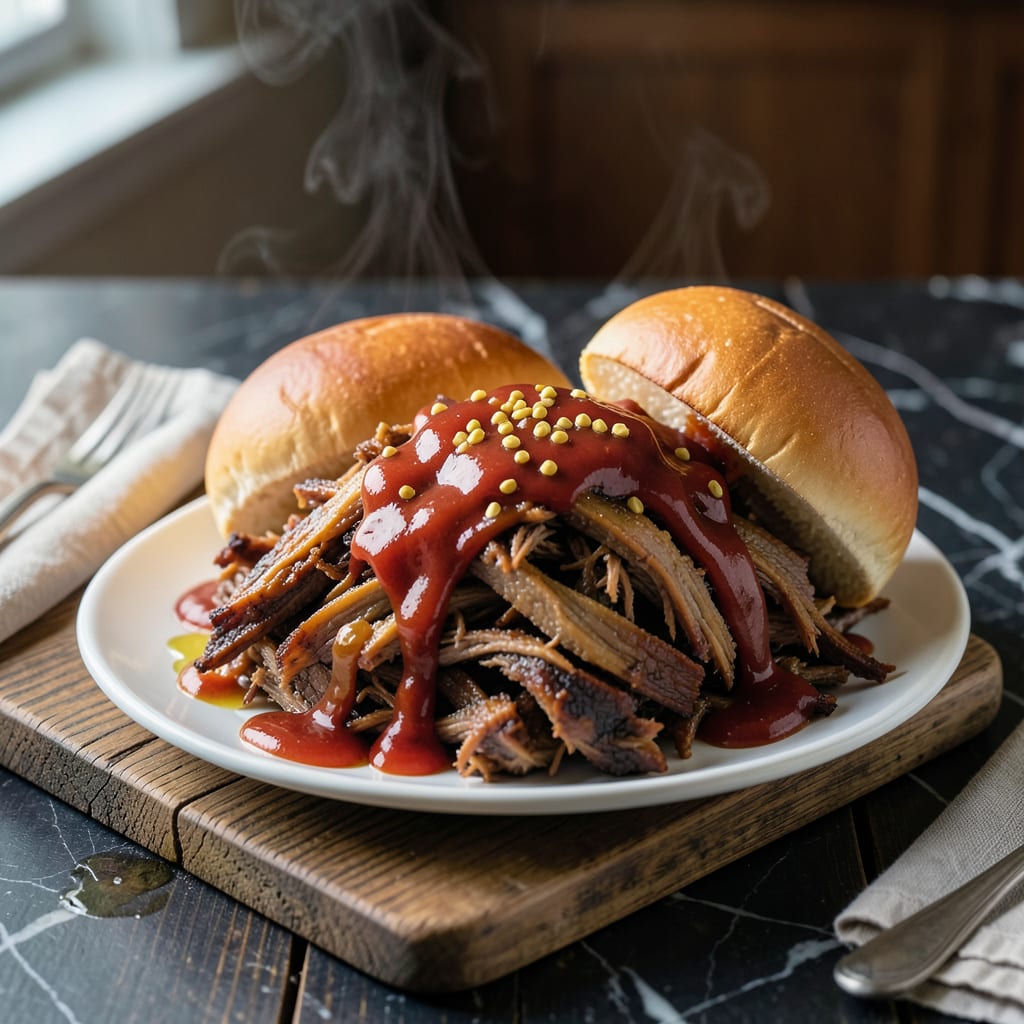
This eastern NC pork BBQ stays true to tradition with its signature vinegar-based sauce and slow-cooked tenderness. Pitmaster techniques meet regional authenticity for a dish that defines Carolina barbecue.
Perfecting this method requires patience and respect for the process. The result is pulled pork with just the right balance of tangy vinegar sauce and smoky depth, served on a soft bun as intended.
Ingredients for North Carolina Pork Bbq
Traditional eastern North Carolina pulled pork starts with these authentic ingredients for signature vinegar-based barbecue.
| Ingredient | Amount | Notes |
|---|---|---|
| Pork Shoulder 🥩 | 4 lb | Bone-in preferred for flavor |
| Apple Cider Vinegar 🍏 | 2 cups | The foundation of the sauce |
| Water 💧 | 1 cup | For sauce consistency |
| Ketchup 🍅 | ½ cup | Adds subtle sweetness |
| Brown Sugar 🍚 | ½ cup | Light or dark variety |
| Yellow Mustard 🟡 | ¼ cup | For tang and color |
| Crushed Red Pepper Flakes 🌶️ | 2 tsp | Adjust for heat preference |
| Black Pepper 🌶️ | 1 tbsp | Freshly ground preferred |
| Kosher Salt 🧂 | 1 tbsp | Diamond Crystal preferred |
| Garlic Powder 🧄 | 1 tbsp | Not garlic salt |
| Onion Powder 🧅 | 1 tbsp | Balances the vinegar sharpness |
| Hamburger Buns 🍞 | 4 whole | Soft, slightly sweet variety |
| Coleslaw Mix 🥬 | 2 cups | Pre-shredded for convenience |
[recipe_ingredient_scaler]
The pork shoulder is non-negotiable for authentic eastern NC BBQ—bone-in yields the best texture and flavor after long, slow cooking. Costco and Sam’s Club offer quality options in bulk, but your local butcher can provide the ideal cut with proper marbling. Avoid pre-ground pork; the large, intact shoulder holds up to the extended cook time. For the vinegar, Heinz apple cider vinegar is the standard for its consistent acidity and clean flavor.
No apple cider vinegar? White vinegar in a pinch, but reduce by one-quarter as it’s more potent. Honey or molasses can replace brown sugar, though the flavor profile shifts slightly. For heat, cayenne pepper works instead of crushed red pepper—use half the amount. The ketchup is optional; purists skip it, but it adds balance to the vinegar’s sharpness. Hamburger buns should be soft—Martin’s Potato Rolls are a pitmaster favorite.
Cooked pork keeps 4-5 days refrigerated or 3 months frozen. The vinegar sauce can be made ahead and stored up to 1 week in the fridge. Always reheat pork gently with a splash of sauce to maintain moisture. Coleslaw is best made fresh, but pre-shredded mix saves time without sacrificing quality.
Why You’ll Love This Recipe
- Set It and Forget: I toss the pork shoulder in the slow cooker with vinegar and spices, then walk away for hours—minimal effort, maximum payoff.
- Tangy Sweet Balance: The apple cider vinegar cuts through the richness while the brown sugar caramelizes into this ridiculously good glaze.
- Feeds a Crowd: Between us, this recipe makes enough pulled pork for a weekend dinner, sandwiches all week, and still some to freeze.
- Pantry Staples Only: Honestly, I already had vinegar, ketchup, and sugar on hand—just needed to grab the pork shoulder on sale.
Step-by-Step Instructions for North Carolina Pork BBQ
Master the technique behind this vinegar-based tradition with precise timing and temperature control.
Step 1: Season and Slow-Cook the Pork Shoulder
Begin by rubbing the 4 lb Pork Shoulder with 1 tbsp Kosher Salt, 1 tbsp Black Pepper, 1 tbsp Garlic Powder, and 1 tbsp Onion Powder. I ensure every surface is evenly coated for maximum flavor penetration. Place the pork in a slow cooker or Dutch oven.
For authentic texture, cook on low heat for 8-10 hours until the meat shreds effortlessly with a fork. The internal temperature should reach 195-203°F—this is when collagen breaks down into tender, juicy strands.
Step 2: Prepare the Eastern-Style Vinegar Sauce
In a saucepan, combine 2 cups Apple Cider Vinegar, 1 cup Water, 0.5 cup Ketchup, 0.5 cup Brown Sugar, 0.25 cup Yellow Mustard, and 2 tsp Crushed Red Pepper Flakes. Whisk until the brown sugar fully dissolves—this prevents graininess in the finished sauce.
Simmer over medium heat for 10 minutes, stirring occasionally, until the sauce thickens slightly and the flavors meld. The mixture should coat the back of a spoon but remain pourable. Taste and adjust the heat level with additional crushed red pepper if desired.
Step 3: Shred and Sauce the Pork
Once the pork is tender, remove it from the cooking vessel and shred it using two forks. Discard any large fat chunks or bones. I prefer to pull it into long, irregular strands for that classic pulled pork texture.
Transfer the shredded pork to a large bowl and pour 1 cup of the vinegar sauce over it. Toss gently to coat evenly, ensuring every piece is saturated with the tangy, slightly sweet mixture. Reserve the remaining sauce for serving.
Step 4: Toast the Buns and Assemble
Lightly toast the 4 whole Hamburger Buns on a griddle or in a 350°F oven for 2-3 minutes until they’re golden brown and warm. This step prevents sogginess when assembled.
Fill each bun with a generous portion of the sauced pork. Top with 2 cups Coleslaw Mix for the traditional crunch and freshness contrast. Serve with extra vinegar sauce on the side for those who favor a tangier bite.
Pro Tips For Making North Carolina Pork Bbq
- Slow Cook the Shoulder: I learned this the hard way—rushing pork shoulder at high heat gives you tough meat. Let it go low and slow (225-250°F) for 8-10 hours until it shreds with a fork.
- Balance the Vinegar: North Carolina BBQ needs that tang, but straight apple cider vinegar can overwhelm. Cut it with equal parts water to mellow the bite without losing the flavor.
- Skip the Early Sauce: Resist the urge to drown the pork in sauce while cooking—it’ll just burn the sugars. Wait until the last 30 minutes or serve it on the side.
- Use Brown Sugar Sparingly: Sounds weird, but it works: a light hand with brown sugar (about ¼ cup per pound) keeps the sauce from getting cloyingly sweet. The vinegar should still shine.
Storing and Reheating Leftovers
Refrigerator Storage
Let your pulled pork cool to room temperature within 2 hours of cooking. I store mine in airtight glass containers—Pyrex is my go-to for durability. It’ll keep beautifully in the fridge at 40°F or below for up to 4-5 days. The vinegar sauce actually deepens in flavor over time. ❄️
Freezer Storage
For longer storage, portion the pork into freezer-safe bags, removing as much air as possible. I use quart-sized vacuum-sealed bags for best results. It’ll maintain quality for up to 3 months. Always label with the date—trust me, you’ll forget otherwise.
Stovetop Reheating
This is my preferred method for maintaining texture. Heat the pork in a saucepan over low-medium heat with a splash of the vinegar sauce and ¼ cup water. Stir occasionally for 8-10 minutes until heated through to 165°F. 🔥
Oven Reheating
For larger batches, preheat your oven to 300°F. Spread the pork on a baking sheet, drizzle with extra sauce, and cover with foil. Heat for 15-20 minutes, stirring halfway through. This method keeps the pork incredibly tender.
Sauce Storage
The vinegar sauce can be stored separately in a mason jar in the fridge for up to 1 week. If it separates, just give it a good stir before using. For longer storage, freeze it in ice cube trays—perfect for quick reheating portions.
Nutrition Facts

Trained in classic French technique but raised on slow-cooked ribs and spicy rubs, she blends culinary skill with smoke and soul.
- Recipe for Boneless Pork Chops in Cast Iron Skillet: Sear and Baste to Juicy Perfection - October 3, 2026
- Recipe for Boneless Cross Rib Roast: Slow-Roasted Beef with Herb Crust - October 3, 2026
- Hamburgers in Sauce Recipe Crock Pot: Slow-Cooked Savory Delight - October 3, 2026