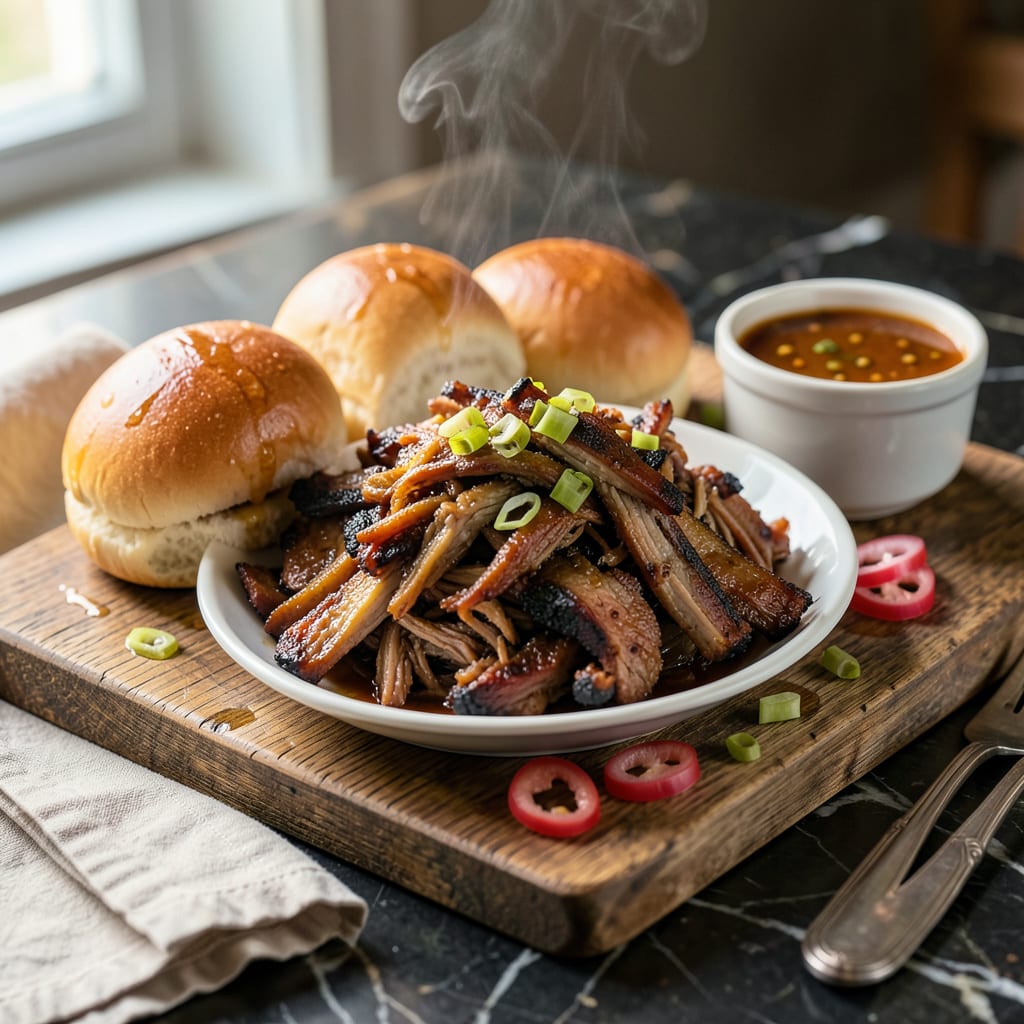
Getting my first whiff of hickory smoke at family cookouts sparked my love for authentic BBQ. This method uses a simple vinegar-based sauce that defines North Carolina style.
Slow-cooked pork shoulder becomes tender and juicy, then gets shredded and tossed with that signature tangy sauce. The result is restaurant-quality pulled pork with a kick of vinegar sharpness.
Ingredients for North Carolina Pulled Pork Bbq
Simple, bold ingredients for that authentic Carolina BBQ experience at home.
| Ingredient | Amount | Notes |
|---|---|---|
| Pork Shoulder 🥩 | 4 lb | Bone-in for best flavor |
| Apple Cider Vinegar 🍏 | 2 cups | For tangy sauce base |
| White Vinegar 🧪 | ½ cup | Adds sharpness to sauce |
| Brown Sugar 🍚 | ½ cup | Light or dark variety |
| Ketchup 🍅 | ½ cup | For slight sweetness |
| Yellow Mustard 🟡 | 2 tbsp | Smooth Dijon works too |
| Worcestershire Sauce 🍶 | 2 tbsp | Adds umami depth |
| Hot Sauce 🔥 | 1 tbsp | Texas Pete preferred |
| Garlic Powder 🧄 | 1 tbsp | Fresh minced works too |
| Onion Powder 🧅 | 1 tbsp | Essential for dry rub |
| Paprika 🌶️ | 1 tbsp | Sweet or smoked variety |
| Salt 🧂 | 1 tbsp | Diamond Crystal preferred |
| Black Pepper 🌶️ | 1 tbsp | Freshly ground coarse |
| Hickory Wood Chips 🌳 | 2 cups | Soaked for smoking |
[recipeingredientscaler]
The pork shoulder is non-negotiable—bone-in, well-marbled pieces from Costco or your local butcher give the juiciest results. I’ve tried boneless cuts, but they dry out faster. For the vinegars, Bragg’s apple cider vinegar has the right acidity, while any white vinegar works for the sharpness. The hickory wood chips? Soak them for at least 30 minutes before smoking (or buy pre-soaked).
No apple cider vinegar? White vinegar plus 1 tbsp sugar per cup gets you close. Out of Worcestershire? Soy sauce with a dash of lemon juice works in a pinch. The brown sugar can be swapped for honey or maple syrup, but it’ll tweak the flavor. For the hot sauce, Crystal or Tabasco are fine substitutes if Texas Pete isn’t handy.
Leftovers keep 5 days in the fridge, but honestly, this tastes even better the next day. Freeze for up to 3 months—portion into containers for easy reheating. The sauce can be made ahead and stored separately for 1 week.
Why You’ll Love This Recipe
- Set It and Forget: I toss the pork shoulder in the slow cooker with vinegars and brown sugar, then let it do its thing for hours.
- Tangy Perfection: The mix of apple cider and white vinegar gives that signature Carolina bite I crave every time.
- Feeds the Whole Crew: One pork shoulder makes enough for sandwiches, tacos, or loaded baked potatoes all week long.
- Leftovers for Days: Honestly, it tastes even better the next day—piled high on a bun or straight from the fridge.
Step-by-Step Instructions for North Carolina Pulled Pork BBQ
Here’s the method I’ve perfected for that signature vinegar tang with deep smoky flavor.
Step 1: Prepare and Season the Pork Shoulder
Pat the 4 lb Pork Shoulder dry with paper towels—this ensures the rub adheres properly and creates a better bark. I like to trim off any large fat caps, but leave some for flavor and moisture during the long cook.
In a small bowl, combine the 1 tbsp Salt, 1 tbsp Black Pepper, 1 tbsp Paprika, 1 tbsp Garlic Powder, and 1 tbsp Onion Powder. Massage this dry rub all over the pork, pressing it into every crevice. Let the seasoned shoulder sit at room temperature for 30 minutes while you prepare your smoker.
Step 2: Set Up Your Smoker with Hickory Wood
Soak the 2 cups Hickory Wood Chips in water for at least 30 minutes—this prevents them from burning too quickly. Drain them and add to your smoker’s wood box or place in a foil pouch with holes poked in the top if using a charcoal smoker.
Preheat your smoker to 225°F. I recommend using a water pan in the smoker to maintain moisture during the long cook. When you see thin blue smoke (not thick white smoke), you’re ready to add the pork. Place the shoulder fat-side up on the grates, which will baste the meat as it renders.
Step 3: Smoke Low and Slow Until Tender
Insert a meat probe into the thickest part of the pork, avoiding bone. Smoke undisturbed for 8-10 hours until the internal temperature reaches 195-203°F. You’ll know it’s ready when the probe slides in like butter with no resistance.
Resist the urge to open the smoker frequently—every time you do, you lose heat and add 15-20 minutes to your cook time. When the pork hits 160°F, I wrap it in butcher paper to power through the stall while keeping the bark intact.
Step 4: Rest and Shred the Pork
Remove the pork from the smoker and let it rest wrapped in a clean towel for 1 hour. This resting period allows the juices to redistribute throughout the meat. I place it in a cooler to maintain temperature during this time.
When ready to serve, unwrap and shred the pork using two forks or meat claws. Discard any large fat pieces or bone. The pork should pull apart effortlessly into tender strands with a beautiful dark bark on the exterior.
Step 5: Toss with Carolina Vinegar Sauce
In a saucepan, combine the 2 cups Apple Cider Vinegar, 0.5 cup White Vinegar, 0.5 cup Brown Sugar, 0.5 cup Ketchup, 2 tbsp Yellow Mustard, 2 tbsp Worcestershire Sauce, and 1 tbsp Hot Sauce.
Simmer over medium heat for 10 minutes, stirring occasionally, until the sugar dissolves and flavors meld. Pour the warm sauce over the shredded pork and toss gently to coat evenly. The sauce should be tangy with a slight sweetness and a hint of heat.
Pro Tips For Making North Carolina Pulled Pork Bbq
- Cook Low and Slow: I learned this the hard way—rushing pork shoulder at high heat gives you tough, dry meat. Keep it at 225°F in the smoker or oven for 8-10 hours until it falls apart with a fork.
- Balance Your Vinegars: After burning my tongue on too much white vinegar once, I now use a 2:1 ratio of apple cider to white vinegar for that classic NC tang without the harsh bite.
- Don’t Skip the Rest: Pulling pork straight from the heat makes it lose all its juices. Let it rest in a warm place for 30-45 minutes under foil before shredding—sounds weird but it works.
- Sweeten Last: My grandmother swore by this: stir in the brown sugar and ketchup only in the final 30 minutes of cooking to prevent burning and keep the sauce from turning bitter.
Regional Styles of These Flavors
Eastern Carolina Style
This is the original vinegar-based style from the coastal plains. The sauce uses apple cider vinegar and white vinegar with just a touch of brown sugar. No tomatoes here—just pure tang with crushed red pepper for heat. I remember my first taste at a roadside stand near Raleigh. 💛
Piedmont Style
Moving west toward the Piedmont region, you’ll find a slightly sweeter version. The sauce includes ketchup for color and sweetness along with the vinegar base. It’s still tangy but with more body. This is what most people think of as classic North Carolina BBQ sauce.
Lexington Style
In Lexington, they take Piedmont style a step further by adding tomato paste to the sauce. The result is a deeper red color with balanced sweetness and acidity. Local pitmasters often use shoulder and ham together, though I prefer just the shoulder for pulled pork.
Western Carolina Style
As you head toward the mountains, the sauce gets thicker and sweeter. Here, they might add molasses or honey to the vinegar base. The pork is often served chopped rather than pulled, but the vinegar tang remains the signature.
I’ve judged at local competitions where these regional pride runs deep. ✨
Nutrition Facts

Trained in classic French technique but raised on slow-cooked ribs and spicy rubs, she blends culinary skill with smoke and soul.
- Octopus Recipe Pan Fried: Crispy Edges With Tender Bites - October 3, 2026
- Recipe For Fried Pork Chops In An Iron Skillet: Crispy Crust With Juicy Centers - October 3, 2026
- Recipe for Fully Cooked Spiral Ham: Sweet Glaze and Effortless Elegance - October 3, 2026