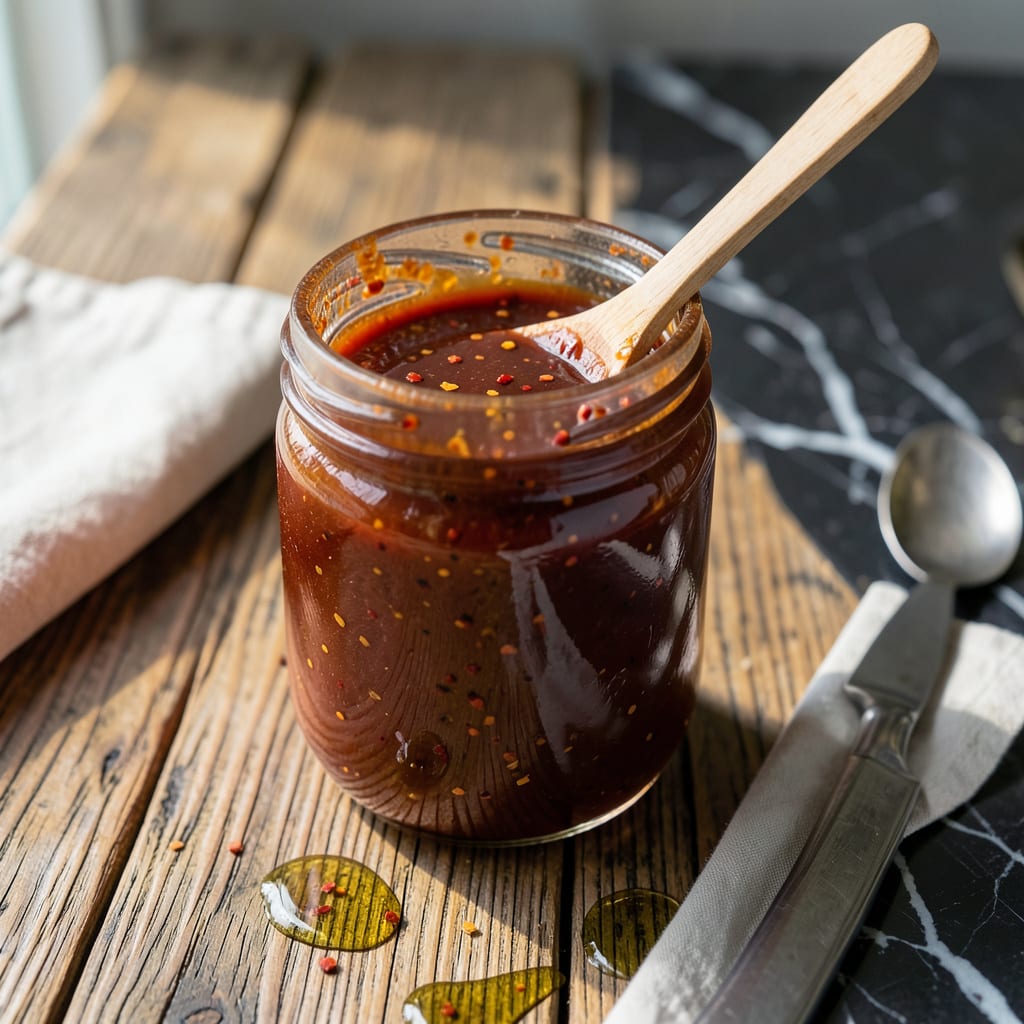
This vinegar-based sauce delivers the tangy punch that defines Eastern North Carolina BBQ tradition. My pitmaster roots taught me that balance is everything—here, it’s vinegar’s sharpness mellowed just enough to let the meat shine.
Simple ingredients come together in minutes, creating a sauce that’s versatile for pulled pork, ribs, or as a mop while smoking. The ratio of vinegar to sweetener is the secret to that signature bright, clean finish.
Ingredients for North Carolina Vinegar Bbq Sauce
Ten ingredients deliver that signature bright, vinegary tang. Nothing complicated here.
| Ingredient | Amount | Notes |
|---|---|---|
| Apple Cider Vinegar 🍏 | 2 cups | Primary tangy base ingredient |
| White Vinegar 🍶 | ½ cup | Adds extra sharpness |
| Brown Sugar 🧈 | ½ cup | Balances vinegar acidity |
| Ketchup 🍅 | ¼ cup | Adds subtle tomato base |
| Hot Sauce 🌶️ | 2 tbsp | Texas Pete recommended |
| Crushed Red Pepper Flakes 🔥 | 1 tsp | Adjust for heat preference |
| Kosher Salt 🧂 | 1 ½ tsp | Diamond Crystal preferred |
| Ground Black Pepper 🌶️ | 1 tsp | Freshly ground for best flavor |
| Worcestershire Sauce 🍶 | 1 tbsp | Vegan version required |
| Water 💧 | ¼ cup | Thins sauce to desired consistency |
[recipe_ingredient_scaler]
The vinegars are non-negotiable. Apple cider vinegar for depth, white vinegar for pure sharpness—both are shelf-stable staples at any grocery store. I grab mine from Harris Teeter when I’m stocking up for a big cook. Look for vinegars with 5% acidity for that authentic bite. The brown sugar should be light or dark, but avoid those fancy raw sugars—they don’t dissolve as cleanly.
No apple cider vinegar? White vinegar plus a splash of apple juice gets you close. Brown sugar can be swapped for white sugar plus molasses. For heat, cayenne at half the amount replaces red pepper flakes. The vegan Worcestershire is key—Annie’s brand is widely available. If you’re out of ketchup, tomato paste thinned with water works in a pinch.
This sauce keeps forever—seriously, the vinegar preserves it. Store in a sealed jar at room temp for 6 months, or fridge for 1 year. The flavors meld after a day, so make it ahead if you can. Shake before using, as the spices like to settle.
Why You’ll Love This Recipe
- 5-Minute Magic: I dump everything in a pot and let it simmer while I prep the rest of dinner.
- Tangy Kick: That sharp vinegar bite balanced with brown sugar’s warmth is what makes Carolina BBQ sing.
- Grill Night Hero: Slather it on pulled pork, ribs, or even as a mop sauce for chicken—it never lets me down.
- Pantry Staples: Between us, I always have these ingredients on hand, so I can make a batch whenever the craving hits.
Step-by-Step Instructions for North Carolina Vinegar BBQ Sauce
Here’s the method. Simple, quick, and delivers that signature tang every time.
Step 1: Combine the Vinegar Base and Sweeteners
In a medium saucepan, pour in the 2 cups Apple Cider Vinegar and 0.5 cup White Vinegar. These two create the sharp, tangy foundation that defines this sauce. I use a non-reactive pan to prevent any metallic taste from affecting the flavor.
Add the 0.5 cup Brown Sugar and stir until it begins to dissolve. The sugar won’t fully incorporate yet—that happens during cooking. This balance of acid and sweetness is what makes the sauce so addictive on pulled pork.
Step 2: Incorporate the Flavor Builders
Stir in the 0.25 cup Ketchup, 2 tbsp Hot Sauce, and 1 tbsp Worcestershire Sauce. The ketchup adds a subtle tomato depth without overpowering the vinegar, while the hot sauce and Worcestershire bring complexity and a touch of heat.
This is where the sauce starts to take on its characteristic color and layered flavor profile. I use Texas Pete for the hot sauce as recommended—it has the right vinegar base to complement the other ingredients perfectly.
Step 3: Season and Simmer to Perfection
Add the 1 tsp Crushed Red Pepper Flakes, 1.5 tsp Kosher Salt, and 1 tsp Ground Black Pepper. These seasonings deepen the flavor and add a slight kick that balances the sweetness. Diamond Crystal kosher salt is my preference here for its clean taste.
Pour in the 0.25 cup Water to thin the mixture slightly. Bring to a gentle boil over medium-high heat, then reduce to medium-low and let it simmer for 10-12 minutes. You’ll notice the sauce thicken slightly and the raw vinegar edge mellow out.
Step 4: Cool and Adjust Consistency
Remove the saucepan from heat and let the sauce cool to room temperature. As it cools, it will thicken further. This is the perfect time to taste and adjust the seasoning if needed—though I rarely find it necessary with these exact proportions.
The final texture should coat the back of a spoon but still be pourable. If it’s too thick after cooling, whisk in a splash of water. This sauce keeps beautifully in the fridge for up to 2 weeks, and the flavors only improve with time.
Pro Tips For Making North Carolina Vinegar Bbq Sauce
- Simmer Low and Slow: Keep the heat at a gentle simmer—too high and the vinegars will reduce too fast, leaving you with a harsh, one-note sauce. I learned this the hard way after scorching a batch that tasted more like cleaning solution than BBQ.
- Balance the Sugars: Brown sugar can overpower the tang, so start with 1/3 less than the recipe calls for, then adjust. After ruining a batch with too much sweetness, I now taste as I go.
- Skip the Cheap Vinegar: Use good-quality apple cider vinegar—it’s the backbone of the flavor. The cheap stuff tastes thin and metallic, and your sauce will suffer for it.
- Rest Before Using: Let the sauce sit for at least 30 minutes after cooking. Sounds weird, but it works: the flavors meld and mellow, and the heat from the peppers will soften just enough.
Wine and Beer Pairings for This Recipe
Crisp Lager Pairings
A cold American lager like Budweiser or Miller High Life cuts through the vinegar tang perfectly. The carbonation cleanses your palate between bites of saucy pulled pork. I always keep a few in my cooler during long smokes. 🍺
Light Bodied Whites
For wine lovers, a dry Riesling from the Finger Lakes region offers crisp acidity that mirrors the sauce. Sauvignon Blanc from New Zealand works too, with its citrus notes complementing the vinegar base beautifully.
Amber Ales
An amber ale like Fat Tire adds a malty sweetness that balances the acidity without overpowering it. The caramel notes in the beer enhance the brown sugar in the sauce. I discovered this pairing at a local BBQ competition.
Rosé Options
A dry rosé with good acidity can be surprisingly refreshing. Look for Provençal styles that are crisp and light. The subtle berry notes won’t compete with the sauce’s simplicity. 🍷
Non-Alcoholic Choices
For those skipping alcohol, sparkling water with a lime wedge works wonders. The bubbles and citrus cleanse your palate just like beer. I also love sweet tea—the Southern classic that’s a natural match for vinegar-based sauces.
Nutrition Facts

Trained in classic French technique but raised on slow-cooked ribs and spicy rubs, she blends culinary skill with smoke and soul.
- Recipe for Boneless Pork Chops in Cast Iron Skillet: Sear and Baste to Juicy Perfection - October 3, 2026
- Recipe for Boneless Cross Rib Roast: Slow-Roasted Beef with Herb Crust - October 3, 2026
- Hamburgers in Sauce Recipe Crock Pot: Slow-Cooked Savory Delight - October 3, 2026