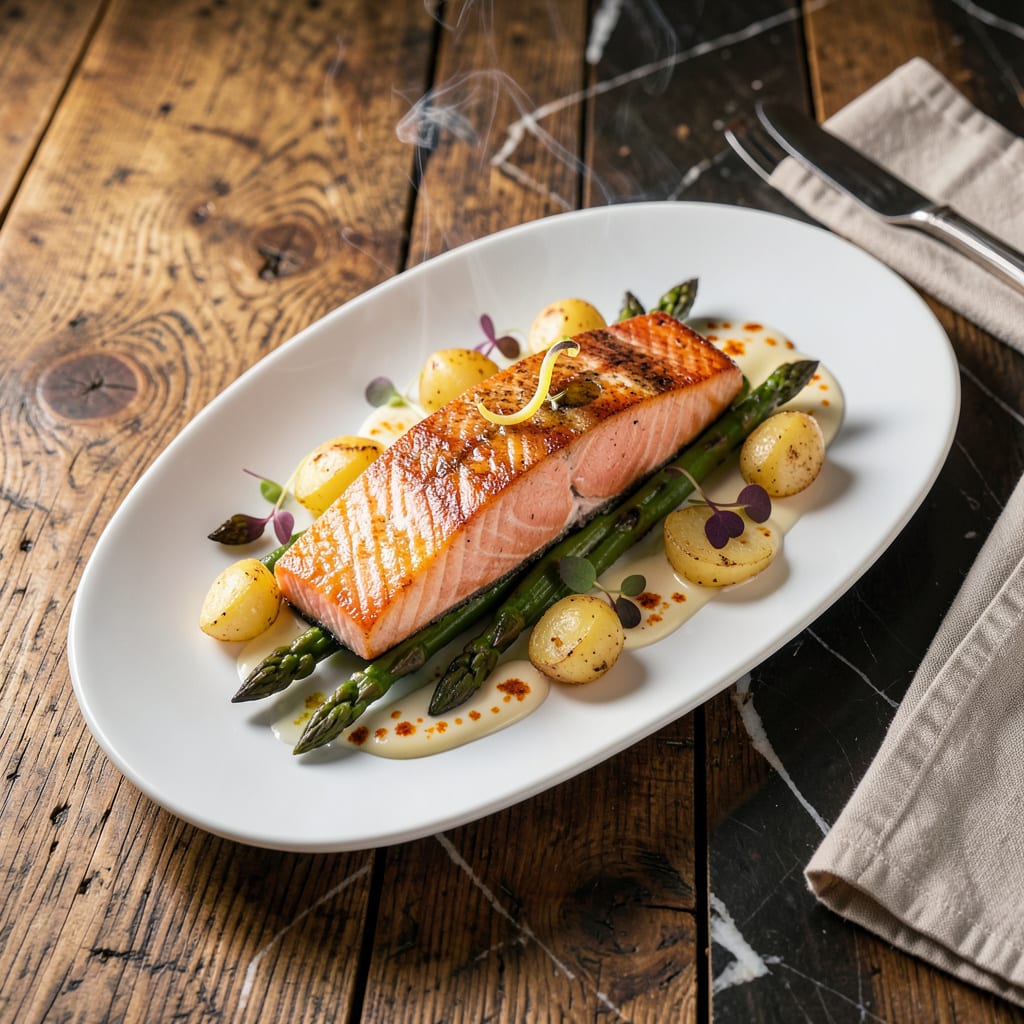
For perfect Norwegian salmon fillet, season with salt, pepper, and dill, then pan-sear skin-side down in butter and olive oil for 4-5 minutes per side. Finish with lemon juice for bright, tender results.
What elevates this method is the combination of high heat and fat, which creates that coveted crispy skin while keeping the interior moist. 🔥 I always recommend using a heavy-bottomed skillet—it distributes heat evenly and prevents hot spots that could burn the delicate flesh. The lemon at the end isn’t just for flavor; its acidity actually helps preserve the salmon’s vibrant color and cuts through the richness of the butter.
Norwegian salmon’s natural oil content makes it particularly forgiving for home cooks. ✨ Unlike leaner fish that dry out quickly, this variety maintains its succulence even if you overshoot the cooking time by a minute or two. That’s why I consider it the perfect gateway fish for anyone building confidence with seafood preparation.
💡 In This Article
- Why Norwegian Salmon Stands Out for Flavor and Texture
- Pro Tips for Cooking Norwegian Salmon Fillet Like a Chef
Why Norwegian Salmon Stands Out for Flavor and Texture
The secret begins in Norway’s icy fjords, where water temperatures hover between 34-46°F year-round. This cold environment forces salmon to develop higher fat reserves—typically 12-18%—compared to warmer-water varieties.
The fat isn’t just quantity; it’s quality too, with omega-3 levels measuring about 2.3 grams per 100g, nearly double what you’d find in Atlantic salmon from other regions. 🔥
What you taste is directly tied to what they eat. Farmed Norwegian salmon feast on a carefully balanced diet of fish oil, fish meal, and plant proteins that includes natural astaxanthin (the pigment that gives salmon its color).
Wild Norwegian salmon, meanwhile, dine on krill and small fish, which contributes to their more pronounced, almost nutty flavor profile. The fat distribution is also different—farmed salmon has fat marbled throughout, while wild has fat concentrated along the lateral line.
This fat composition creates what I call the “butter effect” when cooking. At 125°F internal temperature, those healthy fats begin to liquefy between the muscle fibers, giving the flesh that signature velvety texture. ✨ Compare this to Pacific salmon, which tends to be leaner and can dry out more easily.
The cold-water origin also means the muscle fibers are tighter, so when cooked properly, Norwegian salmon flakes into larger, more satisfying pieces rather than crumbling.
The texture difference becomes obvious when you press the raw fillet—Norwegian salmon should spring back slowly, like pressing into cold butter, while other varieties might feel firmer or softer. This elasticity comes from the protein structure developed in cold waters.
When seared, that same structure creates beautiful caramelization on the skin without the flesh drying out underneath.
Here’s a pro tip from my years working with seafood: The color tells you everything about quality. Premium Norwegian salmon should be a vibrant coral-orange, not pale pink. That deep color indicates higher astaxanthin levels, which means better flavor and more antioxidants.
🌟 When shopping, look for fillets with the Norwegian Seafood Council’s blue label—it’s your guarantee of authentic Norwegian origin and sustainable farming practices.
I’ve found that this fat content also makes Norwegian salmon incredibly forgiving for home cooks. The natural oils create a built-in moisture barrier during cooking, giving you about a 2-minute window past perfect doneness before the fish starts to dry out.
That’s why I recommend it to anyone just building confidence with seafood—the margin for error is beautifully wide.
The flavor differences become especially apparent when you compare preparation methods. Try this test: Poach equal portions of Norwegian and Pacific salmon in the same 160°F water bath. The Norwegian will maintain its shape and rich flavor, while the Pacific may taste more delicate but less substantial.
This makes Norwegian salmon the ideal choice for everything from raw applications (like gravlax) to high-heat searing without falling apart.

Trained in classic French technique but raised on slow-cooked ribs and spicy rubs, she blends culinary skill with smoke and soul.
- Recipe for Boneless Pork Chops in Cast Iron Skillet: Sear and Baste to Juicy Perfection - October 3, 2026
- Recipe for Boneless Cross Rib Roast: Slow-Roasted Beef with Herb Crust - October 3, 2026
- Hamburgers in Sauce Recipe Crock Pot: Slow-Cooked Savory Delight - October 3, 2026