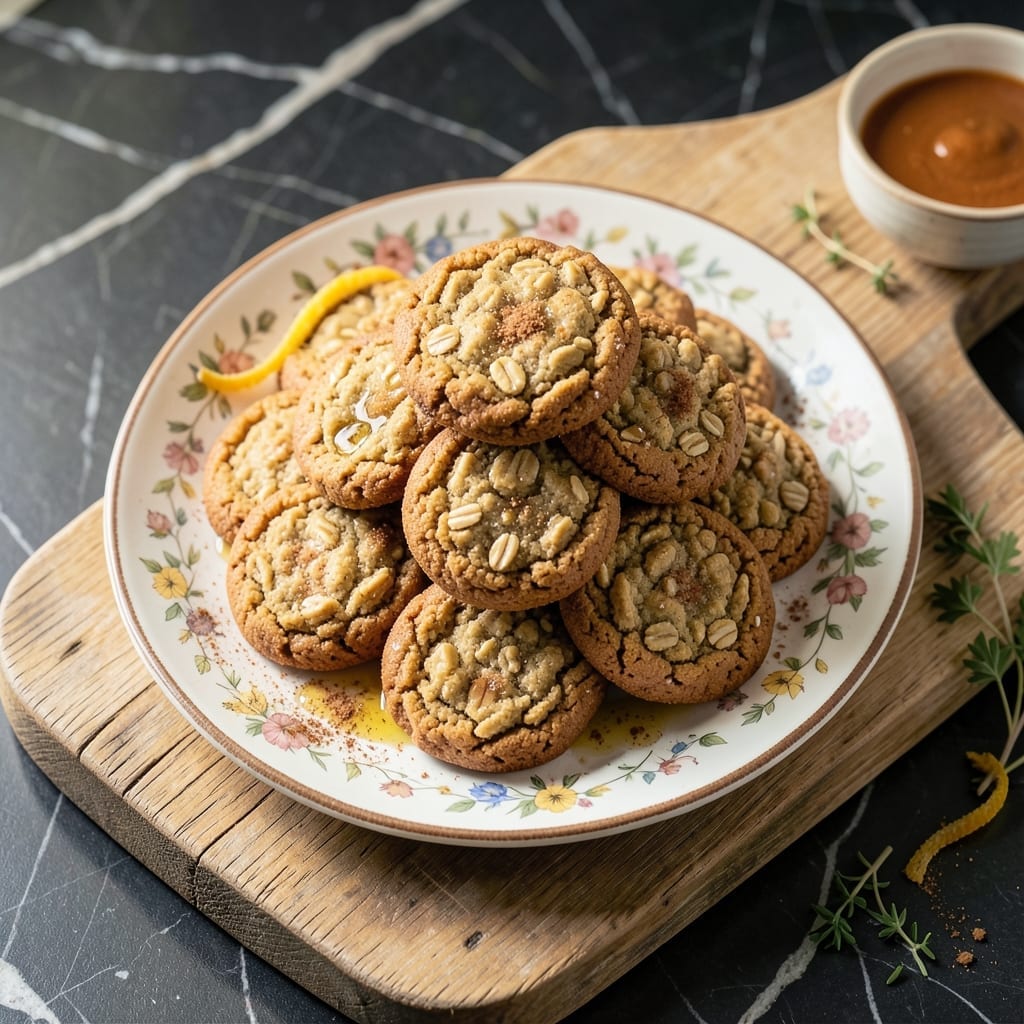
This oil-based oatmeal cookie delivers chewy edges and soft centers without a single stick of butter. The secret lies in using neutral oil to create tender texture while maintaining structure.
What emerges from the oven is a cookie that holds its shape, develops a golden crust, and offers that signature oatmeal chew. Simple ingredients, professional results every time.
Ingredients for Oatmeal Cookie Recipe No Butter
Simple, quality ingredients come together for perfect texture without butter.
| Ingredient | Amount | Notes |
|---|---|---|
| Old-Fashioned Rolled Oats 🌾 | 3 cups | Certified gluten-free if needed |
| All-Purpose Flour 🌾 | 1 ½ cups | Spoon and level measure |
| Neutral Vegetable Oil 🫒 | ¾ cup | Canola, grapeseed, or avocado |
| Granulated Sugar 🍚 | ¾ cup | White or light brown sugar |
| Packed Light Brown Sugar 🟤 | ¾ cup | Firmly packed for moisture |
| Large Eggs 🥚 | 2 whole | Room temperature preferred |
| Pure Vanilla Extract 🌿 | 2 tsp | Real vanilla, not imitation |
| Ground Cinnamon 🌿 | 1 tsp | Freshly ground for best flavor |
| Baking Soda 🧂 | 1 tsp | Ensures proper rise |
| Salt 🧂 | ½ tsp | Fine sea salt recommended |
| Chopped Walnuts 🌰 | ¾ cup | Toasted for enhanced flavor |
| Raisins 🍇 | ¾ cup | Plump in warm water if dry |
[recipe_ingredient_scaler]
The oats are critical here. Bob’s Red Mill old-fashioned rolled oats give the best chew—avoid instant or steel-cut. For the oil, neutral flavors like canola or avocado ensure the cookie’s taste shines through. Most supermarkets carry suitable options, but Whole Foods has a great selection of high-quality oils and organic oats if you prefer.
No oil on hand? Melted coconut oil works but may add a slight flavor. Short on raisins? Dried cranberries or chocolate chips make great swaps. If avoiding nuts, omit or use sunflower seeds. The brown sugar can be swapped for coconut sugar, though texture may vary slightly.
Store cookies in an airtight container at room temperature for up to 5 days, or freeze for 3 months. Baked cookies also freeze well—just thaw before serving. The dough can be refrigerated for 24 hours or frozen for later baking.
Why You’ll Love This Recipe
- No-Fuss Mixing: I just stir the oil, sugars, and dry ingredients together—no waiting for butter to soften or creaming step required.
- Caramelized Chew: The brown sugar and oil combo gives these cookies that deep, almost toffee-like richness with a perfect crisp edge.
- Weeknight Hero: Honestly, I’ve baked a batch between Zoom meetings—they’re ready start-to-finish in the time it takes to preheat the oven.
- Pantry Staples: Between us, I always have oats, flour, oil, and sugar on hand, so these cost pennies and save last-minute grocery runs.
Step-by-Step Instructions for Oatmeal Cookies No Butter
Here’s the method. Straightforward, tested, works every time.
Step 1: Combine Dry Ingredients
In a medium bowl, whisk together the 1.5 cups All-Purpose Flour, 1 tsp Baking Soda, 1 tsp Ground Cinnamon, and 0.5 tsp Salt until evenly distributed. This aerates the flour and ensures the leavening agent is properly dispersed for even rise.
I always sift or whisk dry ingredients first—this prevents pockets of baking soda that can leave a metallic taste. Set this bowl aside while you prepare the wet ingredients.
Step 2: Cream Oil and Sugars
In a large mixing bowl, combine the 0.75 cup Neutral Vegetable Oil, 0.75 cup Granulated Sugar, and 0.75 cup Packed Light Brown Sugar. Beat with an electric mixer on medium speed for 2-3 minutes until the mixture is light and fluffy, almost doubled in volume.
The oil replaces butter here, creating a tender crumb without sacrificing moisture. You’ll notice the texture is slightly different from butter-based doughs—smoother and more supple.
Step 3: Incorporate Wet Ingredients and Oats
Add the 2 whole Large Eggs and 2 tsp Pure Vanilla Extract to the oil-sugar mixture. Beat on medium speed for 30 seconds until fully emulsified. The mixture should look homogeneous with no visible oil separation.
Gradually add the dry ingredients, mixing on low speed just until combined. Fold in the 3 cups Old-Fashioned Rolled Oats, 0.75 cup Chopped Walnuts, and 0.75 cup Raisins with a wooden spoon, ensuring even distribution without overmixing.
This is where the magic happens—the oats absorb moisture from the dough, creating that signature chewy texture. The walnuts and raisins add bursts of flavor and texture contrast.
Step 4: Portion and Bake
Preheat your oven to 350°F and line two baking sheets with parchment paper. Using a cookie scoop or tablespoon, portion the dough into 1.5-inch balls and place them 2 inches apart on the prepared sheets.
Bake for 10-12 minutes or until the edges are golden brown but the centers still look slightly underdone. The cookies will continue to set as they cool on the baking sheet for 5 minutes before transferring to a wire rack.
Step 5: Cool and Store
Let the cookies cool completely on the wire rack. They’ll firm up as they cool but remain wonderfully chewy. Store in an airtight container at room temperature for up to 5 days.
For best results, I recommend underbaking by a minute or two—the residual heat finishes the cooking while keeping the centers soft. These cookies actually improve in texture after a day, as the oats continue to hydrate.
Pro Tips For Making Oatmeal Cookie Recipe No Butter
- Chill the Dough: I learned this the hard way—after baking flat, greasy cookies. Refrigerate the dough for at least 30 minutes so the oil solidifies slightly and the oats absorb moisture for thicker, chewier cookies.
- Press the Oats: Sounds weird, but it works: pulse the rolled oats in a food processor for 5 quick bursts. This breaks down some of the flakes for a better texture without turning them into flour.
- Watch the Edges: Vegetable oil burns faster than butter, so pull the cookies when the edges are just golden but the centers still look slightly underdone. They’ll finish cooking on the tray.
- Use Fresh Oil: After a batch turned out stale-tasting, I finally figured out old oil was the culprit. Always use fresh, neutral vegetable oil—anything past its prime will give your cookies an off flavor.
Storing and Reheating Leftovers
Room Temperature Storage
Once completely cooled, store your cookies in an airtight container with parchment between layers. They’ll keep fresh at room temperature for up to 5 days. I use glass containers with snap-tight lids to maintain optimal texture.
Freezing Baked Cookies
For longer storage, freeze baked cookies in a single layer on a tray first, then transfer to a freezer bag. They’ll last up to 3 months. When ready to eat, thaw at room temperature for 30 minutes or warm briefly in the oven. ❄️
Dough Storage
Unbaked dough can be refrigerated for 24 hours or frozen in scooped portions for up to 3 months. Thaw overnight in the fridge before baking. I love having pre-portioned dough ready for fresh cookies anytime.
Reviving Stale Cookies
If cookies lose their softness, place them on a baking sheet, tent with foil, and warm at 300°F for 5-8 minutes. Add a slice of bread to the storage container to help retain moisture longer.
Reheating for Warm Cookies
For that just-baked experience, warm cookies at 350°F for 3-5 minutes. This restores their gooey centers and crisp edges. I often do this for breakfast with a glass of milk. 💛
Nutrition Facts
Frequently Asked Questions
What can I use instead of butter?
Neutral oils like canola or avocado work perfectly. For a different flavor, try melted coconut oil or applesauce for a lighter texture. Each alternative adds its own unique touch to the cookies.
How do I make them extra chewy?
Underbake slightly—pull them out when edges are golden brown but centers look soft. Let them cool on the baking sheet for 5 minutes to set. Using brown sugar also enhances chewiness.
Can I make them without eggs?
Yes! Replace eggs with flax eggs (1 tbsp ground flax + 3 tbsp water per egg) or 1/4 cup applesauce. The texture will be slightly different but still delicious.
Why are my cookies flat?
Flat cookies often mean too much oil or not enough flour. Measure ingredients precisely, and chill dough for 30 minutes before baking to help maintain shape.

Trained in classic French technique but raised on slow-cooked ribs and spicy rubs, she blends culinary skill with smoke and soul.
- Recipe for Boneless Pork Chops in Cast Iron Skillet: Sear and Baste to Juicy Perfection - October 3, 2026
- Recipe for Boneless Cross Rib Roast: Slow-Roasted Beef with Herb Crust - October 3, 2026
- Hamburgers in Sauce Recipe Crock Pot: Slow-Cooked Savory Delight - October 3, 2026