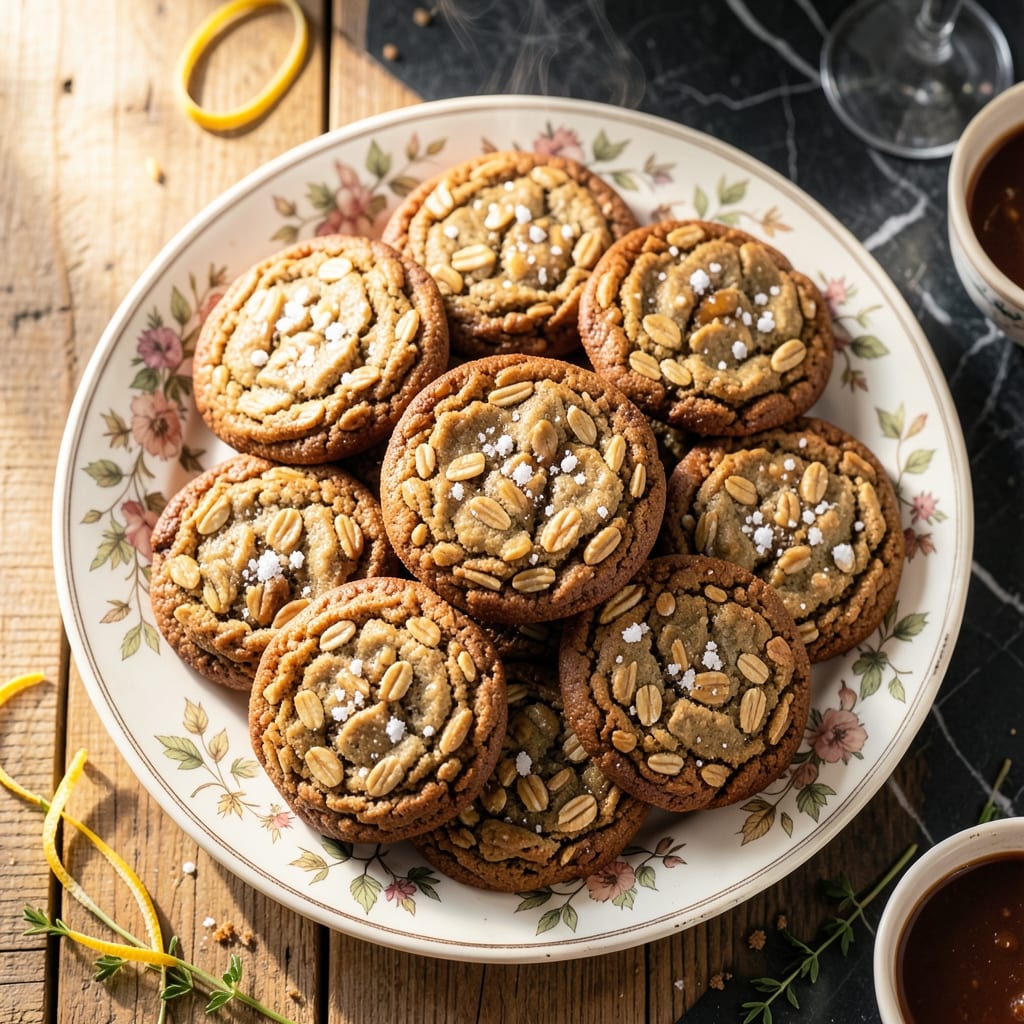
Butter-free baking doesn’t mean sacrificing texture or flavor. This oatmeal cookie recipe proves you can achieve chewy edges and soft centers using a simple coconut oil swap.
I developed this version to deliver classic oatmeal cookie satisfaction without dairy. The coconut oil creates a tender crumb while maintaining that signature golden-brown finish we all love.
The result is a cookie that holds its shape, stays moist for days, and delivers that nostalgic oatmeal flavor with every bite. No one will guess it’s missing a traditional ingredient.
Perfect for those with dietary restrictions or anyone looking to try a new approach to a beloved classic.
Ingredients for Oatmeal Cookie Recipe Without Butter
Pantry staples plus a coconut oil swap make these chewy, golden oatmeal cookies possible.
| Ingredient | Amount | Notes |
|---|---|---|
| Old-Fashioned Rolled Oats 🌾 | 3 cups | Not instant or quick oats |
| All-Purpose Flour 🥣 | 1 ½ cups | Spooned and leveled |
| Refined Coconut Oil 🥥 | ¾ cup | Melted and cooled slightly |
| Light Brown Sugar 🍚 | 1 cup | Packed firmly into cup |
| Granulated White Sugar 🍚 | ½ cup | Fine grain preferred |
| Large Eggs 🥚 | 2 whole | Room temperature preferred |
| Pure Vanilla Extract 🌿 | 2 tsp | Not imitation vanilla |
| Ground Cinnamon 🌿 | 1 tsp | Freshly ground if possible |
| Baking Soda 🧂 | 1 tsp | Ensures proper rise |
| Salt 🧂 | ½ tsp | Fine sea salt recommended |
| Raisins 🍇 | 1 cup | Optional, can substitute chocolate chips |
| Chopped Walnuts 🌰 | ¾ cup | Toasted for extra flavor |
[recipe_ingredient_scaler]
The coconut oil is key here—refined for neutral flavor, unrefined if you want that subtle coconut note. I grab mine from Trader Joe’s (great price) or Whole Foods for organic. The oats need to be old-fashioned rolled, not quick or steel-cut (they won’t give you that perfect texture). Bob’s Red Mill is my go-to brand for consistency. Make sure your baking soda isn’t expired—old leaveners are a silent cookie killer.
No refined coconut oil? Vegetable oil or melted vegan butter works in a pinch (but texture changes slightly). Out of brown sugar? All granulated plus 1 tbsp molasses gets you close. Raisin haters can swap in dried cranberries or chocolate chips. For gluten-free, 1:1 GF flour blend does the trick—just add 1/4 tsp xanthan gum if your blend doesn’t have it.
Dough keeps in the fridge for 3 days (flavor deepens!) or freezes for 3 months. Baked cookies stay soft for 5 days in an airtight container. I always double the batch—half for now, half for the freezer (worth the extra minute).
Why You’ll Love This Recipe
- One Bowl Wonder: I just dump everything in, mix, and bake—no creaming butter or chilling dough.
- Coconut Caramel Magic: Refined coconut oil plus brown sugar gives that deep, buttery caramel note without dairy.
- Lunchbox MVP: These stay soft for days, so I bake a double batch for school snacks all week.
- Pantry Hero: Old-fashioned oats, basic flour, and oil I always have mean I can make these anytime.
Step-by-Step Instructions for Oatmeal Cookies Without Butter
Here’s the method I use to get perfectly chewy cookies with crisp edges every time.
Step 1: Cream Coconut Oil and Sugars
In a large bowl, beat the 0.75 cup refined coconut oil with the 1 cup light brown sugar and 0.5 cup granulated white sugar until light and fluffy. I use an electric mixer on medium speed for about 3-4 minutes—this step is crucial for aerating the dough.
You’ll notice the mixture transforms from grainy to smooth. The coconut oil should be melted and cooled slightly before starting, but not solid. This creates the base for chewy texture without any butter.
Step 2: Incorporate Wet Ingredients and Vanilla
Add the 2 whole large eggs one at a time, mixing well after each addition. Then stir in the 2 tsp pure vanilla extract. I always use room temperature eggs here—they emulsify better with the coconut oil.
The mixture should look slightly pale and creamy. If it appears separated, keep mixing for another 30 seconds until fully combined. The vanilla adds depth that complements the coconut oil beautifully.
Step 3: Combine Dry Ingredients and Oats
In a separate bowl, whisk together the 1.5 cups all-purpose flour, 1 tsp ground cinnamon, 1 tsp baking soda, and 0.5 tsp salt. Gradually add this to the wet mixture, mixing just until the flour disappears—overmixing makes cookies tough.
Then fold in the 3 cups old-fashioned rolled oats by hand using a wooden spoon. The dough will be thick and slightly sticky. The oats give these cookies their signature texture and hearty bite.
Step 4: Fold in Raisins and Walnuts
Gently stir in the 1 cup raisins and 0.75 cup chopped walnuts until evenly distributed. I like to toast the walnuts first for extra flavor, but it’s optional. The raisins should be plump—if yours are dry, soak them in warm water for 10 minutes then drain before adding.
This is your last chance to taste the dough (if you’re brave enough to eat raw eggs). The dough should be sweet with visible flecks of cinnamon and a slight coconut aroma.
Step 5: Bake to Golden Perfection
Preheat your oven to 350°F and line baking sheets with parchment paper. Drop rounded tablespoons of dough 2 inches apart—they’ll spread. Bake for 10-12 minutes until the edges are golden brown but the centers still look slightly soft.
Let the cookies cool on the baking sheet for 5 minutes before transferring to a wire rack. They’ll continue to set as they cool, developing that perfect chewy texture with crisp edges. The coconut oil gives them a subtle richness that’s distinctly different from butter-based cookies.
Pro Tips For Making Oatmeal Cookie Recipe Without Butter
- Chill the Dough: After mixing, refrigerate the dough for 30 minutes—I learned this the hard way when my first batch spread into thin, crispy puddles.
- Use Room-Temp Oil: Make sure your refined coconut oil is softened but not melted, about 70°F, so it creams properly with the sugars.
- Measure Oats Right: Scoop the rolled oats into the measuring cup, then level it off—packing them down can make your cookies dense and dry.
- Rotate the Trays: Halfway through baking, switch the trays top to bottom and front to back for even browning, especially with coconut oil’s lower smoke point.
Pro Cooking Tips for Great oatmeal cookie recipe without butter
Coconut Oil Temperature
Use refined coconut oil melted and cooled to room temperature—about 70°F. Too hot and it’ll cook the eggs; too cold and it’ll solidify. I test it by dipping my finger in—it should feel warm but not hot. This ensures proper emulsification with your sugars. 🌡️
Creaming Technique
Beat the coconut oil and sugars for a full 3-4 minutes on medium speed. This aerates the mixture, creating tiny air pockets that expand during baking for that perfect chewy texture. The mixture should turn pale and fluffy, not grainy.
Oat Selection Matters
Old-fashioned rolled oats are non-negotiable here. They absorb moisture differently than quick oats, giving you that signature texture. I always use Bob’s Red Mill for consistency. Fold them in by hand to avoid overmixing the dough.
Baking Sheet Prep
Line your sheets with parchment paper, not silicone mats. Parchment allows the bottoms to crisp slightly while the centers stay soft. Space dough 2 inches apart—they’ll spread more than butter-based cookies. I rotate my pans halfway through baking for even browning.
Cool Properly
Let cookies rest on the baking sheet for 5 minutes before transferring. This critical step lets them set without crumbling. The coconut oil makes them more delicate when hot. I slide the parchment onto the rack to cool completely. 💡
Storage Tip
Store in an airtight container with a slice of bread to maintain moisture. They’ll stay soft for 5 days. For longer storage, freeze the dough balls and bake straight from frozen—add 2 minutes to bake time.
Nutrition Facts
Frequently Asked Questions
Can I use unrefined coconut oil instead of refined?
Yes, but it will add a mild coconut flavor. For neutral taste, stick with refined coconut oil.
Why do my cookies spread too much?
Coconut oil melts faster than butter. Chill the dough for 30 minutes before baking to prevent excessive spreading.
How do I make them gluten-free?
Swap the flour for a 1:1 gluten-free blend. Add 1/4 tsp xanthan gum if your blend doesn’t include it.
Can I skip the eggs?
Use flax eggs (1 tbsp ground flax + 3 tbsp water per egg). Let sit for 5 minutes before using.

Trained in classic French technique but raised on slow-cooked ribs and spicy rubs, she blends culinary skill with smoke and soul.
- Recipe for Boneless Pork Chops in Cast Iron Skillet: Sear and Baste to Juicy Perfection - October 3, 2026
- Recipe for Boneless Cross Rib Roast: Slow-Roasted Beef with Herb Crust - October 3, 2026
- Hamburgers in Sauce Recipe Crock Pot: Slow-Cooked Savory Delight - October 3, 2026