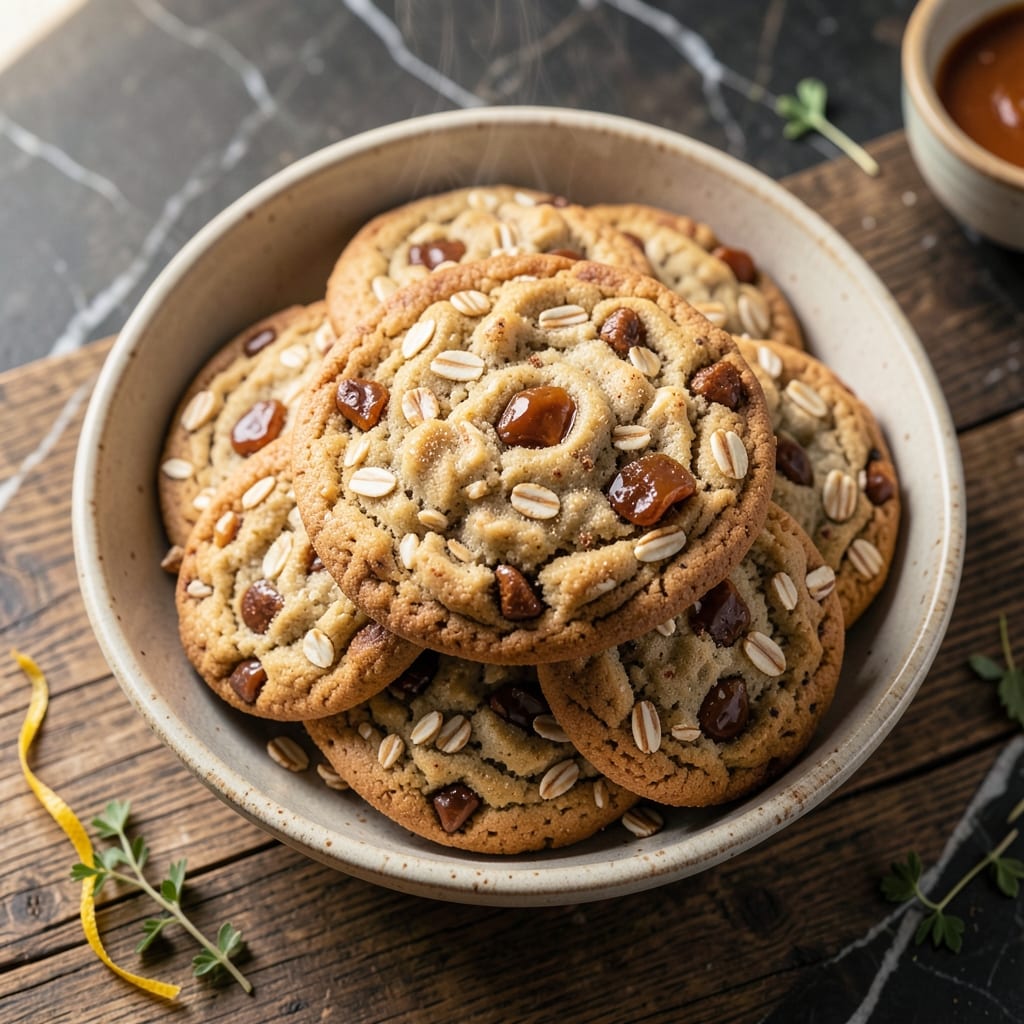
I developed this recipe to deliver bakery-style results with minimal effort, using the classic Nestlé formula as inspiration. The butterscotch chips create pockets of sweet, buttery flavor in every bite.
What makes this version stand out is the balance of textures—chewy oats, crisp edges, and soft centers. The dough comes together in 10 minutes, making it perfect for busy mornings or last-minute cravings.
The butterscotch chips melt into gooey pockets while the oats provide satisfying chew. This recipe delivers fast, reliable results every time, with no special equipment required.
Serve warm for the best experience, when the chips are at their most luscious. These disappear fast from any breakfast table.
Ingredients for Oatmeal Scotchies Recipe Nestle
Ten simple ingredients create bakery-style oatmeal cookies with melty butterscotch pockets.
| Ingredient | Amount | Notes |
|---|---|---|
| Old-Fashioned Rolled Oats 🌾 | 2 cups | Not instant or quick oats |
| All-Purpose Flour 🌾 | 1 ¼ cups | Spooned and leveled |
| Baking Soda 🧂 | 1 tsp | Ensures proper rise |
| Ground Cinnamon 🌿 | 1 tsp | Freshly ground preferred |
| Salt 🧂 | ½ tsp | Fine sea salt recommended |
| Unsalted Butter 🧈 | 1 cup | Softened to room temperature |
| Granulated Sugar 🍚 | ¾ cup | Fine white sugar |
| Packed Brown Sugar 🟤 | ¾ cup | Light or dark variety |
| Large Eggs 🥚 | 2 whole | Room temperature for even mixing |
| Vanilla Extract 💧 | 2 tsp | Pure vanilla preferred |
| Butterscotch Chips 🍫 | 1 ½ cups | Nestlé brand recommended |
[recipe_ingredient_scaler]
The butterscotch chips are non-negotiable here—Nestlé delivers the classic flavor and melt. Old-fashioned oats provide the right texture; instant or quick oats will make them mushy. King Arthur or Gold Medal flour are reliable choices. For butter, Land O’Lakes or Kerrygold give consistent results. Always check your baking soda’s freshness; a quick test in vinegar will confirm its potency.
No butterscotch chips? White chocolate chips with a pinch of brown sugar and butter extract can mimic the flavor. For a chewier cookie, swap half the flour for bread flour. Brown sugar can be increased to 1 cup for deeper caramel notes. If avoiding eggs, flax eggs work but may slightly alter texture. The vanilla extract should be pure—imitation lacks depth.
Store dough covered in the fridge for up to 3 days, or freeze for 3 months. Baked cookies keep in an airtight container for 1 week. For best results, warm briefly before serving to soften the chips. (worth the extra minute)
Why You’ll Love This Recipe
- One Bowl Wonder: I mix everything in a single bowl—no fancy equipment, just a spoon and five minutes of effort.
- Butterscotch Bliss: The cinnamon-spiced oats pair with melty butterscotch chips for that warm, caramel-like flavor in every bite.
- Lunchbox Hero: These stay soft for days, so I pack them for school snacks or my afternoon coffee break.
- Pantry MVP: All the ingredients are shelf-stable staples I already keep on hand, so I can bake a batch anytime.
Step-by-Step Instructions for Oatmeal Scotchies
This method ensures perfect texture and even chip distribution with minimal effort.
Step 1: Cream Butter and Sugars for Optimal Texture
In a stand mixer fitted with the paddle attachment, beat the 1 cup Unsalted Butter with the 0.75 cup Granulated Sugar and 0.75 cup Packed Brown Sugar on medium speed for 3-4 minutes. The mixture should become light and fluffy, nearly doubling in volume.
This creaming process incorporates air, creating a tender crumb. The butter must be properly softened—it should dent when pressed but not be greasy. Under-creaming results in dense cookies, so don’t rush this step.
Step 2: Incorporate Eggs and Vanilla for Richness
Add the 2 whole Large Eggs, one at a time, mixing on low speed for 30 seconds after each addition until fully incorporated. Then add the 2 tsp Vanilla Extract and mix for another 10 seconds.
The mixture may appear slightly curdled after adding the eggs, but this is normal. Using room temperature eggs ensures even distribution throughout the dough, preventing pockets of raw egg.
Step 3: Combine Dry Ingredients and Form the Dough
In a separate bowl, whisk together the 1.25 cups All-Purpose Flour, 1 tsp Baking Soda, 1 tsp Ground Cinnamon, and 0.5 tsp Salt. Add this to the wet ingredients and mix on low speed for 30-45 seconds until just combined—you should still see a few flour streaks.
Remove the bowl from the mixer and fold in the 2 cups Old-Fashioned Rolled Oats and 1.5 cups Butterscotch Chips by hand using a silicone spatula. Over-mixing develops gluten, which makes cookies tough, so stop as soon as everything is incorporated.
Step 4: Scoop and Bake to Golden Perfection
Preheat your oven to 375°F and line two baking sheets with parchment paper. Scoop the dough into 2-tablespoon portions (I use a cookie scoop for uniform size) and place them 2 inches apart on the prepared sheets.
Bake for 10-12 minutes until the edges are golden brown but the centers still look slightly underdone. They’ll continue cooking on the hot pan after you remove them from the oven. Let them cool on the baking sheet for 5 minutes before transferring to a wire rack to cool completely.
Pro Tips For Making Oatmeal Scotchies Recipe Nestle
- Chill the Dough: After mixing, refrigerate the dough for 30 minutes—I learned this the hard way when my first batch spread into one giant cookie.
- Use Room-Temp Butter: Make sure your butter is soft but not melted (about 65°F), or the scotchies will sink to the bottom and the texture will be off.
- Don’t Overbake: Pull the cookies when the edges are just golden but the centers still look slightly underdone; they’ll finish setting as they cool.
- Toast the Oats: Spread the rolled oats on a baking sheet and toast at 350°F for 8-10 minutes before mixing—sounds weird, but it adds a nutty depth that raw oats just can’t.
Essential Equipment for oatmeal scotchies recipe nestle
Stand Mixer Necessity
While you can mix by hand, a stand mixer with paddle attachment is ideal for creaming butter and sugars to the perfect light and fluffy consistency. I use my KitchenAid Artisan for every batch—it handles the thick dough without strain.
Cookie Scoop Perfection
A 2-tablespoon cookie scoop ensures uniform portions and even baking. I recommend the OXO Good Grips model—its trigger mechanism makes quick work of sticky dough. Uniform size means every cookie bakes at the same rate.
Baking Sheets Matter
Heavy-duty half-sheet pans prevent burning and promote even browning. Nordic Ware or USA Pan are my go-to brands. Always use parchment paper or silicone mats to prevent sticking and make cleanup a breeze. 💡
Cooling Rack Essential
Transferring cookies to a wire rack after their initial 5-minute rest prevents soggy bottoms. A 3-tier cooling rack saves counter space when making multiple batches. This small step makes a big difference in texture.
Measuring Tools
Accurate measurements are key—use dry measuring cups for flour and oats, and liquid measures for vanilla. I keep a set of stainless steel cups from Cuisinox in my drawer. Spoon and level your flour to avoid dense cookies.
Oven Thermometer
Oven temperatures can be inaccurate. A $5 oven thermometer from Taylor ensures your 375°F is spot-on. This simple tool prevents under- or over-baked cookies and gives consistent results every time. 🔥
Nutrition Facts
Frequently Asked Questions
Can I use quick oats instead of old-fashioned?
Quick oats will work but create a slightly less chewy texture. For best results, stick with old-fashioned rolled oats as they hold their shape better during baking.
How do I store leftover cookies?
Keep in an airtight container at room temperature for up to 1 week. For longer storage, freeze in a single layer first, then transfer to a freezer bag for up to 3 months.
Why are my cookies spreading too much?
This usually means the butter was too soft or the dough wasn’t chilled. Try refrigerating the dough for 30 minutes before baking. Also ensure your oven is preheated to 375°F.
Can I make these gluten-free?
Yes! Substitute the flour with a 1:1 gluten-free baking flour. Ensure your oats are certified gluten-free as well. The texture may vary slightly but will still be delicious.

Trained in classic French technique but raised on slow-cooked ribs and spicy rubs, she blends culinary skill with smoke and soul.
- Recipe for Boneless Pork Chops in Cast Iron Skillet: Sear and Baste to Juicy Perfection - October 3, 2026
- Recipe for Boneless Cross Rib Roast: Slow-Roasted Beef with Herb Crust - October 3, 2026
- Hamburgers in Sauce Recipe Crock Pot: Slow-Cooked Savory Delight - October 3, 2026