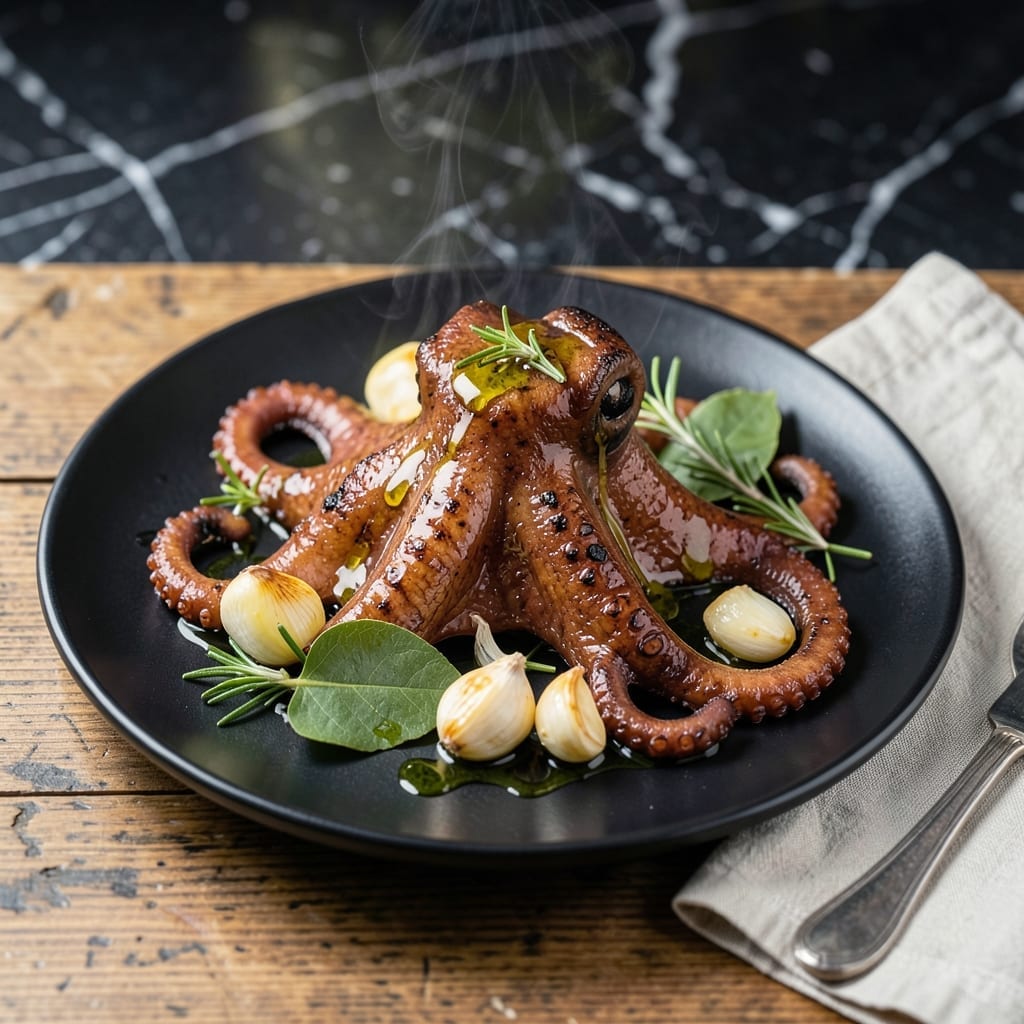
Achieving tender octopus head requires precision and patience, but the results are worth every minute. This Mediterranean-inspired preparation transforms a challenging protein into a delicate, flavorful dish.
The secret lies in the two-step cooking process: a gentle simmer followed by a quick sear. This ensures the meat becomes supple while developing a rich, complex character that defines great seafood cookery.
I’ve refined this method through years of professional experience, balancing traditional techniques with modern precision. The octopus emerges fork-tender with a subtle smokiness from the finishing char.
Serve it as a centerpiece with lemon, olive oil, and fresh herbs to highlight its natural elegance. This is a dish that commands attention.
Ingredients for Octopus Head
Precision ingredients for a Mediterranean masterpiece that transforms a challenging protein into delicate perfection.
| Ingredient | Amount | Notes |
|---|---|---|
| Octopus Head 🐙 | 2 lb | Fresh or thawed, cleaned |
| Extra-Virgin Olive Oil 🫒 | ½ cup | High-quality, fruity finish |
| Lemon 🍋 | 2 whole | Zested and juiced |
| Garlic Cloves 🧄 | 6 cloves | Smashed, peeled |
| Bay Leaves 🍃 | 2 whole | Dried, for simmering |
| Fresh Rosemary Sprigs 🌿 | 2 whole | For aromatic infusion |
| Red Wine Vinegar 💧 | 2 tbsp | Balances richness |
| Kosher Salt 🧂 | 2 tbsp | Diamond Crystal preferred |
| Freshly Ground Black Pepper 🌶️ | 1 tsp | Coarse grind |
| Fresh Flat-Leaf Parsley 🌿 | ½ cup | Chopped, for garnish |
| Dried Oregano 🌿 | 1 tsp | Mediterranean variety |
| Crushed Red Pepper Flakes 🌶️ | ½ tsp | Adjust to heat preference |
| White Wine 🍷 | 1 cup | Dry variety, for braising |
| Water 💧 | 4 cups | For initial simmer |
[recipe_ingredient_scaler]
The octopus is non-negotiable—fresh from a reputable seafood market is ideal, but frozen works if properly thawed. Look for vibrant color and firm texture. For olive oil, California Olive Ranch or Colavita deliver the fruity finish this dish demands. Fresh herbs are essential; whole sprigs of rosemary and bay leaves infuse the simmering liquid with authentic Mediterranean aroma.
No white wine? Dry vermouth is an acceptable substitute, or use additional water with a splash of lemon juice. Fresh oregano can replace dried at three times the amount. If flat-leaf parsley is unavailable, cilantro works in a pinch, though the flavor profile will shift. The red wine vinegar balances the dish’s richness—apple cider vinegar offers a milder alternative.
Store fresh octopus in the coldest part of your refrigerator for up to 24 hours before cooking. Leftovers keep for 3 days refrigerated, though the texture is best enjoyed immediately. The olive oil and vinegar can be stored at room temperature, while fresh herbs should be wrapped in damp paper towels and refrigerated.
Why You’ll Love This Recipe
- One Pot Wonder: I just toss the octopus head in with olive oil, garlic, and bay leaves—minimal prep, maximum flavor.
- Garlicky Citrus Kick: The lemon and garlic combination gives it this bright, bold taste that’s ridiculously good.
- Weeknight Hero: Honestly, it’s my go-to for a quick but impressive dinner, even on a busy Tuesday.
- Budget-Friendly Feast: A single octopus head stretches far, and the ingredients are simple pantry staples I always have.
Step-by-Step Instructions for Mediterranean-Style Octopus
This method ensures perfectly tender results through careful timing and technique.
Step 1: Tenderize the Octopus Through Simmering
In a large pot with a tight-fitting lid, combine the 4 cups Water, 2 whole Bay Leaves, 6 cloves Garlic Cloves, 2 whole Fresh Rosemary Sprigs, 2 tbsp Kosher Salt, and 0.5 tsp Crushed Red Pepper Flakes. Bring to a rolling boil over high heat.
Add the 2 lb Octopus Head and immediately reduce heat to maintain a gentle simmer. Cover and cook for 45-60 minutes until the thickest part of the tentacles can be pierced easily with a knife. This slow simmer is crucial for breaking down the tough muscle fibers.
Step 2: Infuse with Mediterranean Flavors
Once tender, drain the octopus, reserving 1 cup of the cooking liquid. In a clean pot, heat 0.5 cup Extra-Virgin Olive Oil over medium heat. Add the octopus and sauté for 2-3 minutes to develop color.
Pour in the 1 cup White Wine and reserved cooking liquid. Add 1 tsp Dried Oregano and 1 tsp Freshly Ground Black Pepper. Simmer uncovered for 10-12 minutes until the liquid reduces by half and the flavors meld.
Step 3: Finish with Bright Acidic Notes
Remove from heat and stir in the 2 tbsp Red Wine Vinegar and juice from 2 whole Lemon. The acidity balances the richness and enhances the Mediterranean character.
Transfer the octopus to a serving platter, drizzle with the reduced braising liquid, and garnish with 0.5 cup Fresh Flat-Leaf Parsley. The parsley adds fresh color and herbal brightness that complements the dish perfectly.
Step 4: Rest and Serve
Let the octopus rest for 5-10 minutes before serving. This allows the flavors to settle and the meat to reabsorb some of the cooking liquids, ensuring maximum tenderness.
Serve warm with crusty bread to soak up the flavorful sauce. The octopus should be fork-tender with a slight resistance at the center, and the sauce should have a balanced acidity from the lemon and vinegar.
Pro Tips For Making Octopus Head
- Tenderize First: Pound the octopus head gently with a mallet or rolling pin before cooking—this breaks down the tough fibers and guarantees a more tender result.
- Use Fresh Bay: Skip the dried bay leaves; fresh ones infuse the oil with a brighter, more aromatic flavor that actually changes the outcome.
- Low and Slow: I learned this the hard way—cook the octopus head on low heat for at least 45 minutes to avoid rubbery texture.
- Acid at the End: Add the lemon juice only in the last 5 minutes of cooking to preserve its freshness and prevent the octopus from toughening up.
Pro Cooking Tips for This Dish
Freeze for Tenderness
Here’s my pro trick: freeze the octopus for 24 hours before cooking. The ice crystals break down muscle fibers, ensuring a more tender result. I learned this from old-school Mediterranean fishermen who swore by it. 💪
Simmer with Aromatics
Don’t skimp on the simmering liquid. Use 4 cups water with 2 bay leaves, 6 garlic cloves, and 2 rosemary sprigs for maximum flavor infusion. The octopus absorbs these aromatics like a sponge, transforming from rubbery to succulent.
Low and Slow Heat
Maintain a gentle simmer—never a rolling boil. I keep my burner at medium-low heat and adjust as needed. If the water boils too hard, the octopus toughens. Patience is key; 45-60 minutes is the sweet spot for perfect texture.
Char for Depth
After simmering, sear the octopus in a hot pan with 0.5 cup olive oil for 2-3 minutes. This adds a smoky depth that elevates the dish. I use my cast-iron skillet for this step—it retains heat beautifully. 🔥
Acid Balance
Finish with 2 tbsp red wine vinegar and lemon juice to cut through the richness. The acidity brightens the flavors and balances the dish. I always taste and adjust—sometimes an extra squeeze of lemon is needed.
Rest Before Serving
Let the octopus rest for 5-10 minutes after cooking. This allows the juices to redistribute, ensuring every bite is moist and flavorful. Serve with crusty bread to soak up the delicious sauce.
Nutrition Facts
Frequently Asked Questions
How do I know when it’s fully cooked?
Test with a knife—the thickest part of the tentacles should pierce easily after 45-60 minutes of simmering. The meat will turn opaque and feel tender, not rubbery.
Can I use frozen instead of fresh?
Thaw it completely in the fridge for 24 hours first. Frozen octopus often benefits from freezing, as it helps break down tough fibers for a more tender result.
Why does the recipe call for a two-step process?
The simmer tenderizes the meat, while the sear adds smoky depth. Skipping either step risks a rubbery texture or bland flavor. This method guarantees perfect results.
What if my octopus turns out tough?
It likely didn’t simmer long enough. Return it to the pot with more liquid and cook for an additional 15-20 minutes at a gentle simmer. Patience is key!

Trained in classic French technique but raised on slow-cooked ribs and spicy rubs, she blends culinary skill with smoke and soul.
- Recipe for Boneless Pork Chops in Cast Iron Skillet: Sear and Baste to Juicy Perfection - October 3, 2026
- Recipe for Boneless Cross Rib Roast: Slow-Roasted Beef with Herb Crust - October 3, 2026
- Hamburgers in Sauce Recipe Crock Pot: Slow-Cooked Savory Delight - October 3, 2026