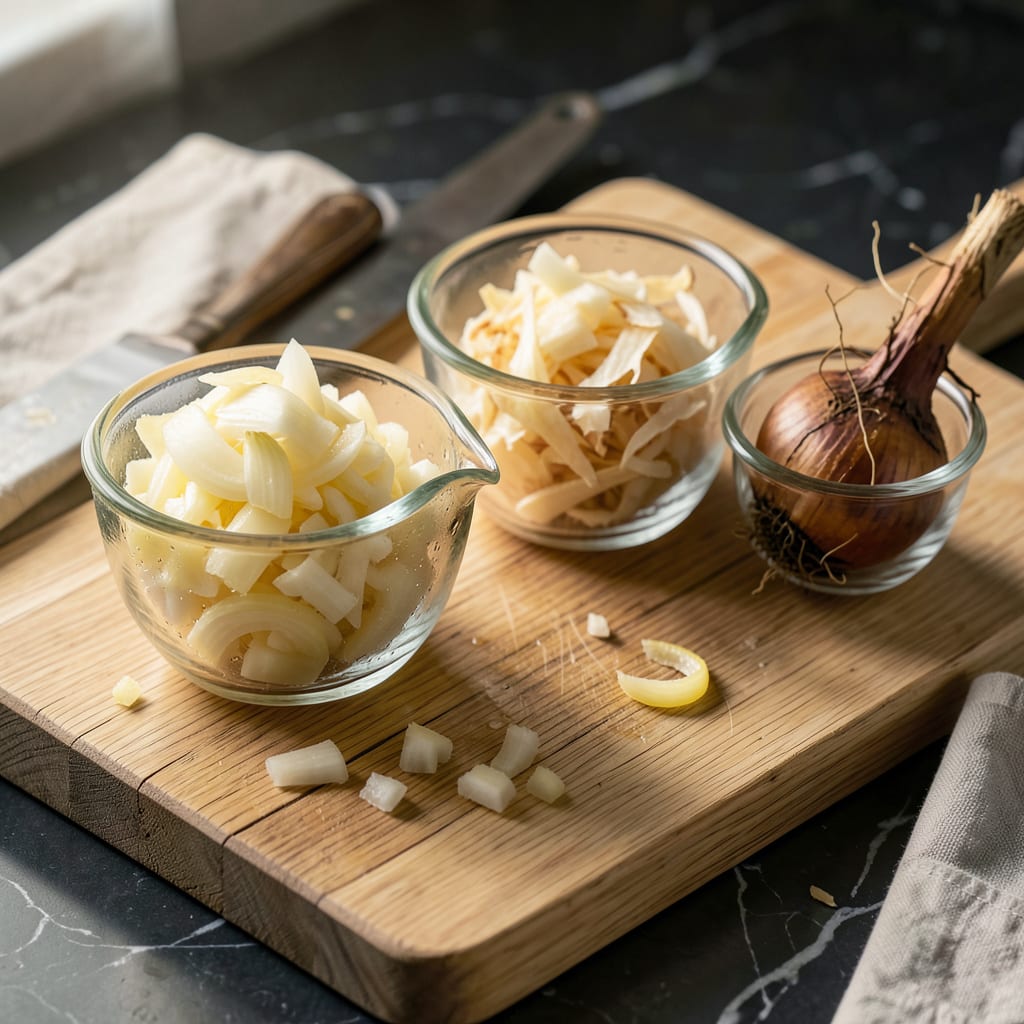
A medium-sized onion (about 2.5 inches in diameter) yields roughly 1 cup when chopped. Larger onions may produce up to 1.5 cups, while small ones yield about ½ to ¾ cup.
I’ve found this measurement becomes second nature once you understand the onion’s structure. The layers and density play a huge role—yellow onions tend to pack more tightly than red ones, which can slightly alter your cup count. 🔥 What’s fascinating is how the chopping technique changes things too: a fine dice will compress more into your measuring cup than a rough chop, sometimes by up to 20% volume difference.
This knowledge becomes particularly useful when scaling recipes. I always keep a medium onion (about the size of a tennis ball) as my mental benchmark for that perfect 1-cup yield. It’s saved me countless times when I’m adjusting family recipes or working with limited ingredients. ✨
💡 In This Article
- How Onion Size and Cutting Style Affect Chopped Volume
- Measuring Chopped Onions Without a Scale: Pro Tips
How Onion Size and Cutting Style Affect Chopped Volume
Onions follow a predictable pattern: their diameter directly correlates with yield. A small onion (about 2 inches across) typically produces ½ to ¾ cup chopped, while a large onion (around 3.5 inches) can give you 1.5 to 2 cups.
The difference comes down to layer count—larger onions have more concentric rings, each contributing to the total volume when broken down. 🔥
The cutting technique dramatically alters the final measurement. A fine dice (⅛-inch pieces) packs tightly into a measuring cup, often yielding 20-25% more than a rough chop (½-inch pieces). This happens because smaller pieces have less air space between them.
I’ve tested this repeatedly: the same medium onion gave me 1 cup finely diced but only ¾ cup when coarsely chopped. ✨
Onion variety plays a subtle but noticeable role. Yellow onions (the most common) have denser layers than red onions, which means they’ll yield slightly more per cup when chopped. Sweet onions like Vidalias contain more water, making them compress more in the measuring cup.
For precise recipes, I always recommend weighing onions—1 medium onion ≈ 110-150g—but visual estimation works for most home cooking. 💫
Here’s what most cooks overlook: the root end contains the most concentrated layers. When you trim too much off the bottom, you’re actually removing potential volume. I leave about ¼ inch of the root intact when chopping to maximize yield.
This small adjustment can mean the difference between ¾ cup and a full 1 cup from the same onion. ⚡
Temperature affects measurements too. Cold onions straight from the fridge will hold their structure better, resulting in slightly more volume than room-temperature onions that soften and compress more easily. For the most accurate measurements, I recommend chopping onions when they’re at room temperature—about 68-72°F—which gives the most consistent results. 🌟
Consider these key factors when prepping onions:
- Size matters: 2.5-inch diameter = 1 cup benchmark
- Cut consistency: Uniform pieces ensure accurate measurements
- Variety differences: Yellow > Red > Sweet in density order
- Root preservation: Leave ¼ inch for maximum yield

Trained in classic French technique but raised on slow-cooked ribs and spicy rubs, she blends culinary skill with smoke and soul.
- Recipe for Boneless Pork Chops in Cast Iron Skillet: Sear and Baste to Juicy Perfection - October 3, 2026
- Recipe for Boneless Cross Rib Roast: Slow-Roasted Beef with Herb Crust - October 3, 2026
- Hamburgers in Sauce Recipe Crock Pot: Slow-Cooked Savory Delight - October 3, 2026