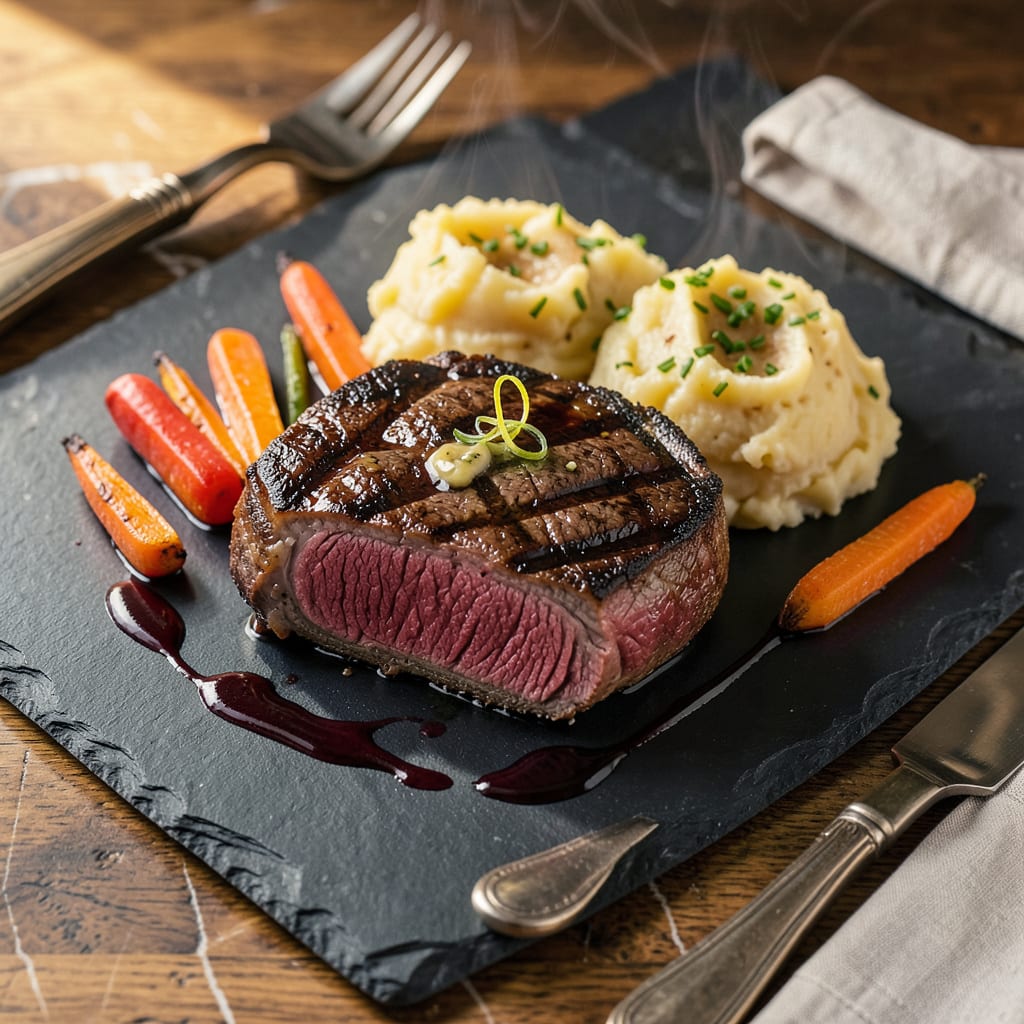
Rare steak offers a rich, beefy flavor with a tender, almost buttery texture. The center stays cool and deeply red, delivering juiciness with each bite while the outer layer develops a subtle caramelized crust.
As a pitmaster who’s worked with every doneness level, I can tell you rare steak is all about preserving the meat’s natural character. 🔥 The minimal cooking time keeps the muscle fibers relaxed, which is why it practically melts in your mouth. What most people don’t realize is that the deep red center comes from myoglobin—a protein that gives beef its color and contributes to that intense, iron-rich flavor profile you can’t get with more well-done preparations.
The contrast between the warm, seared exterior and cool interior creates a unique sensory experience. This isn’t just about softness—it’s about how the fat marbling stays intact, releasing bursts of flavor with each bite. I always recommend trying it with just kosher salt and black pepper first to truly appreciate the beef’s natural qualities before experimenting with rubs or sauces.
💡 In This Article
- Why Rare Steak Has a Distinct Flavor and Mouthfeel
- Best Cuts and Seasonings for Rare Steak Preparation
Why Rare Steak Has a Distinct Flavor and Mouthfeel
The magic of rare steak starts with myoglobin, the protein that gives beef its red color. When you cook meat to only 120-130°F internally, this protein remains largely unchanged, preserving that deep ruby hue and iron-rich flavor.
The minimal heat exposure means the muscle fibers stay relaxed rather than contracting and squeezing out moisture—this is why rare steak retains about 20% more juices than medium-cooked meat. 🔥
Fat distribution plays a crucial role in that signature buttery texture. In cuts like ribeye or filet mignon, the intramuscular fat (marbling) stays intact at lower temperatures, creating pockets of richness that melt gradually as you chew. Compare this to well-done steak where fat renders completely, leaving the meat drier.
The temperature gradient is dramatic too—your first bite delivers a warm, caramelized crust while the center remains cool and velvety.
What most people miss is how rare cooking preserves beef’s natural enzymes. These proteins begin breaking down muscle tissue during the aging process, and minimal heat allows that tenderizing action to continue on your plate. The result is a texture that’s simultaneously firm enough to hold its shape yet yields with almost no resistance.
I’ve found this effect is most pronounced in dry-aged cuts where enzymes have had 21-28 days to work their magic. ✨
The flavor profile develops differently than with higher-temperature cooking. Without significant Maillard reactions (which start around 285°F), rare steak showcases the beef’s inherent qualities—grass-fed varieties taste cleaner and slightly mineral, while grain-finished cuts offer more buttery sweetness.
The absence of char means you’re tasting the animal’s diet and breed characteristics rather than smoke or caramelization notes.
Here’s what’s actually happening at the cellular level: collagen hasn’t begun converting to gelatin (that starts around 160°F), so the meat maintains its structural integrity while still feeling luxurious.
The juices you see on your plate aren’t just water—they’re a complex mixture of dissolved proteins, minerals, and fats that carry flavor directly to your taste buds with each bite. 💫
This doneness level also highlights breed differences dramatically. A rare Wagyu steak will have fat that literally pools on your tongue at body temperature, while a leaner grass-fed cut offers more resistance and a cleaner finish.
The contrast between the seared surface and cool interior creates a temperature play that enhances perception of both texture and flavor complexity.

Trained in classic French technique but raised on slow-cooked ribs and spicy rubs, she blends culinary skill with smoke and soul.
- Recipe for Boneless Pork Chops in Cast Iron Skillet: Sear and Baste to Juicy Perfection - October 3, 2026
- Recipe for Boneless Cross Rib Roast: Slow-Roasted Beef with Herb Crust - October 3, 2026
- Hamburgers in Sauce Recipe Crock Pot: Slow-Cooked Savory Delight - October 3, 2026