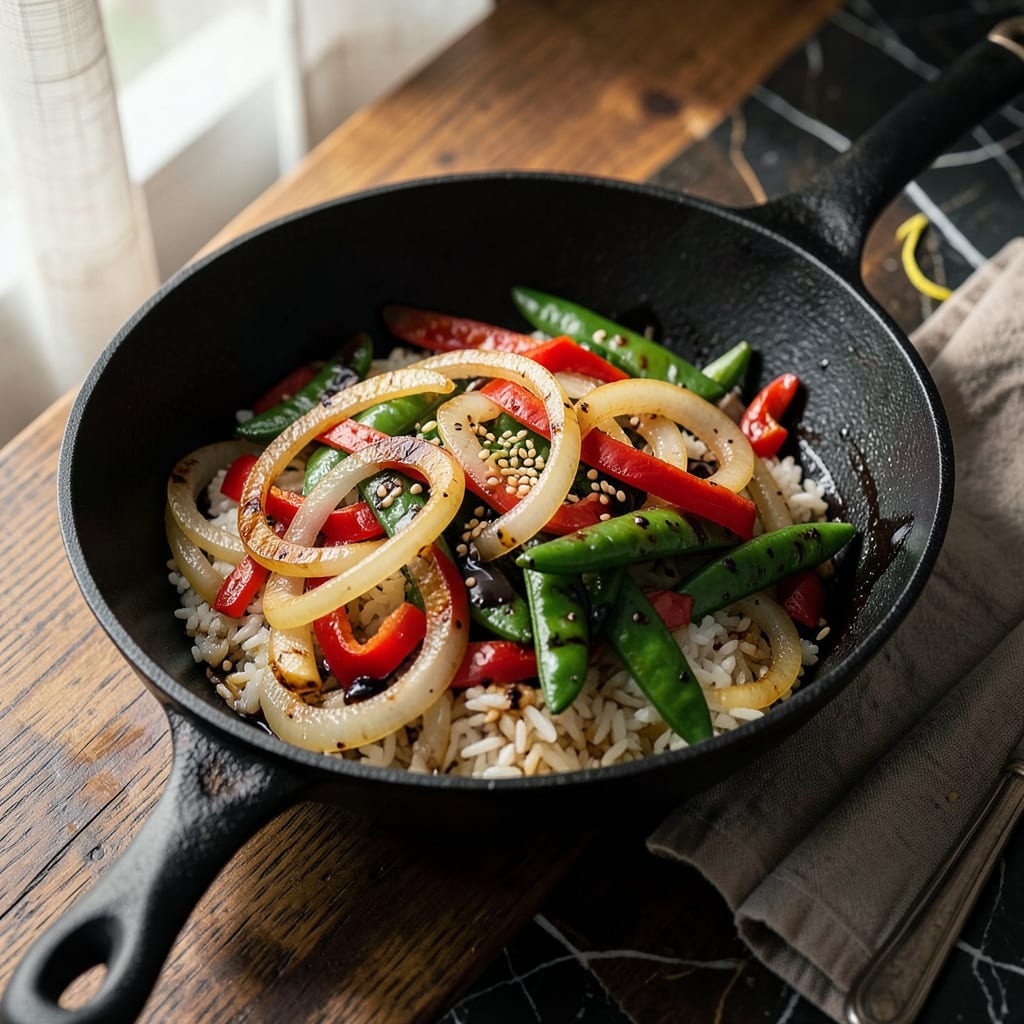
Let me tell you about the secret weapon in every great stir fry: onions done right. I’m talking about those perfect crisp-tender layers that add sweetness and texture to every bite. After burning through more stir fries than I care to admit, I finally cracked the code for getting onions just right—no more soggy mess or bitter crunch.
This isn’t about just throwing sliced onions in the pan. We’re talking thin, even slices that caramelize slightly at the edges while keeping their bite. The trick is high heat and perfect timing—add them too early and they turn mushy, too late and they stay raw. I’ve got the timing down to a science after years of trial and error.
What you end up with is a stir fry where the onions become the star. They develop this amazing balance—sweet from caramelization, sharp from their natural flavor, and with just enough crunch to make every bite interesting. The best part? This technique works whether you’re cooking tofu, chicken, or just a mountain of vegetables.
Pair this with some steamed rice and you’ve got a meal that’s quick enough for Tuesday but impressive enough for company. The onions make all the difference—trust me, once you try this method, you’ll never go back to the old way of stir frying.
📚 In This Guide
- What You’ll Need
- Instructions
- Tips and Common Mistakes
What Youll Need
- ● Onions: 1–2 medium yellow, red, or white (about 1 cup sliced) – pick based on flavor preference! 🧅
- ● Oil: 1–2 tbsp high-heat oil (peanut, avocado, or vegetable oil works best)
- ○ Protein (optional): 8 oz chicken, beef, tofu, or shrimp, sliced thinly for quick cooking
- ○ Vegetables (optional): 2 cups bell peppers, broccoli, or snap peas – prepped and ready to toss in!
- ● Sauce: 2–3 tbsp soy sauce, oyster sauce, or stir-fry sauce (adjust to taste)
- ○ Aromatics: 2–3 cloves garlic, minced + 1 tsp fresh ginger (optional but highly recommended)
- ● Seasonings: Salt, pepper, and a pinch of red pepper flakes (if you like heat!)
- ● Wok or skillet: 12-inch non-stick or carbon steel for even heat distribution
- ● Cutting board & knife: A sharp chef’s knife for clean, quick slices
- ● Wooden spatula or tongs: For easy stirring and flipping
- ● Mixing bowls: Small bowls for prepped ingredients (keeps things organized!)
Instructions for Perfect Stir-Fried Onions
Here’s the secret to onions that are crispy on the edges yet sweet and tender throughout—every single time.
Choose and Prep Your Onions
Start by selecting the right onion variety. I always use yellow onions for stir-frying because they caramelize beautifully while maintaining structure. Cut off both ends, then slice the onion in half from root to stem. Peel away the papery outer layers and discard them.
Place each half cut-side down and make thin, even slices from root to stem. This creates uniform pieces that cook at the same rate. Aim for slices about ¼-inch thick—thin enough to cook quickly but thick enough to maintain texture. Separate the slices into individual rings for even cooking.
Heat Your Pan Properly
Place a wok or large skillet over high heat until it’s smoking hot. This is crucial—onions need intense heat to develop that perfect crisp-tender texture. Add neutral oil (like vegetable or peanut oil) and swirl to coat the pan completely. You should see the oil shimmer immediately.
Wait until you see the first wisp of smoke before adding your onions. This ensures the pan is hot enough to sear rather than steam the onions. If the oil isn’t hot enough, your onions will release too much moisture and become soggy instead of developing those beautiful caramelized edges.
Cook in Stages for Perfect Texture
Add your sliced onions to the hot pan and spread them in an even layer. Let them cook undisturbed for 1-2 minutes until the edges start to turn golden brown. You’ll hear a lively sizzling sound—that’s exactly what you want!
Now stir the onions and continue cooking for another 3-4 minutes, stirring occasionally. You’re looking for a mix of textures: some pieces should be deeply caramelized while others remain slightly crisp. The onions will soften and become translucent, with sweet, concentrated flavor developing. Don’t be afraid of the brown bits—they’re packed with flavor!
Finish with Flavor Boosters
When your onions are nearly done, push them to one side of the pan and add any aromatics like garlic or ginger to the empty space. Cook for 30 seconds until fragrant, then mix everything together. This prevents burning while building layers of flavor.
Splash in a small amount of liquid—soy sauce, rice wine, or even water—just enough to deglaze the pan. Scrape up all those delicious browned bits from the bottom and toss them with the onions. Cook for another 30-60 seconds until the liquid evaporates and the onions are perfectly glazed.
Serve Immediately for Best Texture
Transfer the onions to your serving dish right away. Stir-fried onions are at their absolute best when served immediately—they’ll have that perfect balance of crisp edges and tender centers. The flavor will be sweet with just a hint of caramelized bitterness that makes them irresistible.
Notice how the onions have transformed from sharp and pungent to mellow and complex. Each bite should offer a mix of textures: some pieces will be silky soft while others have a slight crispness. This contrast is what makes perfectly stir-fried onions so addictive in any dish!
Tips and Common Mistakes for Perfect Stir-Fried Onions
Let me share the game-changing secrets that will take your stir-fried onions from good to absolutely irresistible every time.
The Heat Factor: That high heat mentioned in Step 2 isn’t just important—it’s everything! I can’t stress enough how crucial it is to wait until you see that first wisp of smoke before adding your onions. This is what creates those beautiful caramelized edges instead of sad, steamed onions. If your oil isn’t shimmering and nearly smoking, your pan isn’t hot enough yet. Trust me, this one detail makes all the difference in texture!
Timing Secret: During those critical 1-2 minutes in Step 3 when you first add the onions, resist the urge to stir! Let them sear undisturbed to develop those golden-brown edges. You’ll hear a lively sizzle—that’s the sound of flavor developing. Only after you see those edges starting to brown should you begin stirring. This initial sear is what gives your onions that perfect crisp-tender contrast.
Texture Tip: When you’re in the 3-4 minute cooking phase, don’t aim for uniform color! You want a mix of deeply caramelized pieces and some that are still slightly crisp. Those browned bits at the bottom of the pan? They’re flavor gold—make sure to scrape them up when you deglaze in Step 4. This is where that complex, sweet-savory flavor comes from that makes these onions so addictive.
Flavor Booster: In Step 4, when you add aromatics like garlic or ginger, keep them moving constantly during those 30 seconds! They burn easily at high heat. I like to create a little “well” in the center of the pan where the onions are pushed to the sides—this gives the aromatics direct contact with the hot surface for maximum flavor without burning. The moment you smell their fragrance, mix them with the onions immediately.
Pro Tips for Onion In Stir Fry
- Let me share the game-changing secrets that will take your stir-fried onions from good to absolutely irresistible eve…
- The Heat Factor: That high heat mentioned in Step 2 isn’t just important—it’s everything! I can’t stress enough how c…
- Timing Secret: During those critical 1-2 minutes in Step 3 when you first add the onions, resist the urge to stir! Le…
Frequently Asked Questions
Got questions about using onions in stir fry? You’re not alone! Here are the most common queries—with quick, actionable answers to level up your wok game.
How do I keep onions crispy in stir fry instead of mushy?
Slice them thinly and uniformly (¼-inch thick), and add them to a ripping-hot wok with oil first. Stir-fry on high heat for just 1–2 minutes until edges brown but centers stay slightly firm. Overcrowding = steam = soggy onions!
Can I use red onions instead of white or yellow for stir fry?
Absolutely! Red onions add sweetness and color but soften faster. For best results, quick-pickle slices (soak in vinegar + sugar for 10 mins) before stir-frying to mellow their bite. Or use them raw as a garnish for crunch.
Why do my stir-fry onions taste bitter? How do I fix it?
Bitterness comes from undercooking or using old onions. Sauté them first until golden (3–4 mins) to caramelize natural sugars. Pro tip: A pinch of salt or sugar while cooking balances flavors. Toss stale onions—they’re the usual culprit!
What’s the best onion substitute if I’m out or allergic?
Try these swaps for similar texture/flavor:
- Leeks (mild, sweet—use white/light green parts)
- Shallots (delicate, caramelizes beautifully)
- Fennel (crunchy, slight licorice note)
- Green onions (add at the end for freshness)
Should I soak onions before stir-frying to reduce tears?
Soaking in ice water for 10 minutes helps (and reduces sharpness!), but pat them very dry before cooking to avoid oil splatter. For speed, chill onions in the fridge for 30 mins pre-slice—or wear kitchen goggles!
Adding onions to your stir fry isn’t just about extra flavor—it’s about texture, aroma, and depth that transform a simple dish into something unforgettable. 🧅✨ Whether you prefer them caramelized and sweet or crisp-tender for a bite, mastering the technique ensures every stir fry shines. Ready to level up your cooking? Grab a wok, pick your favorite veggies, and start experimenting with layers of onion magic today!

Trained in classic French technique but raised on slow-cooked ribs and spicy rubs, she blends culinary skill with smoke and soul.
- Recipe for Boneless Pork Chops in Cast Iron Skillet: Sear and Baste to Juicy Perfection - October 3, 2026
- Recipe for Boneless Cross Rib Roast: Slow-Roasted Beef with Herb Crust - October 3, 2026
- Hamburgers in Sauce Recipe Crock Pot: Slow-Cooked Savory Delight - October 3, 2026