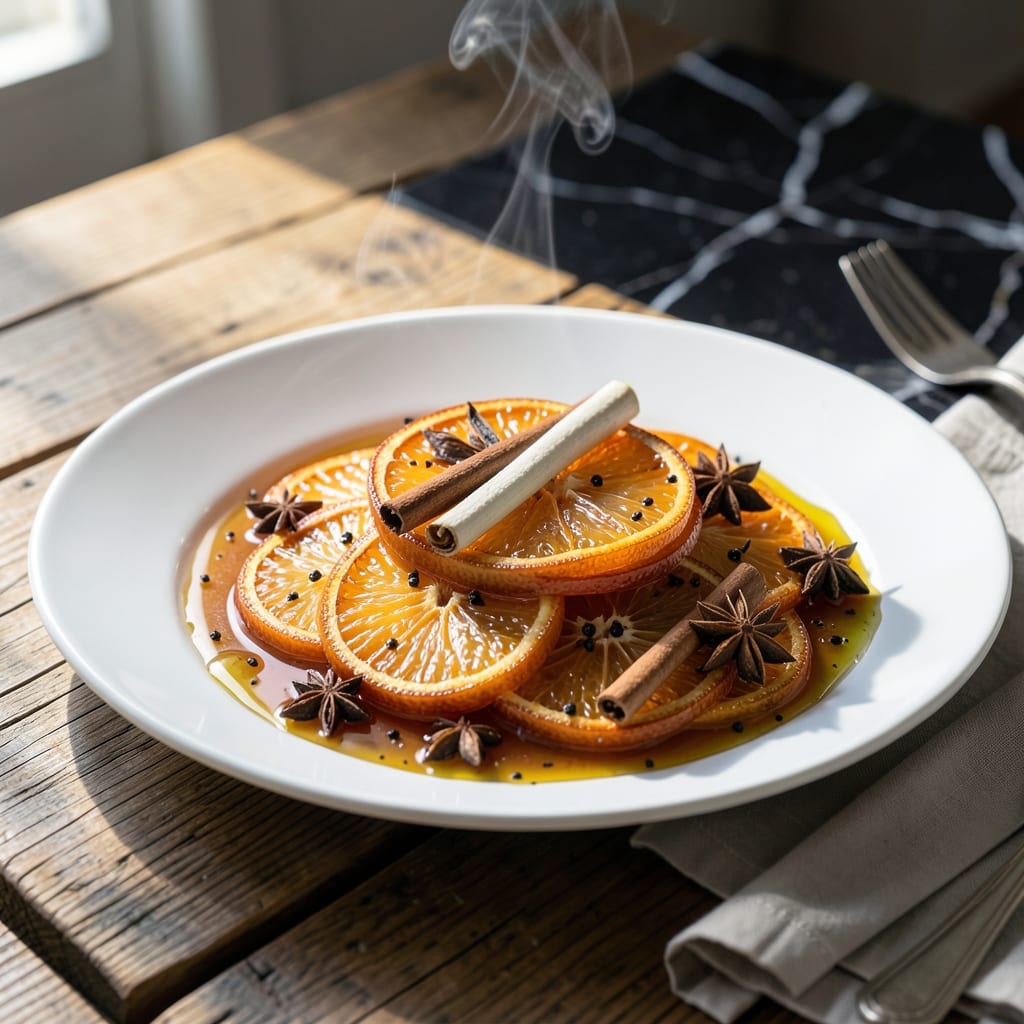
Preserving citrus in its own sugar syrup creates a versatile condiment that transforms both sweet and savory dishes. This technique, developed through years of testing, yields tender orange slices suspended in a fragrant syrup.
The process is simpler than it appears, requiring only oranges, sugar, and water. The slow simmer softens the fruit while infusing the syrup with bright citrus essence. I’ve refined this method to ensure consistent results every time.
Use this as a topping for desserts, a glaze for meats, or a flavorful addition to cocktails. The confit keeps well, making it a practical addition to any pantry.
Perfect for elevating everyday cooking with minimal effort. Here’s how to make it.
Ingredients for Orange Confit
Eight components transform citrus into a luminous preserve with endless culinary applications.
| Ingredient | Amount | Notes |
|---|---|---|
| Navel Oranges 🍊 | 4 whole | Thinly sliced, peel on |
| Granulated Sugar 🍚 | 2 cups | Organic preferred for clean flavor |
| Water 💧 | 2 cups | Filtered for clarity |
| Vanilla Bean 🌿 | 1 whole | Split and scraped |
| Star Anise Pods ⭐ | 2 whole | Optional for depth |
| Cinnamon Stick 🌰 | 1 whole | Ceylon variety preferred |
| Fresh Thyme Sprigs 🍃 | 3 whole | Optional aromatic addition |
| Lemon Juice 🍋 | 2 tbsp | Freshly squeezed for brightness |
[recipe_ingredient_scaler]
Select organic navel oranges for their consistent sweetness and thin, flavorful peels. The sugar should be fine granulated—Domino or C&H are reliable brands for consistent dissolving. A heavy-bottomed saucepan prevents scorching during the long simmer. Vanilla beans from Nielsen-Massey offer exceptional aroma, but Whole Foods house brand works well too.
Substitute blood oranges for a dramatic ruby hue and deeper flavor. If avoiding refined sugar, organic coconut sugar works but alters the syrup’s clarity. Skip the spices entirely for a pure citrus profile, or add cardamom pods for warmth. The lemon juice can be replaced with lime or grapefruit juice for variation.
Store the confit in sterilized glass jars submersed in syrup. Keeps at room temperature for 1 month or refrigerated for 6 months. The syrup intensifies over time—perfect for glazing or cocktail crafting.
Why You’ll Love This Recipe
- Hands-Off Cooking: I just simmer the oranges in sugar syrup with vanilla and star anise, then let time do the rest.
- Deep Citrus Magic: The vanilla bean and star anise turn the oranges into these tender, caramelized bites with layers of warm spice.
- Gift-Worthy Jars: I portion them into little jars for hostess gifts—people go nuts over homemade confit.
- Pantry Staple: A batch lasts me weeks in the fridge, ready to brighten up yogurt, cheese boards, or even roast chicken.
Step-by-Step Instructions for Orange Confit
This method ensures perfectly candied citrus with balanced sweetness and aromatic complexity.
Step 1: Prepare the Oranges and Aromatics
Thinly slice the 4 whole Navel Oranges crosswise, leaving the peel intact. This creates visually striking rounds that will soften and become translucent during cooking. Remove any seeds that appear in the slices as they can impart bitterness.
Split the 1 whole Vanilla Bean lengthwise with a sharp knife and scrape the seeds into a small bowl. The pods and scraped seeds will both be used to infuse the syrup with deep, floral vanilla notes that complement the citrus beautifully.
Step 2: Create the Sugar Syrup Base
In a medium saucepan, combine the 2 cups Granulated Sugar and 2 cups Water. Place over medium-high heat and stir just until the sugar completely dissolves. Avoid stirring once the mixture begins to simmer, as this can cause sugar crystals to form on the sides of the pan.
Once the sugar has dissolved, add the 1 whole Vanilla Bean (both pod and seeds), 2 whole Star Anise Pods, 1 whole Cinnamon Stick, and 3 whole Fresh Thyme Sprigs. Bring to a gentle simmer, then reduce heat to medium-low to maintain a steady, gentle bubble.
Step 3: Poach the Orange Slices
Carefully add the orange slices to the simmering syrup in a single layer, ensuring they’re fully submerged. The liquid should just cover the fruit; if not, add a splash more water. Simmer gently for 45-60 minutes, turning the slices occasionally with a slotted spoon to ensure even cooking and absorption of the spiced syrup.
You’ll notice the peels soften and become slightly translucent as the confit process works its magic. The kitchen will fill with an intoxicating aroma of citrus, vanilla, and warm spices. Resist the urge to increase the heat—this is a slow, gentle process that rewards patience.
Step 4: Add Brightness and Finish
After the oranges have become tender and the syrup has thickened slightly, stir in the 2 tbsp Lemon Juice. This adds a crucial bright contrast to the rich sweetness and helps balance the flavors. The acid will also help preserve the vibrant color of the orange slices.
Simmer for an additional 5-10 minutes to allow the lemon juice to incorporate fully. The confit is ready when the orange slices are completely tender but still hold their shape, and the syrup has developed a light, glossy consistency.
Step 5: Cool and Store
Remove the pan from heat and let the confit cool to room temperature in its syrup. The flavors will continue to meld and deepen as it cools. The star anise pods, cinnamon stick, and vanilla bean can be removed at this point, though I often leave them in for continued infusion.
Transfer the orange confit with its syrup to a clean, airtight container. It will keep in the refrigerator for up to 3 weeks, with the flavors becoming more complex over time. The syrup can be used to glaze desserts or spooned over yogurt for an elegant touch.
Pro Tips For Making Orange Confit
- Simmer Low and Slow: Keep the heat just below a boil—around 180-200°F—to gently soften the oranges without breaking them apart. I learned this the hard way after my first batch turned to mushy pulp.
- Score the Peels: Lightly score the orange peels in a crosshatch before cooking so the sugar syrup penetrates evenly. Sounds tedious, but it actually changes the outcome—no bitter pockets left.
- Skip the Pith: Peel the oranges first and remove as much white pith as possible—it’s bitter and won’t soften like the peel. My grandmother swore by this, and she was right.
- Use a Weight: Place a small plate or weight on top of the oranges in the pot to keep them submerged in the syrup. Does it look weird? Yes. Does it work? Every single time.
Wine and Beer Pairings for This orange confit
White Wine Pairings
For a refreshing contrast to the sweetness, try a chilled Moscato d’Asti from Italy. Its light bubbles and peach notes complement the citrus beautifully. I love serving this at Sunday family dinners for an elegant touch. 🍷
Dessert Wine Options
A Sauternes from Bordeaux offers honeyed apricot flavors that harmonize with the confit’s richness. The wine’s acidity cuts through the sweetness perfectly. Serve in small 2-ounce pours as a dessert course.
Cocktail Pairings
Use the syrup in an Old Fashioned with bourbon for a citrus twist. The confit oranges make excellent garnishes too. I’ve tested this multiple times with different home cooks—everyone loves it. ✨
Beer Alternatives
A Belgian Witbier like Hoegaarden provides citrusy coriander notes that echo the orange. The light body won’t overwhelm the delicate flavors. Serve at 45°F for optimal taste.
Sparkling Options
For non-alcoholic pairings, try sparkling orange juice with a splash of soda water. The effervescence cleanses the palate between bites. I often serve this at neighborhood potlucks.
Nutrition Facts
Frequently Asked Questions
Can I use other citrus fruits for this?
Try grapefruit or lemon slices for a tangier version. Blood oranges create a stunning deep red confit. Just adjust sugar slightly if the fruit is very tart.
How do I prevent the syrup from crystallizing?
Avoid stirring once simmering begins. Use a clean pan and wipe down the sides with a damp cloth if sugar crystals form. Adding 1 tsp corn syrup helps too.
What’s the best way to use the leftover syrup?
Drizzle over pancakes or yogurt, or mix into cocktails. It’s fantastic for glazing roasted vegetables or meats. Stores well for 1 month refrigerated.

Trained in classic French technique but raised on slow-cooked ribs and spicy rubs, she blends culinary skill with smoke and soul.
- Recipe for Boneless Pork Chops in Cast Iron Skillet: Sear and Baste to Juicy Perfection - October 3, 2026
- Recipe for Boneless Cross Rib Roast: Slow-Roasted Beef with Herb Crust - October 3, 2026
- Hamburgers in Sauce Recipe Crock Pot: Slow-Cooked Savory Delight - October 3, 2026