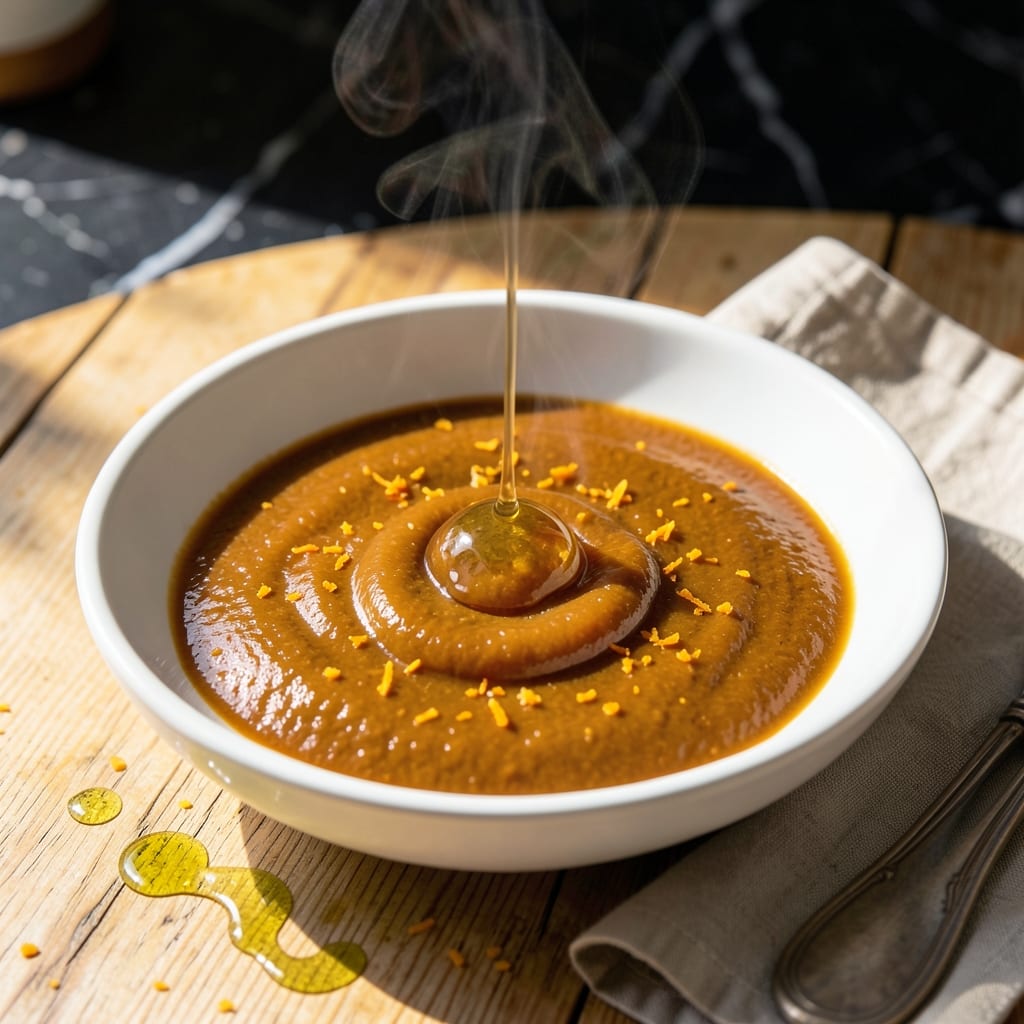
This orange gravy transforms ordinary dishes into something extraordinary with its bright citrus notes and rich, velvety texture.
I developed this sauce to add a sophisticated twist to savory meals, balancing sweet orange with deep umami flavors. The combination of fresh juice and zest creates layers of complexity that elevate roasted meats and vegetables alike.
The process is straightforward yet yields restaurant-quality results. A simple roux thickens the base while orange zest adds aromatic depth that store-bought versions can’t match.
Use it to glaze duck, drizzle over pork, or enrich vegetarian dishes. This versatile sauce keeps well refrigerated for up to a week.
Ingredients for Orange Gravy
Nine ingredients transform into restaurant-quality citrus gravy with bright, complex flavors.
| Ingredient | Amount | Notes |
|---|---|---|
| Unsalted Butter 🧈 | 4 tbsp | For rich roux base |
| All-Purpose Flour 🌾 | 4 tbsp | Creates smooth thickening |
| Fresh Orange Juice 🍊 | 1 ½ cups | Navel or Valencia preferred |
| Fresh Orange Zest 🍊 | 2 tbsp | Finely grated for aroma |
| Low-Sodium Chicken Broth 🍲 | 1 ½ cups | Quality brand recommended |
| Honey 🍯 | 2 tbsp | Balances citrus acidity |
| Soy Sauce 🫒 | 1 tbsp | Adds umami depth |
| Dijon Mustard 🟡 | 1 tsp | Sharp flavor enhancer |
| Kosher Salt 🧂 | ½ tsp | Adjust to taste |
| Freshly Ground Black Pepper 🌶️ | ¼ tsp | Finishing touch |
[recipe_ingredient_scaler]
The orange juice is non-negotiable—freshly squeezed navel or Valencia oranges give that vibrant, sweet-tart punch store-bought can’t touch. Zest them first (the good stuff, not the pith) for aromatic depth. For the broth, Better Than Bouillon or a quality carton from Whole Foods elevates the base. Butter should be unsalted so you control the seasoning, and Plugrá is my go-to for its high fat content.
No fresh oranges? Bottled juice at half the amount plus extra zest works in a pinch (but fresh is better).Swap honey for maple syrup or agave if you need vegan. Soy sauce can be tamari for gluten-free or Worcestershire for extra complexity (just check for anchovies). The mustard is flexible—whole grain or yellow both work, but Dijon’s sharpness cuts through the richness.
Gravy thickens as it cools. Store in a jar with a tight lid—keeps 5-7 days in the fridge. Freeze in ice cube trays for 3 months, then transfer to bags. Reheat gently with a splash of water (don’t boil or it’ll break).
Why You’ll Love This Recipe
- 20-Minute Magic: I can go from butter and flour to silky orange gravy faster than my kids argue over the last chicken nugget.
- Zesty Punch: The fresh orange juice and zest hit your palate like sunshine—bright, tangy, and just sweet enough.
- Holiday or Tuesday: Honestly, it dresses up roast turkey at Christmas and turns a humble chicken breast into a weeknight win.
- Pantry Hero: All the ingredients are staples I already keep on hand, so it’s a last-minute save when I’m out of ideas.
Step-by-Step Instructions for Orange Gravy
Here’s my tested method for building layers of citrus flavor into a velvety smooth sauce.
Step 1: Create a Golden Roux Base
Melt the 4 tbsp Unsalted Butter in a heavy saucepan over medium heat. You want it to foam but not brown—that would add bitter notes. Once melted, whisk in the 4 tbsp All-Purpose Flour all at once.
Keep whisking constantly for 2-3 minutes until the mixture turns a light golden color and smells slightly nutty. This is your roux, and it’s the thickening powerhouse of the gravy. If it browns too quickly, reduce the heat slightly.
Step 2: Build the Liquid Foundation
Slowly pour in the 1.5 cups Low-Sodium Chicken Broth while whisking vigorously to prevent lumps. The mixture will thicken immediately, then thin out as you add more liquid. Now add the 1.5 cups Fresh Orange Juice and continue whisking.
At this point, the mixture should be smooth and starting to thicken. Bring it to a gentle simmer. You’re looking for small bubbles breaking the surface occasionally, not a rolling boil. Simmer for 3-4 minutes until it coats the back of a spoon.
Step 3: Add Depth and Sweetness
Stir in the 2 tbsp Fresh Orange Zest, 2 tbsp Honey, 1 tbsp Soy Sauce, and 1 tsp Dijon Mustard. The soy sauce might seem unusual, but trust me—it adds umami that balances the citrus beautifully.
Let the mixture simmer for another 2-3 minutes so the flavors meld together. The honey will mellow the acidity of the orange, while the mustard adds a subtle sharpness. Taste and adjust the balance if needed.
Step 4: Finish and Season
Reduce the heat to low and stir in the 0.5 tsp Kosher Salt and 0.25 tsp Freshly Ground Black Pepper. Remember, the soy sauce already adds saltiness, so taste before adding more.
Let the gravy simmer for a final 2 minutes to ensure all flavors are fully incorporated. The finished product should have a glossy sheen and coat the back of a spoon with a slight ribbon effect. If it’s too thick, whisk in a splash of water. If too thin, simmer a minute longer.
Pro Tips For Making Orange Gravy
- Whisk Constantly: Medium-low heat and a whisk in constant motion prevent the butter-flour roux from browning or clumping—I learned this the hard way after my first three batches turned lumpy.
- Zest Before Juicing: Grate the orange zest first, then juice the same oranges. It’s more efficient and guarantees your zest and juice come from the same fruit for consistent flavor.
- Skip Cold Broth: Use warm chicken broth when thinning the gravy, or the cold liquid will seize the roux and leave you with a greasy, separated mess.
- Strain the Zest: After steeping the zest in the gravy, strain it out before serving—this keeps the texture silky while still infusing all that bright citrus oil.
Pro Cooking Tips for orange gravy
Roux Perfection
Use a heavy-bottomed saucepan to prevent hot spots that can burn your butter. I swear by All-Clad stainless steel for even heat distribution. Keep the heat at medium—too high and your roux will brown too quickly, adding bitter notes. 🌡️
Lump-Free Gravy
Whisk constantly when adding liquids to your roux. Pour the broth and juice in a slow, steady stream while whisking vigorously. If lumps form anyway, don’t panic—just keep whisking. They’ll dissolve as the gravy heats.
Flavor Layering
Bloom the orange zest in the hot roux for 30 seconds before adding liquids. This releases essential oils for maximum citrus impact. Add the honey and soy sauce together—they’ll balance each other’s intensity.
Consistency Control
For thicker gravy, simmer uncovered for an extra 2-3 minutes. Too thick? Whisk in 1 tbsp at a time of warm water until it reaches your desired consistency. Remember, it will thicken slightly as it cools.
Straining Option
For silky smooth gravy, strain through a fine-mesh sieve before serving. This removes any zest bits or potential lumps. I do this for special occasions, but usually leave it rustic for everyday meals.
Make Ahead Tip
The flavors deepen overnight. Make it 1 day ahead, refrigerate, then gently reheat with a splash of water. Avoid boiling during reheating to prevent separation. 💡
Nutrition Facts
Frequently Asked Questions
Can I use bottled orange juice instead of fresh?
Bottled juice works in a pinch, but use half the amount since it’s more concentrated. Fresh juice provides brighter flavor and better acidity balance in the gravy.
Why does my gravy look separated?
This happens when reheated too quickly or boiled. Warm it gently over low heat, stirring constantly. If needed, whisk in 1 tsp cold water to bring it back together.
How can I make this vegan?
Swap butter for vegan margarine and use vegetable broth instead of chicken. Replace honey with maple syrup or agave. The flavor profile remains delicious!

Trained in classic French technique but raised on slow-cooked ribs and spicy rubs, she blends culinary skill with smoke and soul.
- Recipe for Boneless Pork Chops in Cast Iron Skillet: Sear and Baste to Juicy Perfection - October 3, 2026
- Recipe for Boneless Cross Rib Roast: Slow-Roasted Beef with Herb Crust - October 3, 2026
- Hamburgers in Sauce Recipe Crock Pot: Slow-Cooked Savory Delight - October 3, 2026