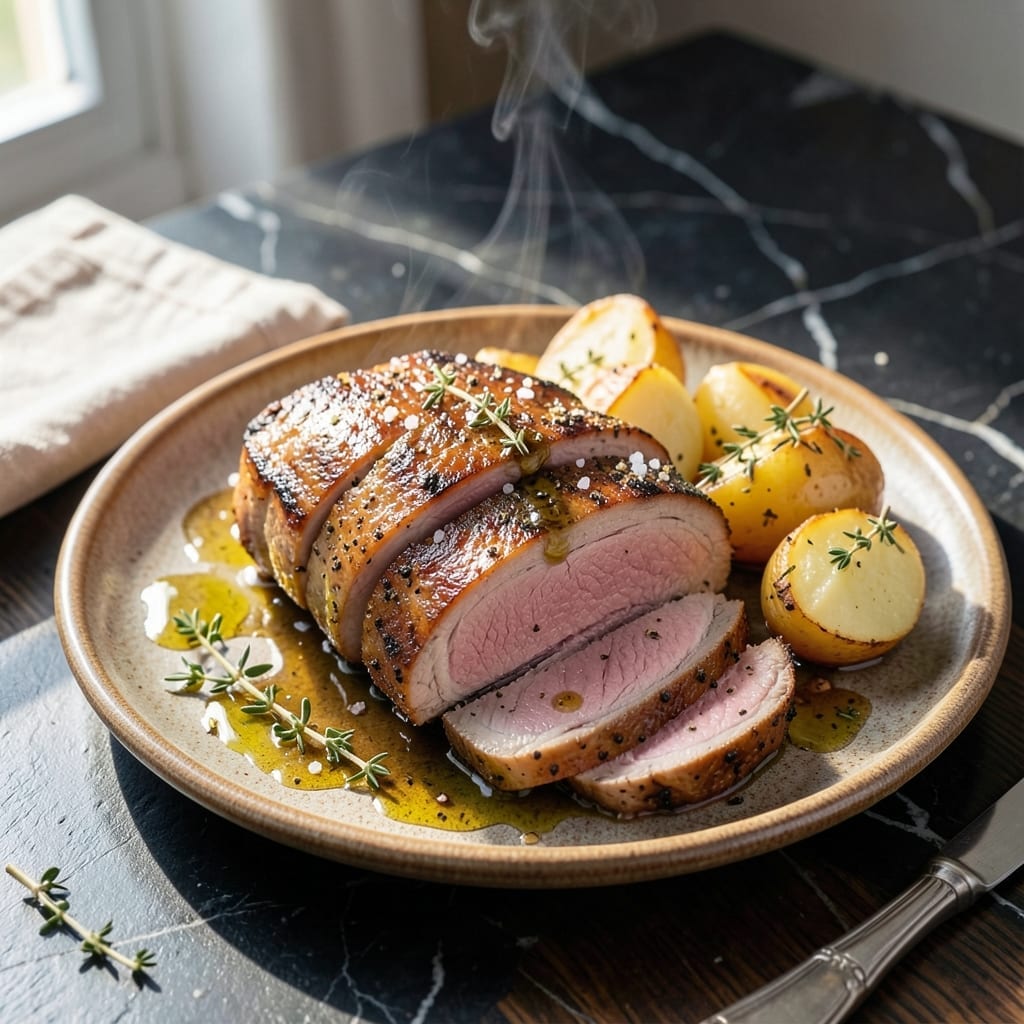
Pan-searing pork loin on the stovetop delivers perfect results every time with the right technique. This method creates a golden crust while keeping the meat juicy and tender throughout.
The key is using high heat to develop a flavorful sear, then reducing to medium-low to cook the pork evenly. A meat thermometer ensures you hit that perfect 145°F internal temperature without overcooking.
What you get is succulent pork loin with a crispy exterior and moist interior, ready to serve in under 30 minutes. The pan juices create a natural base for a quick sauce if desired.
Pair with roasted vegetables or mashed potatoes for a complete meal. Here’s how to nail this technique.
Ingredients for Pork Loin Recipe Stove Top
Quality pork loin plus pantry staples deliver restaurant-worthy pan-seared perfection in minutes.
| Ingredient | Amount | Notes |
|---|---|---|
| Boneless Pork Loin 🥩 | 1 ½ lb | Even thickness for cooking |
| Kosher Salt 🧂 | 1 tsp | Diamond Crystal preferred |
| Freshly Ground Black Pepper 🌶️ | ½ tsp | Coarse grind for texture |
| Garlic Powder 🧄 | 1 tsp | Not garlic salt |
| Dried Thyme 🍃 | ½ tsp | Rubbed between fingers |
| Olive Oil 🫒 | 2 tbsp | High smoke point variety |
| Unsalted Butter 🧈 | 1 ½ tbsp | For basting and sauce |
| Fresh Rosemary 🌿 | 2 piece | Sprigs, optional for aroma |
| Chicken Stock 💧 | ½ cup | Low-sodium preferred |
| Dijon Mustard 🟡 | 1 tsp | For pan sauce base |
| Heavy Cream 🥛 | ¼ cup | Optional for sauce richness |
| Lemon Juice 🍋 | 1 tsp | Freshly squeezed for brightness |
[recipe_ingredient_scaler]
The pork loin must be uniform in thickness—boneless center-cut pieces from Whole Foods or Costco ensure even cooking. Look for vibrant pink color with some marbling. Avoid pre-marinated versions, as they can burn during searing. High smoke point olive oil is essential; avocado oil works equally well if you prefer a neutral flavor.
No pork loin? Pork tenderloin at half the cook time is a suitable substitute. Dried thyme can replace fresh at one-third the amount. Out of Dijon? Whole-grain mustard adds pleasant texture. For a dairy-free sauce, omit butter and use olive oil exclusively. The chicken stock can be swapped with vegetable stock without issue.
Leftover pork keeps beautifully in the fridge for 4-5 days or freezes for 3 months. Reheat gently in a skillet with a splash of stock to maintain moisture. Always rest the meat for 5-10 minutes before slicing—this keeps it juicy (worth the extra minute).
Why You’ll Love This Recipe
- I’ll be real: this single pork loin gives us dinner for two nights, plus leftovers for sandwiches.
- One Pan Wonder: I sear the pork loin right in my skillet then let it finish cooking—no oven, no extra dishes.
- Herb Crusted Bliss: The garlic powder and thyme form this incredible crust that makes every bite ridicously good.
- Feeds a Crowd: I’ll be real: this single pork loin gives us dinner for two nights, plus leftovers for sandwiches.
Step-by-Step Instructions for Pan-Seared Pork Loin
Master the stovetop technique for juicy, flavorful pork with a perfect golden crust every time.
Step 1: Season and Prepare the Pork Loin
Pat the 1.5 lb boneless pork loin dry with paper towels to ensure a good sear. Even thickness is critical here, so trim any uneven portions. Season all sides generously with the 1 tsp kosher salt, 0.5 tsp freshly ground black pepper, 1 tsp garlic powder, and 0.5 tsp dried thyme, rubbing the spices into the surface.
Let the seasoned pork sit at room temperature for 20 minutes. This step ensures even cooking throughout and helps the salt penetrate the meat for maximum flavor. The surface should look uniformly coated with the spice blend.
Step 2: Sear the Pork to Develop a Crust
Heat the 2 tbsp olive oil in a large, heavy skillet over medium-high heat until it shimmers. Add the pork loin and sear for 4-5 minutes per side, using tongs to flip only once. The goal is a deep golden brown crust—don’t move the pork until it releases naturally from the pan.
Add the 2 piece fresh rosemary and 1.5 tbsp unsalted butter to the pan during the last 2 minutes of searing. Tilt the skillet slightly and baste the pork with the melted butter and aromatic oil. This step infuses the meat with additional flavor and promotes even browning.
Step 3: Cook Through and Rest
Reduce heat to medium and continue cooking the pork, turning it occasionally, until the internal temperature reaches 145°F on an instant-read thermometer. This typically takes an additional 8-10 minutes, depending on thickness.
Transfer the pork to a cutting board, tent loosely with foil, and let it rest for 10 minutes. Resting allows the juices to redistribute, ensuring every slice is moist and tender. The internal temperature will rise to about 150°F during this time.
Step 4: Create the Pan Sauce
Place the skillet over medium heat and add the 0.5 cup chicken stock, scraping up any browned bits with a wooden spoon. Stir in the 1 tsp Dijon mustard and let the liquid reduce by half, about 3-4 minutes.
Remove from heat and whisk in the 0.25 cup heavy cream and 1 tsp lemon juice. Taste and adjust seasoning if needed. The sauce should be smooth and slightly thickened, with a balance of tangy and creamy flavors. Slice the pork and serve with the pan sauce spooned over the top.
Pro Tips For Making Pork Loin Recipe Stove Top
- Sear It Hard: Crank the heat to medium-high and sear the pork loin on all sides until deep golden brown—I learned this the hard way after too many pale, steamed-looking loins. About 3-4 minutes per side does the trick.
- Season Overnight: Rub the kosher salt, pepper, garlic powder, and thyme into the pork loin the night before. Sounds weird, but it works: the flavors penetrate deeper and the meat stays juicier.
- Use a Thermometer: Skip guessing and pull the pork at 145°F internal temp—any higher and it turns dry. I burned three batches before I finally started checking with a probe.
- Tent and Rest: Transfer the pork to a plate, tent loosely with foil, and give it a solid 10 minutes before slicing. My grandmother swore by this, and she was right: the juices redistribute instead of pooling on the cutting board.
Essential Equipment for This Recipe
Quality Skillet
Invest in a heavy-bottomed stainless steel skillet or cast iron pan—both retain heat evenly and create that perfect sear. I swear by my All-Clad 12-inch for stovetop pork loin. Avoid nonstick for this recipe as you need high heat. 🔥
Instant-Read Thermometer
A digital meat thermometer is non-negotiable for perfect results. I use the ThermoWorks ThermaPen—it gives accurate readings in 2-3 seconds. Pork loin is done at 145°F internal temperature.
Heat-Resistant Tools
Use long-handled tongs and a silicone brush for basting. The tongs let you flip the pork safely, while the brush handles the hot butter and oil mixture. I keep a OXO 12-inch pair in my kitchen drawer.
Wooden Spoon
A sturdy wooden spoon is essential for scraping up those flavorful browned bits when making the pan sauce. It won’t scratch your skillet like metal utensils might. I prefer bamboo for its durability.
Resting Setup
Have a cutting board and aluminum foil ready for resting. The foil tent keeps the pork warm while allowing steam to escape. A 10-minute rest ensures juicy, tender slices every time.
Pan Sauce Essentials
Keep low-sodium chicken stock, Dijon mustard, and heavy cream on hand for the sauce. These pantry staples come together in 5 minutes for a restaurant-quality finish. 💫
Nutrition Facts
Frequently Asked Questions
What’s the best way to season pork loin for pan-searing?
Pat the pork dry first, then coat all sides with salt, pepper, garlic powder, and thyme. Let it sit at room temperature for 20 minutes to enhance flavor absorption.
How do I know when the pork is done without a thermometer?
While a thermometer is best, you can check firmness—the meat should feel slightly springy, not mushy. The internal color should be faintly pink at 145°F.
Can I use a nonstick pan instead?
Avoid nonstick for high-heat searing—it can’t handle the temperature needed for a good crust. Use stainless steel or cast iron instead.
Why does the pork need to rest before slicing?
Resting for 10 minutes lets juices redistribute, so they don’t spill out when you cut. This keeps every bite tender and moist.

Trained in classic French technique but raised on slow-cooked ribs and spicy rubs, she blends culinary skill with smoke and soul.
- Recipe for Boneless Pork Chops in Cast Iron Skillet: Sear and Baste to Juicy Perfection - October 3, 2026
- Recipe for Boneless Cross Rib Roast: Slow-Roasted Beef with Herb Crust - October 3, 2026
- Hamburgers in Sauce Recipe Crock Pot: Slow-Cooked Savory Delight - October 3, 2026