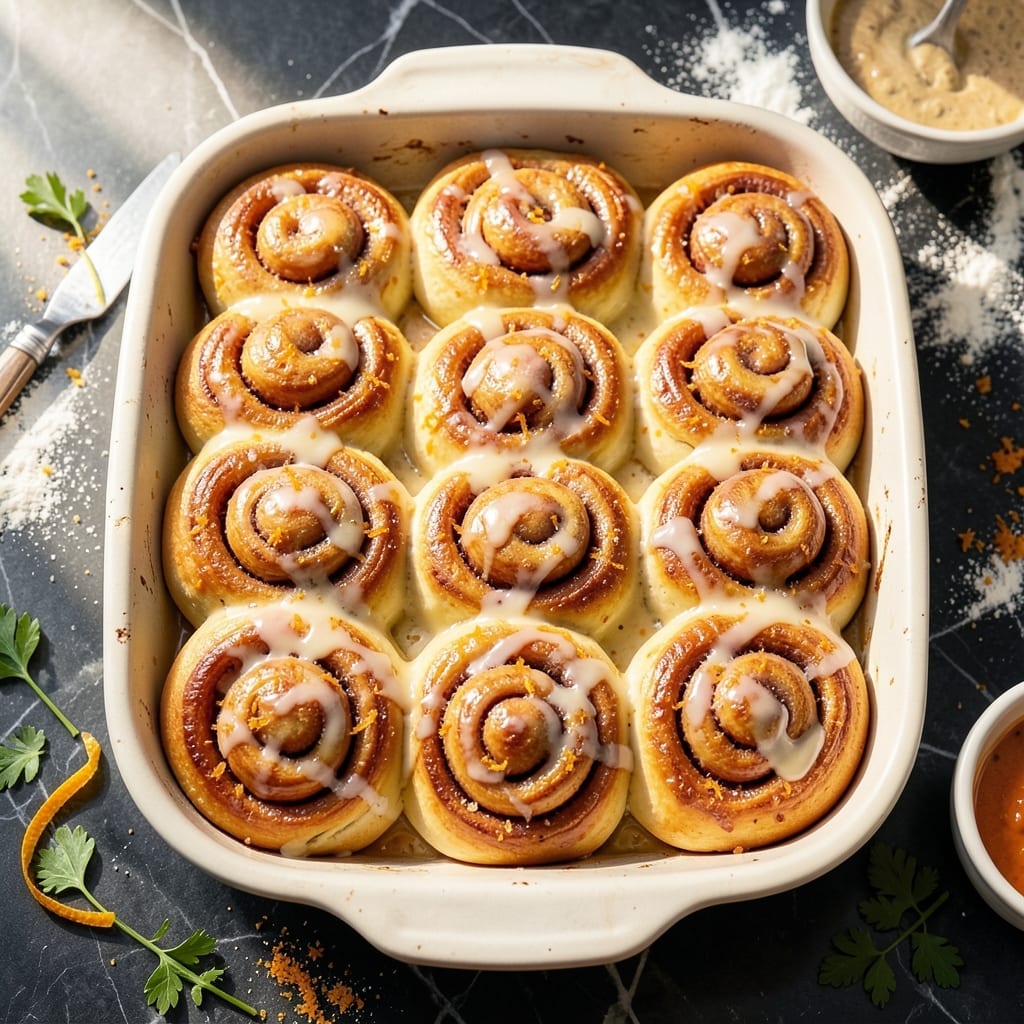
There’s something magical about warm, pillowy rolls infused with bright citrus flavor. I’ve refined this recipe over years of testing to ensure perfectly soft texture and balanced sweetness every time.
The dough comes together with simple ingredients, but the real secret is in the rising process. Two full rises create layers of airy lightness, while the orange glaze adds a sticky, tangy finish that’s impossible to resist.
Each bite delivers a tender crumb with a subtle orange zest that lingers. David—my official taste-tester—always requests a second batch before the first is gone.
Ideal for holiday mornings or weekend brunch, these rolls are worth the effort. Here’s how to make them right.
Ingredients for Orange Rolls Recipe Pioneer Woman
Simple ingredients create these light, citrus-kissed rolls with a sweet orange glaze finish.
| Ingredient | Amount | Notes |
|---|---|---|
| All-Purpose Flour 🌾 | 4 cups | Plus extra for dusting |
| Granulated Sugar 🍚 | ½ cup | Divided for dough and glaze |
| Active Dry Yeast 🍞 | 1 package | 2 1/4 tsp per package |
| Whole Milk 🥛 | 1 cup | Warmed to 110°F |
| Unsalted Butter 🧈 | ½ cup | Melted and cooled |
| Large Egg 🥚 | 1 whole | Room temperature |
| Salt 🧂 | 1 tsp | Fine sea salt preferred |
| Orange Zest 🍊 | 2 tbsp | From 2 large oranges |
| Fresh Orange Juice 🍹 | ½ cup | From 2-3 oranges |
| Vanilla Extract 🌿 | 1 tsp | Pure vanilla for best flavor |
| Powdered Sugar 🍬 | 2 cups | For orange glaze |
| Heavy Cream 🥛 | 2 tbsp | For glaze consistency |
[recipe_ingredient_scaler]
The flour is the foundation here—King Arthur or Gold Medal all-purpose give consistent results. Yeast is finicky, so check the expiration date and store it in the fridge after opening. For the milk, whole milk adds richness, but 2% works in a pinch. Land O’Lakes butter is my go-to for baking, and it melts beautifully into the dough.
No fresh oranges? Bottled orange juice and zest (found in the baking aisle) work, but fresh is brighter. For a dairy-free version, swap the milk for almond milk and use vegan butter. Short on time? Frozen dough can be a shortcut—just add the orange zest to the dough before shaping. The glaze can be thinned with a splash more cream if needed.
Dough rises best in a warm, draft-free spot—my oven with the light on works perfectly. Baked rolls keep 2-3 days in an airtight container, but they’re best fresh. Freeze unbaked rolls for up to 1 month (thaw, rise, then bake).
Why You’ll Love This Recipe
- No-Fuss Dough: Honestly, the yeast does all the work—just mix flour, sugar, milk, and butter, then let it rise while you sip coffee.
- Buttery Orange Bliss: That first bite with the warm, buttery layers and citrusy glaze? Ridiculously good.
- Holiday Morning Star: I pull these out for Christmas morning, but they’re so unfussy I make them on random Sundays too.
- Budget-Friendly Crowd Pleaser: A few pantry staples, one batch, and suddenly I’ve got enough to feed a small army for days.
Step-by-Step Instructions for Orange Rolls
This method delivers soft, citrus-kissed rolls with a glossy orange glaze every time.
Step 1: Activate the Yeast and Prepare the Dough
In a large bowl, combine 1 cup Whole Milk warmed to 110°F with 0.5 cup Granulated Sugar and 1 package Active Dry Yeast. Stir gently and let sit for 5-7 minutes until the mixture becomes foamy and fragrant. This confirms the yeast is active and ready to work its magic.
Add 0.5 cup Unsalted Butter (melted and cooled), 1 whole Large Egg, 1 tsp Salt, 2 tbsp Orange Zest, and 1 tsp Vanilla Extract. Mix until just combined. The orange zest infuses the dough with bright citrus notes that pair beautifully with the sweetness.
Step 2: Incorporate the Flour and Knead
Gradually add 4 cups All-Purpose Flour, 1 cup at a time, mixing until a shaggy dough forms. Turn the dough out onto a lightly floured surface and knead for 8-10 minutes until smooth and elastic. The dough should be slightly tacky but not sticky—add a sprinkle of extra flour if needed.
I find that pressing the heels of my hands into the dough while kneading develops the gluten properly, ensuring a light, airy texture. You’ll know it’s ready when it springs back gently when poked.
Step 3: Let the Dough Rise Until Doubled
Place the dough in a greased bowl, cover with a clean kitchen towel, and let it rise in a warm, draft-free area for 1.5-2 hours, or until doubled in size. For best results, I place the bowl near a warm oven (turned off) or on top of the refrigerator where it’s slightly warmer.
This rise is crucial—it allows the yeast to ferment and develop flavor. The dough should look puffy and jiggle slightly when gently shaken. If your kitchen is cold, the rise might take a bit longer, so be patient.
Step 4: Shape, Second Rise, and Bake
Punch down the risen dough to release air, then divide it into 12 equal portions and shape into smooth balls. Place them in a greased 9×13-inch baking pan, cover, and let rise again for 30-45 minutes until puffy and nearly touching. Preheat the oven to 375°F during the last 10 minutes of rising.
Bake for 18-22 minutes until the rolls are golden brown and the internal temperature reaches 190°F. The tops should be lightly browned, and the rolls should sound hollow when tapped.
Step 5: Glaze and Serve Warm
While the rolls bake, whisk together 2 cups Powdered Sugar, 0.5 cup Fresh Orange Juice, and 2 tbsp Heavy Cream until smooth. The glaze should be thick but pourable—adjust with a little more cream or juice if needed.
Drizzle the glaze over the warm rolls as soon as they come out of the oven. Serve immediately—the glaze will soak in slightly, creating a tender, sticky-sweet finish. These are best enjoyed fresh, with the citrus glaze still glistening.
Pro Tips For Making Orange Rolls Recipe Pioneer Woman
- Warm the Milk: Heat the whole milk to 110°F—any hotter and you’ll kill the yeast, any cooler and it won’t activate. I learned this the hard way after a few sad, flat batches.
- Use Room-Temp Butter: Take the unsalted butter out 30 minutes before starting so it softens evenly. Cold butter tears the dough, and nobody wants tough orange rolls.
- Don’t Over-Flour: Dust your surface lightly when rolling out the dough. Too much flour makes the rolls dense, and after burning three batches, I finally figured out less is more.
- Double the Glaze: Sounds weird, but it works: make extra orange glaze. The rolls soak it up, and the second coat keeps them moist for days.
Common Mistakes When Making orange rolls recipe pioneer woman
Yeast Activation Errors
Using milk that’s too hot will kill the yeast. Always check it’s 110°F—I use a Taylor instant-read thermometer for accuracy. If your mixture doesn’t foam after 7 minutes, your yeast may be expired.
Overworking the Dough
Kneading too long develops excess gluten, making rolls tough. Stop after 8-10 minutes when the dough springs back when poked. David always reminds me that less is more with yeast doughs.
Insufficient Rising Time
Rushing the first rise results in dense rolls. Let it double in size—this takes 1.5-2 hours in a warm spot. My oven with the light on creates the perfect environment. 💡
Improper Shaping
Uneven portions lead to inconsistent baking. Use a scale to divide the dough into 12 equal pieces (about 3.5 oz each). Roll them into smooth balls for uniform rolls.
Glaze Consistency Issues
Too thick? Add 1 tsp Heavy Cream at a time. Too thin? Whisk in ¼ cup Powdered Sugar. The glaze should coat the back of a spoon but still drip slowly.
Overbaking the Rolls
Pull them out when they reach 190°F internal temperature. Overbaked rolls become dry. The tops should be golden brown, not dark brown. I check with my thermometer at 18 minutes. 🌡️
Nutrition Facts
Frequently Asked Questions
Can I make the dough the night before?
Yes! Prepare the dough through the first rise, then refrigerate overnight. Let it warm to room temperature before shaping and the second rise. This slow fermentation actually enhances flavor.
Why did my rolls turn out dense?
Dense rolls usually mean the dough didn’t rise enough. Check yeast freshness and ensure your kitchen is warm enough for proper rising. 1.5-2 hours is typical for the first rise.
Can I substitute dried orange peel for fresh zest?
Yes, but use 1 tbsp dried for every 2 tbsp fresh zest. Dried peel is more concentrated. Fresh zest gives brighter flavor, but dried works in a pinch.
How do I store leftover rolls?
Keep in an airtight container at room temperature for up to 2 days. Reheat in the microwave for 15-20 seconds to restore softness. Freeze unbaked rolls for up to 1 month.

Trained in classic French technique but raised on slow-cooked ribs and spicy rubs, she blends culinary skill with smoke and soul.
- Best Smoked Oxtail Recipe: Deep-Rich Flavor After Low-and-Slow Cooking - October 14, 2026
- Pit Boss Smoked Prime Rib Roast Recipe: Bark-to-Bone Crispness in 4 Hours - October 14, 2026
- Smoked Tuna Steak Recipe: Seared Crust Meets Silky Centers - October 14, 2026