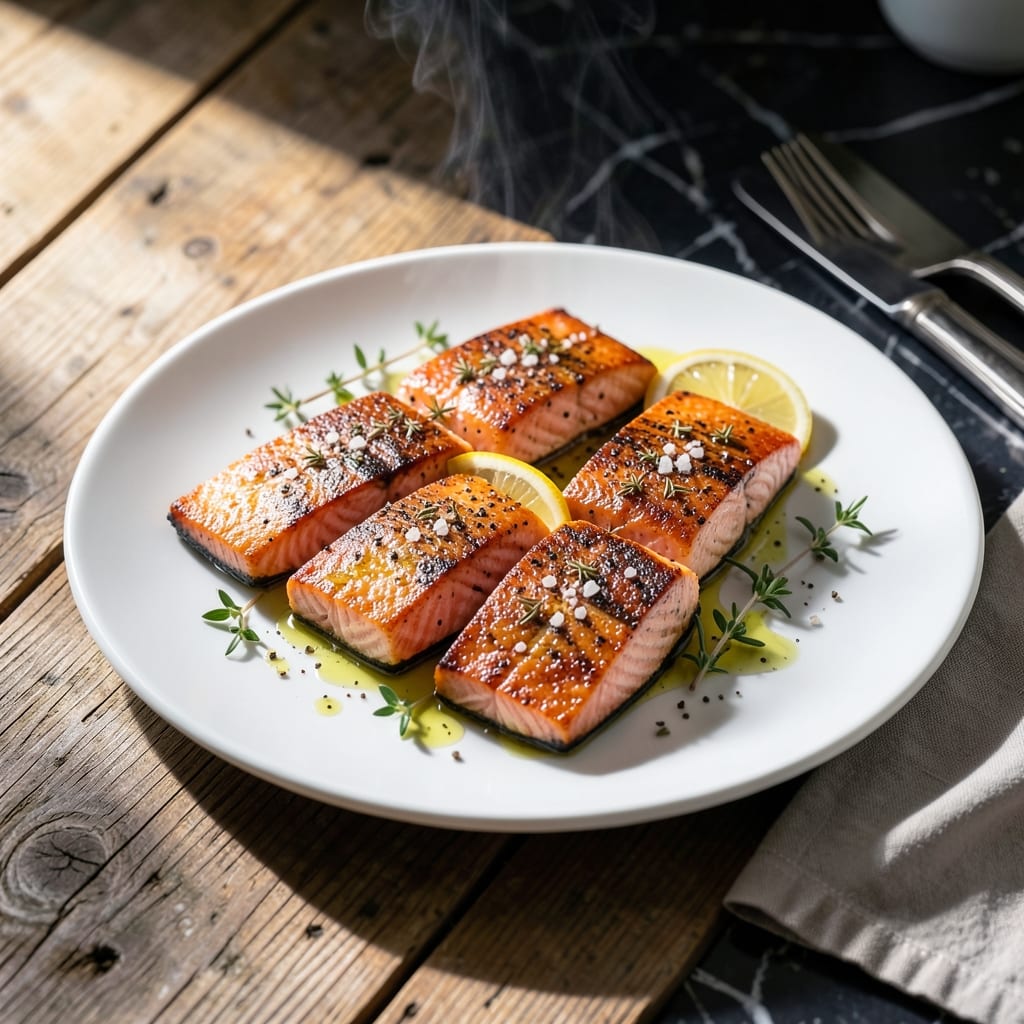
I’ve spent years perfecting oven-baked salmon with skin, and this method delivers a crispy golden crust and flaky flesh every time. The secret lies in starting with cold salmon and a hot oven to render the skin properly.
Pat the fillets dry, season simply, and bake at a high temperature for just 12-15 minutes. This ensures the skin crisps without overcooking the delicate flesh. The result is restaurant-quality salmon with minimal effort.
Serve the salmon straight from the oven with a squeeze of lemon to highlight its natural richness. The contrast between the crispy skin and tender center is what makes this dish unforgettable.
Pair with roasted asparagus or a light salad for a complete meal that’s both elegant and approachable. This technique never fails to impress.
Ingredients for Oven Baked Salmon Recipe with Skin
Simple ingredients create restaurant-quality salmon with crispy skin and tender flesh.
| Ingredient | Amount | Notes |
|---|---|---|
| Salmon Fillets 🐟 | 4 whole | Skin-on, center-cut preferred |
| Olive Oil 🫒 | 2 tbsp | Extra-virgin for best flavor |
| Kosher Salt 🧂 | 1 tsp | Diamond Crystal preferred |
| Black Pepper 🌶️ | ½ tsp | Freshly ground for best texture |
| Garlic Powder 🧄 | ½ tsp | Or 2 fresh cloves minced |
| Dried Thyme 🌿 | ½ tsp | Or 1 tbsp fresh thyme leaves |
| Lemon 🍋 | 1 whole | For serving, cut into wedges |
| Fresh Dill 🌿 | 2 tbsp | Chopped, for garnish |
| Dijon Mustard 🟡 | 1 tbsp | Optional for extra flavor |
| Honey 🍯 | 1 tsp | Optional for glaze |
[recipe_ingredient_scaler]
The salmon is the star here. Center-cut fillets with skin on ensure even cooking and that perfect crisp. Look for wild-caught if possible—it has better flavor and texture. Most seafood counters will portion it for you, but ask for the center cut. Whole Foods or local fishmongers often have the best selection. Always check for freshness: the fish should smell clean, not fishy.
No fresh dill? Substitute dried dill at one-third the amount. Out of thyme? Rosemary or oregano work well too. For a sweeter glaze, swap honey for maple syrup. If you don’t have Dijon, regular mustard works in a pinch (just use half the amount). The olive oil can be any neutral oil, but extra-virgin adds depth.
Salmon is best cooked the day you buy it, but it’ll keep in the fridge for 1-2 days if stored properly. Wrap it tightly in paper towels, then plastic. Leftovers? They’re great cold or reheated gently—lasts 3-4 days in the fridge. Freeze uncooked fillets for up to 3 months.
Why You’ll Love This Recipe
- I’ll be real: cold salmon on salad the next day tastes even better, and it reheats like a dream.
- One Pan Wonder: I toss the fillets with olive oil, salt, pepper, and garlic powder, then let the oven do the rest—no flipping, no fuss.
- Crispy Skin Magic: That garlic powder and olive oil combo gives the skin a golden, crackly finish while the inside stays tender.
- Weeknight Hero: Between us, this is my 20-minute dinner lifesaver when the kids have soccer practice at 5:30.
Step-by-Step Instructions for Oven Baked Salmon With Skin
Master the technique that delivers crispy skin and flaky flesh with every bake.
Step 1: Prep and Season the Salmon Fillets
Pat the 4 whole Salmon Fillets completely dry with paper towels, paying special attention to the skin side. Moisture is the enemy of crispiness, so you want the surface as dry as possible. I like to place them on a paper towel-lined tray for 5 minutes to absorb any lingering dampness.
Drizzle the fillets with 2 tbsp Olive Oil and rub it evenly over all surfaces, including the skin. Then season uniformly with 1 tsp Kosher Salt, 0.5 tsp Black Pepper, 0.5 tsp Garlic Powder, and 0.5 tsp Dried Thyme. The seasoning should form a visible, even layer—don’t be shy.
Step 2: Arrange on Baking Sheet for Optimal Heat Contact
Position a rack in the center of your oven and preheat to 400°F. While the oven heats, line a baking sheet with parchment paper. Place the seasoned fillets skin-side down on the parchment, spacing them at least 1 inch apart to ensure even air circulation.
Press down gently on each fillet for 10 seconds to ensure full contact between the skin and parchment. This prevents curling during baking and maximizes crispiness. The parchment is crucial—it allows the skin to crisp without sticking, and the oil helps conduct heat directly to the skin.
Step 3: Bake to Crispy Skin and Flaky Flesh
Bake the salmon for 12-15 minutes, depending on thickness. You’re looking for the flesh to turn from translucent to opaque and to flake easily when tested with a fork. The skin should appear golden brown and crisp when done.
For the last 2 minutes of baking, I switch the oven to broil on high. This gives the skin an extra boost of crispiness without overcooking the flesh. Watch closely during broiling—the skin can go from perfect to burnt quickly. The fillets are ready when the internal temperature reaches 145°F at the thickest part.
Step 4: Add Glaze and Garnish for Serving
While the salmon bakes, mix 1 tbsp Dijon Mustard and 1 tsp Honey in a small bowl. As soon as the salmon comes out of the oven, brush this mixture lightly over the top of each fillet. The residual heat will warm the glaze without cooking it further.
Garnish with 2 tbsp Fresh Dill sprinkled evenly over all fillets and serve with 1 whole Lemon cut into wedges on the side. The acid from the lemon brightens the rich salmon, while the dill adds a fresh, herbal note. Serve immediately—the skin loses its crispness as it cools.
Pro Tips For Making Oven Baked Salmon Recipe With Skin
- Pat It Dry: Use paper towels to thoroughly dry the salmon before seasoning—I learned this the hard way after my first three batches steamed instead of crisped.
- Skin Side Down: Always place the salmon skin-side down on the baking sheet. This guarantees the skin gets crispy while the flesh stays tender.
- High Heat First: Start with the oven at 425°F to get that skin extra crispy, then drop to 375°F if you’re worried about overcooking the center.
- Rest Before Serving: Let it sit for 5 minutes after baking—this keeps the juices inside instead of all over your plate (yes, even if you’re starving).
Make-Ahead Tips for This Recipe
Prep Ahead Morning
Pat the fillets dry and season them the morning of serving. Store uncovered on a parchment-lined tray in the fridge for up to 8 hours. This drying technique enhances the skin’s crispiness significantly.
I often prep this before dropping Lily at preschool—it saves 10 minutes of evening rush. The salt also begins curing the surface, improving texture. 💡
Seasoning Mix
Combine 1 tsp Kosher Salt, 0.5 tsp Black Pepper, 0.5 tsp Garlic Powder, and 0.5 tsp Dried Thyme in a small bowl. This mix keeps well in an airtight container for up to 1 week.
I make a double batch and store it in my spice drawer. It’s perfect for sprinkling on roasted veggies too.
Partial Bake Method
Bake the seasoned fillets at 400°F for exactly 8 minutes, then cool completely. Refrigerate covered for up to 24 hours before finishing.
When ready, bake at 400°F for 5-7 minutes until reaching 145°F. This method works great for meal prep Sundays.
Glaze Prep
Mix the 1 tbsp Dijon Mustard and 1 tsp Honey up to 2 days ahead. Store in a sealed container in the fridge.
The flavors meld beautifully over time. Stir before using as the honey may settle.
Nutrition Facts
Frequently Asked Questions
Why start with cold salmon?
Cold salmon helps the skin render fat slowly, creating that perfect crisp texture without overcooking the flesh.
Can I skip the parchment paper?
No, parchment prevents sticking and allows even heat distribution for crispy skin. 400°F is hot enough to cause sticking without it.
How do I know when it’s done?
Look for opaque flesh that flakes easily and reaches 145°F internally. The skin should be golden brown and crisp.
What if the skin sticks to the tray?
Ensure fillets are completely dry before baking and use fresh parchment. Press fillets down for 10 seconds before baking to prevent curling.

Trained in classic French technique but raised on slow-cooked ribs and spicy rubs, she blends culinary skill with smoke and soul.
- Recipe for Boneless Pork Chops in Cast Iron Skillet: Sear and Baste to Juicy Perfection - October 3, 2026
- Recipe for Boneless Cross Rib Roast: Slow-Roasted Beef with Herb Crust - October 3, 2026
- Hamburgers in Sauce Recipe Crock Pot: Slow-Cooked Savory Delight - October 3, 2026