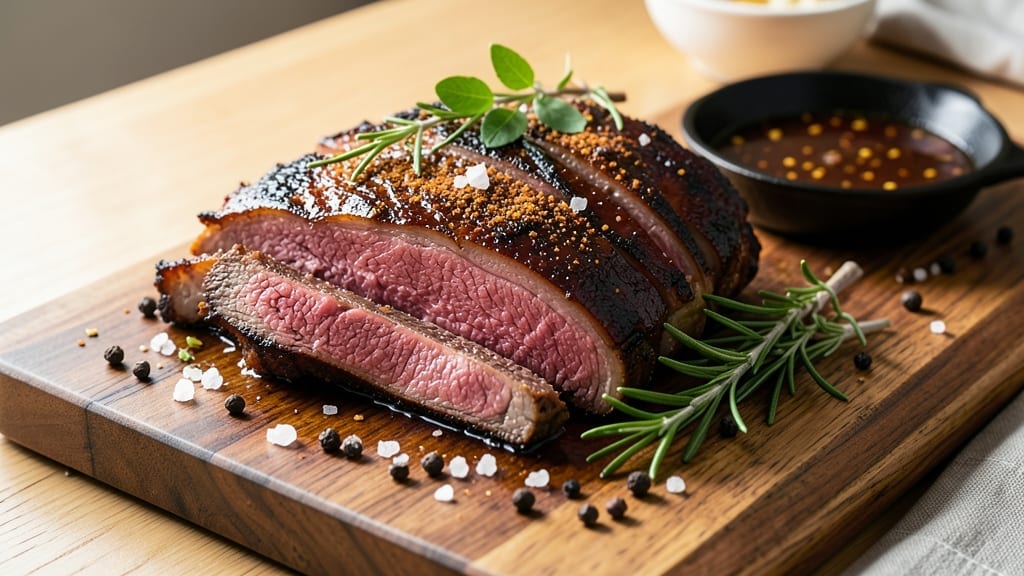
Mastering oven-cooked beef brisket transforms tough cuts into melt-in-your-mouth perfection with a crispy bark that rivals smoker results. After years of perfecting this technique—including my first disastrous attempt where I nearly set off the fire alarm—I’ve developed a foolproof method that delivers tender meat every time.
The secret lies in low-and-slow cooking with precise temperature control, ensuring the brisket stays juicy while developing that coveted crust.
This recipe requires just five key ingredients but delivers restaurant-quality results at home. We’ll use a simple dry rub to enhance the beef’s natural flavors, then let the oven do the heavy lifting over six hours at a steady 275°F.
Unlike traditional smoker methods, this approach works perfectly in any oven, making it accessible for home cooks without specialized equipment. The beauty of oven brisket is its versatility—serve it sliced thin for sandwiches or shredded for tacos, and the tender meat adapts to any meal.
By the time you’re done, you’ll have perfectly tender beef with a deep, caramelized bark that adds layers of flavor. The slow braising process breaks down the connective tissue, resulting in meat so soft it nearly dissolves on your tongue.
This isn’t just another brisket recipe—it’s a game-changer for weeknight dinners or holiday feasts, proving you don’t need a smoker to achieve showstopping results.
Pair it with classic sides like creamy mashed potatoes, roasted root vegetables, or a tangy red wine reduction to complete the meal. The leftovers reheat beautifully, making this the ultimate make-ahead dish for busy families. Let’s get started—your taste buds will thank you.
Ingredients for oven cooked beef brisket
Five simple ingredients transform tough brisket into melt-in-your-mouth perfection with crispy bark.
| Ingredient | Amount | Notes |
|---|---|---|
| Beef Brisket 🥩 | 4 lb | Whole packer cut, fat cap intact |
| Kosher Salt 🧂 | 2 tbsp | Diamond Crystal preferred |
| Black Peppercorns 🌶️ | 1 ½ tbsp | Freshly cracked preferred |
| Granulated Garlic 🧄 | 1 tbsp | Not garlic powder |
| Smoked Paprika 🌶️ | 1 tbsp | For deep smoky flavor |
| Brown Sugar 🍯 | 1 tbsp | Light or dark variety |
| Beef Broth 💧 | 1 cup | Low-sodium preferred |
| Yellow Onion 🧅 | 1 whole | Quartered, skin on |
| Fresh Rosemary 🌿 | 1 sprig | For aromatic depth |
| Fresh Thyme 🌿 | 2 sprigs | Stems removed |
| Apple Cider Vinegar 🍎 | 2 tbsp | For tenderizing |
| Extra-Virgin Olive Oil 🫒 | 2 tbsp | For basting |
[recipe_ingredient_scaler]
The brisket is the star—look for a 4-pound packer cut with plenty of marbling and that fat cap intact. Costco or local butcher shops usually carry the best quality, but the meat department at Whole Foods works too. If the cut is lean, trim the fat to about 1/4-inch thickness—this helps create that coveted bark. The fat cap should stay on; it renders down during cooking, keeping the meat juicy. I always buy mine a day ahead and let it sit uncovered in the fridge—this helps the rub adhere better and gives the brisket a head start on seasoning.
No smoked paprika? Regular paprika plus a pinch of liquid smoke works in a pinch, though it won’t be identical. Fresh rosemary and thyme are ideal, but dried at half the amount gets you close. The beef broth can be swapped for water plus 1 tbsp soy sauce if you’re in a bind, though the umami depth suffers. For the vinegar, red wine vinegar or even lemon juice will work, but apple cider adds a subtle sweetness that complements the beef. The olive oil matters here—use something with a high smoke point like avocado oil if you’re worried about burning, but extra-virgin olive oil adds great flavor when basting.
This brisket reheats like a dream—honestly, it’s even better the next day once all the flavors meld. Store leftovers in the fridge for up to 5 days, tightly wrapped in butcher paper or foil to retain moisture. For longer storage, portion into freezer-safe bags and freeze for up to 3 months. The bark stays crispy if you reheat it in a 350°F oven for 15 minutes, covered loosely with foil. I always make a double batch—one for dinner, one to freeze for lazy weeknights when I don’t feel like cooking.
Why You’ll Love This Recipe
- No-Fuss Prep: I swear by this recipe because it’s literally three steps: rub, roast, repeat. No brining, no fancy equipment—just a brisket, a handful of spices (kosher salt, cracked peppercorns, that’s it), and your oven doing all the work. Honestly, I’ve made it on a weeknight while scrolling through my phone.
- Smoky Depth Magic: That smoked paprika and granulated garlic? Chef’s kiss. The crust gets this crackly, caramelized edge while the inside stays tender enough to melt—no dry, tough brisket here. It’s the kind of flavor that makes people ask, “What’d you do to it?” (Spoiler: Just salt, pepper, and patience.)
- Leftovers for Days: Between us, this recipe makes way more than I need for dinner. I’ll save half for sandwiches the next day or toss chunks into tacos—no one complains when you’ve got perfectly seasoned beef on hand. (My freezer’s full of it, actually.)
- Budget Hero: A whole brisket for less than $10 a pound? Yes, please. It stretches across meals, feeds a crowd, and still tastes like you spent hours on it. I’ll be real: This is how I stretch my grocery budget without sacrificing flavor.
Step-by-step instructions for slow-braised beef brisket
Here’s how to transform a tough cut into melt-in-your-mouth perfection with a perfect crust.
Prepare and Season the Brisket
Begin by trimming the fat cap of the 4 lb beef brisket to about ¼-inch thickness using a sharp knife. Leave the fat intact on the edges to protect the meat during cooking. Pat the entire surface dry with paper towels—this step is crucial for developing that coveted crispy bark later.
In a small bowl, combine the 2 tbsp kosher salt, 1.5 tbsp freshly cracked black peppercorns, 1 tbsp granulated garlic, 1 tbsp smoked paprika, and 1 tbsp brown sugar. Rub this mixture generously over all sides of the brisket, pressing firmly so the spices adhere. Let it sit at room temperature for 30 minutes while you prepare the oven.
Sear and Braise the Brisket
Preheat your oven to 300°F. Heat the 2 tbsp extra-virgin olive oil in a large Dutch oven over medium-high heat. Place the seasoned brisket fat-side down in the pan and sear for 5 minutes without moving it—this creates the foundation for that crispy bark. Flip and sear the other side for another 5 minutes.
Remove the brisket and set it aside. In the same Dutch oven, add the quartered yellow onion, 1 sprig fresh rosemary, and 2 sprigs fresh thyme. Sauté for 2 minutes until fragrant. Deglaze the pan with the 2 tbsp apple cider vinegar, scraping up all the browned bits from the bottom. Pour in the 1 cup beef broth and return the brisket to the pot, fat-side up.
Slow-Braise to Tender Perfection
Cover the Dutch oven tightly with a lid and transfer it to the preheated 300°F oven. Braise for 3 hours, then carefully flip the brisket and add another ½ cup beef broth if needed to keep the liquid level above half the brisket’s height. Continue cooking for another 2 hours, or until the internal temperature reaches 195°F when measured with a meat thermometer.
The brisket is done when it’s fork-tender and pulls apart easily. The cooking liquid will have reduced significantly, creating a rich, flavorful sauce. Let the brisket rest in the juices for 15 minutes before slicing against the grain into ¼-inch thick pieces.
Create the Crispy Bark
Increase the oven temperature to 450°F. Transfer the brisket to a baking sheet and place it fat-side up. Broil for 3-5 minutes until the fat is rendered and the surface develops a deep golden-brown crust. Watch carefully to prevent burning.
Slice the brisket against the grain and serve immediately with the reduced braising liquid spooned over the top. The result should be tender, juicy meat with a crispy exterior that contrasts beautifully with the rich, savory sauce beneath.
Pro Tips For Making Oven Cooked Beef Brisket
- Trim the Fat First: Cut off the thickest layer of fat on the brisket before seasoning—it’s not just for looks. I learned this the hard way when my first batch rendered way too much grease, making the crust soggy instead of crisp. Aim for about ¼-inch fat left; it’ll still render flavor but won’t steam the meat.
- Salt in Layers, Not Just Once: Don’t just salt the brisket once and call it done. After the initial dry rub, add another light coat of kosher salt and smoked paprika right before you put it in the oven—this guarantees that crust you’re craving. I used to skip this, and my brisket always came out dull.
- Start Hot, Then Chill: Roast the brisket at 425°F (220°C) for the first 30 minutes to kickstart the Maillard reaction—this is non-negotiable for flavor. Then drop it to 275°F (135°C) and let it slow-cook. I was skeptical until I tried it; the high start makes all the difference in depth of flavor.
- Rest Under Foil: After pulling the brisket from the oven, tent it loosely with foil and let it rest for at least 15 minutes. This keeps it from drying out while you slice—trust me, cutting into it fresh is a rookie mistake. The juices redistribute, and every slice stays moist.
Flavor customization for this oven cooked beef brisket
Smoky Chipotle Twist
Add 2 tablespoons adobo sauce from canned chipotles in adobo (plus 1 teaspoon of the sauce) to your rub for a smoky, slightly spicy kick. I like to blend it with the brown sugar and smoked paprika before applying—this creates a sticky, flavorful crust.
For extra heat, sprinkle ½ teaspoon cayenne pepper over the brisket before the final broil. Serve with cool avocado crema or pickled jalapeños to balance the heat. 🌶️
Sweet and Tangy Glaze
Brush the brisket with a honey-balsamic glaze during the last 30 minutes of cooking for a caramelized finish. Mix ¼ cup honey, 2 tablespoons balsamic vinegar, and 1 tablespoon Dijon mustard, then simmer until thickened.
The glaze adds a sweet-tangy contrast to the rich beef, perfect for serving over mashed sweet potatoes or roasted Brussels sprouts. I use local honey from Portland farmers markets for the best flavor.
Herb-Infused Red Wine Reduction
Upgrade the braising liquid by deglazing with ½ cup red wine (like Cabernet Sauvignon) instead of vinegar. Reduce the cooking liquid after removing the brisket into a rich red wine reduction—simmer until syrupy, then finish with 1 tablespoon butter and a pinch of salt.
This luxurious sauce pairs beautifully with creamy polenta or garlic bread. I often make extra to drizzle over grilled vegetables for a second course.
Cajun Spice Rub
Swap the classic rub for a Cajun-inspired blend of 1 tablespoon each of smoked paprika, garlic powder, onion powder, dried thyme, and oregano, plus ½ teaspoon each of cayenne, black pepper, and salt.
The brisket develops a deeper, spicier crust that works perfectly in Cajun-style tacos or red beans and rice. For extra authenticity, add 1 teaspoon filé powder to the braising liquid—just be sure to add it at the end to avoid clumping. 🔥
Brown Sugar and Coffee Rub
For a bold, slightly bitter twist, add 1 tablespoon instant coffee and ½ teaspoon cinnamon to your rub. The coffee enhances the beef’s depth, while the cinnamon adds warmth. This variation shines in sliders with caramelized onions or cheesy grits.
I found this combo at a Portland coffee roaster’s holiday market and fell in love—it’s become a family favorite for Thanksgiving leftovers.
Citrus and Herb Marinade
Marinate the brisket overnight in ¼ cup orange juice, 2 tablespoons olive oil, 1 tablespoon soy sauce, 1 teaspoon grated orange zest, and 1 sprig rosemary, tied together with kitchen twine.
After searing, proceed with the braising method. The citrus brightens the rich beef, making it ideal for spring or summer meals. Serve with herbed quinoa or roasted asparagus for a lighter take on brisket. 💛
Nutrition facts
Frequently asked questions
Can I cook brisket in the oven without a Dutch oven?
Yes! Use a heavy oven-safe pot with a tight-fitting lid, like a deep skillet or even a roasting pan with a lid. For best results, add a rack to elevate the brisket and prevent it from sitting in liquid. If you don’t have a lid, cover tightly with heavy-duty foil to trap steam and maintain moisture.
Why does my brisket turn out dry even after slow cooking?
Dry brisket usually happens from overcooking or losing moisture. Always cook until the internal temp hits 195°F—no higher! Use a meat thermometer to avoid guesswork. Also, keep the brisket submerged in liquid (add more broth if needed) and never skip the 15-minute rest before slicing.
What’s the best way to slice brisket for sandwiches?
Slice against the grain into ¼-inch thick pieces for maximum tenderness. The grain runs diagonally across the flat cut—look for the muscle fibers and cut perpendicular to them. For sandwiches, stack 3-4 slices per bun with your favorite toppings like horseradish cream or caramelized onions.
Can I make this brisket in an air fryer?
Not ideal for full brisket cooking, but you can try a hybrid method: Sear the brisket in a skillet, then transfer to an air fryer at 275°F for 4-5 hours with ½ cup broth sprayed every hour. Finish with the broil step. Expect less bark development and longer cooking time compared to the oven method.
How long can I keep cooked brisket in the fridge?
Store cooked brisket in an airtight container for up to 5 days in the fridge. For longer storage, portion into freezer bags and freeze for 3 months. Reheat in a 350°F oven for 15 minutes with a splash of broth to restore moisture—never microwave directly.

Trained in classic French technique but raised on slow-cooked ribs and spicy rubs, she blends culinary skill with smoke and soul.
- Oven Cooked Beef Brisket Recipe: Slow-Braised Tender Meat With Crispy Bark - October 15, 2026
- Beef Brisket Pit Boss Recipe: Smoky, Fall-Apart Tenderness in 8 Hours - October 15, 2026
- Beef Brisket Pit Boss Recipe: Smoky, Fall-Apart Tenderness in 8 Hours - October 15, 2026