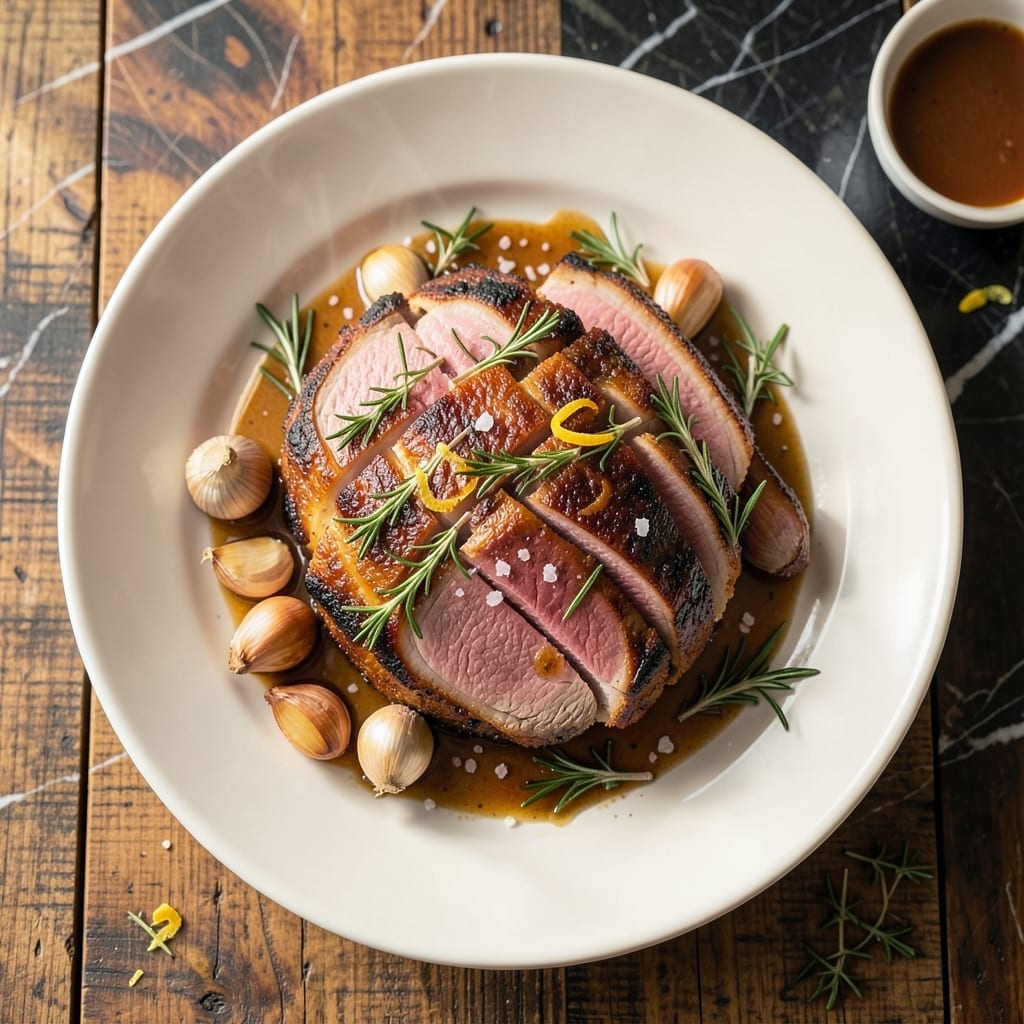
This oven method delivers herb-crusted pork loin with caramelized edges and juicy centers every time. The dry rub creates a flavorful bark while locking in moisture.
Simple preparation yields professional results. A hot oven and proper resting ensure perfect texture from crust to core. Serve with roasted vegetables for a complete meal.
Ingredients for Oven Roasted Pork Loin
Herb-crusted pork loin requires bold seasonings and a quality cut for caramelized perfection.
| Ingredient | Amount | Notes |
|---|---|---|
| Pork Loin 🥩 | 2 lb | Boneless, center-cut preferred |
| Olive Oil 🫒 | 2 tbsp | Extra-virgin for richness |
| Dried Rosemary 🌿 | 2 tsp | Crushed for maximum flavor |
| Dried Thyme 🍃 | 2 tsp | Rubbed between fingers |
| Garlic Powder 🧄 | 1 tbsp | Not garlic salt |
| Onion Powder 🧅 | 1 tbsp | Freshly ground preferred |
| Kosher Salt 🧂 | 1 tbsp | Diamond Crystal recommended |
| Black Pepper 🌶️ | 1 tsp | Freshly ground preferred |
| Dijon Mustard 🟡 | 2 tbsp | Smooth, not whole grain |
| Fresh Garlic Cloves 🧄 | 4 cloves | Minced for dry rub |
| Brown Sugar 🟤 | 1 tbsp | Light or dark variety |
| Smoked Paprika 🌶️ | 1 tsp | For depth of flavor |
[recipe_ingredient_scaler]
The pork loin quality directly impacts results. Center-cut boneless from Whole Foods or a reputable butcher ensures even cooking and optimal marbling. Look for a vibrant pink color with a thin fat cap—avoid any pieces with a grayish tint. For the dry rub, Penzeys offers exceptional spices, though bulk bins at natural food stores work well too. Freshly grinding the black pepper and rubbing the dried herbs between your fingers releases essential oils for maximum flavor impact.
No smoked paprika? Regular paprika plus a pinch of cayenne approximates the smokiness. Fresh thyme or rosemary can replace dried at a 1:3 ratio (1 tbsp fresh = 1 tsp dried). If avoiding sugar, maple syrup at half the quantity adds caramelization without overpowering. Dijon mustard substitutes include whole grain mustard (for texture) or Worcestershire sauce (for depth), though the latter contains anchovies—ensure it aligns with dietary needs.
Store the pork loin in its original packaging in the coldest part of your fridge for up to 3 days before cooking. The dry rub can be pre-mixed and kept in an airtight container for 6 months. Leftovers reheat beautifully—slice and warm in a skillet with a splash of broth to restore moisture, or enjoy cold in sandwiches for up to 4 days.
Why You’ll Love This Recipe
- Set It and Forget: I rub the pork loin with olive oil, herbs, and garlic powder, pop it in the oven, and walk away—no babysitting required.
- Herb-Crusted Perfection: The rosemary and thyme form this insane crust that cracks when you slice it, and the garlic? It’s in every bite.
- Feeds My Crowd: One pork loin, a handful of spices, and suddenly I’ve got enough for Sunday dinner and Monday’s sandwiches.
- Budget Hero: Pork loin is always on sale at my store, and a little goes a long way—this feels fancy but costs less than takeout.
Step-by-Step Instructions for Oven Roasted Pork Loin
Master this technique for perfectly tender meat with a caramelized herb crust every time.
Step 1: Prepare the Herb and Spice Rub
In a small bowl, combine the 2 tsp Dried Rosemary, 2 tsp Dried Thyme, 1 tbsp Garlic Powder, 1 tbsp Onion Powder, 1 tbsp Kosher Salt, 1 tsp Black Pepper, 1 tbsp Brown Sugar, and 1 tsp Smoked Paprika. I crush the rosemary and thyme between my fingers as I add them to release their essential oils.
Mince the 4 cloves Fresh Garlic Cloves finely and stir them into the dry mixture. Add the 2 tbsp Dijon Mustard and 2 tbsp Olive Oil, then mix until a thick paste forms. This paste will adhere beautifully to the pork loin and create a flavorful crust.
Step 2: Coat and Sear the Pork Loin
Pat the 2 lb Pork Loin dry with paper towels to ensure the rub adheres properly. Place the pork loin on a clean work surface and spread the herb paste evenly over all sides, pressing gently to create a uniform coating. This step ensures every bite is infused with bold, aromatic flavors.
Heat a large oven-safe skillet over medium-high heat. Add the coated pork loin and sear for 2-3 minutes per side until the surface is golden brown and the crust begins to caramelize. The searing process locks in juices and creates a beautiful, flavorful exterior.
Step 3: Roast to Perfection
Preheat your oven to 375°F. Transfer the seared pork loin in the skillet directly to the oven. Roast for 25-30 minutes, or until the internal temperature reaches 145°F when measured with an instant-read thermometer inserted into the thickest part of the loin.
Baste the pork loin with the pan juices halfway through the cooking time to enhance the caramelization and keep the crust moist. The aroma of the herbs and spices will fill your kitchen, signaling that your roast is nearing completion.
Step 4: Rest and Serve
Remove the pork loin from the oven and transfer it to a cutting board. Tent loosely with aluminum foil and let it rest for 10-15 minutes. This resting period allows the juices to redistribute throughout the meat, ensuring a moist and tender result.
Slice the pork loin against the grain into ½-inch thick pieces. The slices should reveal a juicy interior with a beautifully caramelized crust. Serve immediately with your favorite sides to enjoy the full depth of flavor and perfect texture.
Pro Tips For Making Oven Roasted Pork Loin
- Sear Before Roasting: I learned this the hard way—sear the pork loin in a hot pan with olive oil for 2-3 minutes per side before roasting to lock in juices and get that golden crust.
- Pat It Dry: Skip the wet surface—pat the pork loin completely dry with paper towels before seasoning so the rosemary and thyme actually stick and brown.
- Don’t Overcrowd Herbs: After burning my first few attempts, I now spread the dried rosemary and thyme evenly, pressing them into the oil-rubbed meat instead of dumping them in one spot.
- Use a Thermometer: Sounds obvious, but pull it at 145°F internal temp—no higher, or you’ll end up with a dry, overcooked loin, even if it looks perfect on the outside.
Troubleshooting This Dish
Dry or Tough Meat
If your pork loin turns out dry, it likely overcooked. Use an instant-read thermometer to pull it at 145°F internal temperature. I also recommend brining the pork loin in ¼ cup kosher salt dissolved in 4 cups water for 2 hours before cooking to boost moisture retention. 💡
Pale Crust
For a deeper caramelization, ensure your oven is fully preheated to 375°F before roasting. Pat the pork loin very dry before applying the rub, and don’t skip the searing step—2-3 minutes per side in a hot skillet creates the foundation for that perfect crust.
Uneven Cooking
If one end is overdone while the other is undercooked, your pork loin might be uneven in thickness. I always trim the thinner end to match the thicker portion. Alternatively, fold the thin end under and secure it with kitchen twine before cooking for even heat distribution.
Rub Won’t Stick
This usually happens if the pork loin isn’t dry enough. Pat it thoroughly with paper towels, then apply a thin layer of Dijon mustard before the rub—it acts like glue. I also let the rubbed pork loin sit uncovered in the fridge for 30 minutes to help the crust set. 🔥
Juices Run Clear Too Soon
Don’t rely on clear juices alone—always use a thermometer. Pork can reach a false “done” appearance at 140°F when juices run clear but isn’t fully cooked. Wait for the internal temp to hit 145°F for safe, perfectly cooked meat.
Overly Salty Crust
If your crust tastes too salty, you may have used table salt instead of kosher salt—they’re not interchangeable by volume. Stick with Diamond Crystal kosher salt as specified. To balance, serve with a sweet side like roasted apples or a tangy sauce.
Nutrition Facts
Frequently Asked Questions
How do I know when it’s fully cooked?
Use an instant-read thermometer to check the internal temperature. It’s done at 145°F in the thickest part. Juices may run clear before this, so don’t rely on that alone.
Can I use fresh herbs instead of dried?
Yes! Use a 1:3 ratio (1 tbsp fresh = 1 tsp dried). Fresh rosemary and thyme work wonderfully, but crush them to release their oils for maximum flavor.
What if my crust isn’t crispy enough?
Ensure the oven is fully preheated to 375°F. Pat the meat very dry before applying the rub and sear it for 2-3 minutes per side in a hot skillet.
How long should I let it rest before slicing?
Rest for 10-15 minutes under foil. This lets juices redistribute, keeping the meat moist and tender. Slice against the grain for the best texture.

Trained in classic French technique but raised on slow-cooked ribs and spicy rubs, she blends culinary skill with smoke and soul.
- Recipe for Boneless Pork Chops in Cast Iron Skillet: Sear and Baste to Juicy Perfection - October 3, 2026
- Recipe for Boneless Cross Rib Roast: Slow-Roasted Beef with Herb Crust - October 3, 2026
- Hamburgers in Sauce Recipe Crock Pot: Slow-Cooked Savory Delight - October 3, 2026