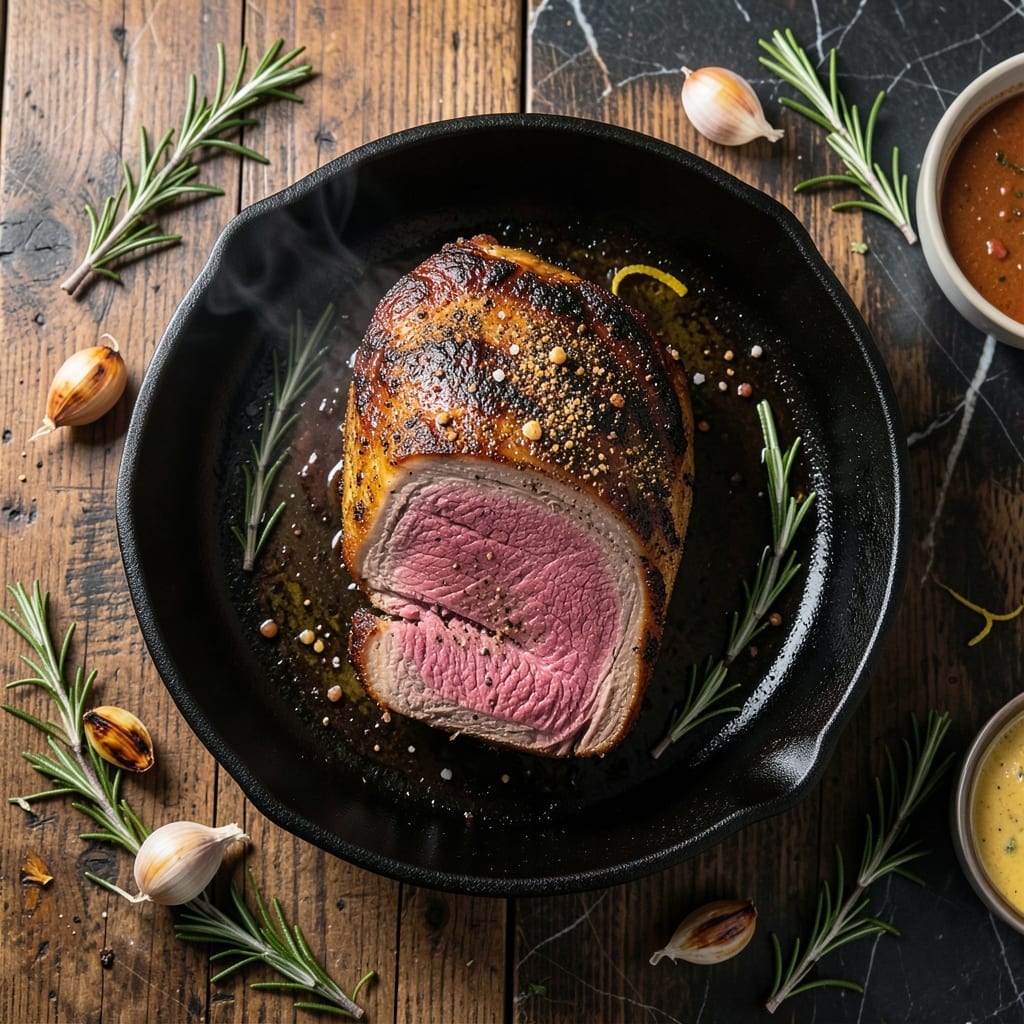
This reverse sear method delivers even doneness every time with minimal effort.
By starting low in the oven, then finishing with a high-heat sear, you achieve perfectly cooked tri tip from edge to center.
Ingredients for Oven Tri Tip
A well-seasoned tri tip and a few pantry staples create this foolproof oven method.
| Ingredient | Amount | Notes |
|---|---|---|
| Tri Tip Roast 🥩 | 2 ½ lb | Well-marbled, trimmed of excess fat |
| Kosher Salt 🧂 | 1 ½ tbsp | Diamond Crystal preferred for even seasoning |
| Freshly Ground Black Pepper 🌶️ | 1 tbsp | Coarse grind for texture |
| Garlic Powder 🧄 | 1 tsp | Not garlic salt |
| Onion Powder 🧅 | 1 tsp | Balances the rub |
| Smoked Paprika 🌶️ | 1 tsp | Adds depth to crust |
| Olive Oil 🫒 | 2 tbsp | High smoke point for searing |
| Unsalted Butter 🧈 | 2 tbsp | For basting during sear |
| Fresh Rosemary Sprigs 🌿 | 2 pieces | Optional for aromatic finish |
| Fresh Thyme Sprigs 🍃 | 2 pieces | Optional for aromatic finish |
| Red Wine 🍷 | ¼ cup | Dry variety for deglazing |
[recipe_ingredient_scaler]
The tri tip quality is paramount. Costco or Whole Foods typically carry well-marbled cuts—look for even fat distribution and vibrant red color. Avoid pre-cut steaks; a whole roast allows for more even cooking and better control over thickness. USDA Choice or Prime grades deliver superior tenderness. If your butcher offers dry-aged tri tip, the concentrated flavor is worth the premium.
No smoked paprika? Chipotle powder at half the amount adds similar depth. Out of fresh herbs? Dried rosemary and thyme at one-third the quantity work in the rub. For a non-alcoholic deglaze, beef broth with a splash of balsamic vinegar mimics red wine’s acidity. The olive oil can be substituted with avocado oil for an even higher smoke point during searing.
Store the raw tri tip in its original packaging on a plate in the coldest part of your fridge for up to 3 days. Post-cooking, leftovers keep for 4-5 days wrapped tightly. Slice against the grain before storing for easier reheating. Freezes beautifully for up to 3 months with minimal texture loss.
Why You’ll Love This Recipe
- Minimal Effort: I rub the tri tip with salt, pepper, garlic, and onion powder—no marinating, no fuss. Just pop it in the oven and let it do the work.
- Rich and Savory: The crust from the kosher salt and black pepper gives way to tender, juicy beef packed with deep, smoky flavor from the garlic and onion.
- Feeds a Crowd: This recipe is my go-to for Sunday dinners, birthday gatherings, or even meal prep—I slice it thin and it stretches for days.
- Leftovers Gold: Honestly, the next-day tri tip sandwiches are even better, and it freezes beautifully for quick meals later.
Step-by-Step Instructions for Oven Tri Tip
Master the reverse sear method for perfectly even doneness and a beautiful crust.
Step 1: Season the Tri Tip Thoroughly
Pat the 2.5 lb tri tip roast completely dry with paper towels. This removes surface moisture that would prevent proper browning. In a small bowl, combine the 1.5 tbsp kosher salt, 1 tbsp freshly ground black pepper, 1 tsp garlic powder, 1 tsp onion powder, and 1 tsp smoked paprika.
Rub this seasoning mixture all over the roast, pressing firmly to ensure it adheres. The spices will form a flavorful crust as the meat cooks. Let the seasoned roast sit at room temperature for 30-45 minutes before cooking to ensure even cooking throughout.
Step 2: Slow-Roast in the Oven
Preheat your oven to 275°F. Place a wire rack in a rimmed baking sheet and position the roast fat-side up on the rack. The rack allows air to circulate around the entire roast, promoting even cooking.
Roast for 1 to 1.5 hours, until the internal temperature reaches 115-120°F on an instant-read thermometer. You want the center to be 10-15°F below your desired final temperature—this ensures perfect doneness after searing.
Step 3: Sear for a Perfect Crust
Remove the roast from the oven and increase the temperature to 450°F. Heat the 2 tbsp olive oil in a large oven-safe skillet over high heat until shimmering. Carefully place the roast in the skillet and sear for 2-3 minutes per side until deeply browned.
Add the 2 tbsp unsalted butter, 2 pieces fresh rosemary sprigs, and 2 pieces fresh thyme sprigs to the pan. Tilt the skillet and baste the roast with the melted butter and herbs for an additional 1-2 minutes to enhance the crust.
Step 4: Rest and Deglaze for Serving
Transfer the roast to a cutting board and tent loosely with foil. Let it rest for 10-15 minutes—this allows the juices to redistribute for maximum tenderness. The internal temperature will rise 5-10°F during this time.
Place the skillet back on medium heat and pour in the 0.25 cup red wine. Scrape up the browned bits with a wooden spoon and simmer for 2-3 minutes until slightly reduced. Strain this pan sauce and serve it alongside the sliced roast for added depth of flavor.
Pro Tips For Making Oven Tri Tip
- Reverse Sear Method: Start with a low oven at 250°F until internal temp hits 115°F, then finish with a high broil to get that perfect crust—I learned this the hard way after my first few came out uneven.
- Dry the Surface: Pat the tri tip completely dry before seasoning, or the salt and spices won’t stick properly and you’ll end up with a steamed exterior instead of a sear.
- Don’t Overcrowd: Give the roast space on the rack so heat circulates evenly—after burning one side of a tri tip by cramming it in, I finally got a thermometer to check hot spots.
- Rest Before Slicing: Tent the cooked tri tip under foil for 10 minutes before cutting, or all the juices will run out on the board and leave the meat dry.
Troubleshooting Perfect Results
Uneven Cooking
If you notice the edges cooking faster than the center, your oven may have hot spots. Rotate the baking sheet 180° halfway through the slow-roast phase. I also recommend using an oven thermometer to verify your oven’s true temperature—many run 25°F off. 🌡️
Poor Crust Formation
For a better sear, ensure your skillet is ripping hot before adding the roast. If your pan isn’t hot enough, the meat will steam instead of brown. Use high smoke point oil like the olive oil specified, and don’t crowd the pan.
Tough or Chewy Texture
This usually means the tri tip didn’t rest long enough. Always let it rest for 10-15 minutes after cooking. Also, check that you’re slicing against the grain—tri tip has two grain directions, so rotate your cutting board midway.
Dry or Overcooked
Pull the roast from the oven when it hits 115-120°F internal temp. The sear and rest will bring it to perfect medium-rare. If you overshoot, tent with foil and let it rest—the juices will redistribute and moisten the meat slightly. 💡
Weak Flavor
Don’t skip the resting time after seasoning. Letting the rub sit on the meat for 30-45 minutes before cooking allows the salt to penetrate and the spices to adhere. For extra depth, add 1 tsp brown sugar to your rub next time.
Sauce Too Thin
If your pan sauce is watery, simmer it longer until it coats the back of a spoon. For extra richness, whisk in 1 tbsp cold butter off the heat. This creates a silky, restaurant-quality finish.
Nutrition Facts
Frequently Asked Questions
What’s the ideal internal temperature for medium-rare?
Remove from oven at 115-120°F. The sear and rest will bring it to perfect medium-rare at 130-135°F total.
Can I use a different cooking method?
Yes! For smoky flavor, grill over indirect heat at 275°F then sear directly. Sous vide at 130°F for 6-8 hours also works beautifully.
How do I know when it’s done without a thermometer?
Press test: medium-rare feels like the base of your thumb when relaxed. But for tri tip, a thermometer is highly recommended for accuracy.
Why does my tri tip come out tough?
Most likely it didn’t rest long enough. Always let it rest 10-15 minutes and slice against the grain. Also check you’re not overcooking past 140°F.

Trained in classic French technique but raised on slow-cooked ribs and spicy rubs, she blends culinary skill with smoke and soul.
- Octopus Recipe Pan Fried: Crispy Edges With Tender Bites - October 3, 2026
- Recipe For Fried Pork Chops In An Iron Skillet: Crispy Crust With Juicy Centers - October 3, 2026
- Recipe for Fully Cooked Spiral Ham: Sweet Glaze and Effortless Elegance - October 3, 2026