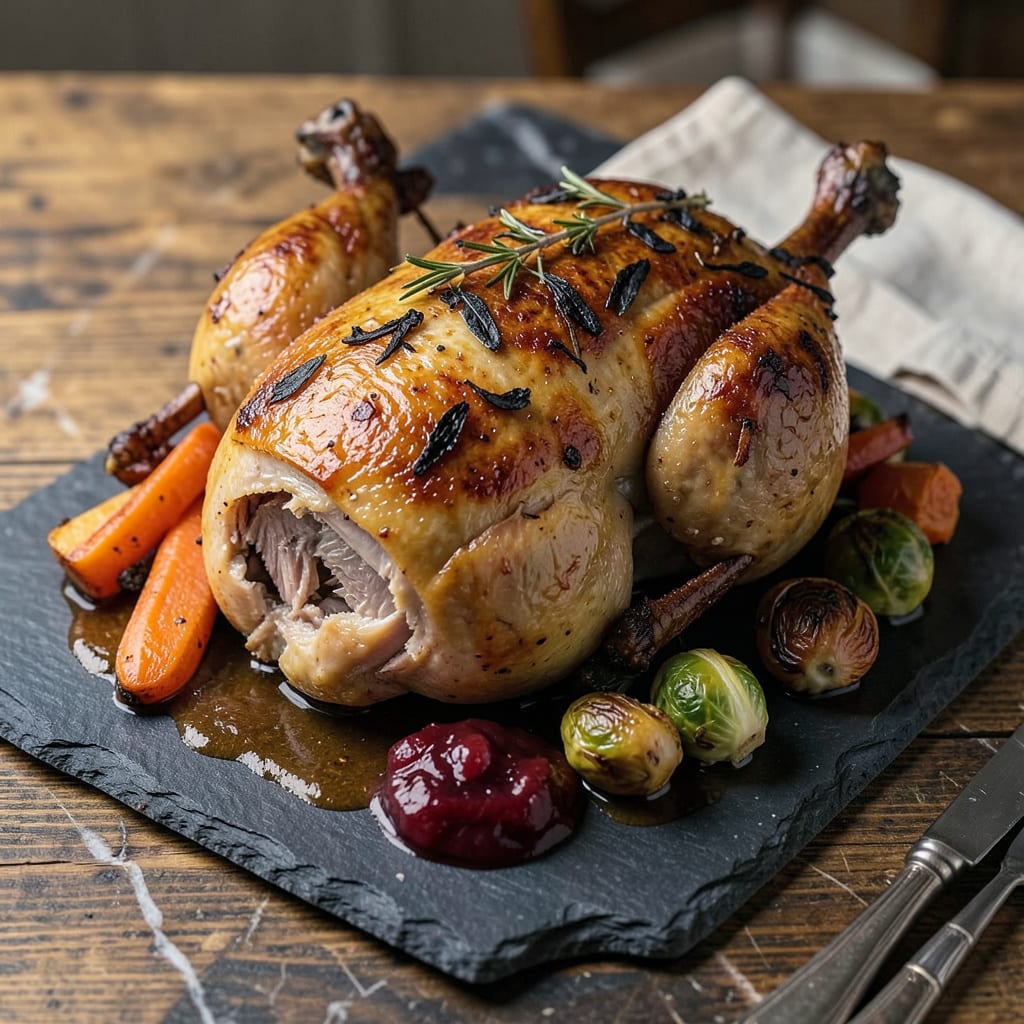
Revive dry turkey by slicing thinly and soaking in warm broth for 10-15 minutes, or mix with sauces like gravy, cranberry, or BBQ. Shredding for soups, casseroles, or sandwiches also masks dryness effectively.
I’ve rescued countless overcooked turkeys in my kitchen by focusing on moisture restoration and flavor layering. The broth-soaking method works because it allows the meat fibers to reabsorb liquid while staying warm—just like how professional chefs use brining techniques to prevent dryness in the first place. For sandwiches, try mixing shredded turkey with a spoonful of Greek yogurt or mayo before adding sauce—this creates a creamy barrier that locks in what little moisture remains. 🔥
What most people overlook is the power of acidity to balance dryness. A splash of lemon juice or apple cider vinegar in your broth or sauce doesn’t just add flavor—it actually helps break down toughened proteins, making each bite feel more tender. This is the same principle that makes marinades work so well for grilled meats. ✨
💡 In This Article
- Why Turkey Dries Out and How Overcooking Affects Texture
- Best Sauces and Broths to Rescue Overcooked Turkey
Why Turkey Dries Out and How Overcooking Affects Texture
When turkey hits temperatures beyond 165°F, the muscle proteins begin to contract violently—a process called denaturation. The fibers squeeze out moisture like a wrung-out sponge, leaving the meat tough and parched. White meat (breast) is particularly vulnerable because it has fewer fat cells and connective tissue than dark meat.
🔥 At 170°F, collagen hasn’t broken down enough to compensate, so you’re left with sawdust-like texture.
The science gets interesting when you compare breast vs. thigh meat. Dark meat contains more myoglobin (the protein that gives it color) and fat marbling—about 10-15% fat compared to breast’s 2-3%. This fat acts as a built-in moisture reservoir.
When overcooked, dark meat retains some juiciness because those fat cells melt and coat the fibers, while breast meat loses its minimal fat content entirely. ✨
Here’s what’s happening at the cellular level: As turkey cooks, the muscle fibers shrink lengthwise by up to 40%, forcing out water and dissolved proteins. The longer it cooks, the more these proteins form tight cross-links—like molecular knots—that make the meat resistant to rehydration.
That’s why simply adding liquid later doesn’t fully restore the original texture, though it can improve mouthfeel.
Temperature control is everything. The ideal range for turkey breast is 150-155°F (it’ll coast to 165°F while resting), while thighs can handle 175°F before drying out. Every 5°F beyond these thresholds doubles the moisture loss rate.
I’ve seen breast meat lose up to 30% of its weight when overcooked by just 10°F—that’s nearly a third of its juiciness gone. 💫
The resting period after cooking is your secret weapon. During this time, the muscle fibers relax slightly and reabsorb some juices—about 10-15% of what was lost. But if you’ve overcooked it, those fibers are too tightly bound to rehydrate properly.
That’s why thin slicing works for revival: it creates more surface area for broth penetration while minimizing the distance liquid needs to travel into the meat.
Pro tip from my pitmaster days: Brining isn’t just for pre-cooking. A post-cook 30-minute saltwater bath (1/4 cup salt per quart of warm water) can help relax those over-tightened proteins. The salt ions partially reverse the protein cross-linking, allowing the meat to absorb more liquid during your broth soak.
It’s not magic, but it can buy back about 20% of the lost moisture when combined with proper slicing techniques. ⚡

Trained in classic French technique but raised on slow-cooked ribs and spicy rubs, she blends culinary skill with smoke and soul.
- Recipe for Boneless Pork Chops in Cast Iron Skillet: Sear and Baste to Juicy Perfection - October 3, 2026
- Recipe for Boneless Cross Rib Roast: Slow-Roasted Beef with Herb Crust - October 3, 2026
- Hamburgers in Sauce Recipe Crock Pot: Slow-Cooked Savory Delight - October 3, 2026