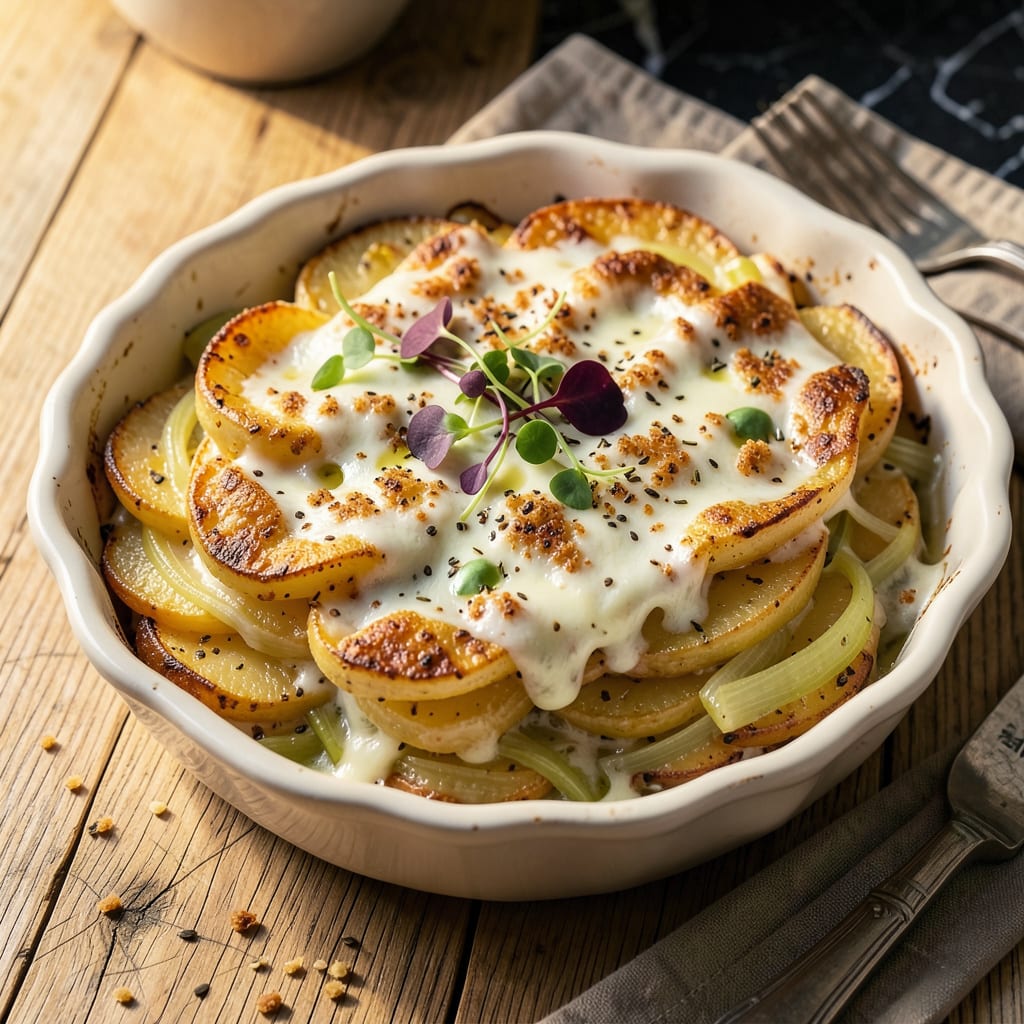
Layer thinly sliced potatoes with a creamy mixture of heavy cream, garlic, and cheddar cheese. Bake at 375°F for 50-60 minutes until golden and bubbly. Optional: Add ham or crispy breadcrumbs for extra texture.
This dish shines when you understand the magic between potato starch and dairy. 🔥 As the slices bake, their natural starches thicken the cream into that signature velvety sauce—no roux needed. I always recommend Yukon Golds for their buttery flavor and waxy texture that holds up beautifully. The key is patience: rushing the bake can cause the cream to separate, while that full hour ensures every layer becomes tender without turning mushy.
What I love most is how adaptable this recipe is for different occasions. For a holiday crowd, I’ll add smoked ham between layers, while a crispy panko topping transforms it into an elegant side for date night. The cheese choice changes everything too—swap cheddar for Gruyère when you want a nuttier depth that pairs perfectly with white wine.
💡 In This Article
- Why Scalloped Potatoes Have That Perfect Creamy Texture
- 5 Ways to Customize Your Scalloped Potatoes Recipe
Why Scalloped Potatoes Have That Perfect Creamy Texture
The secret lies in how potato starch interacts with dairy fats during baking. When you slice potatoes thinly (about 1/8-inch thick), you expose maximum surface area. As they bake, the starch cells rupture and release amylose molecules that act as natural thickeners.
This is why Yukon Gold potatoes—with their medium starch content—create that ideal velvety consistency without turning gluey. 🔥
Temperature control is everything. At 375°F, the cream gently simmers between the potato layers, allowing the starch to gradually absorb liquid while the fats emulsify. Too hot, and the dairy proteins will curdle; too cool, and you’ll end up with a watery sauce.
I’ve found that covering the dish with foil for the first 30 minutes prevents the top from drying out while the interior layers soften perfectly.
The potato variety makes a dramatic difference in texture. Russets (high starch) will break down completely, creating a mashed-potato-like consistency, while waxy red potatoes hold their shape too firmly. Yukon Golds hit the sweet spot with their 14-18% starch content and natural buttery flavor.
Their thin skins also contribute subtle earthiness that complements the creamy sauce beautifully.
Here’s what most people miss: the resting period after baking is crucial. When you pull scalloped potatoes from the oven, the starch molecules are still actively absorbing liquid. Letting them rest for 10-15 minutes allows the sauce to reach its maximum thickness.
This is when the magic happens—the layers set up while staying tender, and the flavors meld together. ✨
For extra richness, I sometimes replace 1/3 of the heavy cream with whole milk. The lower fat content actually helps prevent the sauce from becoming too dense, while still maintaining that luxurious mouthfeel. The milk proteins also brown more readily, creating those coveted golden edges that make the dish so visually appealing.
What surprises many cooks is how salt timing affects texture. Salting the potatoes before baking draws out moisture through osmosis, which then gets reabsorbed during cooking. This creates a more concentrated potato flavor while helping the starch gelatinize more completely. I recommend 1 teaspoon of kosher salt per pound of potatoes for optimal results. 💫

Trained in classic French technique but raised on slow-cooked ribs and spicy rubs, she blends culinary skill with smoke and soul.
- Recipe for Boneless Pork Chops in Cast Iron Skillet: Sear and Baste to Juicy Perfection - October 3, 2026
- Recipe for Boneless Cross Rib Roast: Slow-Roasted Beef with Herb Crust - October 3, 2026
- Hamburgers in Sauce Recipe Crock Pot: Slow-Cooked Savory Delight - October 3, 2026