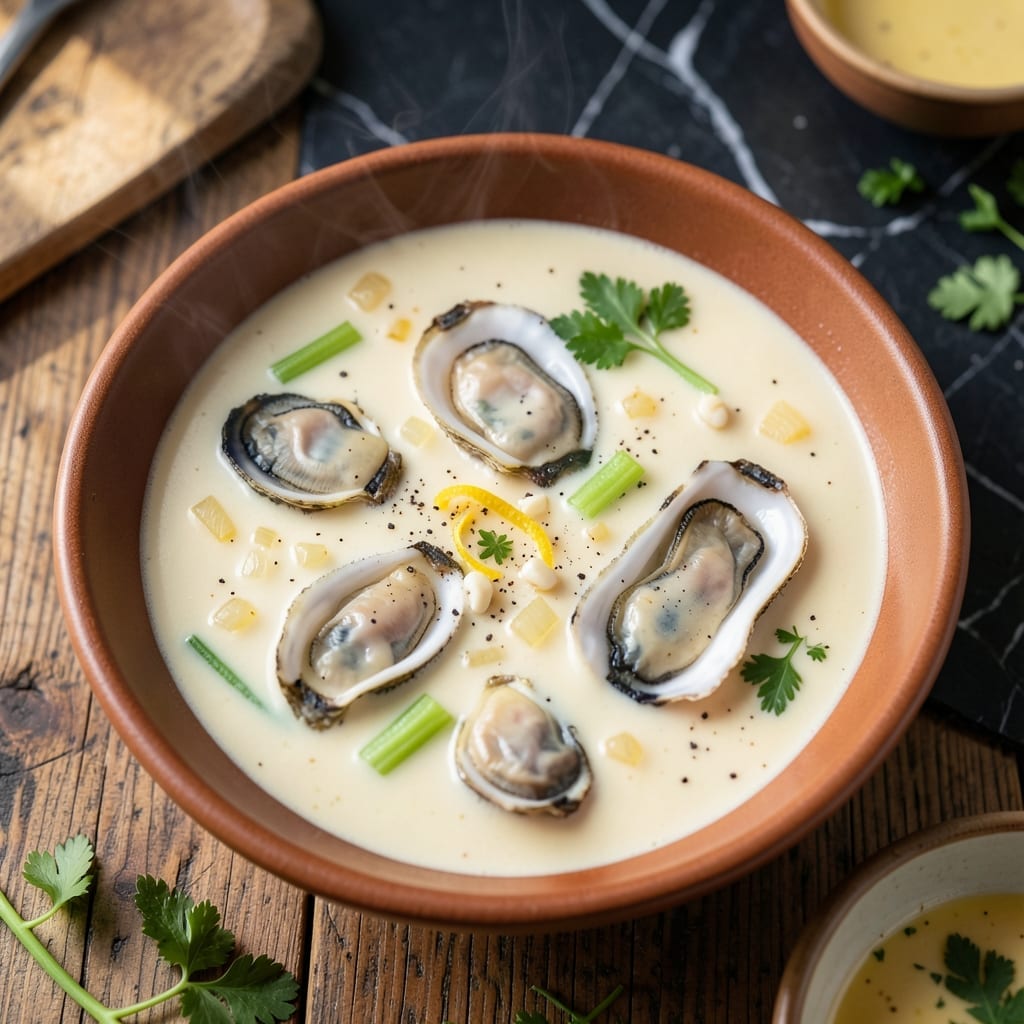
There’s a quiet elegance to a well-made oyster stew that relies on just milk and butter to create its velvety richness. This recipe proves that simplicity often yields the most refined results.
With only a handful of ingredients and minimal effort, you’ll achieve a creamy, comforting bowl that lets the oysters shine. The milk and butter form a delicate base that enhances, rather than overpowers, the briny sweetness of the oysters.
Ingredients for Oyster Stew Recipe with Just Milk and Butter
Elegant simplicity starts with fresh oysters, milk, butter, and a few aromatic staples for depth.
| Ingredient | Amount | Notes |
|---|---|---|
| Fresh Oysters 🦪 | 1 lb | Shucked, liquids reserved |
| Whole Milk 🥛 | 4 cups | Full-fat for creaminess |
| Unsalted Butter 🧈 | ½ cup | Cut into small pieces |
| Yellow Onion 🧅 | 1 whole | Finely diced for base |
| Celery Stalks 🌿 | 2 pieces | Finely diced for aroma |
| Garlic Cloves 🧄 | 2 cloves | Minced for depth |
| All-Purpose Flour 🌾 | 2 tbsp | For light thickening |
| Sea Salt 🧂 | 1 tsp | Adjust to taste after cooking |
| Freshly Ground Black Pepper 🌶️ | ½ tsp | For finishing touch |
| Fresh Parsley 🌿 | 2 tbsp | Chopped, for garnish |
| Bay Leaf 🍃 | 1 whole | For subtle infusion |
[recipe_ingredient_scaler]
The oysters are non-negotiable here. Freshly shucked from a trusted seafood counter—look for plump, briny specimens with clear liquor. Most Whole Foods or local fishmongers will shuck them for you if you ask. The milk needs to be whole for that velvety texture; low-fat won’t deliver the same richness. For butter, Plugrá or Kerrygold are excellent choices for their high fat content and clean flavor.
No fresh oysters? High-quality canned oysters (packed in their liquor) work in a pinch—just drain and rinse them first. Want more depth? A splash of dry white wine deglazes the pan beautifully before adding milk. The celery can be omitted, but it adds a subtle earthiness that balances the brininess. For a gluten-free version, cornstarch slurry at the end replaces the flour.
This stew is best served immediately—it thickens as it cools. Leftovers keep in the fridge for 2 days (the oysters will firm up). Reheat gently on the stove, adding a splash of milk to restore creaminess. Never boil, or the dairy will separate.
Why You’ll Love This Recipe
- One Pot Magic: I love that this comes together in a single pot—just melt butter, sauté onion and celery, then add oysters and milk.
- Creamy Briny Bliss: The fresh oysters soak up the rich milk and butter, creating this velvety, salty-sweet bite that’s honestly hard to stop eating.
- Weeknight Hero: Between us, this is my go-to for busy evenings when I need something comforting on the table fast.
- Budget-Friendly Luxury: Here’s what sold me—fresh oysters feel fancy, but the short ingredient list keeps it surprisingly affordable.
Step-by-Step Instructions for Oyster Stew With Milk and Butter
This method delivers a velvety, comforting stew with minimal effort and maximum flavor.
Step 1: Sauté the Aromatics for Depth
Melt the 0.5 cup Unsalted Butter in a large, heavy pot over medium heat. Once foaming subsides, add the finely diced Yellow Onion and Celery Stalks. Cook for 5-7 minutes, stirring occasionally, until the vegetables soften and turn translucent.
Add the minced Garlic Cloves and the Bay Leaf, stirring for 30 seconds until the garlic releases its aroma. Be careful not to let it brown—this ensures a sweet, mellow base without bitterness. The mixture should smell fragrant but not burnt.
Step 2: Create the Roux and Build the Base
Sprinkle the 2 tbsp All-Purpose Flour over the vegetables and stir constantly for 1-2 minutes to cook off the raw flour taste. This forms a light roux that will thicken the stew slightly without making it heavy.
The mixture should look pasty and bubble gently. Immediately pour in the 4 cups Whole Milk, whisking vigorously to prevent lumps. The milk will gradually thicken as it heats—keep stirring until it reaches a smooth, velvety consistency.
Step 3: Add Oysters and Finish the Stew
Once the milk mixture is just beginning to simmer, add the 1 lb Fresh Oysters along with their reserved liquids. Stir gently to distribute the oysters evenly. Cook for 3-5 minutes until the edges of the oysters curl and they become plump and opaque.
Avoid boiling vigorously, as this can make the oysters tough. The stew is ready when the oysters are just cooked through and the liquid has thickened enough to lightly coat the back of a spoon. Season with the 1 tsp Sea Salt and 0.5 tsp Freshly Ground Black Pepper.
Step 4: Rest and Garnish for Serving
Remove the pot from heat and let the stew rest for 2-3 minutes. This allows the flavors to meld and the oysters to absorb some of the creamy broth. Discard the Bay Leaf before serving.
Ladle the stew into warm bowls and garnish each serving with the 2 tbsp Fresh Parsley. The parsley adds a bright, fresh contrast to the rich, creamy base. Serve immediately with crusty bread to soak up every last drop.
Pro Tips For Making Oyster Stew Recipe With Just Milk And Butter
- Simmer, Don’t Boil: Keep the heat at a gentle simmer—boiling curdles the milk and toughens the oysters. I learned this the hard way after turning my first batch into a lumpy mess.
- Drain the Oysters: Rinse and drain the oysters well before adding them to the pot, or the stew will taste watery. Sounds obvious, but I’ve ruined a meal by skipping this in a rush.
- Sauté the Aromatics: Cook the onion and celery in butter for 5 full minutes until soft—this builds flavor since the recipe is so simple. My grandmother swore by this, and she was right.
- Use Full-Fat Milk: Whole milk is non-negotiable here; lower-fat versions thin out and lack richness. After trying skim once, I never made that mistake again.
Essential Equipment for This Dish
The Right Pot
I always reach for my 5-quart enameled cast iron Dutch oven for this stew. The heavy base distributes heat evenly, preventing hot spots that could scorch the milk. A Le Creuset or Lodge works perfectly. 🌡️
Stirring Tools
A wooden spoon is essential for stirring the roux and scraping the bottom without scratching your pot. I also keep a whisk nearby for smoothing out any lumps when adding milk.
Oyster Prep Gear
If shucking your own, invest in a good oyster knife—the OXO Good Grips model has an ergonomic handle. A fine-mesh strainer helps catch any shell fragments when straining the liquor.
Temperature Control
An instant-read thermometer ensures you never exceed 180°F, the point where milk starts to scorch. I use a ThermoWorks for accuracy.
Serving Essentials
Warm bowls make a difference—preheat them in a 200°F oven for 5 minutes. A ladle with a 1-cup capacity portions the stew neatly. 💫
Cleanup Helper
Keep a silicone spatula handy for scraping every last bit of stew from the pot. The creamy base sticks less to enameled surfaces, making cleanup easier.
Nutrition Facts
Frequently Asked Questions
Can I use canned oysters instead of fresh?
Yes, high-quality canned oysters work well. Drain and rinse them first to remove excess sodium. They’ll be slightly firmer than fresh but still delicious.
Why does the milk need to be whole?
Whole milk’s higher fat content creates the creamy texture this stew is known for. Lower-fat versions won’t deliver the same richness or velvety mouthfeel.
How can I prevent the stew from curdling?
Keep the heat at medium and stir frequently. Avoid boiling, as high heat can separate the dairy. If it starts to look grainy, remove from heat immediately.
What’s the best way to reheat leftovers?
Gently warm on the stove over low heat, stirring often. Add a splash of milk to restore creaminess. Never microwave, as it can make the stew unevenly hot.

Trained in classic French technique but raised on slow-cooked ribs and spicy rubs, she blends culinary skill with smoke and soul.
- Recipe for Boneless Pork Chops in Cast Iron Skillet: Sear and Baste to Juicy Perfection - October 3, 2026
- Recipe for Boneless Cross Rib Roast: Slow-Roasted Beef with Herb Crust - October 3, 2026
- Hamburgers in Sauce Recipe Crock Pot: Slow-Cooked Savory Delight - October 3, 2026