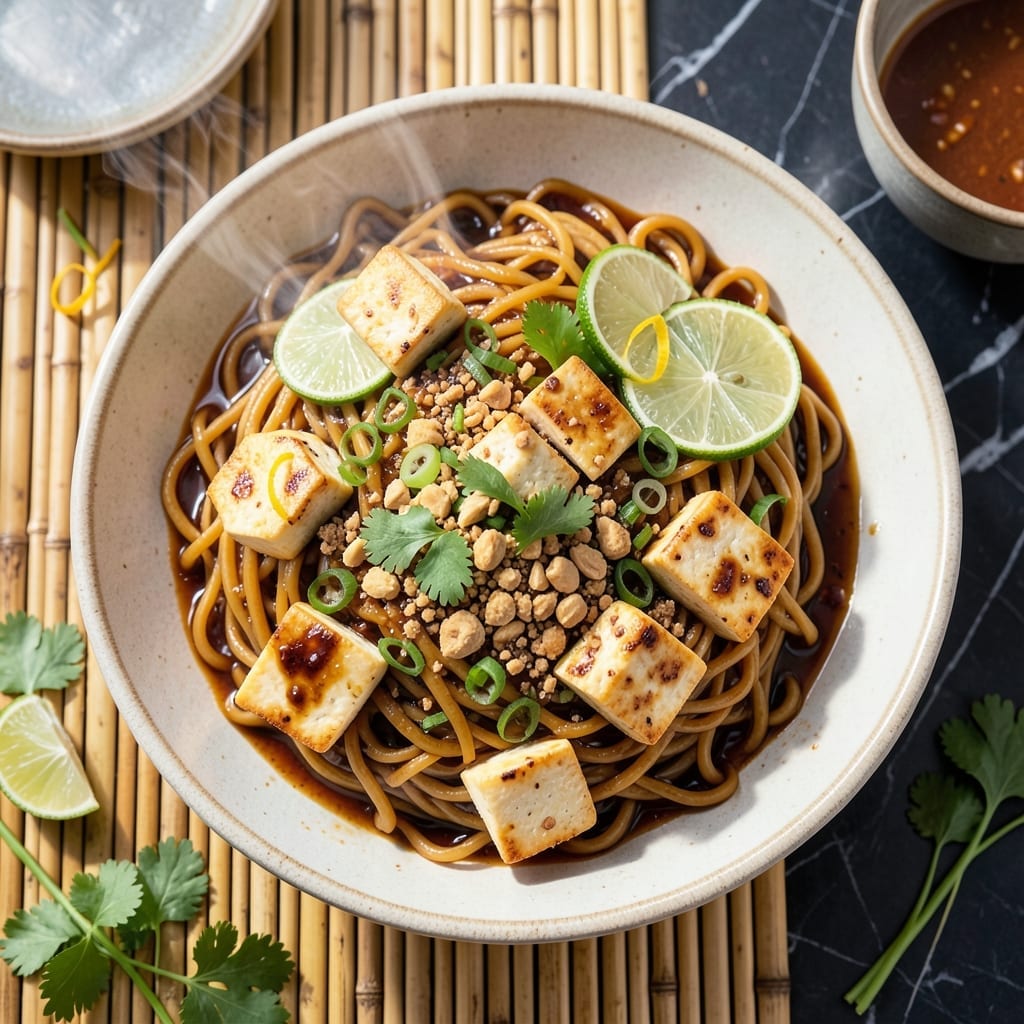
This pad thai delivers authentic Thai flavors without fish sauce, using a clever soy-tamarind blend instead. The dish maintains its classic balance of sweet, sour, and savory.
You’ll achieve restaurant-quality results with rice noodles, tofu, and vegetables, all coated in a rich, umami-packed sauce. Perfect for a vegan-friendly meal that doesn’t compromise on taste.
Ingredients for Pad Thai Recipe No Fish Sauce
Flat noodles, crisp tofu, and a tangy tamarind sauce deliver that classic pad thai magic.
| Ingredient | Amount | Notes |
|---|---|---|
| Rice Noodles 🍜 | 8 oz | Flat, medium-width preferred |
| Firm Tofu 🧈 | 14 oz | Pressed and cubed |
| Tamarind Paste 🌰 | ¼ cup | Pure, no added sugar |
| Soy Sauce 🫒 | ⅓ cup | Low-sodium preferred |
| Brown Sugar 🏝️ | 3 tbsp | Light or dark works |
| Rice Vinegar 💧 | 2 tbsp | Mild flavor essential |
| Garlic Cloves 🧄 | 4 cloves | Minced finely |
| Shallot 🧅 | 1 whole | Thinly sliced |
| Bean Sprouts 🌱 | 2 cups | Fresh, rinsed |
| Green Onions 🌿 | 4 whole | Thinly sliced for garnish |
| Crushed Peanuts 🥜 | ½ cup | Unsalted, roughly chopped |
| Lime 🍈 | 1 whole | Cut into wedges |
| Red Chili Flakes 🌶️ | 1 tsp | Adjust to heat preference |
| Cilantro 🌿 | ¼ cup | Fresh leaves, chopped |
| Vegetable Oil 🫒 | 2 tbsp | Neutral flavor for frying |
[recipe_ingredient_scaler]
The tamarind paste is non-negotiable here—look for pure paste at Asian markets or the international aisle at Whole Foods. I’ve seen it at Trader Joe’s too, just check the label for additives. The tofu needs to be firm so it holds up to stir-frying (extra-firm works too). Press it for at least 20 minutes to get it nice and crispy. Rice noodles can be found in the same international section—avoid the super thin ones, they’ll turn to mush.
No tamarind? Lime juice plus a little extra brown sugar gets you close, but the flavor won’t be as deep. Swap tofu for chickpeas or tempeh if you prefer. Bean sprouts can be skipped, but they add that classic crunch. The soy sauce should be low-sodium to avoid oversalting—coconut aminos work if you’re avoiding soy. Fresh lime is a must, though bottled works in a pinch (don’t tell anyone I said that).
The sauce keeps for 1 week in the fridge if you make it ahead. Pressed tofu stays good for 3 days in water (change daily). Leftovers taste even better the next day—just splash a little water in the pan when reheating to loosen the noodles.
Why You’ll Love This Recipe
- One Pot Wonder: I soak the rice noodles while I press the tofu, and everything comes together in a single pan.
- Sweet-Sour Balance: The tamarind paste and brown sugar create that classic tangy depth without needing fish sauce.
- Weeknight Lifesaver: Honestly, it’s my go-to when I need dinner fast but still want restaurant-worthy flavor.
- Budget Stretcher: Firm tofu and pantry staples like soy sauce keep costs low while feeding a crowd.
Step-by-Step Instructions for Pad Thai No Fish Sauce
Here’s the method. Straightforward, tested, works every time.
Step 1: Prepare the Rice Noodles and Tofu
Soak the 8 oz Rice Noodles in warm water for 15-20 minutes until pliable but still slightly firm. They’ll finish cooking in the pan, so don’t oversoak. Drain and set aside.
While the noodles soak, press the 14 oz Firm Tofu to remove excess moisture, then cube it. Heat 1 tablespoon Vegetable Oil in a large skillet or wok over medium-high heat. Add the tofu and cook until golden brown on all sides, about 5-7 minutes. Remove and set aside.
Step 2: Make the Pad Thai Sauce
In a small bowl, whisk together the 0.25 cup Tamarind Paste, 0.33 cup Soy Sauce, 3 tbsp Brown Sugar, and 2 tbsp Rice Vinegar. Taste and adjust the balance—you want a tangy, slightly sweet, and umami-rich sauce. The tamarind gives that authentic depth without fish sauce.
This sauce is the heart of the dish, so take a moment to get it right. If it’s too tart, add a touch more brown sugar. If it’s too sweet, a splash of rice vinegar will balance it out.
Step 3: Cook the Aromatics and Noodles
In the same skillet, heat the remaining 1 tablespoon Vegetable Oil over medium-high heat. Add the minced 4 cloves Garlic Cloves and thinly sliced 1 whole Shallot. Sauté for 1-2 minutes until fragrant and the shallot starts to soften.
Add the drained rice noodles and pour the sauce over them. Toss everything together with tongs, cooking for 2-3 minutes until the noodles are tender and have absorbed most of the sauce. If the pan gets too dry, add a splash of water to loosen things up.
Step 4: Combine and Garnish
Return the tofu to the skillet and stir to combine. Add the 2 cups Bean Sprouts and toss for another 1-2 minutes until the sprouts wilt slightly but retain some crunch.
Transfer to serving plates and garnish with thinly sliced 4 whole Green Onions, 0.5 cup Crushed Peanuts, 0.25 cup Cilantro, 1 tsp Red Chili Flakes for heat, and 1 whole Lime cut into wedges for squeezing. Serve immediately while hot.
Pro Tips For Making Pad Thai Recipe No Fish Sauce
- Soak Noodles Right: Cover rice noodles in room temperature water for 30-45 minutes—no longer, or they’ll turn to mush before hitting the pan. I learned this the hard way after ending up with a gummy mess.
- Press the Tofu: Wrap firm tofu in a clean towel, place a heavy pan on top, and let it drain for 15 minutes. This guarantees it’ll crisp up in the pan instead of stewing in its own moisture.
- Balance the Sauce: Mix tamarind paste, soy sauce, and brown sugar in a 2:2:1 ratio before cooking. Taste and adjust—this blend replaces fish sauce’s tang and umami without overpowering.
- High Heat Only: Crank the heat to medium-high and keep it there. After burning three batches, I finally figured out that pad thai demands quick cooking to stay light, not soggy.
Dietary Considerations for This pad thai recipe no fish sauce
Keto-Friendly Options
To make this pad thai recipe no fish sauce keto-friendly, swap traditional rice noodles for shirataki noodles or zucchini noodles. These low-carb alternatives keep the dish light while maintaining texture.
Use sugar-free sweeteners like erythritol or stevia in place of regular sugar. Add extra protein with shrimp, chicken, or tofu to balance macros.
Gluten-Free Adaptations
This recipe is naturally gluten-free if you use tamari instead of soy sauce and ensure all other ingredients, like rice noodles, are certified gluten-free. Double-check labels for hidden gluten.
For added safety, avoid cross-contamination by using clean utensils and cookware dedicated to gluten-free cooking.
Allergen Awareness
Common allergens in pad thai include peanuts, eggs, and soy. For a nut-free version, omit crushed peanuts and use seeds like sunflower or sesame for garnish.
If eggs are a concern, simply skip them or replace with a flaxseed or chickpea flour “egg” for binding. Always verify ingredient sources for potential allergens.
Vegetarian Modifications
For a vegetarian twist, replace meat with tofu, tempeh, or a mix of colorful veggies like bell peppers, bean sprouts, and mushrooms. These add heartiness and texture.
Ensure the sauce uses vegetarian oyster sauce or a mushroom-based alternative to keep the umami flavor without animal products.
Low-Sodium Adjustments
Reduce sodium by using low-sodium soy sauce or coconut aminos and minimizing added salt. Fresh lime juice and herbs like cilantro can enhance flavor without extra sodium.
Opt for unsalted peanuts and rinse canned ingredients like bean sprouts to further lower sodium content while keeping the dish delicious.
Nutrition Facts

Trained in classic French technique but raised on slow-cooked ribs and spicy rubs, she blends culinary skill with smoke and soul.
- Recipe for Boneless Pork Chops in Cast Iron Skillet: Sear and Baste to Juicy Perfection - October 3, 2026
- Recipe for Boneless Cross Rib Roast: Slow-Roasted Beef with Herb Crust - October 3, 2026
- Hamburgers in Sauce Recipe Crock Pot: Slow-Cooked Savory Delight - October 3, 2026