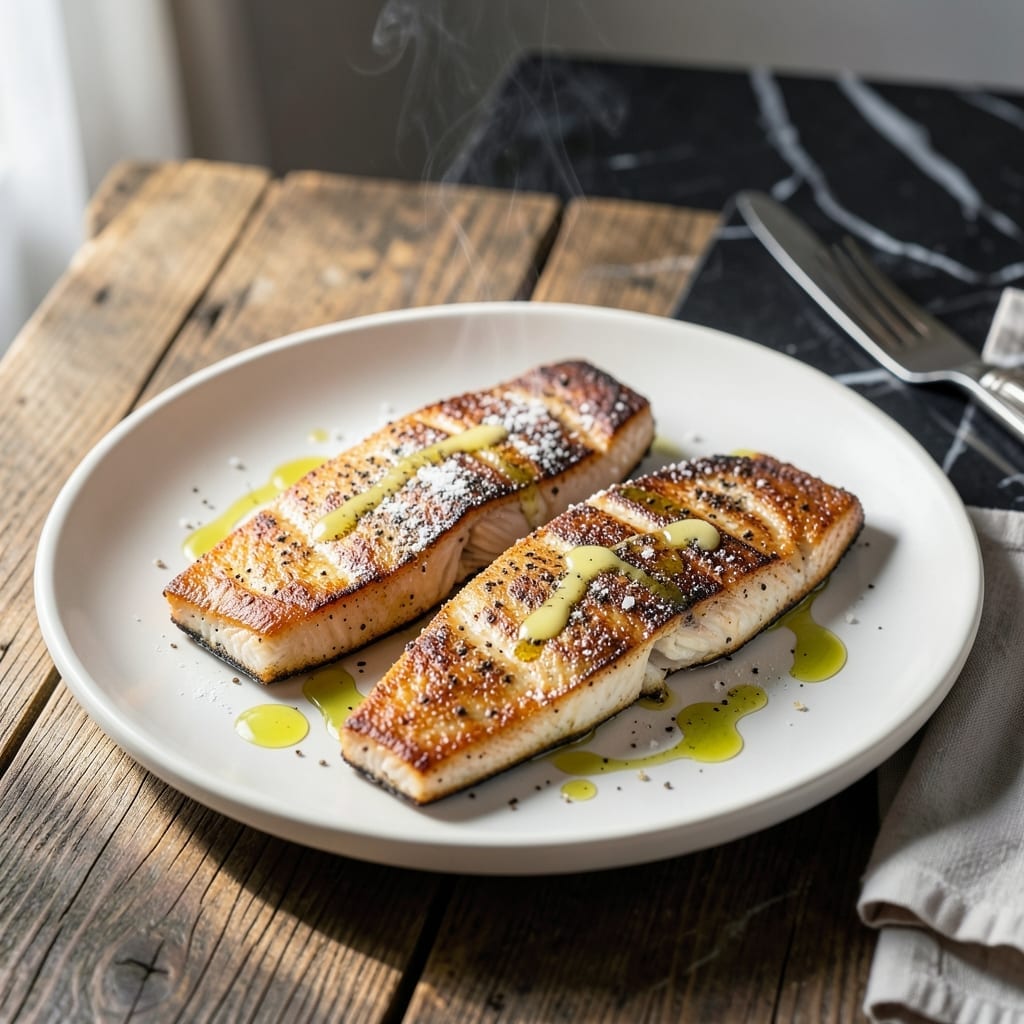
This pan-frying method guarantees crispy skin while keeping the fish moist and tender. I developed this technique after years of experimenting with heat levels and timing, ensuring professional results every time.
The key is starting with a hot pan and using the right oil to create a perfect sear. A simple seasoning of salt and pepper allows the natural sweetness of the snapper to shine through without overpowering it.
You’ll achieve a golden, shatteringly crispy exterior with flaky, moist flesh inside. The contrast in textures makes each bite satisfying and restaurant-quality.
Serve immediately with a squeeze of lemon and your choice of sides for a dish that’s both elegant and effortless.
Ingredients for Pan Fried Snapper
Fresh snapper, simple seasoning, and a hot pan deliver that perfect crispy skin and moist flesh.
| Ingredient | Amount | Notes |
|---|---|---|
| Red Snapper Fillets 🐟 | 4 whole | Skin-on, about 6 oz each |
| Kosher Salt 🧂 | 1 ½ tsp | Diamond Crystal preferred |
| Freshly Ground Black Pepper 🌶️ | 1 tsp | Coarse grind for texture |
| All-Purpose Flour 🌾 | ½ cup | For light dusting before frying |
| Extra-Virgin Olive Oil 🫒 | ½ cup | High smoke point, light color |
| Unsalted Butter 🧈 | 3 tbsp | For basting while cooking |
| Fresh Lemon 🍋 | 1 whole | Cut into wedges for serving |
| Fresh Parsley 🌿 | ¼ cup | Chopped, for garnish |
| Garlic Cloves 🧄 | 2 cloves | Minced, optional for aromatics |
| Shallot 🧅 | 1 whole | Finely diced, optional for flavor |
| White Wine 🍷 | ¼ cup | Dry variety for deglazing |
[recipe_ingredient_scaler]
The snapper is the star here—skin-on fillets are non-negotiable for that shatteringly crispy texture. Whole Foods or local fishmongers usually have the freshest, but most grocery stores carry it frozen (thaw overnight in the fridge). Look for fillets that are firm, translucent, and smell like the ocean, not fishy. The oil needs a high smoke point—light olive oil or avocado oil work if you don’t have extra-virgin on hand.
No red snapper? Branzino, sea bass, or cod are solid swaps—just adjust cooking time for thickness. Skip the flour if you want gluten-free, but it helps create that golden crust. Out of white wine? Substitute chicken broth with a squeeze of lemon. The butter is key for basting—don’t skip it unless you’re avoiding dairy (then use more oil). Fresh herbs are best, but dried parsley at one-third the amount works in a pinch.
Cook this immediately—it’s best hot off the pan. Leftovers keep in the fridge for 1-2 days, but the skin loses its crispness. Reheat gently in a skillet to revive the texture. The lemon and parsley garnish? Non-negotiable for that bright finish (worth the extra minute).
Why You’ll Love This Recipe
- 20-Minute Meal: I can get this from fridge to plate faster than takeout arrives. Just flour, season, and sear.
- Crispy Perfection: That golden crust from the olive oil and flour with tender snapper underneath? Ridiculously good.
- Weeknight Hero: Honestly, it’s my go-to for busy Tuesdays when I need something fancy but unfussy.
- Budget Luxury: Red snapper feels special, but a little goes a long way. One fillet per person keeps it affordable.
Step-by-Step Instructions for Pan Fried Snapper
Here’s the method for achieving perfectly crispy skin and moist fish every time.
Step 1: Season and Flour the Red Snapper Fillets
Pat all 4 whole Red Snapper Fillets completely dry with paper towels—moisture is the enemy of crispy skin. Season both sides evenly with the 1.5 tsp Kosher Salt and 1 tsp Freshly Ground Black Pepper, pressing gently so the seasoning adheres.
Dredge each fillet lightly in the 0.5 cup All-Purpose Flour, shaking off any excess. This creates a thin, even coating that promotes browning. I like to place the floured fillets on a wire rack to allow air circulation while I heat the pan.
Step 2: Pan Fry the Fillets in Hot Oil
Heat the 0.5 cup Extra-Virgin Olive Oil in a large skillet over medium-high heat until it shimmers but doesn’t smoke. Carefully place the fillets in the pan skin-side down, pressing down gently with a fish spatula for 10 seconds to prevent curling.
Cook undisturbed for 3-4 minutes until the skin is golden brown and crisp. The edges should look opaque about halfway up the fillet. Resist the urge to move them—this ensures proper crust formation. Flip and cook for an additional 2-3 minutes until the fish flakes easily with a fork.
Step 3: Bast with Butter and Aromatics
Reduce heat to medium and add the 3 tbsp Unsalted Butter to the pan. As it melts, add the 2 cloves Garlic Cloves and 1 whole Shallot (if using) to the butter. Tilt the pan slightly and spoon the foaming butter over the fillets continuously for 30-45 seconds.
This basting technique adds rich flavor and helps cook the top of the fish gently. The garlic and shallot will infuse the butter with aroma—remove the pan from heat if the butter starts to brown too quickly to prevent burning.
Step 4: Deglaze and Finish
Carefully transfer the fillets to a warm plate. Pour off all but 2 tablespoons of the oil and butter from the pan. Return to medium heat and add the 0.25 cup White Wine, scraping up any browned bits from the bottom with a wooden spoon.
Let the wine reduce by half, about 1-2 minutes, then pour this pan sauce over the fillets. The acidity from the wine cuts through the richness of the butter beautifully.
Step 5: Garnish and Serve Immediately
Garnish with the chopped 0.25 cup Fresh Parsley and serve with wedges from the 1 whole Fresh Lemon. The brightness of the lemon and parsley complements the rich, buttery fish perfectly.
Serve immediately while the skin is still crisp—the contrast between the crispy skin and moist interior is what makes this dish special. The fish should flake easily but still feel tender and juicy.
Pro Tips For Making Pan Fried Snapper
- Pat Fillets Dry: I learned this the hard way—any moisture left on the snapper will steam it instead of frying. Use paper towels and press firmly to remove all traces of water before seasoning.
- Heat the Oil First: Get the pan screaming hot before adding the fillets, about 2-3 minutes over medium-high. Sounds obvious, but I used to rush this and end up with pale, greasy fish.
- Skip Overcrowding: Resist the urge to cook all four fillets at once unless you have a huge pan. Crowding drops the oil temp and turns your crispy coating into a soggy mess.
- Rest Before Serving: Give the snapper 3-4 minutes on a warm plate after frying. My grandmother swore by this, and it keeps the juices from pooling on the plate when you cut into it.
Essential Equipment for This Recipe
The Right Skillet
A heavy-bottomed skillet is essential for even heat distribution. I swear by my 12-inch cast iron from Lodge—it retains heat beautifully and develops a natural non-stick surface over time. For beginners, a stainless steel skillet with an aluminum core works well too. 🔥
Fish Spatula
Invest in a thin, flexible fish spatula—it’s a game-changer for flipping delicate fillets without breaking them. I prefer the Mercer Culinary model with a long handle to keep my hands away from the heat. The thin edge slides perfectly under the skin.
Oil Choice Matters
Use an oil with a high smoke point—extra-virgin olive oil works if it’s light in color, but avocado oil is my go-to for its neutral flavor. Avoid unrefined oils like toasted sesame that can burn at high temperatures.
Tongs for Basting
Have a pair of 12-inch tongs ready for safe basting. I use OXO Good Grips for their locking mechanism and comfortable grip. They make it easy to tilt the pan and spoon that golden butter over the fillets without splashing.
Wire Rack
A cooling rack keeps your fillets elevated while they wait for the pan to heat. This prevents the skin from steaming and losing its crispness. I place mine over a sheet pan to catch any drips.
Instant-Read Thermometer
While not mandatory, a ThermoWorks ThermoPop gives me peace of mind. Snapper is done at 145°F internal temperature, and this little tool confirms it in seconds. Honestly, I use it for almost everything I cook. 🌡️
Nutrition Facts
Frequently Asked Questions
What’s the best oil for crispy skin?
Use a high smoke point oil like light olive or avocado oil. They handle medium-high heat without burning, ensuring perfectly crisp results. Avoid unrefined oils that smoke easily.
How do I prevent the fillets from curling?
Press down gently with a fish spatula for 10 seconds after placing them skin-side down. This keeps them flat while the skin crispens. Also, pat them completely dry before cooking.
Can I substitute another fish?
Try branzino, sea bass, or cod as alternatives. Adjust cooking time based on thickness—thinner fillets need 1-2 minutes less per side.
How do I know when it’s done?
The fish should flake easily with a fork and reach 145°F internally. The edges will turn opaque halfway up the fillet when ready to flip.

Trained in classic French technique but raised on slow-cooked ribs and spicy rubs, she blends culinary skill with smoke and soul.
- Recipe for Boneless Pork Chops in Cast Iron Skillet: Sear and Baste to Juicy Perfection - October 3, 2026
- Recipe for Boneless Cross Rib Roast: Slow-Roasted Beef with Herb Crust - October 3, 2026
- Hamburgers in Sauce Recipe Crock Pot: Slow-Cooked Savory Delight - October 3, 2026