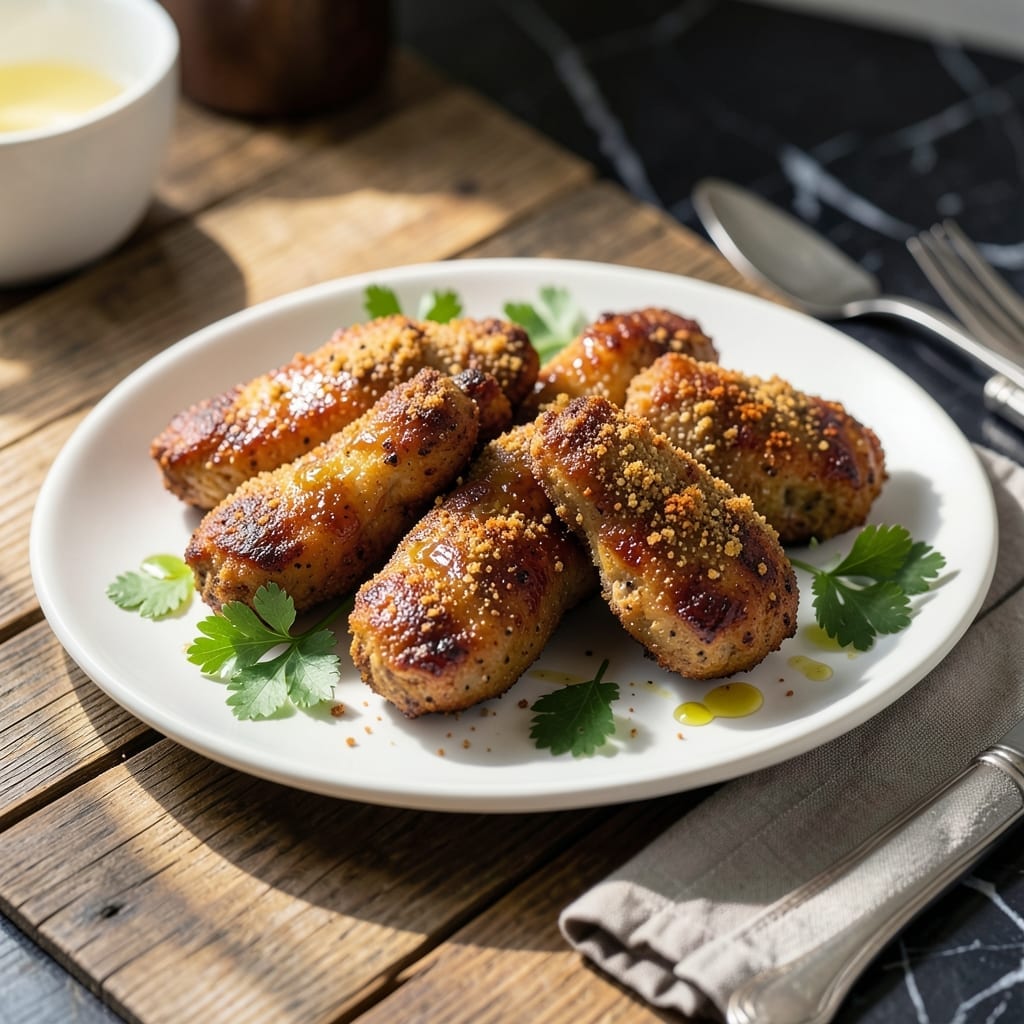
There’s a simple art to achieving perfectly tender chicken with a golden crust at home. This method delivers restaurant-quality results with minimal effort and maximum flavor.
The key is proper heat control and timing. Searing the tenders in a hot pan creates that coveted crispy exterior while locking in the juicy centers we all crave.
You’ll find this technique works with just basic pantry staples and a few fresh ingredients. No special equipment required—just a good skillet and a little patience.
Serve these with your favorite dipping sauce for a meal that’s sure to become a weeknight staple. The results speak for themselves.
Ingredients for Pan Seared Chicken Tenders
Pantry staples meet fresh chicken for that crispy, juicy magic you crave.
| Ingredient | Amount | Notes |
|---|---|---|
| Chicken Tenders 🍗 | 1 ½ lb | Boneless, skinless, uniform size |
| All-Purpose Flour 🌾 | ½ cup | For light dredging coat |
| Kosher Salt 🧂 | 1 ½ tsp | Diamond Crystal preferred |
| Freshly Ground Black Pepper 🌶️ | 1 tsp | Coarse grind ideal |
| Garlic Powder 🧄 | 1 tsp | Not garlic salt |
| Onion Powder 🧅 | 1 tsp | Balances seasoning blend |
| Paprika 🌶️ | 1 tsp | Sweet or smoked variety |
| Large Eggs 🥚 | 2 whole | Beaten for egg wash |
| Panko Breadcrumbs 🍞 | 1 ½ cups | For crispy coating |
| Vegetable Oil 🫒 | ½ cup | High smoke point, neutral flavor |
| Unsalted Butter 🧈 | 2 tbsp | For basting tenders |
| Fresh Parsley 🌿 | ¼ cup | Chopped, for garnish |
| Lemon Wedges 🍋 | 4 pieces | For serving brightness |
[recipe_ingredient_scaler]
The chicken is everything here. Look for tenders labeled ‘air-chilled’ at Whole Foods or Trader Joe’s—they crisp up better than water-soaked versions. Size matters too: aim for uniform pieces (about 1.5 inches wide) so they cook evenly. I grab the family pack from Costco and portion it myself. The panko? Kikkoman is my go-to for that extra-crispy texture (the good stuff, not the pre-seasoned kind).
No panko? Crush plain breadcrumbs in a food processor for a similar texture. Swap the paprika for Cajun seasoning if you want a kick. Fresh out of eggs? Buttermilk at half the quantity works for the wash (or Greek yogurt thinned with water). The oil can be avocado or peanut oil—both have high smoke points. Skip the butter if you’re feeling lazy, but it adds that restaurant-style richness.
Cooked tenders keep 3-4 days in the fridge—reheat in a toaster oven to revive the crisp. Raw chicken? Use within 2 days or freeze for 3 months. The breading mix can be prepped ahead and stored in a jar (don’t add the egg wash until ready to cook).
Why You’ll Love This Recipe
- 20-Minute Meal: I can get these golden tenders from pan to plate faster than takeout arrives.
- Garlic-Kissed Crisp: That garlic powder in the flour gives every bite a warm, savory crunch.
- Kid-Approved Staple: Honestly, it’s the only protein my picky nephew will eat without a fight.
- Leftovers? Better: Cold or reheated, they’re just as good tucked into wraps or salads the next day.
Step-by-Step Instructions for Pan Seared Chicken Tenders
Here’s the method I swear by for achieving that perfect golden crust while keeping the inside juicy.
Step 1: Season and Dredge the Chicken Tenders
Pat the 1.5 lb chicken tenders completely dry with paper towels—this is non-negotiable for crispy results. In a shallow dish, combine the 0.5 cup all-purpose flour with 1.5 tsp kosher salt, 1 tsp freshly ground black pepper, 1 tsp garlic powder, 1 tsp onion powder, and 1 tsp paprika.
Dredge each tender lightly in the flour mixture, shaking off any excess. The seasoning should coat the chicken evenly but not in clumps. I’ve found that pressing the flour gently into the meat helps it adhere better during searing.
Step 2: Coat with Egg and Panko for Extra Crispiness
In a separate shallow dish, beat the 2 whole large eggs until well combined. Dip each floured tender into the egg, allowing any excess to drip off. Then, roll the tenders in the 1.5 cups panko breadcrumbs, pressing firmly to create a thick, even coating.
Here’s the thing—panko’s coarse texture gives you that restaurant-style crunch. Let the coated tenders rest on a wire rack for 5 minutes. This helps the coating set so it doesn’t fall off during cooking.
Step 3: Sear the Tenders to Golden Perfection
Heat the 0.5 cup vegetable oil in a large skillet over medium-high heat until shimmering but not smoking. Add the 2 tbsp unsalted butter and let it melt. Working in batches to avoid crowding, carefully lay the tenders in the pan.
Cook for 3-4 minutes per side, or until the coating is deep golden brown and crispy. Don’t move the tenders until they release easily from the pan—this ensures a solid crust forms. If the oil starts to smoke, lower the heat slightly.
Step 4: Drain, Garnish, and Serve Immediately
Transfer the cooked tenders to a paper towel-lined plate to drain any excess oil. While they’re still hot, I like to sprinkle them with a pinch of extra kosher salt for an extra flavor boost.
Garnish with the 0.25 cup fresh parsley, chopped finely, and serve with the 4 pieces lemon wedges on the side for brightness. The acidity from the lemon cuts through the richness perfectly. Serve immediately while the coating is at its crispiest.
Pro Tips For Making Pan Seared Chicken Tenders
- Dry the Chicken: Pat the tenders completely dry with paper towels before seasoning—I learned this the hard way after my first batch steamed instead of seared.
- Heat the Pan First: Get your pan screaming hot (medium-high to high) and let it sit for 2 minutes before adding oil, or the crust won’t form properly.
- Skip the Overcrowding: Cook in batches with space between each piece, or they’ll boil in their own juices instead of getting that golden crust.
- Season the Flour: Mix the kosher salt, black pepper, and garlic powder right into the flour before dredging—it sticks better and flavors every bite.
Troubleshooting This Dish
Soggy Coating Fix
If your coating isn’t crisping, check your oil temperature first. It needs to reach 350-375°F—use a thermometer for accuracy. Crowding the pan also causes steam, which makes the coating soggy. Cook in batches with 1 inch between pieces. 🌡️
Breading Falls Off
Let the coated tenders rest for 5 minutes before frying so the egg sets. If using frozen chicken, thaw completely and pat very dry—excess moisture prevents adhesion. Press the panko firmly into each tender.
Uneven Cooking
Use uniform tenders (about 1.5 inches wide) so they cook at the same rate. If some finish early, transfer to a 200°F oven while cooking the rest. Avoid moving tenders too soon—they release naturally when ready.
Oil Temperature Drops
Adding cold chicken lowers oil temperature. Let it recover between batches. If oil smokes, lower heat slightly. I use a cast iron skillet for even heat retention.
Greasy Results
Drain on a wire rack, not paper towels, to prevent steam from making the coating limp. Blot excess oil with a fresh towel. Serve immediately for maximum crispiness. 💡
Nutrition Facts
Frequently Asked Questions
How do I know when they’re done cooking?
The tenders are ready when the coating is deep golden brown and the internal temperature reaches 165°F. Use a meat thermometer for accuracy. They should release easily from the pan when fully cooked.
Can I use regular breadcrumbs instead of panko?
Yes, but panko creates a crisper texture. If using regular breadcrumbs, pulse them in a food processor first for a coarser texture. You may need to press harder to get the coating to adhere.
Why did my breading fall off during cooking?
This usually happens if the chicken wasn’t completely dry before coating. Pat it thoroughly with paper towels, and let the breaded tenders rest for 5 minutes before cooking to help the coating set.
What’s the best oil for searing?
Use oils with a high smoke point like vegetable, peanut, or avocado oil. These handle the medium-high heat needed for crispy results without burning. Avoid olive oil as it can impart a bitter taste.

Trained in classic French technique but raised on slow-cooked ribs and spicy rubs, she blends culinary skill with smoke and soul.
- Recipe for Boneless Pork Chops in Cast Iron Skillet: Sear and Baste to Juicy Perfection - October 3, 2026
- Recipe for Boneless Cross Rib Roast: Slow-Roasted Beef with Herb Crust - October 3, 2026
- Hamburgers in Sauce Recipe Crock Pot: Slow-Cooked Savory Delight - October 3, 2026