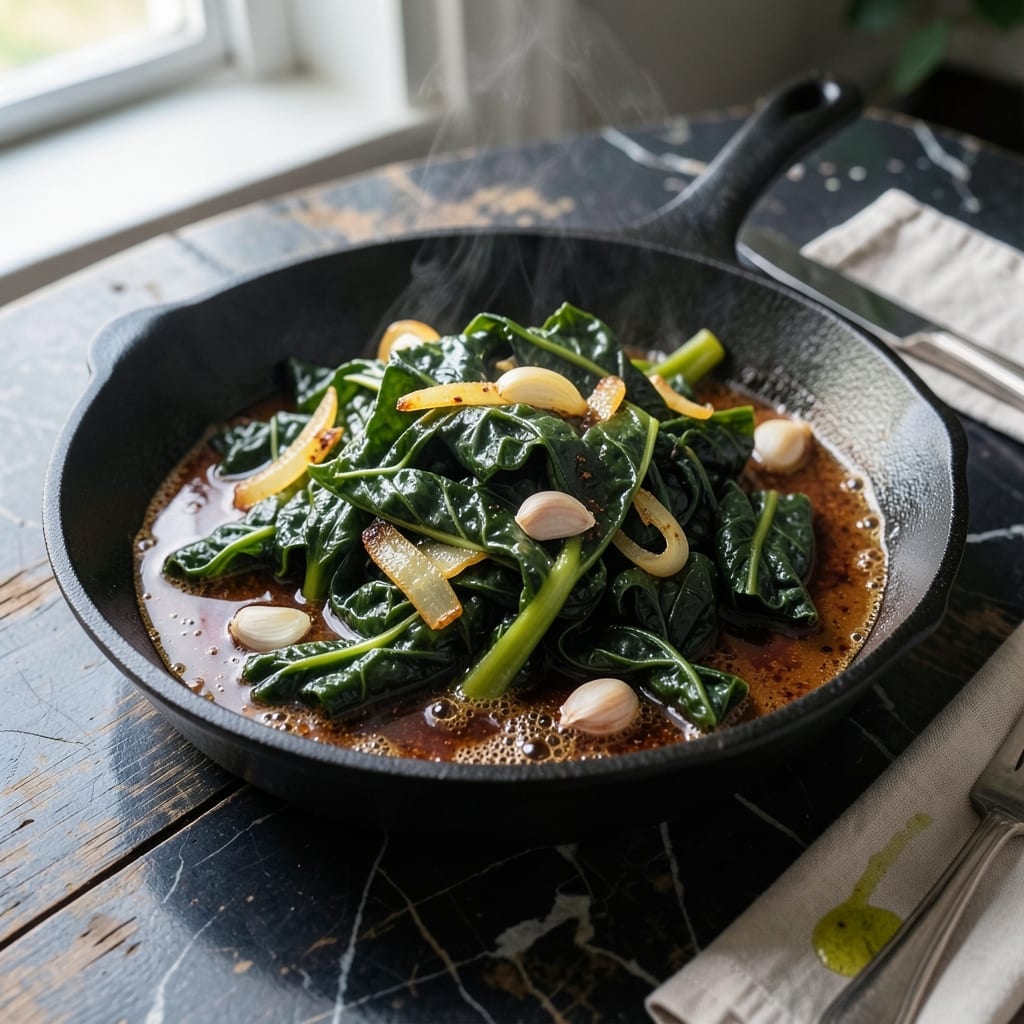
Slow-cooked collard greens bring Southern tradition to your table with minimal effort and maximum flavor. This method transforms tough leaves into tender, smoky bites that soak up every bit of seasoning.
I learned early that patience is the secret—low heat and time work their magic, creating a dish that tastes like home in every bite.
Ingredients for Paula Deen Collard Greens
Pantry raid plus fresh greens. Southern comfort in every bite.
| Ingredient | Amount | Notes |
|---|---|---|
| Collard Greens 🥬 | 2 lb | Fresh, tough stems removed |
| Vegetable Broth 🥣 | 4 cups | Low-sodium preferred |
| Yellow Onion 🧅 | 1 whole | Medium, diced |
| Garlic Cloves 🧄 | 4 cloves | Minced for depth |
| Apple Cider Vinegar 🍏 | ¼ cup | For tangy brightness |
| Smoked Paprika 🌶️ | 1 tsp | For smoky flavor |
| Red Pepper Flakes 🔥 | ½ tsp | Adjust to taste |
| Brown Sugar 🍚 | 2 tbsp | Balances the acidity |
| Olive Oil 🫒 | 2 tbsp | For sautéing onions |
| Salt 🧂 | 1 tsp | Kosher or sea salt |
| Black Pepper 🌶️ | ½ tsp | Freshly ground |
| Liquid Smoke 💨 | 1 tsp | Optional for extra smokiness |
[recipe_ingredient_scaler]
The collards are the star here. Look for bright green leaves with crisp stems—avoid anything yellowed or wilted. Farmers markets often have the best bunches, but most supermarkets carry them year-round. I always buy extra (they cook down a lot) and freeze what I don’t use. For the broth, Better Than Bouillon vegetable base is my go-to—just mix with hot water.
No apple cider vinegar? White vinegar or lemon juice works in a pinch. Out of smoked paprika? Regular paprika plus a pinch of chipotle powder gets you close. The brown sugar can be swapped for maple syrup or honey (since this is vegetarian). If you’re missing liquid smoke, a dash of soy sauce adds depth. The red pepper flakes can be skipped if you’re sensitive to heat.
Leftovers taste even better the next day after the flavors meld. Keeps for 5 days in the fridge, freezes for 3 months (just thaw before reheating). I like to make a big batch—it’s one of those dishes that’s even better reheated.
Why You’ll Love This Recipe
- One-Pot Wonder: I just toss the collard greens, onion, garlic, and broth in a single pot and let it simmer—no fancy techniques, no extra dishes.
- Tangy Richness: The apple cider vinegar cuts through the greens with that bright, tangy kick I crave every time.
- Feeds a Crowd: I make a big batch for Sunday dinner, and it’s just as good reheated for lunch the next day.
- Pantry Staples: Honestly, I always have these ingredients on hand, so it’s my go-to when I need something hearty without a grocery run.
Step-by-Step Instructions for Smoky Southern-Style Collard Greens
Here’s how I make them rich, tender, and packed with that signature smoky flavor.
Step 1: Prep the Greens and Aromatics
Start by thoroughly washing the 2 lb collard greens to remove any grit. I fill my sink with cold water, submerge the leaves, and let them soak for 5 minutes, then rinse and repeat until the water runs clear. While they drain, remove the tough central stems by folding each leaf in half and slicing along the stem with a sharp knife.
Stack the leaves and roll them tightly, then slice crosswise into 1-inch ribbons. Set these aside. Dice the yellow onion into small, even pieces and mince the 4 cloves garlic cloves. This prep ensures everything cooks evenly and the flavors meld perfectly during the long simmer.
Step 2: Sauté Onions and Bloom the Spices
Heat the 2 tbsp olive oil in a large pot or Dutch oven over medium heat. Add the diced yellow onion and cook for 5-6 minutes, stirring occasionally, until soft and translucent. You’ll know it’s ready when the onions turn light golden and start to smell sweet.
Stir in the minced garlic cloves, 1 tsp smoked paprika, 0.5 tsp red pepper flakes, 1 tsp salt, and 0.5 tsp black pepper. Cook for 1 minute, stirring constantly—this blooms the spices and deepens their flavor. Be careful not to let the garlic burn, or it’ll turn bitter.
Step 3: Add Liquids and Greens, Then Simmer
Pour in the 4 cups vegetable broth, 0.25 cup apple cider vinegar, 2 tbsp brown sugar, and 1 tsp liquid smoke. Stir well to combine, then add the chopped collard greens in batches, pressing them down as they wilt. This helps fit all the greens into the pot without overflowing.
Bring the mixture to a boil, then reduce the heat to low. Cover the pot and let it simmer for 1.5 to 2 hours, stirring occasionally. The greens are done when they’re tender but still vibrant green and the liquid has reduced slightly. If it gets too dry, add a splash of water or broth.
Step 4: Adjust Seasoning and Serve
Taste and adjust the seasoning if needed. I often add a pinch more salt or a splash of apple cider vinegar for brightness. The greens should have a balance of smoky, tangy, and slightly sweet flavors, with just a hint of heat from the red pepper flakes.
Ladle the greens into a serving dish, including some of the pot likker—the flavorful cooking liquid is a Southern staple. These taste even better the next day, so don’t be surprised if they’re gone before you can save leftovers.
Pro Tips For Making Paula Deen Collard Greens
- Blanch the Greens First: Plunge collard greens in boiling water for 3-4 minutes before cooking—I learned this the hard way after chewing through tough stems more times than I care to admit.
- Sauté Onions Slow: Cook the yellow onions low and slow in a little oil until they’re golden, about 8-10 minutes; rushing this step leaves them harsh and underdeveloped.
- Skip the Vinegar Rush: Add the apple cider vinegar at the end, not the start, or the greens turn gray and lose their bright, tangy punch.
- Use Low Sodium Broth: Since the greens reduce so much, regular vegetable broth can make the dish way too salty—low sodium lets you control the seasoning.
Wine and Beer Pairings for This Recipe
White Wine Pairs
A crisp Sauvignon Blanc from New Zealand cuts through the smoky richness beautifully. Its bright acidity and citrus notes complement the tangy apple cider vinegar in the greens. I love how the wine’s grassy undertones echo the earthy collards. 🍷
Red Wine Options
For red lovers, try a light-bodied Pinot Noir from Oregon. The subtle fruit flavors and earthy notes won’t overpower the dish. Serve slightly chilled to enhance its pairing potential with the greens’ smoky depth.
Beer Pairings
A German Pilsner with its clean, crisp profile refreshes your palate between bites. The mild bitterness balances the dish’s sweetness from the brown sugar. For darker beers, a Brown Ale offers caramel notes that complement the smokiness. 🍺
Southern-Style Match
I often reach for a Sweet Tea Vodka cocktail – it’s a nod to Southern tradition. The sweetness mirrors the brown sugar in the greens while the tea tannins cut through the richness. It’s my go-to for backyard cookouts.
Nutrition Facts
Frequently Asked Questions
How long does it take to cook?
Simmer the greens for 1.5 to 2 hours on low heat until tender but still vibrant. This slow cooking time ensures they absorb all the smoky, tangy flavors.
Can I use frozen greens?
Yes, but thaw and drain them first. Frozen greens may cook faster, so check for tenderness at 1 hour. Fresh is preferred for texture, but frozen works in a pinch.
Why do my greens taste bitter?
Bitterness often comes from undercooking or skipping the vinegar. Balance the flavors with brown sugar or a splash more apple cider vinegar. Proper simmering time mellows the bitterness.
Can I make this ahead?
The flavors improve overnight. Store in the fridge for up to 5 days or freeze for 3 months. Reheat gently to preserve texture.

Trained in classic French technique but raised on slow-cooked ribs and spicy rubs, she blends culinary skill with smoke and soul.
- Recipe for Boneless Pork Chops in Cast Iron Skillet: Sear and Baste to Juicy Perfection - October 3, 2026
- Recipe for Boneless Cross Rib Roast: Slow-Roasted Beef with Herb Crust - October 3, 2026
- Hamburgers in Sauce Recipe Crock Pot: Slow-Cooked Savory Delight - October 3, 2026