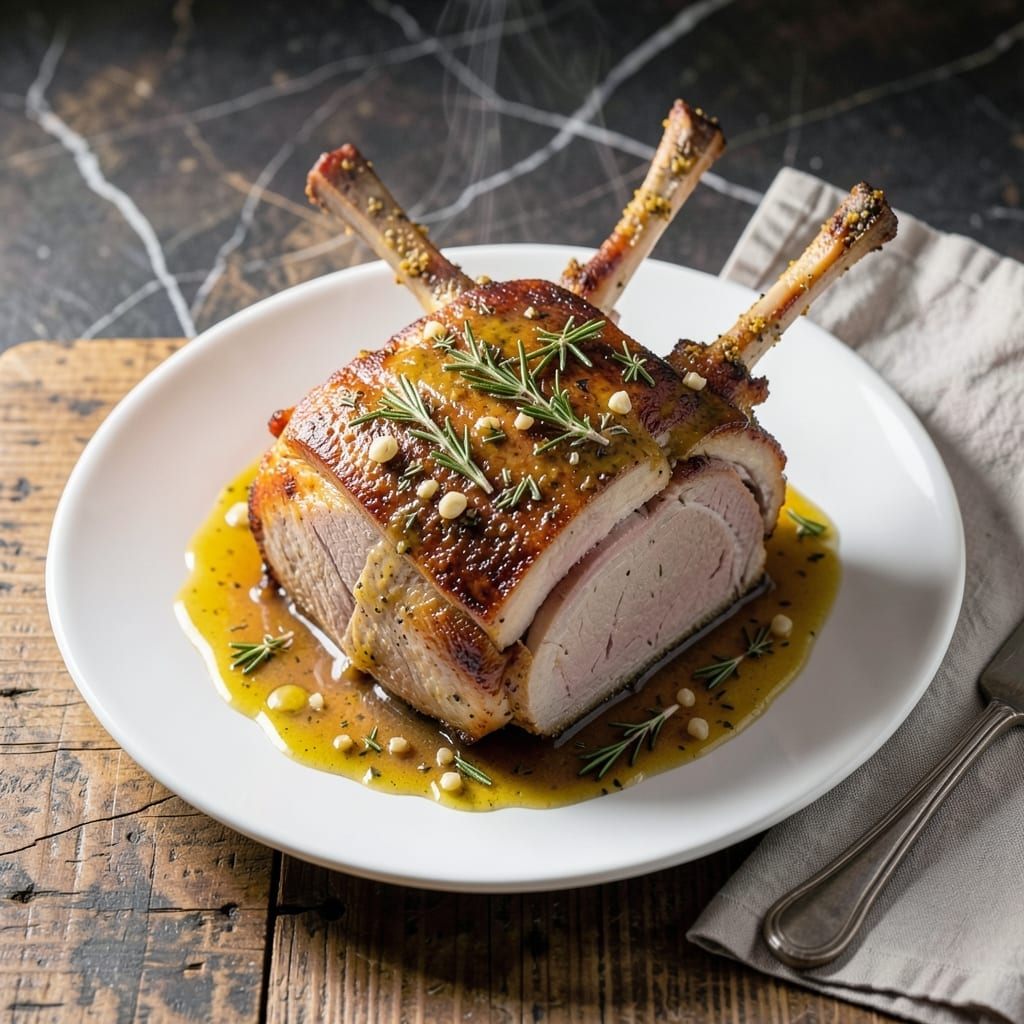
This herb-crusted pork rack transforms a simple cut into an elegant centerpiece for special occasions. The secret lies in a balanced herb blend and precise roasting technique.
With a golden crust and tender meat, this dish delivers restaurant-quality results. Perfect for holidays or Sunday suppers with family.
Ingredients for Costco Rack of Pork
Elevate your dinner with this Costco-sourced pork rack and aromatic herb blend for restaurant-worthy results.
| Ingredient | Amount | Notes |
|---|---|---|
| Bone-In Pork Rib Roast 🥩 | 4 lb | Frenched bones for presentation |
| Dijon Mustard 🟡 | ¼ cup | Whole grain variety preferred |
| Fresh Rosemary 🌿 | 2 tbsp | Finely chopped, stems removed |
| Fresh Thyme 🍃 | 2 tbsp | Leaves stripped from stems |
| Fresh Sage 🌿 | 1 tbsp | Finely minced fresh leaves |
| Garlic Cloves 🧄 | 6 cloves | Minced to fine paste |
| Kosher Salt 🧂 | 2 tbsp | Diamond Crystal preferred |
| Black Pepper 🌶️ | 1 tbsp | Freshly cracked coarse |
| Extra-Virgin Olive Oil 🫒 | ¼ cup | High-quality cold-pressed |
| Dry White Wine 🍷 | ½ cup | Sauvignon Blanc recommended |
| Unsalted Butter 🧈 | 4 tbsp | Softened to room temperature |
| Shallot 🧅 | 1 whole | Finely minced for crust |
| Chicken Stock 🥣 | ½ cup | Low-sodium preferred |
[recipe_ingredient_scaler]
The pork roast is everything here. Costco’s bone-in rib roast consistently offers excellent marbling and size—look for a 4-pound cut with frenched bones for that elegant presentation. Whole Foods also carries quality options if you prefer organic. The herbs should be fresh (vibrant green and fragrant)—avoid any with wilting leaves or brown spots. Most grocery stores stock these year-round in the produce section.
No fresh herbs? Dried at one-third the quantity works in a pinch, though the flavor won’t be as bright. Sauvignon Blanc can be swapped for any dry white wine, or use additional chicken stock if avoiding alcohol. For the mustard, regular Dijon is fine, but whole grain adds texture to the crust. The butter must be unsalted to control seasoning—European-style preferred for richer flavor.
The roast can rest at room temperature for 1 hour before cooking. Leftovers keep 4-5 days refrigerated, though the crust softens. Reheat gently in a 300°F oven to preserve moisture. The herb mixture can be prepped 1 day ahead and stored covered in the fridge.
Why You’ll Love This Recipe
- Set It and Forget: That bone-in pork rib roast from Costco goes straight from fridge to oven with just a quick rub of Dijon and fresh herbs—no babysitting required.
- Herb-Crusted Bliss: The rosemary, thyme, and sage form this insane aromatic crust that makes every bite taste like a special occasion without the fancy restaurant price.
- Feeds the Whole Crew: One roast means dinner for six plus leftovers for sandwiches the next day—my kids fight over the crispy ends.
- Budget Luxury: Honestly, it feels indulgent but costs less per serving than takeout, and the leftovers reheat beautifully for meal prep.
Step-by-Step Instructions for Herb-Crusted Pork Rib Roast
Master the technique for a perfectly roasted centerpiece with a fragrant herb crust.
Step 1: Prepare the Herb Crust and Season the Roast
Finely mince the 1 whole shallot, 6 cloves garlic cloves, 2 tbsp fresh rosemary, 2 tbsp fresh thyme, and 1 tbsp fresh sage until you have a uniform, aromatic paste. This ensures every bite carries the full herb profile.
Pat the 4 lb bone-in pork rib roast dry with paper towels to maximize crust adhesion and browning. Rub the surface with the 0.25 cup Dijon mustard, then press the herb mixture evenly over the entire roast. This creates a flavorful barrier that locks in juices.
Season generously with the 2 tbsp kosher salt and 1 tbsp black pepper, ensuring full coverage. The salt will draw out surface moisture initially, but the crust will form a perfect seal as it roasts.
Step 2: Sear for a Flavorful Foundation
Heat a large oven-safe skillet or roasting pan over medium-high heat. Add the 0.25 cup extra-virgin olive oil and 4 tbsp unsalted butter, swirling to combine as the butter melts.
Once the butter stops foaming, sear the roast on all sides for 2-3 minutes per side until deeply golden brown. The Frenched bones will make handling easier—use tongs to rotate the roast, ensuring even contact with the pan. This step develops the Maillard reaction for complex, meaty flavors.
Step 3: Roast to Ideal Doneness
Preheat your oven to 375°F. Transfer the seared roast to the oven, bone-side down, and roast uncovered for 1 hour to 1 hour 15 minutes. The exact time depends on your oven and the roast’s thickness.
Baste the roast with the pan juices every 20 minutes to keep the crust moist and promote even browning. Begin checking the internal temperature after 1 hour—you’re aiming for 145°F in the thickest part of the meat, away from the bone.
Step 4: Deglaze and Create the Pan Sauce
Remove the roast to a cutting board and tent loosely with foil. Place the roasting pan over medium heat, add the 1 whole shallot (finely minced), and cook until softened, about 2 minutes.
Pour in the 0.5 cup dry white wine and scrape up all the browned bits from the pan with a wooden spoon. Let the wine reduce by half, about 3-4 minutes, then add the 0.5 cup chicken stock and simmer for another 2-3 minutes until slightly thickened.
Step 5: Rest and Serve
Let the roast rest for 15-20 minutes before carving. This allows the juices to redistribute, ensuring each slice is moist and flavorful. The internal temperature will rise 5-10°F during resting.
Carve between the bones into individual chops, arranging them on a serving platter. Drizzle the pan sauce over the top or serve it on the side for dipping. The herb crust should be deeply browned and fragrant, with the meat tender and just barely pink at the center.
Pro Tips For Making Costco Rack Of Pork
- Rest Before Slicing: Give the roast a full 15 minutes under loose foil before carving—this keeps the juices from running all over the cutting board instead of staying in the meat.
- Score the Fat Cap: Cut shallow crosshatches in the fat cap before seasoning so the Dijon mustard and herbs actually penetrate instead of just sitting on top.
- Skip Cold Meat: Pull the pork out of the fridge 1 hour before cooking—I learned this the hard way after ending up with a dry exterior and undercooked center.
- Fresh Herbs Only: Dried rosemary, thyme, or sage won’t give the same punch; splurge on fresh since they’re the soul of this dish’s flavor.
Make-Ahead Tips for This Recipe
Herb Crust Prep
Mix your 2 tbsp rosemary, 2 tbsp thyme, and 1 tbsp sage with minced shallot and garlic up to 1 day ahead. Store in an airtight container in the fridge. This saves time and lets flavors meld. I often prep this while coastal rides clear my head. 💡
Roast Seasoning
Pat the 4 lb pork rib roast dry and rub with Dijon mustard the morning of cooking. Keep uncovered in the fridge to dry the surface further—this ensures a crispier crust when roasted.
Pan Sauce Base
Measure out your dry white wine and chicken stock the night before. Combine them in a jar and refrigerate. Cold liquid added to a hot pan creates the perfect deglaze for maximum flavor extraction.
Room Temperature
Take the roast out of the fridge 1-2 hours before cooking. This ensures even cooking throughout. I always set mine on the counter while I prep the rest of dinner. 🌡️
Oven Setup
Preheat your oven to 375°F 30 minutes before roasting. A fully preheated oven is crucial for that initial sear-to-roast transition. Use the time to arrange your roasting pan and gather basting tools.
Resting Space
Clear a spot on your counter for the roast to rest after cooking. Tent loosely with foil and let it sit for 15-20 minutes before carving. This step is non-negotiable for juicy results.
Nutrition Facts
Frequently Asked Questions
What temperature should the pork reach?
Roast until the internal temperature hits 145°F in the thickest part. It will rise to 150-155°F while resting.
Can I use dried herbs instead of fresh?
Yes, but use one-third the amount since dried herbs are more concentrated. The flavor won’t be as bright, but it works in a pinch.
How long should the pork rest before serving?
Let it rest for 15-20 minutes after roasting. This keeps the juices inside the meat for the most tender results.
What can I substitute for white wine?
Use additional chicken stock or apple cider vinegar mixed with water. Both will still create a flavorful pan sauce.

Trained in classic French technique but raised on slow-cooked ribs and spicy rubs, she blends culinary skill with smoke and soul.
- Recipe for Boneless Pork Chops in Cast Iron Skillet: Sear and Baste to Juicy Perfection - October 3, 2026
- Recipe for Boneless Cross Rib Roast: Slow-Roasted Beef with Herb Crust - October 3, 2026
- Hamburgers in Sauce Recipe Crock Pot: Slow-Cooked Savory Delight - October 3, 2026