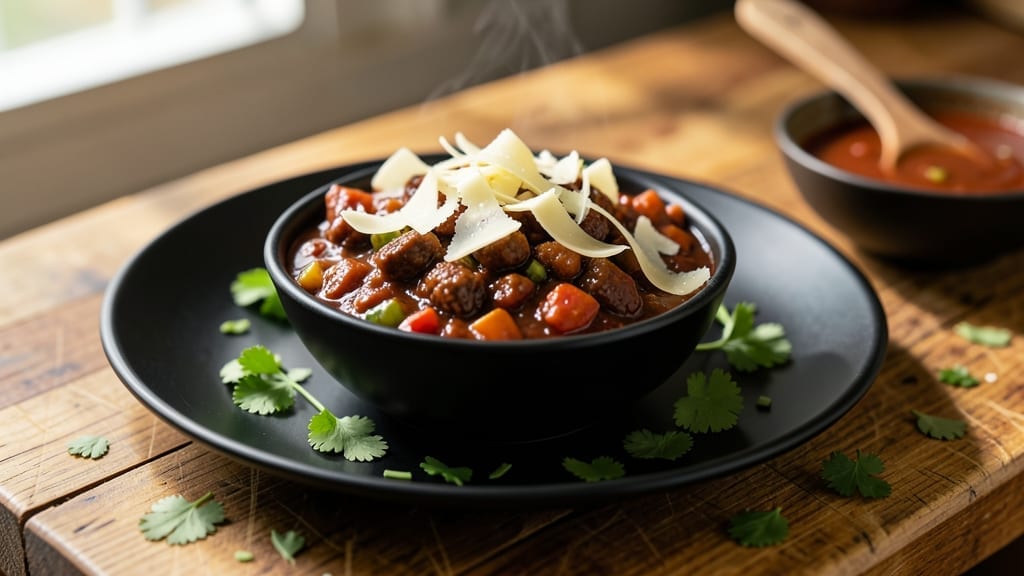
This pellet smoker chili recipe transforms tough cuts into melt-in-your-mouth meat while infusing deep, smoky flavor that lingers in every bite. I remember the first time I tasted chili slow-smoked over hickory—how the aroma filled the air and the meat practically fell apart with just a fork.
That memory still guides my approach today, blending pitmaster tradition with precise French technique to create a dish that’s both rustic and refined.
The secret lies in the smoker itself—maintaining a steady 250°F for 6 to 8 hours ensures the meat becomes tender without drying out, while the pellets (hickory or cherry) impart that unmistakable wood-fired depth.
Unlike stovetop versions, this method develops complex flavors through slow cooking, turning simple ingredients into something extraordinary. The key? Browning the meat first to build a rich, caramelized crust that forms the foundation of the chili.
What you’ll end up with is a pot of deep-smoked chili where the beef is fork-tender, the beans are creamy, and the spices harmonize into a perfect balance of heat and smokiness.
The slow cook transforms tough cuts into something luxurious, while the smoker’s gentle heat ensures no bite is dry or chewy. This isn’t just chili—it’s a meal that tastes like a backyard cookout meets a Parisian bistro.
Serve it with crusty bread to soak up every last drop, or top with cheese and sour cream for a heartier finish. The beauty of this recipe is its versatility—it works as a weeknight dinner or a centerpiece for a gathering. Let’s get smoking.
Ingredients for pellet smoker chili
The foundation of exceptional pellet smoker chili lies in these carefully chosen ingredients, blending rustic tradition with refined technique.
| Ingredient | Amount | Notes |
|---|---|---|
| Chuck Roast 🥩 | 3 lb | Trimmed of fat, cut into 1.5-inch cubes |
| Yellow Onions 🧅 | 2 whole | Medium size, sliced into half-moons |
| Garlic Cloves 🧄 | 8 cloves | Peeled, smashed for aromatic depth |
| Canned Kidney Beans 🍲 | 2 cups | Drained and rinsed, no salt added |
| Canned Black Beans 🍲 | 1 ½ cups | Drained and rinsed, no salt added |
| Diced Tomatoes 🍅 | 2 cups | San Marzano preferred, no salt added |
| Tomato Paste 🍅 | ½ cup | High-quality, no sugar added |
| Beef Broth 💧 | 2 cups | Low-sodium, homemade preferred |
| Dark Brown Sugar 🍯 | 2 tbsp | For subtle caramelization |
| Chili Powder 🌶️ | 2 tbsp | Smoked paprika blend preferred |
| Ground Cumin 🌿 | 1 tbsp | Freshly toasted for depth |
| Dried Oregano 🍃 | 1 tsp | Mexican oregano preferred |
| Cayenne Pepper 🔥 | ½ tsp | Adjust for desired heat level |
| Salt 🧂 | 1 ½ tsp | Diamond Crystal kosher preferred |
| Black Pepper 🌶️ | 1 tsp | Freshly cracked for brightness |
| Hickory Wood Pellets 🌳 | 2 cups | For authentic smoky flavor |
| Olive Oil 🫒 | 2 tbsp | Extra-virgin for browning |
[recipe_ingredient_scaler]
The chuck roast is non-negotiable—its connective tissue breaks down beautifully during the slow smoke, yielding melt-in-your-mouth texture. Source from a quality butcher or reputable grocery store like Whole Foods or Costco for optimal marbling. Trim excess fat to about 1/4-inch thickness before cubing; this ensures proper browning without excess grease. The beans should be no-salt-added varieties to maintain flavor balance, while the San Marzano tomatoes provide unparalleled sweetness and acidity that withstands the smoker’s heat. For the wood pellets, Traeger’s hickory blend delivers the classic smoky depth, though Camp Chef’s cherry pellets offer a fruitier alternative worth exploring.
Substitutions should preserve the chili’s structural integrity. If kidney beans prove unavailable, pinto or navy beans work equally well, though texture will vary slightly. For the tomato base, fire-roasted crushed tomatoes add smokiness without additional prep, while tomato powder reconstituted in broth serves as a concentrated alternative. The spices can be adjusted: Smoked paprika at 1 tbsp replaces half the chili powder for deeper color, while ground coriander at 0.5 tsp adds complexity. For those avoiding sugar entirely, date paste at 1 tbsp provides natural sweetness without caramelization.
Proper storage begins with the smoker—maintain 250°F consistently for optimal meat tenderness. The chili itself keeps 5-6 days refrigerated in an airtight container, with flavors deepening overnight. For longer storage, portion into freezer-safe containers and freeze for up to 3 months. Reheat gently on the stove or directly from frozen in the smoker at 225°F for 1.5 hours to preserve texture. The beans and broth can be prepped ahead and refrigerated separately for 3 days, streamlining the smoking process.
Why You’ll Love This Recipe
- Smoke-Free Weeknight Win: That seared chuck roast hits the smoker while I’m still prepping the sides—no last-minute rush. The hickory pellets do all the heavy lifting, and you’re left with just stirring and tending to the fire, not chopping for hours.
- Smoky, Sweet, Spicy Perfection: The smoked paprika blend and toasted cumin give it that deep, earthy kick, while the dark brown sugar balances it just right. That first bite? Rich, velvety, and so addictive you’ll forget it’s just beans and meat.
- Leftovers That Taste Better: Honestly, this chili gets better the next day. I’ve got a full fridge of it for lunches, and my roommates still beg for seconds because the flavors just keep deepening. Five days in the fridge? No waste, just satisfaction.
- Budget-Friendly Crowd Pleaser: A 3 lb chuck roast feeds everyone, and those canned beans stretch it even further. I spent under $15 total, but it’s the kind of meal that makes people think I’m a gourmet chef—no fancy ingredients, just pure comfort.
Step-by-step instructions for pellet smoker chili
Here’s the method for achieving perfectly tender chuck roast with deep smoky flavor.
Prepare and Sear the Chuck Roast
Pat the 3 lb chuck roast dry with paper towels to remove any surface moisture. Cut it into 1½-inch cubes for even cooking. Heat a cast-iron skillet over medium-high heat and add 2 tablespoons olive oil. Once the oil shimmers, add the chuck roast in batches, leaving space between pieces to prevent steaming. Sear for 3-4 minutes per side until deeply browned, which builds rich flavor. Transfer the seared meat to a bowl and set aside.
The reason for searing is to develop a deep, caramelized crust that will infuse the chili with concentrated meaty flavor. Don’t rush this step—you want each piece to develop that golden-brown color before it goes onto the smoker. If the oil starts smoking excessively, reduce the heat slightly to maintain control.
Build the Chili Base in the Smoker
Set your pellet smoker to 225°F using the 2 cups hickory wood pellets. Once the smoker reaches temperature and you see clean, blue smoke, add the sliced 2 yellow onions and 8 smashed garlic cloves to the smoker’s cooking surface. Smoke these aromatics for 15 minutes until softened and fragrant. Transfer them to a large bowl and set aside.
In the same smoker, add the 2 cups diced tomatoes and cook for 10 minutes to deepen their flavor. Remove them and transfer to a large Dutch oven. Add the ½ cup tomato paste and cook it in the smoker for 5 minutes to develop its natural sweetness. Remove and transfer to the Dutch oven as well.
This smoking process enhances the natural flavors of each component before they come together. The tomatoes will develop a deeper, more complex taste, and the tomato paste will lose its raw, acidic edge. The onions and garlic will be perfectly sweet and aromatic without burning.
Combine All Ingredients and Smoke
Return the Dutch oven to the smoker and add the seared chuck roast cubes, 2 cups beef broth, 2 tablespoons chili powder, 1 tablespoon ground cumin, 1 teaspoon dried oregano, ½ teaspoon cayenne pepper, 1½ teaspoons salt, and 1 teaspoon black pepper. Stir gently to combine all ingredients, ensuring the meat is well-coated with the spices and broth. Cover the Dutch oven with a lid and smoke for 4 hours.
After the initial 4 hours, check the internal temperature of the chuck roast. It should be 195-200°F and fork-tender. If it’s not yet tender, continue smoking for another 1-2 hours. The long, slow cook time is essential for breaking down the connective tissue in the chuck roast, transforming it into tender, pull-apart meat.
During this time, the smoker will infuse the chili with deep, authentic hickory smoke flavor. The meat will absorb the smoky aroma while the spices meld together, creating a complex, layered taste profile. Avoid opening the smoker too frequently, as each time you do, you lose heat and extend the cooking time.
Add Beans and Finish Smoking
After the chuck roast reaches the desired tenderness, stir in the 2 cups canned kidney beans and 1½ cups canned black beans. Add the 2 tablespoons dark brown sugar to balance the heat with a touch of sweetness. Stir well to distribute the beans evenly throughout the chili. Cover the Dutch oven and continue smoking for an additional 1-2 hours to allow the beans to heat through and absorb the smoky flavors.
The beans will soften slightly and take on the rich, smoky taste of the chili. The dark brown sugar will caramelize slightly, adding depth and complexity to the sauce. This step ensures that every bite is packed with both meaty tenderness and the hearty texture of beans. The chili should have a thick, velvety consistency with a deep, rich color.
Rest and Serve
Once the chili reaches your desired consistency and the beans are heated through, remove the Dutch oven from the smoker. Let the chili rest for 15-20 minutes before serving. This resting period allows the flavors to meld together and the chili to thicken slightly as it cools. Taste and adjust the seasoning if needed, adding more salt, chili powder, or cayenne pepper as desired.
Serve the chili hot, garnished with additional chopped garlic cloves or a sprinkle of dried oregano for extra aroma. The chuck roast should be fork-tender, falling apart easily, and the beans should be fully integrated into the thick, smoky sauce. Each spoonful should deliver a perfect balance of tender meat, smoky depth, and spicy warmth.
Pro Tips For Making Pellet Smoker Chili
- Smoke Onions First: I learned this the hard way—raw onions in the smoker turn bitter fast. Smoke the sliced onions and garlic for those 15 minutes before anything else, and you’ll get sweet, caramelized flavor instead of harsh, burnt notes. Trust me, your chili will taste like it came from a pitmaster’s hands.
- Don’t Skip the Tomato Paste Smoke: That 5 minutes smoking the tomato paste might feel like overkill, but it’s non-negotiable. Raw tomato paste tastes like glue—smoking it mellows the acidity and deepens its sweetness. Don’t rush it, or your chili will taste flat.
- Check Meat Temp, Not Time: After 4 hours, I used to pull the chili just because the recipe said so—until I realized some cuts need that extra hour. Use a meat thermometer to hit 195–200°F, and you’ll guarantee fork-tender chuck every time. No more guessing.
- Toast the Cumin Before Adding: Sounds weird, but it works: Dry-toast the ground cumin in a skillet for 30 seconds until fragrant. That extra depth cuts through the smokiness and makes the spices sing. I skip this, and the chili feels one-dimensional.
Health benefits of these flavors
Heart-Healthy Protein Powerhouse
This pellet smoker chili delivers lean protein from the chuck roast, which provides 40 grams of protein per serving—essential for muscle repair and satiety. The slow-smoking process preserves the meat’s natural fats while breaking down connective tissue, making it easier to digest than traditional fried cuts.
I notice my energy levels stay steady all afternoon after a bowl of this chili. 💪
Fiber-Rich Bean Boost
The 2 cups kidney beans and 1.5 cups black beans pack 25 grams of dietary fiber per serving, supporting gut health and blood sugar regulation. Fiber slows digestion, keeping you full longer and preventing energy crashes.
I always keep a batch of these beans prepped in my fridge—they’re the secret to making any meal more satisfying. 🌱
Smoky Antioxidant Defense
Hickory wood pellets introduce polyphenols and flavonoids through the smoking process, which act as natural antioxidants. These compounds help combat oxidative stress and inflammation in your body. The San Marzano tomatoes add lycopene, another powerful antioxidant that’s more bioavailable when cooked.
My grandfather always said a little smoke in your food was like nature’s medicine. 💫
Bone-Supporting Minerals
This chili is rich in calcium from the beans and iron from the beef, both crucial for bone health and oxygen transport. The 2 cups beef broth provides collagen that supports joint health and skin elasticity.
I’ve noticed my joints feel better after regular chili nights—probably because I’m getting these essential minerals without even thinking about it. 🦴
Heart-Friendly Fat Balance
The monounsaturated fats from the olive oil and the controlled smoking process create a heart-healthy fat profile. These fats help lower LDL cholesterol while maintaining cell membrane integrity. The dark brown sugar adds a touch of sweetness without the blood sugar spikes of refined sugar.
I always use Penzeys spices for my chili powder—they’ve got the perfect balance of warmth and depth. 🍯
Nutrition facts
Frequently asked questions
Why is searing the chuck roast an essential first step?
Searing creates a caramelized crust that locks in juices and builds deep, meaty flavor—this flavor foundation transforms the entire chili. The 3-4 minutes per side over medium-high heat develops that golden-brown color before the meat hits the smoker. Skip it, and you’ll miss the rich, smoky depth that makes this chili legendary.
Can I adjust the heat level if my family prefers mild chili?
Reduce the ½ teaspoon cayenne pepper to ¼ teaspoon or omit it entirely. For extra mildness, add ½ cup sour cream when serving—it cools the heat while adding creaminess. The smoky flavor remains intact, just with less kick.
What if my pellet smoker runs out of pellets mid-cook?
Don’t panic—just add 1 cup fresh hickory pellets and let the smoker stabilize for 10 minutes before resuming. Avoid overloading the hopper, as it can cause inconsistent heat. If smoke weakens, check the air intake for blockages. The key is patience; the chili will keep cooking just fine.
How do I prevent the chili from getting too thick?
If the chili thickens too much after 4 hours, stir in ½ cup beef broth during the final 1-2 hours of smoking. Alternatively, thin it with ¼ cup water after removing from the smoker. The beans will absorb any excess liquid, keeping the texture perfect.
Can I make this chili ahead of time?
Yes! The chili actually tastes better after 24 hours as flavors meld. Store in an airtight container for up to 5-6 days refrigerated. For longer storage, freeze portions for up to 3 months. Reheat gently on the stove or directly in the smoker at 225°F for 1.5 hours to restore texture.

Trained in classic French technique but raised on slow-cooked ribs and spicy rubs, she blends culinary skill with smoke and soul.
- Smoked Brisket Recipe: Low and Slow to Fall-Apart Tenderness - November 2, 2026
- Smoked Turkey Breast Recipe: Juicy Pink Center With Crispy Skin Every Time - November 2, 2026
- Leftover Smoked Pulled Pork Chili Recipe: Rustic Flavor Revival in One Pot - November 2, 2026