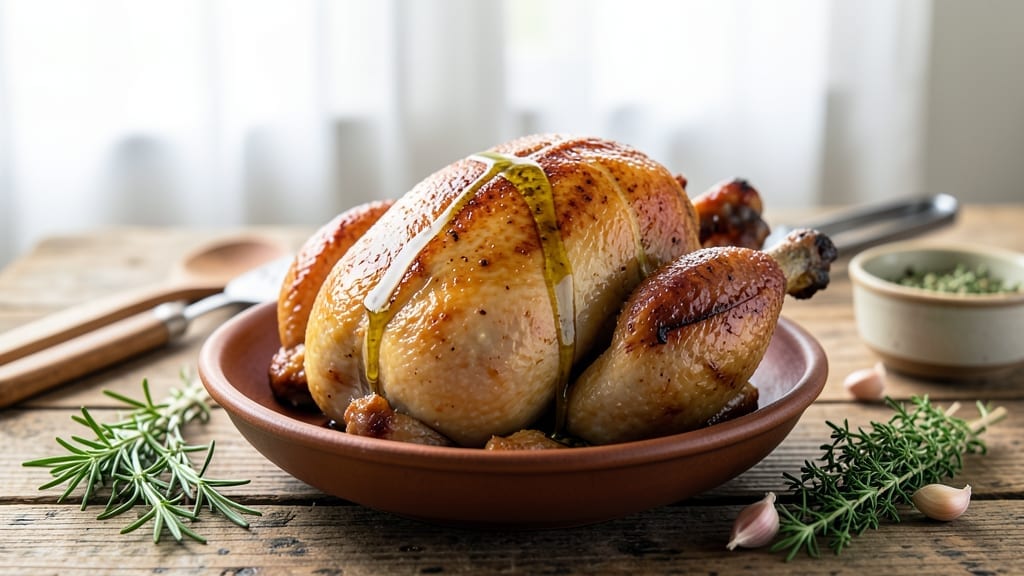
A pellet smoker turkey recipe transforms Thanksgiving from stressful to spectacular by delivering juicy dark meat and crispy skin without flipping or basting. The secret lies in precise temperature control and indirect smoking—no guesswork, just consistent results that impress even skeptical relatives.
I’ve perfected this method after years of trial and error, ensuring your turkey stays moist inside while developing that coveted mahogany crust outside.
The process begins with a dry brine (no messy wet solution) that seasons the turkey thoroughly while keeping the meat tender.
You’ll monitor internal temperatures with a reliable probe, maintaining a steady 275°F smoke for 3-4 hours per pound—long enough to break down collagen for fork-tender dark meat without drying out the breast.
The pellet smoker’s automatic wood feed eliminates the need for constant adjustments, letting you focus on hosting rather than hovering.
By the time your turkey emerges, you’ll have a golden, crisp-skinned centerpiece with juicy thighs and legs that fall apart at the touch. The skin develops a smoky-sweet depth from the pellets, while the meat remains succulent—no sad, dry slices here.
This method also frees up your oven for sides, so you can roast vegetables or bake rolls simultaneously for a full holiday spread.
Resting, carving, and plating become effortless with the right techniques, ensuring every slice is presented beautifully. Safety is built in with cross-contamination prevention and proper probe placement, so you can serve with confidence. Let’s get started on a turkey that will be the talk of the table.
Ingredients for pellet smoker turkey
A 13-pound turkey, precise seasoning, and pellet smoker magic create perfect Thanksgiving centerpiece.
| Ingredient | Amount | Notes |
|---|---|---|
| Whole Turkey (12-14 lb) 🦃 | 13 lb | Thawed, giblets removed |
| Coarse Kosher Salt 🧂 | ½ cup | Diamond Crystal preferred |
| Ground Black Pepper 🌶️ | 2 tbsp | Freshly ground, coarse |
| Unsalted Butter (Sticks) 🧈 | ½ lb | Room temperature, patted dry |
| Honey 🍯 | ¼ cup | Pure, no additives |
| Apple Cider Vinegar 🍎 | 0.1 cup | Raw, unfiltered |
| Pellet Smoker Wood Chips 🔥 | 2 lb | Hickory or pecan blend |
| Meat Thermometer 📊 | 1 piece | Instant-read preferred |
| Butcher Paper 📄 | 2 sheets | For skin protection |
| Aluminum Foil 🔥 | 1 sheet | Heavy-duty, for wrapping |
| Turkey Neck Sausage 🌭 | 2 whole | For aromatics, optional |
| Fresh Rosemary 🌿 | ¼ cup | Stems removed, chopped |
| Fresh Thyme 🌿 | ¼ cup | Leaves only, chopped |
| Garlic Cloves 🧄 | 8 cloves | Peeled, smashed |
| Chicken Stock 🍲 | 2 cups | Low-sodium preferred |
[recipe_ingredient_scaler]
The turkey size matters most—12-14 lbs is ideal for even cooking without drying. Thaw it completely in the fridge (about 24 hours per 4-5 lbs), not on the counter. Remove giblets and pat dry thoroughly—moisture equals steam equals soggy skin. For the dry brine, Diamond Crystal kosher salt dissolves evenly without clumping, but any coarse salt works. I always grab Costco’s bulk butter—it’s cheaper and stays fresh longer than small tubs. The honey should be pure, no artificial sweeteners—local raw honey adds subtle floral notes.
No apple cider vinegar? White wine vinegar or lemon juice works in a pinch, but the tanginess won’t be as balanced. Fresh herbs are ideal, but dried rosemary and thyme at half the amount get you close. Skip the sausage? Place whole garlic cloves and onion halves under the turkey for aromatics. For the stock, homemade is best, but Lowry’s or Pacific Foods low-sodium are solid store-bought options. The meat thermometer is non-negotiable—instant-read probes like Thermoworks give the most accurate readings. Pro tip: Butcher paper under the turkey prevents sticking and lets you flip it easily for even browning.
The turkey stays juicy thanks to the dry brine and 3-4 hours per pound at 275°F. Rest it 30-45 minutes before carving—this keeps juices from spilling out. Store leftovers in airtight containers for 3-4 days or freeze for up to 3 months. I portion mine into meal-sized bags so I can grab a slice anytime. The pellet smoker’s automatic feed means no fussing with wood—just set it, walk away, and enjoy your holiday. Probe placement is critical: breast at 165°F, thighs at 175°F, and dark meat at 195°F for maximum tenderness.
Why You’ll Love This Recipe
- No-Fuss Feast: Honestly, this recipe is my secret weapon for holidays—or even a lazy Sunday. Just pat the turkey dry, slather on that herb butter, and let the pellet smoker do the heavy lifting. No constant basting, no flipping, just set it and forget it while the smoker works its magic.
- Smoky-Sweet Perfection: That honey and apple cider vinegar combo in the butter? Game-changer. The smoky hickory wood chips add depth, while the garlic and herbs make every bite taste like a Sunday dinner your grandma would’ve approved of. The turkey neck sausages inside? Pure flavor bomb.
- Leftovers That Shine: I always make extra because this turkey is that good. Slice it up for sandwiches the next day, or shred it into tacos—it’s just as delicious cold. And that pan sauce? Drizzle it over mashed potatoes or roasted veggies to stretch it even further.
- Budget-Friendly Crowd-Pleaser: Feeding a crowd doesn’t have to break the bank. A whole turkey is cheaper per serving than most proteins, and ingredients like fresh rosemary and thyme are affordable staples that elevate the dish without costing extra. Plus, the pellet smoker’s efficiency means you’re not wasting energy (or money) on high heat.
Step-by-step instructions for smoked turkey
Here’s how to achieve that perfect balance of crispy skin and juicy dark meat in your pellet smoker.
Prepare and Season the Turkey
Start by removing the turkey from the refrigerator and letting it sit at room temperature for 30 minutes before smoking. This ensures even cooking throughout. Pat the turkey dry inside and out with paper towels—this is absolutely critical for crispy skin. Any moisture left on the skin will prevent proper browning.
In a small bowl, combine the ½ cup coarse kosher salt and 2 tablespoons ground black pepper. Generously rub this mixture all over the turkey, including inside the cavity. Don’t be shy—press the seasoning into the skin so it adheres well. This dry brine will work its magic while the turkey smokes, creating that perfect balance of flavor and texture.
Next, create a simple herb butter by mixing the ½ pound unsalted butter (softened), ¼ cup honey, ¼ cup apple cider vinegar, ¼ cup chopped fresh rosemary, ¼ cup chopped fresh thyme, and 8 smashed garlic cloves. Spread this mixture all over the turkey skin, making sure to get it into the crevices. This will add incredible flavor and help create that beautiful golden crust.
Set Up the Pellet Smoker
Fill your pellet smoker with 2 lb of hickory or pecan wood chips—these woods complement turkey beautifully. Preheat the smoker to 225°F and let it stabilize for 15-20 minutes before adding the turkey. This low temperature ensures the turkey cooks slowly and evenly, preventing dryness while developing deep flavor.
While the smoker preheats, place the 2 turkey neck sausages in the cavity of the turkey. These will add incredible depth of flavor as they render and infuse the meat. Secure the turkey in a roasting rack positioned over a drip pan to catch any juices that might drip. This keeps your smoker clean and helps maintain consistent heat.
Place the turkey breast-side up on the smoker grates. The breast side up position helps prevent the breast meat from drying out while allowing the skin to crisp properly. Close the lid and resist the urge to peek—every time you open the lid, you lose heat and moisture, extending your cook time.
Smoke the Turkey to Perfection
Smoke the turkey for 4-5 hours at 225°F, or until the thigh reaches an internal temperature of 155°F when measured with your meat thermometer. This is the ideal temperature for juicy dark meat. You’ll notice the skin starting to crisp and develop a beautiful golden color—this is when you know you’re on the right track.
Here’s where the magic happens: When the thigh reaches 155°F, it’s time to wrap the turkey. Tear off 2 sheets of butcher paper and wrap them tightly around the turkey, leaving the breast exposed. The butcher paper allows the skin to crisp while protecting the dark meat from drying out. Return the turkey to the smoker and continue cooking.
Continue smoking until the thigh reaches 165°F and the breast reaches 160°F. This typically takes another 1-2 hours. The turkey is done when the meat thermometer inserted into the thickest part of the thigh (not touching bone) reads 165°F and the breast reaches 160°F. The skin should be deep golden brown and crispy to the touch.
Rest and Carve for Maximum Juiciness
Once the turkey reaches the proper internal temperatures, remove it from the smoker and transfer it to a cutting board. Tent loosely with 1 sheet of aluminum foil and let it rest for 30-45 minutes. This resting period allows the juices to redistribute throughout the meat, ensuring every slice is moist and flavorful.
While the turkey rests, prepare a simple pan sauce using the 2 cups chicken stock. Place the turkey neck sausages in a skillet and cook over medium heat until they render their fat. Remove the sausages and set them aside, then pour the rendered fat into a saucepan. Add the 2 cups chicken stock and bring to a simmer, scraping up any browned bits from the bottom of the pan. This will create a rich, flavorful sauce to drizzle over your carved turkey.
After resting, carefully remove the butcher paper and carve the turkey. The skin should be crispy and golden, while the meat should be juicy and tender. Serve the turkey with the pan sauce drizzled over the top and the turkey neck sausages on the side for added flavor. Your guests will be amazed by the perfect balance of crispy skin and juicy dark meat!
Pro Tips For Making Pellet Smoker Turkey
- Skip the Butter Prep Hassle: Pat the 0.5 lb unsalted butter sticks dry with a paper towel before mixing with honey and vinegar—wet butter won’t emulsify properly, and your herb butter will separate mid-spread. I learned this the hard way when my first batch turned into a gloppy mess.
- Wrap at 155°F—Not Earlier: Wait until the thigh hits 155°F before wrapping in butcher paper. Any earlier, and you’ll trap steam too soon, turning your crispy skin into sad, limp rubber. The paper’s magic is in timing—let that skin get a head start.
- Don’t Crowd the Smoker: Place the turkey on the middle rack with at least 2 inches of space above and below. I once stuffed mine too close to the lid, and the breast steamed instead of smoking—resulting in a sad, pale, and soggy mess. Airflow is everything.
- Smash Those Garlic Cloves: 8 peeled garlic cloves need to be smashed, not minced, for the herb butter. Whole cloves won’t infuse flavor, and mincing turns them into a paste that clumps. A heavy knife or rolling pin does the trick—no food processor needed.
Wine and beer pairings for pellet smoker turkey
Classic Red Wine Pairings
The rich, smoky-sweet flavors of your pellet-smoked turkey pair beautifully with bold red wines. I always reach for a Cabernet Sauvignon from Napa Valley—its dark fruit notes and tannins complement the turkey’s savory depth.
A Merlot with its softer texture and plum undertones also works wonderfully, smoothing out the meal’s richness. Both wines stand up to the herb butter and crispy skin without overwhelming the dish. 🍷
Light Beer Complements
A crisp American wheat beer like Blue Moon cuts through the turkey’s richness with its citrusy finish. The effervescence cleanses your palate between bites, balancing the smoky flavors. For a malty option, try a German pilsner like Warsteiner—its light body won’t compete with the turkey’s bold taste.
Both beers highlight the dish’s natural flavors without distraction. 🍺
Unexpected White Wine
Don’t overlook Off-Dry Riesling for this meal—its slight sweetness and acidity surprise and delight. A German Kabinett from the Mosel Valley pairs perfectly with the turkey’s smoky notes while enhancing the herb butter’s complexity. The wine’s stone fruit flavors bridge the gap between the savory turkey and sweet sides. 🍇
Regional Beer Fusion
For a Southern twist, pair your turkey with a Texas-style lager like Lone Star. The subtle oak and caramel notes in the beer complement the pellet-smoked turkey’s depth. If you’re in the Midwest, a Michigan hard cider with dry apple notes adds a refreshing contrast to the smoky flavors.
Both options bring regional charm to the table. 🍏
Dessert Wine Finish
End the meal with a Port wine like Taylor’s Late Bottled Vintage. Its nutty, caramelized fruit flavors contrast beautifully with the turkey’s smoky-sweet profile. A splash of Moscato d’Asti also works—its light bubbles and peach notes provide a refreshing finale.
Both pairings leave your guests satisfied and eager for seconds. 🍇
Nutrition facts
Frequently asked questions
Why does the recipe use butcher paper instead of foil?
Butcher paper lets the skin crisp beautifully while still protecting the turkey from direct heat. Unlike foil, it breathes slightly, allowing moisture to escape for that perfect crispy texture while preventing the meat from drying out. The paper also makes it easier to flip the turkey during smoking for even browning.
Can I skip the turkey neck sausages?
Yes, but you’ll miss out on extra flavor! The sausages add aromatic depth as they render and infuse the turkey. If you skip them, place whole garlic cloves and onion halves in the cavity instead for similar flavor. Both methods work, but the sausages give that authentic smoky richness.
How do I prevent the breast from drying out?
Start by placing the turkey breast-side up on the smoker grates. This position helps the skin crisp while keeping the breast meat moist. Wrapping the turkey in butcher paper after 155°F thigh temp also protects the breast from drying out. The 30-minute rest before carving is key too—it lets juices redistribute.
What’s the best way to check for doneness?
Use an instant-read meat thermometer inserted into the thickest part of the thigh (not touching bone). The turkey is done when the thigh reaches 165°F and the breast hits 160°F. The skin should also be deep golden and crispy. Never guess—reliance on color alone can lead to undercooked meat.
Can I make this recipe ahead of time?
Yes! Smoke the turkey to 160°F breast temp and refrigerate it wrapped in foil for up to 24 hours. Reheat gently in a 300°F oven until it reaches 165°F internally. This works best for leftovers—never reheat fully cooked turkey above 140°F without proper temperature control.

Trained in classic French technique but raised on slow-cooked ribs and spicy rubs, she blends culinary skill with smoke and soul.
- Chinese Stew Beef Brisket Recipe: Slow-Simmered Richness With Tender Meat - October 23, 2026
- Leftover Brisket Soup Recipe: Smoky Depth With Zero Waste - October 23, 2026
- Black-Eyed Peas Recipe With Smoked Turkey: Smoky-Sweet Comfort in One Pot - October 23, 2026