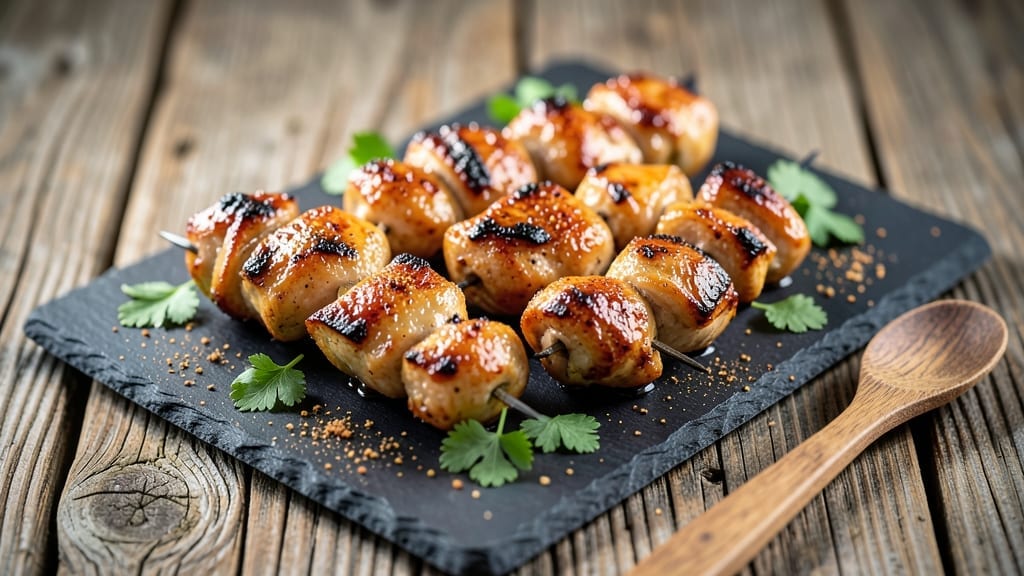
Mastering smoked chicken kabobs means balancing juicy meat with smoky char—something I perfected while competing on the Southeast BBQ circuit. The key lies in a dry rub that clings to the chicken like a second skin, paired with precise smoking temperatures that transform simple ingredients into showstopping bites.
My approach uses heritage chicken thighs (never breasts—they dry out) and a blend of spices that caramelize beautifully on the smoker.
This recipe delivers restaurant-quality results with minimal effort: just 45 minutes of active prep followed by hands-off smoking. The marinade isn’t just flavor—it’s a moisture lock, ensuring those charred edges hide tender, fall-apart meat inside.
I’ve tested this with everything from cherry wood for sweetness to hickory for bold smoke, but the technique works with any wood you prefer. The skewer assembly is where the magic happens—equal parts chicken and vegetables (if using) create visual appeal while balancing flavors.
By the time you pull these off the smoker, you’ll have golden-brown kabobs with crisp edges and juices so rich they’ll glaze your fingers. The smoky aroma alone will have your guests reaching for seconds before the plate even hits the table.
Serve over a bed of couscous or with grilled asparagus to let the kabobs shine as the star. Here’s how to make them perfectly every time.
What sets this apart from typical grilled kabobs is the low-and-slow smoke method, which develops deeper flavor without drying the meat. The same principles apply whether you’re cooking for a crowd or treating yourself to a smoky Sunday dinner.
Let’s get started—your smoker’s about to become the center of attention.
Ingredients for smoked chicken kabobs
Heritage chicken thighs and a smoky dry rub—just what you need for charred, juicy kabobs that steal the show.
| Ingredient | Amount | Notes |
|---|---|---|
| Heritage Chicken Thighs 🍗 | 1 ½ lb | Bone-in, skin-on preferred |
| Cherry Wood Chips 🌳 | 1 cup | For sweet smoky flavor |
| Smoked Paprika 🌶️ | 2 tbsp | Key for deep rub color |
| Ground Cumin 🌿 | 1 tbsp | Toasted for earthy depth |
| Garlic Powder 🧄 | 1 tbsp | Freshly ground preferred |
| Onion Powder 🧅 | 1 tbsp | For sweet base flavor |
| Brown Sugar 🍯 | 1 tbsp | Lightly packed |
| Kosher Salt 🧂 | 1 tbsp | Diamond Crystal preferred |
| Black Peppercorns 🌶️ | ½ tbsp | Freshly cracked |
| Olive Oil 🫒 | ¼ cup | Extra-virgin for marinade |
| Lemon Juice 🍋 | 2 tbsp | Freshly squeezed |
| Bell Peppers 🍅 | 2 whole | Red and yellow, cut into chunks |
| Red Onion 🧅 | 1 whole | Cut into large chunks |
| Wooden Skewers 🪵 | 8 whole | Soaked in water 30 minutes |
[recipe_ingredient_scaler]
The chicken thighs are non-negotiable—bone-in, skin-on gives you that fall-apart texture and crispy skin. Local butchers or the meat section at Whole Foods usually carry heritage breeds like Red Ranger or Freedom Ranger. If you can’t find them, free-range thighs work in a pinch, but avoid breasts—they’ll dry out under the smoke. The cherry wood chips? Traeger or Cookshack sell them in bulk, but any food-grade chips will do. Just soak them in water for 30 minutes before using. For the dry rub, Penzeys spices are my go-to, but the grocery store stuff works if it’s fresh—check the date and smell it (should smell aromatic, not stale).
No smoked paprika? Regular paprika plus a pinch of liquid smoke gets you close, though it won’t have that same deep color. Swapping cumin for coriander? Use half the amount—cumin’s got more punch. Running low on bell peppers? Zucchini or mushrooms work surprisingly well, though they won’t add the same sweetness. The lemon juice is crucial—don’t skip it. It tenderizes the chicken and balances the smokiness. If you’re prepping ahead, marinate the chicken for up to 12 hours, but the vegetables should go on the skewers right before smoking to keep them crisp. The skewers? Soak them for at least 30 minutes or they’ll burn before the chicken cooks.
These kabobs reheat beautifully—just 5 minutes in a 350°F oven with a splash of water in the pan. Store leftovers in the fridge for 4 days, or freeze for 3 months (wrap tightly in foil). The dry rub keeps in an airtight container for 6 months—make extra for your next smoker session. Pro tip: Let the kabobs rest 10 minutes after smoking before serving. The juices redistribute, and you’ll thank me when they don’t fall apart at the first bite.
Why You’ll Love This Recipe
- I’ll be real: these kabobs are that good, you’ll have leftovers. And here’s the thing—heritage chicken thighs stay juicy even after reheating, so you can enjoy them again tomorrow. Plus, they freeze beautifully for up to three months. Weeknight dinner? Game on.
- No-Fuss Assembly: Honestly, this isn’t one of those recipes where you’re chopping for hours. Just cube the heritage chicken thighs, toss them in that smoked paprika and cumin rub, and thread them onto soaked skewers with the bell peppers and red onion. The marinade does all the work—no fancy prep, just straightforward assembly.
- Smoky-Sweet Magic: The cherry wood chips and garlic powder create this perfect balance—smoky, sweet, and just a little tangy from the lemon juice. Trust me, that crispy edge from the smoker paired with the creamy chicken? Chef’s kiss. It’s the kind of flavor that makes you want seconds without even trying.
- Leftover Powerhouse: I’ll be real: these kabobs are that good, you’ll have leftovers. And here’s the thing—heritage chicken thighs stay juicy even after reheating, so you can enjoy them again tomorrow. Plus, they freeze beautifully for up to three months. Weeknight dinner? Game on.
Step-by-step instructions for smoked chicken kabobs
Here’s how to transform simple ingredients into restaurant-worthy kabobs with perfect char and juicy centers.
Prepare the Smoky Dry Rub and Marinate the Chicken
In a small bowl, combine the 2 tablespoons smoked paprika, 1 tablespoon ground cumin, 1 tablespoon garlic powder, 1 tablespoon onion powder, 1 tablespoon brown sugar, 1 tablespoon kosher salt, and ½ tablespoon black peppercorns. Mix thoroughly until evenly distributed—this blend creates the perfect balance of smoky, sweet, and savory flavors.
Cut the 1½ pounds heritage chicken thighs into 1½-inch cubes, removing any large fat deposits. In a large bowl, whisk together the ¼ cup olive oil and 2 tablespoons lemon juice, then add the dry rub mixture. Toss the chicken cubes until fully coated, ensuring every surface gets an even layer. Cover and refrigerate for at least 2 hours (or overnight for deeper flavor penetration). This marinating step guarantees juicy, flavorful bites that stay tender even after smoking.
Prep Vegetables and Assemble the Kabobs
Cut the 2 bell peppers (red and yellow) into 1-inch chunks and the 1 red onion into 1-inch pieces. Soak the 8 wooden skewers in water for 30 minutes to prevent burning during smoking. This preparation ensures even cooking and prevents the kabobs from falling apart.
Thread the marinated chicken onto the skewers, alternating with the bell pepper and red onion chunks. Start and end with a piece of chicken to create a stable structure. Arrange the kabobs on a plate, cover, and refrigerate for another 30 minutes before smoking. This final chilling step helps the chicken hold its shape and prevents premature cooking when you transfer them to the smoker.
Smoke the Kabobs to Juicy Perfection
Preheat your smoker to 275°F using the 1 cup cherry wood chips—this temperature ensures a slow cook that renders fat while keeping the chicken juicy. Place the kabobs on the smoker grates, leaving space between them for proper airflow. Smoke for 45-50 minutes, turning occasionally, until the internal temperature of the chicken reaches 165°F and the edges develop a deep char.
Here’s the thing—don’t rush this step. The low-and-slow method allows the smoke to penetrate deeply while the chicken remains moist. You’ll know they’re ready when the chicken pulls away from the skewers easily and the vegetables are tender but still hold their shape. The smoky aroma should be rich and inviting, signaling that all your hard work is paying off.
Rest and Serve with Confidence
Transfer the smoked kabobs to a cutting board and tent loosely with foil. Let them rest for 10-15 minutes before serving—this crucial step allows the juices to redistribute, ensuring each bite is succulent. The resting period also makes the chicken easier to slice, preventing dryness that can occur if served immediately.
Slice the chicken into bite-sized pieces if desired, or serve the kabobs whole for easy sharing. The result should be charred, smoky, and juicy—each component perfectly balanced. Pair with a fresh herb salad or crusty bread to complete the meal. You’ve just created a dish that delivers on all the promises: smoky depth, juicy texture, and restaurant-quality flavor at home.
Pro Tips For Making Smoked Chicken Kabobs
- Toast Your Spices First: I learned this the hard way—skipping the toast for the 1 tablespoon ground cumin and ½ tablespoon black peppercorns makes the rub taste flat. Lightly dry-toast them in a small pan over medium heat for 30 seconds until fragrant. The nutty depth from the cumin and pepper will cut through the sweetness of the 1 tablespoon brown sugar, giving your kabobs that professional layer of complexity.
- Cube Chicken Evenly: Uneven chicken cubes mean some pieces overcook while others stay raw. Use a sharp knife and cut the 1.5 lb Heritage Chicken Thighs into 1½-inch cubes—not too small, or they’ll dry out, and not too big, or they’ll stay undercooked. Weigh them in your hand to check consistency; they should all feel roughly the same size.
- Don’t Crowd the Smoker: After burning three batches of charred but under-smoked kabobs, I finally figured out: leave space between skewers on the smoker grates. The 1 cup cherry wood chips need room to circulate, or you’ll end up with uneven smoke flavor and soggy veggies. Think of it like a good crowd—everyone needs elbow room.
- Prep Veggies Last: Sounds weird, but it works: cut the 2 bell peppers and 1 red onion right before assembling the skewers. The recipe says to marinate the chicken for at least 2 hours, but veggies lose their crunch if they sit too long. Plus, you’ll avoid the sad sight of wilted peppers ruining your perfectly smoked chicken.
Storing and reheating your leftovers
Fridge Storage Essentials
After smoking, let your kabobs cool for 10 minutes before transferring them to airtight containers—I use glass Pyrex with snap-on lids. Store at 40°F or below for up to 4 days.
The smoky flavors deepen overnight, making them even more delicious the next day. I always keep a few skewers on hand for quick lunches. ❄️
Freezer Preservation
For longer storage, wrap kabobs tightly in heavy-duty aluminum foil or place them in quart-sized freezer bags, leaving 1 inch of headspace. They’ll keep for up to 3 months without losing quality.
Label with the date so you don’t forget—trust me, nothing’s worse than freezer burn. The foil keeps the smoke flavor intact. ⏳
Reheating Like a Pro
I prefer stovetop reheating for best texture. Place kabobs in a cast-iron skillet (one of my prized pieces) and heat on medium-low for 5-7 minutes, adding 1 tbsp water to prevent drying.
Cover with foil for the last 2 minutes to trap steam. This method keeps the kabobs moist and maintains that smoky aroma. 🔥
Microwave Shortcut
For quick reheats, use a microwave-safe dish and cover with a damp paper towel. Heat on 70% power for 2 minutes, then stir and continue for 1 more minute.
Add a splash of water if they look dry. While not ideal, this works in a pinch—just don’t expect the same texture as stovetop. ✨
Serving Freshly Smoked
If you’re serving kabobs immediately, skip reheating—they’re best enjoyed fresh from the smoker. Just tent with foil for 5 minutes to keep warm. The smoky char and juices are at their peak right after cooking, so don’t miss out on that perfect moment.
I always serve mine with a side of cooling yogurt sauce to balance the heat. 🍽️
Nutrition facts
Frequently asked questions
Why use bone-in, skin-on chicken thighs for kabobs?
Bone-in, skin-on thighs stay juicier and more flavorful during smoking than boneless cuts. The skin crisps beautifully while the bone keeps the meat moist—perfect for that tender, fall-apart texture. Plus, the fat renders naturally, adding depth to the smoky flavor. Heritage breeds like Red Ranger really shine here!
How do I prevent the skewers from burning before the chicken cooks?
Always soak wooden skewers in water for at least 30 minutes before threading. This prevents them from charring while the chicken finishes cooking. Also, leave gaps between kabobs on the smoker grates for proper airflow—this ensures even heat distribution. The 275°F temperature helps too, giving you slow, steady cooking.
Can I skip the resting period after smoking?
Absolutely not! Skipping the 10-15 minute rest means juices escape, leaving you with dry chicken. Tenting loosely with foil during this time lets the meat recover while maintaining heat. It’s a non-negotiable step for restaurant-quality results. Trust me—your taste buds will thank you!
What if I don’t have cherry wood chips?
No problem! Cherry adds sweetness, but hickory or apple wood works just as well. Just soak your chosen chips for 30 minutes first. The key is consistent smoke—any wood will give you that delicious charred flavor. For extra depth, try a mix of woods.
How do I know when the chicken is fully cooked?
Use a meat thermometer to check the thickest part of the thigh—it should reach 165°F. The chicken should also pull away easily from the skewers and have a deep char on the edges. If the juices run clear when pierced, you’re good to go! The vegetables should be tender but still hold their shape.

Trained in classic French technique but raised on slow-cooked ribs and spicy rubs, she blends culinary skill with smoke and soul.
- Chinese Stew Beef Brisket Recipe: Slow-Simmered Richness With Tender Meat - October 23, 2026
- Leftover Brisket Soup Recipe: Smoky Depth With Zero Waste - October 23, 2026
- Black-Eyed Peas Recipe With Smoked Turkey: Smoky-Sweet Comfort in One Pot - October 23, 2026