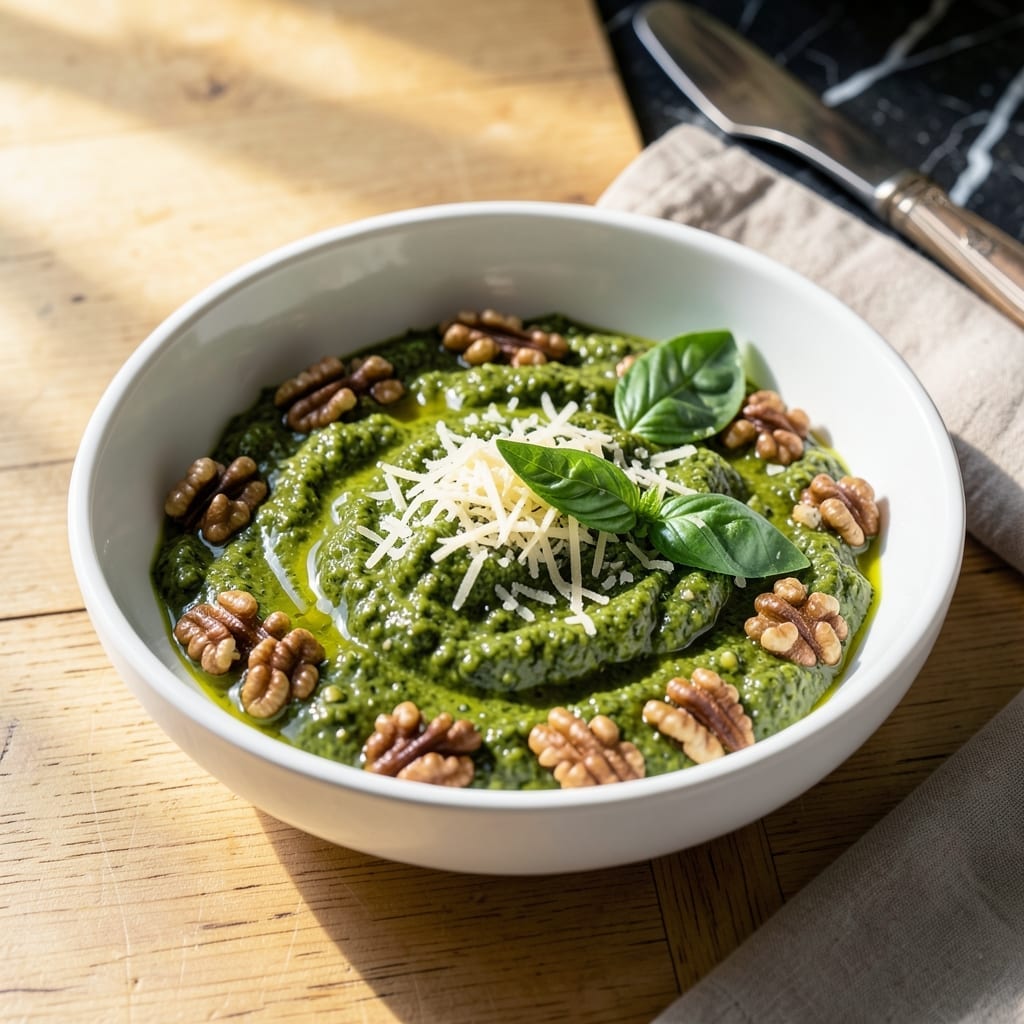
This pesto recipe replaces pine nuts with walnuts for a richer, more affordable twist. The combination of walnuts and parmesan creates a deep, nutty flavor that enhances any dish.
It takes just 5 minutes to blend together, and the result is a versatile sauce that works perfectly with pasta, sandwiches, or as a dip. Store it in the fridge for up to a week.
Ingredients for Pesto Recipe No Pine Nuts
Eight ingredients create this walnut and parmesan pesto with rich, nutty depth in minutes.
| Ingredient | Amount | Notes |
|---|---|---|
| Fresh Basil Leaves 🌿 | 2 cups | Packed, stems removed |
| Walnuts 🥜 | ¾ cup | Raw, lightly toasted |
| Parmesan Cheese 🧀 | ¾ cup | Freshly grated Parmigiano-Reggiano |
| Extra-Virgin Olive Oil 🫒 | ¾ cup | High-quality, fruity |
| Garlic Cloves 🧄 | 3 cloves | Peeled, roughly chopped |
| Lemon Juice 🍋 | 1 tbsp | Freshly squeezed |
| Sea Salt 🧂 | ½ tsp | Fine grain preferred |
| Black Pepper 🌶️ | ¼ tsp | Freshly ground |
[recipe_ingredient_scaler]
The walnuts are the upgrade here—raw and fresh (not those stale ones from last Christmas) deliver the deepest flavor. Trader Joe’s or Costco have the best prices on bulk walnuts. For the Parmesan, Parmigiano-Reggiano is non-negotiable; pre-grated lacks the melting quality and sharpness. Always grate it fresh from a wedge yourself. Basil should be vibrant green, not wilted or bruised.
No walnuts? Pecans or raw cashews work beautifully (same quantity). Fresh basil can be stretched with fresh parsley at half the amount. If lemon juice isn’t handy, white wine vinegar at half the quantity adds the needed acidity. Pecorino Romano can replace Parmesan for a saltier, more pungent kick. The olive oil must be extra-virgin—this isn’t the place for neutral oils.
Pesto oxidizes quickly. Press plastic wrap directly on the surface or pour a thin layer of olive oil on top before sealing. Keeps 1 week refrigerated, freezes for 6 months in airtight containers. Ice cube trays portion it perfectly for single servings.
Why You’ll Love This Recipe
- 5-Minute Blend: I toss everything in the food processor and it’s done before the pasta finishes cooking.
- Rich & Earthy: The walnuts give it a deep, toasty flavor that pairs perfectly with the sharp Parmesan and bright basil.
- Meal-Prep Magic: I make a big batch on Sunday and it keeps beautifully for quick lunches all week.
- Budget-Friendly Swap: Walnuts cost half what pine nuts do, and honestly, I can’t taste the difference.
Step-by-Step Instructions for Walnut and Parmesan Pesto
This method ensures a smooth, vibrant sauce with balanced flavors and perfect texture every time.
Step 1: Toast the Walnuts for Depth
Begin by toasting the 0.75 cup Walnuts in a dry skillet over medium heat for 3-4 minutes, stirring frequently. You’ll notice their natural oils begin to release and the aroma becomes noticeably richer and nuttier.
Remove from heat when the walnuts turn light golden brown and feel warm to the touch. This toasting step intensifies their flavor and removes any raw bitterness, resulting in a more complex pesto. Allow them to cool completely before proceeding—hot walnuts can make your pesto bitter.
Step 2: Pulse Garlic, Walnuts, and Seasonings
In a food processor, combine the cooled 0.75 cup Walnuts with the 3 cloves Garlic Cloves, 0.5 tsp Sea Salt, and 0.25 tsp Black Pepper. Pulse in 1-second bursts until the mixture resembles coarse crumbs, about 8-10 pulses total.
Be careful not to over-process at this stage—you want texture, not a paste. The garlic should be finely minced but not pureed, which would make it bitter. Scrape down the sides of the bowl as needed to ensure even processing.
Step 3: Incorporate Basil and Cheese
Add the 2 cups Fresh Basil Leaves and 0.75 cup Parmesan Cheese to the food processor. Pulse again in 1-second bursts, about 10-12 times, until the basil is finely chopped and the mixture starts to come together.
Stop before it becomes completely smooth—you should still see small flecks of basil. The cheese will help bind the pesto, while the basil provides fresh, aromatic notes. The mixture will look slightly dry at this point, which is normal.
Step 4: Emulsify with Olive Oil and Lemon
With the food processor running continuously, slowly drizzle in the 0.75 cup Extra-Virgin Olive Oil through the feed tube. This gradual addition creates a stable emulsion, giving your pesto that signature creamy texture.
Once the oil is incorporated, add the 1 tbsp Lemon Juice and pulse 2-3 times just to combine. The lemon brightens the flavors and helps preserve the vibrant green color. Taste and adjust seasoning if needed, though the cheese and salt should provide sufficient flavor.
Step 5: Finish and Store Properly
Transfer the pesto to a clean jar or airtight container. For best results, pour a thin layer of Extra-Virgin Olive Oil on top to create a seal that prevents oxidation. This will keep your pesto bright green and fresh-tasting for up to 1 week in the refrigerator.
The finished pesto should be thick but pourable, with a glossy appearance and visible texture from the walnuts. Use immediately for pasta, sandwiches, or as a garnish, or store as directed above.
Pro Tips For Making Pesto Recipe No Pine Nuts
- Toast the Walnuts: I learned this the hard way—raw walnuts can taste bitter. Toss them in a dry pan over medium heat for 3-4 minutes until fragrant before blending.
- Blanch the Basil: After wilting a few batches, I now blanch basil in boiling water for 10 seconds to lock in that bright green color and mellow any bitterness.
- Skip the Overcrowding: Resist the urge to cram all the basil in at once—process in batches to avoid a chunky, uneven texture.
- Grate Your Own Parmesan: Pre-grated parmesan has anti-caking agents that make pesto grainy. Freshly grated melts better and tastes cleaner—worth the extra 2 minutes.
Creative Variations of This Dish
Cashew Creaminess
Swap walnuts for raw cashews at the same quantity for a milder, sweeter flavor. Cashews create an incredibly smooth texture that blends beautifully with the Parmesan Cheese. I find this version works especially well with Asian-inspired dishes. 🌟
Pecan Richness
Use ¾ cup pecans instead of walnuts for a buttery, rich pesto. Pecans have a natural sweetness that pairs wonderfully with the Fresh Basil Leaves. Toast them lightly to enhance their depth.
Sunflower Seed Budget
For a nut-free option, use ½ cup sunflower seeds plus ¼ cup breadcrumbs. This maintains the texture while being more affordable. The seeds add a subtle earthiness that complements the Extra-Virgin Olive Oil.
Spinach Boost
Replace 1 cup of basil with 1 cup baby spinach for a milder, kid-friendly version. The spinach blends seamlessly while adding extra nutrients. I often add 1 extra tbsp Lemon Juice to brighten the flavor.
Vegan Adaptation
Omit the Parmesan Cheese and add 3 tbsp nutritional yeast plus 1 tbsp white miso paste. This creates a cheesy, umami-rich pesto that’s completely plant-based. The miso adds depth you won’t believe is vegan.
Spicy Kick
Add ½ tsp red pepper flakes or 1 small fresh chili when pulsing the garlic. This gives your pesto a subtle heat that pairs well with grilled meats. I love this variation with a charred steak. 🔥
Nutrition Facts
Frequently Asked Questions
Can I use a blender instead of a food processor?
Yes, but pulse carefully to avoid over-blending. A blender may create a smoother texture, so add olive oil slowly and stop frequently to scrape the sides.
Why does my pesto turn brown in the fridge?
Oxidation causes browning. Press plastic wrap directly on the surface or add a thin layer of olive oil on top to seal it from air. This keeps it vibrant for up to 1 week.
Can I freeze this pesto?
Portion into ice cube trays, cover with olive oil, and freeze for up to 6 months. Thaw in the fridge overnight before using.
What can I substitute for walnuts?
Try pecans, cashews, or sunflower seeds for different flavors. Each adds a unique twist while keeping the texture perfect.

Trained in classic French technique but raised on slow-cooked ribs and spicy rubs, she blends culinary skill with smoke and soul.
- Recipe for Boneless Pork Chops in Cast Iron Skillet: Sear and Baste to Juicy Perfection - October 3, 2026
- Recipe for Boneless Cross Rib Roast: Slow-Roasted Beef with Herb Crust - October 3, 2026
- Hamburgers in Sauce Recipe Crock Pot: Slow-Cooked Savory Delight - October 3, 2026