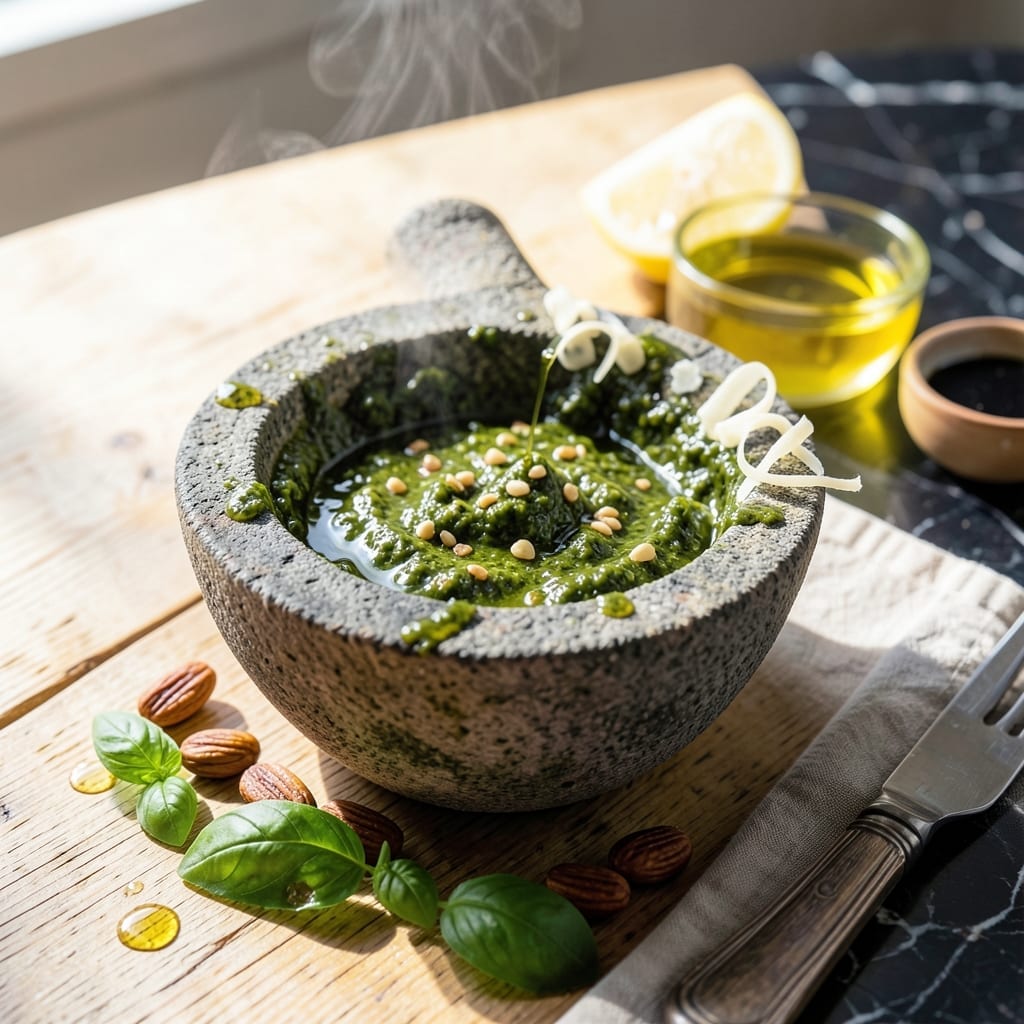
This classic pesto captures the essence of Italian flavors with fresh basil, garlic, and nutty parmesan. The simple blend delivers a vibrant, aromatic sauce perfect for pasta, sandwiches, or dipping.
Jamie Oliver’s approach keeps it authentic yet adaptable—just toss these ingredients in a food processor for a smooth, rich finish. Store in the fridge with a drizzle of oil to preserve its bright, herbaceous taste.
Ingredients for Pesto Sauce Recipe Jamie Oliver
Eight premium ingredients blend into this vibrant, aromatic Italian sauce with ease.
| Ingredient | Amount | Notes |
|---|---|---|
| Fresh Basil Leaves 🌿 | 2 cups | Packed, stems removed |
| Pine Nuts 🥜 | ½ cup | Toasted for nutty depth |
| Garlic Cloves 🧄 | 3 cloves | Peeled, roughly chopped |
| Parmesan Cheese 🧀 | ¾ cup | Freshly grated Parmigiano-Reggiano |
| Extra-Virgin Olive Oil 🫒 | ¾ cup | High-quality, fruity finish |
| Lemon Juice 🍋 | 1 tbsp | Freshly squeezed preferred |
| Sea Salt 🧂 | ½ tsp | Fine grain for even distribution |
| Black Pepper 🌶️ | ¼ tsp | Freshly ground for brightness |
[recipe_ingredient_scaler]
The basil must be pristine—farmers market or homegrown yields the most aromatic leaves. Parmigiano-Reggiano is non-negotiable for authentic nutty depth; avoid pre-grated varieties as they lack texture and flavor. Pine nuts, while traditional, can be sourced affordably at Trader Joe’s or bulk sections of specialty grocers. Toasting them briefly enhances their natural sweetness and aroma.
Substituting pine nuts? Walnuts or raw cashews offer similar richness at a lower cost. Short on basil? A mix of parsley and mint can bridge the gap (use one-third the amount of mint). For a vegan variation, nutritional yeast replaces Parmesan effectively. Always use extra-virgin olive oil—its peppery notes elevate the sauce significantly.
Store in an airtight container with a thin olive oil layer on top to prevent browning. Keeps for 5 days refrigerated or 6 months frozen in ice cube trays. The oil solidifies when cold—simply thaw before use.
Why You’ll Love This Recipe
- Blitz in Minutes: I toss everything in the blender—basil, pine nuts, garlic—no chopping finesse required.
- Flavor Explosion: The sharp Parmesan and nutty pine nuts give it that restaurant-quality punch I crave.
- Pasta, Sandwiches, Dips: Honestly, I’ve slathered this on everything from grilled chicken to garlic bread.
- Fridge Lifesaver: It keeps for a week, so I always have a jar ready to rescue boring leftovers.
Step-by-Step Instructions for Fresh Basil and Nutty Parmesan Pesto
This method ensures perfect texture and balanced flavor with every batch.
Step 1: Toast the Pine Nuts to Nutty Perfection
Place the 0.5 cup Pine Nuts in a dry skillet over medium heat. Stir frequently, watching carefully as they can burn quickly. Toast for 3-5 minutes until they turn golden brown and release a fragrant, nutty aroma.
Immediately transfer to a plate to cool—this stops the cooking process and prevents over-browning. Toasting the pine nuts intensifies their flavor and adds depth to your finished pesto. Let them cool completely before proceeding to avoid wilting the basil.
Step 2: Pulse Garlic and Pine Nuts into a Coarse Paste
In a food processor, combine the toasted 0.5 cup Pine Nuts with the 3 cloves Garlic Cloves. Pulse 8-10 times until the mixture forms a coarse, paste-like consistency. Avoid over-processing into a smooth puree—you want texture.
Scrape down the sides of the processor bowl with a spatula to ensure even incorporation. This initial pulsing creates a stable base that will help emulsify the oil and cheese later. The garlic and nuts should look like wet sand when properly processed.
Step 3: Add Basil and Seasonings for Vibrant Flavor
Add the 2 cups Fresh Basil Leaves, 0.5 tsp Sea Salt, and 0.25 tsp Black Pepper to the processor. Pulse 12-15 times, stopping to scrape the bowl as needed, until the basil is finely chopped but still retains some visible flecks.
The leaves will initially look voluminous but will quickly reduce as they break down. Be patient—this step ensures the basil releases its essential oils without becoming a dark, muddy puree. The mixture should appear bright green with some texture.
Step 4: Emulsify with Cheese and Olive Oil
With the processor running continuously, slowly drizzle in the 0.75 cup Extra-Virgin Olive Oil through the feed tube. This gradual incorporation creates a stable emulsion. Once the oil is fully incorporated, add the 0.75 cup Parmesan Cheese and pulse 3-4 times to combine.
The pesto should have a creamy yet slightly chunky texture. If it appears too thick, add a splash of water and pulse to reach your desired consistency. The cheese should be evenly distributed throughout the mixture, adding saltiness and depth.
Step 5: Finish with Lemon and Final Adjustments
Add the 1 tbsp Lemon Juice and pulse 2-3 times just to incorporate. Taste and adjust seasoning if needed, though the Parmesan and salt should provide sufficient flavor. The lemon brightens the pesto and balances the richness of the oil and cheese.
Transfer to an airtight container. The finished pesto should be vibrant green with visible specks of basil and nuts. For best results, let it rest for 10 minutes at room temperature before serving to allow the flavors to meld. Use within 3 days or freeze for longer storage.
Pro Tips For Making Pesto Sauce Recipe Jamie Oliver
- Toast the Pine Nuts: I learned this the hard way—raw pine nuts make pesto taste flat. Toss them in a dry pan over medium-low heat for 2-3 minutes until golden and fragrant before blending.
- Blanch the Basil: Sounds weird, but it works: dunk basil leaves in boiling water for 10 seconds, then shock in ice water. This keeps your pesto that vibrant green instead of turning brown.
- Skip Pre-Grated Parmesan: After burning three batches of pesto (metaphorically), I finally figured out that fresh-grated Parmesan melts better and tastes sharper than the pre-shredded stuff coated in anti-caking agents.
- Drizzle Oil Slowly: Pulse the processor while pouring the olive oil in a thin stream—about 1/2 cup total. This emulsifies the sauce properly instead of leaving you with a greasy, separated mess.
Storing and Reheating This Dish
🍳 Refrigerator Storage
To keep your pesto sauce recipe Jamie Oliver fresh in the fridge, transfer it to an airtight container and cover the surface with a thin layer of olive oil to prevent oxidation. This method keeps the vibrant green color and bold flavors intact for 3–4 days. Always use a clean spoon when scooping to avoid contamination.
❄️ Freezer Storage
For longer storage, freeze your pesto in ice cube trays or small jars. Once frozen, transfer the cubes to a freezer bag or airtight container. Properly wrapped, it can last 2–3 months without losing much of its freshness. Portioning it this way makes it easy to thaw only what you need for future dishes.
🔥 Reheating Methods
Pesto sauce is best enjoyed fresh, but if you’ve stored it, gently reheat it to preserve its flavor. For a quick fix, microwave in 10–15 second bursts, stirring in between. Alternatively, warm it in a saucepan over low heat (below 160°F) to avoid separating the oils. Avoid high heat, as it can make the basil bitter.
✨ Quality Preservation
To maintain the best texture and taste, thaw frozen pesto in the fridge overnight. If it separates, give it a good stir or blend briefly with a splash of water or olive oil. Keep moisture out by ensuring containers are sealed tightly, and always store in the coldest part of the fridge or freezer.
Nutrition Facts

Trained in classic French technique but raised on slow-cooked ribs and spicy rubs, she blends culinary skill with smoke and soul.
- Recipe for Boneless Cross Rib Roast: Slow-Roasted Beef with Herb Crust - October 3, 2026
- Hamburgers in Sauce Recipe Crock Pot: Slow-Cooked Savory Delight - October 3, 2026
- Sanjeev Kapoor Egg Biryani Recipe: Fragrant Spiced Rice With Boiled Eggs - October 3, 2026