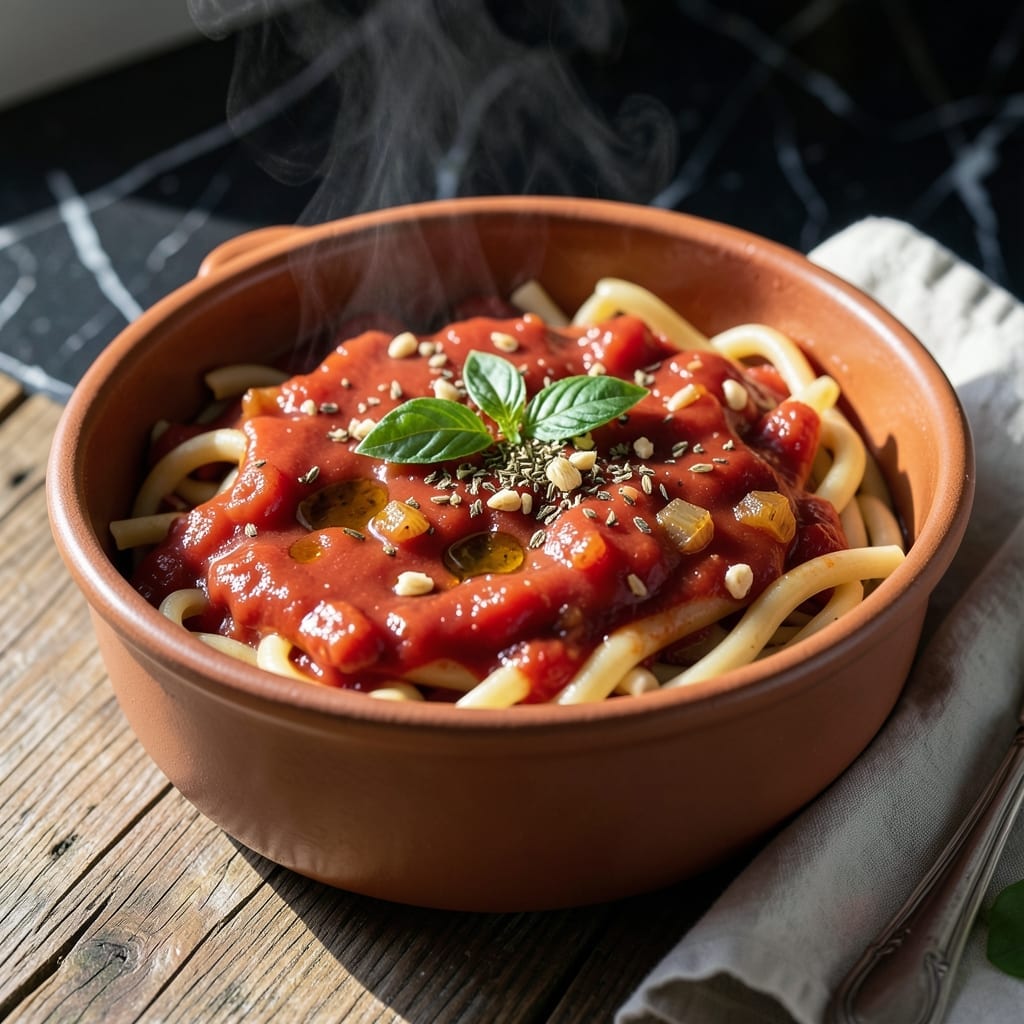
This tomato pasta sauce transforms canned tomatoes into a bright and acidic base for any pasta dish. It’s simple, flavorful, and ready in under 30 minutes.
With just a few pantry staples, you’ll create a sauce that’s rich, versatile, and far superior to store-bought options. Perfect for quick weeknight dinners or meal prep.
Ingredients for Tomato Pasta Sauce Recipe Canned Tomatoes
Pantry staples transform into a vibrant pasta sauce in minutes.
| Ingredient | Amount | Notes |
|---|---|---|
| Canned Whole Peel Tomatoes 🍅 | 28 oz | San Marzano preferred for sweetness |
| Extra-Virgin Olive Oil 🫒 | ¼ cup | High-quality for rich flavor |
| Yellow Onion 🧅 | 1 whole | Finely diced for base |
| Garlic Cloves 🧄 | 4 cloves | Minced for aromatic depth |
| Dried Oregano 🍃 | 1 tsp | Crushed between fingers |
| Dried Basil 🌿 | 1 tsp | Or substitute 1 tbsp fresh |
| Red Pepper Flakes 🌶️ | ½ tsp | Adjust for heat preference |
| Balsamic Vinegar 💧 | 1 tbsp | Adds bright acidity |
| Granulated Sugar 🧂 | 1 tsp | Balances acidity from tomatoes |
| Sea Salt 🧂 | 1 tsp | Adjust to taste after simmering |
[recipe_ingredient_scaler]
The canned tomatoes are the foundation—San Marzano if you can find them (look for the DOP label at Whole Foods or Eataly, but any good-quality brand works in a pinch). I always keep a few cans in my pantry for emergencies. The olive oil should be something you’d drizzle on bread—California Olive Ranch or Colavita are solid grocery store options. Don’t skimp here; it’s doing important flavor work.
Out of dried oregano? Fresh at triple the amount works, but dried is actually better here—it’s more concentrated. No balsamic? A splash of red wine vinegar gets you close. Skip the sugar if your tomatoes are already sweet, but most canned varieties need that little balance. The red pepper flakes are optional, but a pinch adds warmth without overwhelming the acidity.
Sauce keeps in the fridge for 5 days or freezes beautifully for 3 months. I portion leftovers into ice cube trays—perfect single-serving sizes for quick meals. Always taste before serving; the flavors deepen as it sits (worth the extra minute).
Why You’ll Love This Recipe
- One Pot Wonder: I just dump the canned tomatoes, onions, and garlic in a pot—no fancy prep, no mess.
- Garlic & Herb Magic: The oregano and slow-cooked garlic turn simple ingredients into something deeply flavorful.
- Feeds a Crowd: I double the batch and freeze half for lazy nights when I need pasta in a hurry.
- Pantry Hero: Canned tomatoes and basic staples mean I can make this even when my fridge is nearly empty.
Step-by-Step Instructions for Tomato Pasta Sauce
Here’s the method that turns canned tomatoes into a vibrant, restaurant-quality sauce.
Step 1: Build the Aromatic Base
Heat the 0.25 cup Extra-Virgin Olive Oil in a large, heavy-bottomed pot over medium-low heat. Add the finely diced Yellow Onion and cook for 8-10 minutes, stirring occasionally, until it turns translucent and just begins to caramelize at the edges.
This slow cooking develops the onion’s natural sweetness without burning. Watch for the edges to turn golden—this is your visual cue that it’s ready for the next addition. The pot should be large enough to accommodate all ingredients with room to stir.
Step 2: Bloom the Spices and Add Garlic
Stir in the 1 tsp Dried Oregano, 1 tsp Dried Basil, and 0.5 tsp Red Pepper Flakes. Toast the spices in the hot oil for 30 seconds until fragrant—this wakes up their flavors.
Add the 4 minced Garlic Cloves and cook for another 1 minute until just lightly golden. Be careful not to let the garlic brown or it will turn bitter. The kitchen should smell incredibly aromatic at this point.
Step 3: Incorporate Tomatoes and Simmer
Pour in the 28 oz Canned Whole Peel Tomatoes, using your hands to crush them as they go into the pot. This releases their juices and creates a chunky texture. Add the 1 tbsp Balsamic Vinegar, 1 tsp Granulated Sugar, and 1 tsp Sea Salt.
Stir well to combine all ingredients. Increase heat to medium-high until the mixture just begins to bubble, then reduce to low. Partially cover the pot and let it simmer for 45-60 minutes, stirring occasionally.
Step 4: Adjust Consistency and Seasoning
After 30 minutes of simmering, check the thickness. If the sauce seems too watery, remove the lid completely to allow more evaporation. If it’s too thick, add a splash of water. The sauce should coat the back of a spoon but still be pourable.
Taste and adjust the Sea Salt as needed—the amount required depends on the saltiness of your tomatoes. The Balsamic Vinegar and Granulated Sugar should balance perfectly, creating a bright but not harsh acidity.
Continue simmering for the remaining time, stirring occasionally to prevent sticking. The sauce is ready when it has deepened in color and developed a rich, concentrated flavor.
Pro Tips For Making Tomato Pasta Sauce Recipe Canned Tomatoes
- Crush the Tomatoes: Use your hands to crush the canned whole tomatoes as you add them to the pot—this breaks them down faster and releases more juice for a richer sauce.
- Bloom the Oregano: Add the dried oregano to the hot olive oil for 10-15 seconds before the onions go in to wake up its flavors.
- Skip the Garlic Burn: I learned this the hard way—add the garlic only after the onions are soft, not before, or it’ll turn bitter in seconds.
- Simmer Uncovered: Let the sauce reduce uncovered for 15-20 minutes to thicken properly and concentrate the tomato flavor.
Regional Styles of tomato pasta sauce recipe canned tomatoes
🍝 Italian Style
Italian tomato pasta sauce using canned tomatoes is all about simplicity and fresh flavors. The base often includes San Marzano tomatoes, garlic, olive oil, and a touch of basil. Slow-simmered for depth, this style emphasizes bright acidity and natural sweetness. Historically, canned tomatoes became popular in Italy in the 19th century, preserving the summer harvest for year-round use.
🌶️ Sicilian Style
Sicilian versions add bold, regional twists like capers, olives, or anchovies for a briny kick. The sauce may include red pepper flakes for heat, balancing the tomatoes’ sweetness. Cooked quickly to retain texture, this style reflects Sicily’s love for vibrant, punchy flavors influenced by Mediterranean trade routes.
🧄 Neapolitan Style
Neapolitan sauce is the foundation of classic Marinara, made with canned whole tomatoes, garlic, and oregano. It’s cooked briefly to maintain a light, fresh taste. Originating in Naples, this style is a staple for pizza and pasta, showcasing the region’s dedication to minimalist, high-quality ingredients.
🥘 American-Italian Style
In the U.S., tomato pasta sauce often includes onions, carrots, and celery (a soffritto) for depth, along with herbs like oregano and thyme. Canned tomatoes are simmered longer for a richer, thicker consistency. This adaptation emerged as Italian immigrants tailored recipes to local tastes, creating heartier sauces for dishes like spaghetti and meatballs.
Nutrition Facts

Trained in classic French technique but raised on slow-cooked ribs and spicy rubs, she blends culinary skill with smoke and soul.
- Recipe for Boneless Pork Chops in Cast Iron Skillet: Sear and Baste to Juicy Perfection - October 3, 2026
- Recipe for Boneless Cross Rib Roast: Slow-Roasted Beef with Herb Crust - October 3, 2026
- Hamburgers in Sauce Recipe Crock Pot: Slow-Cooked Savory Delight - October 3, 2026