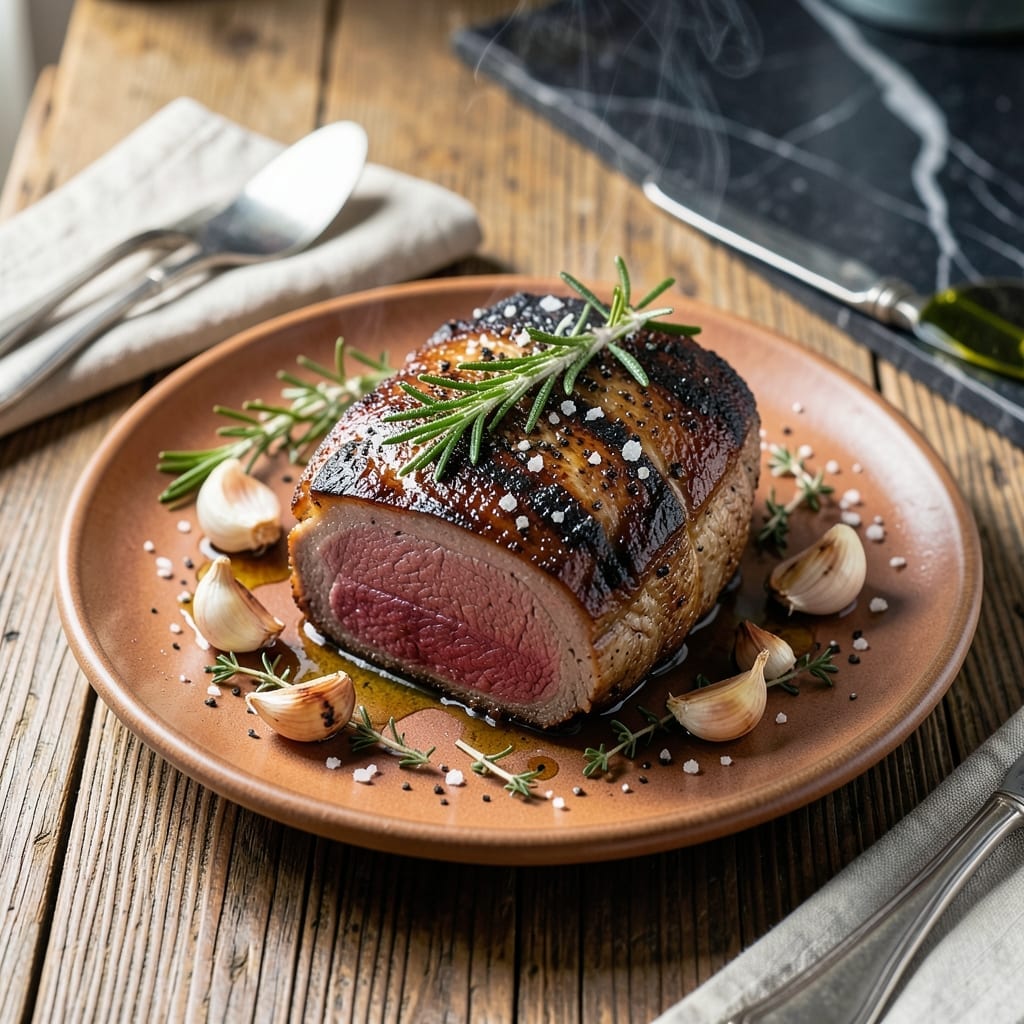
Few dishes command a dinner table like a perfectly cooked beef tenderloin. This recipe delivers tender, buttery meat with a caramelized crust that elevates any special occasion.
The secret lies in proper searing and precise oven timing. I’ve refined this method to ensure the center stays tender and juicy while the exterior develops a rich, flavorful crust.
With a few simple ingredients and careful attention to temperature, you’ll achieve restaurant-quality results. The aroma alone will have your guests eager for the first bite.
Serve with your favorite sides for an unforgettable meal. Here’s how to make it.
Ingredients for Petite Beef Tenderloin
Short list. Big flavor. Perfect for that special dinner.
| Ingredient | Amount | Notes |
|---|---|---|
| Beef Tenderloin 🥩 | 2 lb | Center-cut, trimmed of fat |
| Kosher Salt 🧂 | 1 ½ tsp | Diamond Crystal preferred |
| Black Pepper 🌶️ | 1 tsp | Freshly ground coarse |
| Garlic Cloves 🧄 | 4 cloves | Smashed, peeled |
| Fresh Rosemary 🌿 | 2 sprigs | Woodsy stems intact |
| Fresh Thyme 🍃 | 2 sprigs | Stems removed, leaves only |
| Unsalted Butter 🧈 | 4 tbsp | European-style preferred |
| Olive Oil 🫒 | 2 tbsp | High smoke point variety |
| Dijon Mustard 🟡 | 1 tbsp | Whole grain acceptable |
| Red Wine 🍷 | ¼ cup | Dry bold variety |
| Beef Stock 🥣 | ½ cup | Low-sodium preferred |
| Shallot 🧅 | 1 whole | Finely minced |
[recipe_ingredient_scaler]
The tenderloin is the star here. Look for center-cut pieces at Whole Foods or Costco—they’re more uniform and cook evenly. Ask the butcher to trim excess fat if you’re not comfortable doing it yourself. The meat should have a vibrant red color with good marbling. I usually buy mine a day ahead and let it dry-brine in the fridge overnight (just salt, no water).
No fresh herbs? Dried rosemary and thyme at one-third the amount works in a pinch. Out of red wine? Substitute beef stock with a splash of balsamic vinegar. The butter can be salted if that’s what you have—just skip the extra salt. For the mustard, any sharp mustard like whole grain or stone-ground will do. Short on time? Skip the wine and stock entirely and just sear with butter, garlic, and herbs.
Store the raw tenderloin in the coldest part of your fridge for up to 3 days. Once cooked, leftovers keep 4-5 days and reheat beautifully. Freeze extras for up to 3 months—slice before freezing for easier portions later.
Why You’ll Love This Recipe
- One Pan Elegance: I sear the tenderloin with rosemary and garlic in the same pan I use to finish it—no extra dishes, just rich flavor.
- Buttery Garlic Bite: The garlic cloves and fresh rosemary melt into the beef, creating a crust that’s honestly ridiculous with every bite.
- Fancy Without Fuss: It’s my go-to for dinner parties or a quiet Sunday supper. Between us, it always feels special without the stress.
- Leftover Luxury: Cold slices make the best next-day sandwiches. I’ll be real: I sometimes make extra just for that.
Step-by-Step Instructions for Petite Beef Tenderloin
Here’s my method for a perfectly tender, restaurant-quality centerpiece every time.
Step 1: Prep and Season the Beef
Pat the 2 lb beef tenderloin dry with paper towels. I can’t stress this enough—moisture is the enemy of a good sear. Season all over with the 1.5 tsp kosher salt and 1 tsp black pepper, pressing gently so it adheres.
Let the seasoned beef sit at room temperature for 30-45 minutes. This takes the chill off the meat so it cooks evenly. Meanwhile, smash the 4 cloves garlic cloves and strip the leaves from the 2 sprigs fresh thyme.
Step 2: Sear the Tenderloin to Perfection
Heat the 2 tbsp olive oil in a large oven-safe skillet over medium-high heat until it shimmers. Add the beef and sear on all sides, turning every 2-3 minutes, until deeply browned. This should take about 8-10 minutes total.
Add the 4 tbsp unsalted butter, 2 sprigs fresh rosemary, and smashed garlic cloves to the pan. Tilt the skillet and baste the beef with the melted butter continuously for 1-2 minutes. The aroma will be incredible.
Step 3: Finish in the Oven
Preheat your oven to 400°F. Transfer the skillet to the oven and roast until the internal temperature reaches 125-130°F for medium-rare. This typically takes 15-20 minutes for a 2 lb piece, but always use a meat thermometer.
Remove the beef from the skillet and let it rest on a cutting board for 10-15 minutes. The internal temperature will rise 5-10°F during resting. Tent loosely with foil to keep it warm.
Step 4: Make the Red Wine Pan Sauce
Place the skillet over medium heat and add the finely minced 1 whole shallot. Cook for 1-2 minutes until softened. Stir in the 1 tbsp Dijon mustard and cook for 30 seconds.
Pour in the 0.25 cup red wine and scrape up all the browned bits from the bottom of the pan. Let it reduce by half, about 3-4 minutes. Add the 0.5 cup beef stock and simmer for another 3-4 minutes until slightly thickened. Strain the sauce if you prefer a smoother texture.
Step 5: Slice and Serve
Slice the beef tenderloin into 1-inch thick pieces. Arrange on a platter and spoon the pan sauce over the top. The meat should be tender and juicy with a beautiful crust.
Serve immediately while still warm. This dish pairs beautifully with roasted potatoes or a simple green vegetable. The sauce adds a rich, savory finish that complements the beef perfectly.
Pro Tips For Making Petite Beef Tenderloin
- Rest Before Slicing: Give it a solid 10 minutes under foil after cooking—this lets the juices redistribute so your first slice isn’t a dry disappointment. I learned this the hard way after ruining a perfect tenderloin by cutting too soon.
- Pat It Dry: Blot the beef with paper towels before seasoning; even a little moisture prevents that deep, golden crust from forming. Sounds tedious, but it actually changes the outcome.
- Skip Cold Meat: Pull the tenderloin out of the fridge 30-45 minutes before cooking. I was skeptical until I tried it—cold meat seizes up and cooks unevenly.
- Crush the Garlic: Lightly crush the garlic cloves with the flat of your knife before using them; it releases more flavor without the risk of burning that minced garlic can have.
Storing and Reheating This Recipe
Refrigerator Storage
Let your tenderloin cool for no more than 2 hours before storing. Wrap tightly in plastic wrap or place in an airtight container. It keeps beautifully in the fridge for 4-5 days. The flavors actually deepen overnight. ❄️
Freezer Storage
For longer storage, slice the beef into portions before freezing. Wrap each slice in plastic wrap, then place in a freezer-safe bag or container. It freezes well for up to 3 months without losing quality. Remove excess air to prevent freezer burn.
Stovetop Reheating
My preferred method for maintaining moisture. Heat a skillet over medium-low heat, add a splash of beef stock, and warm the slices for 2-3 minutes per side. Cover the pan to trap steam and keep the meat juicy. 🔥
Oven Reheating
Preheat your oven to 250°F. Place slices on a baking sheet, cover with foil, and warm for 10-15 minutes. This gentle method works well for larger portions. Add a pat of butter on top for extra richness.
Microwave Reheating
For quick meals, microwave individual portions covered with a damp paper towel. Use 50% power for 1-2 minutes, then check and repeat as needed. Avoid high power to prevent drying out.
Sauce Storage
Store any leftover pan sauce in a separate airtight container. It keeps in the fridge for up to 5 days or can be frozen for 1 month. Reheat gently on the stovetop, adding a splash of water if needed.
Nutrition Facts
Frequently Asked Questions
What’s the best way to season a beef tenderloin?
Keep it simple: kosher salt and black pepper are essential. For extra flavor, add garlic, rosemary, and thyme. Press the seasoning into the meat so it adheres well.
How do I know when it’s done cooking?
Use a meat thermometer for accuracy. For medium-rare, aim for an internal temperature of 125-130°F. The temperature will rise 5-10°F while resting.
Can I use a different cut of beef?
Tenderloin is ideal for its tenderness, but a ribeye or strip steak can work. Adjust cooking times, as these cuts may require slightly longer to reach the same doneness.
Why is resting the meat important?
Resting for 10-15 minutes lets juices redistribute. Skipping this step can lead to dry meat, as the juices will leak out when sliced. Always tent with foil to retain warmth.

Trained in classic French technique but raised on slow-cooked ribs and spicy rubs, she blends culinary skill with smoke and soul.
- Recipe for Boneless Pork Chops in Cast Iron Skillet: Sear and Baste to Juicy Perfection - October 3, 2026
- Recipe for Boneless Cross Rib Roast: Slow-Roasted Beef with Herb Crust - October 3, 2026
- Hamburgers in Sauce Recipe Crock Pot: Slow-Cooked Savory Delight - October 3, 2026