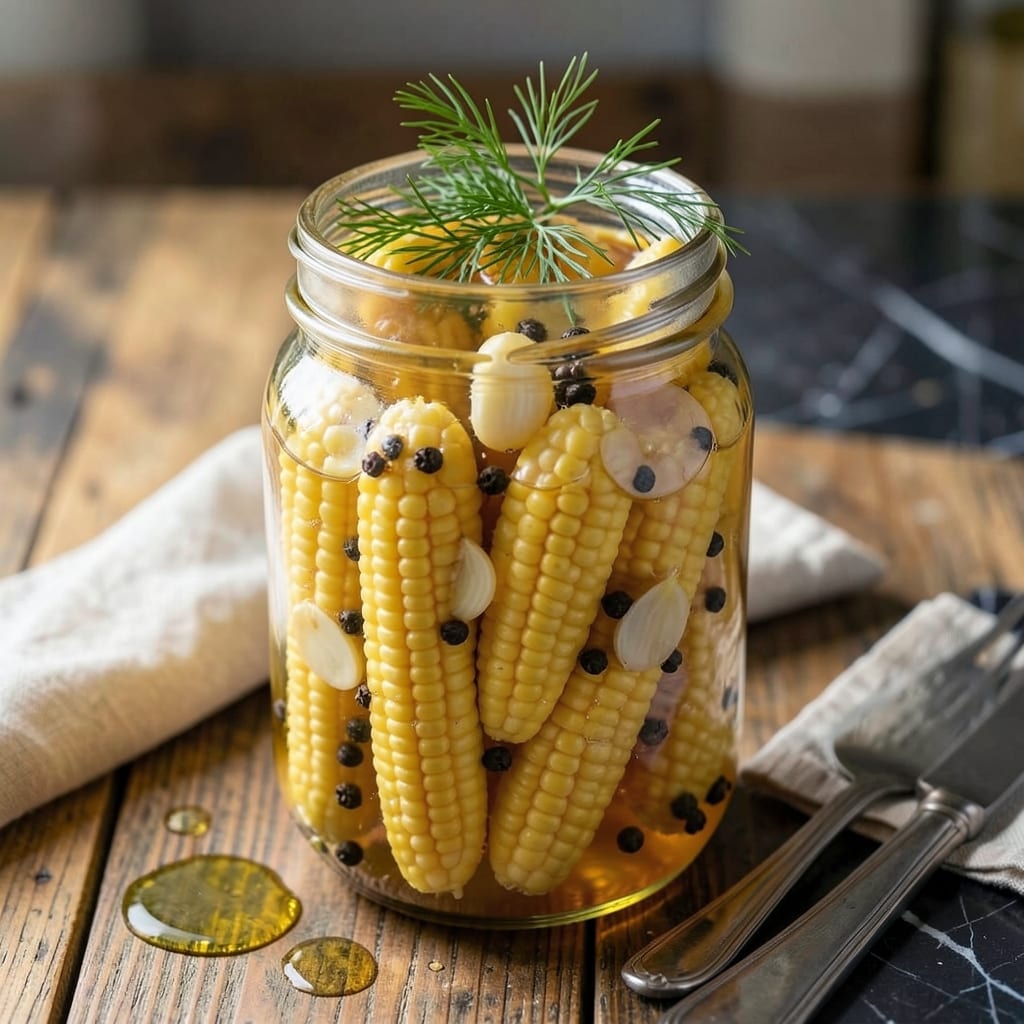
This pickled baby corn delivers a tangy crunch that brightens any meal. I developed this method to preserve the vegetable’s natural sweetness while adding bold, vinegary depth.
The process is simple: baby corn soaks in a hot brine of vinegar, sugar, and spices for 24 hours. This creates a balanced flavor that’s sharp yet slightly sweet, with a satisfying snap in every bite.
What you get is a versatile side that pairs well with sandwiches, salads, or charcuterie boards. The corn stays crisp while absorbing the brine’s complex flavors.
Store in airtight jars and enjoy for up to 6 months. Here’s how to make this pantry staple.
Ingredients for Pickled Baby Corn
Simple canned corn transforms into a vibrant, crunchy pantry staple with these ingredients.
| Ingredient | Amount | Notes |
|---|---|---|
| Baby Corn 🌽 | 2 cans | Drained and rinsed well |
| White Vinegar 💧 | 2 cups | 5% acidity for best results |
| Apple Cider Vinegar 🍏 | ½ cup | Adds fruity depth to brine |
| Granulated Sugar 🍚 | ½ cup | Dissolves completely in brine |
| Water 💧 | 1 ½ cups | Filtered preferred for clarity |
| Kosher Salt 🧂 | 2 tbsp | Diamond Crystal brand preferred |
| Mustard Seeds 🌿 | 1 tbsp | Yellow or brown varieties |
| Black Peppercorns 🌶️ | 1 tsp | Lightly crushed for flavor |
| Red Pepper Flakes 🔥 | ½ tsp | Adjust for heat preference |
| Dried Dill 🌿 | 1 tsp | Or fresh dill sprigs |
| Bay Leaves 🍃 | 2 pieces | Whole leaves for easy removal |
| Garlic Cloves 🧄 | 4 cloves | Lightly smashed, peeled |
| Fresh Thyme Sprigs 🌿 | 2 whole | Optional for extra aroma |
[recipe_ingredient_scaler]
The baby corn is the star—look for cans without added salt (most Asian brands work great). I grab mine from Trader Joe’s or the international aisle. For vinegar, Heinz white vinegar is reliable, but any 5% acidity version works. The apple cider vinegar adds a subtle fruitiness; Bragg’s is my go-to. Don’t skip the Diamond Crystal kosher salt—it dissolves perfectly in brines (worth the extra minute to find it).
No apple cider vinegar? Rice vinegar at equal amount gives a milder tang. Out of mustard seeds? Coriander seeds at half the quantity add a different but complementary warmth. The red pepper flakes can be omitted, but they add that little kick. If using fresh dill, double the amount (the dried stuff packs more punch). Bay leaves are essential for depth—don’t substitute with ground bay leaf.
These keep for the full 6 months if properly sealed. Store in clean, airtight jars (mason jars are perfect). The flavors deepen over time, so wait at least 24 hours before digging in. Refrigerate after opening and use within 2 weeks (they lose crunch faster once exposed to air).
Why You’ll Love This Recipe
- 5-Minute Brine: After boiling the corn, I just mix vinegar, sugar, and water—no fancy steps.
- Tangy & Sweet: The apple cider vinegar gives it that perfect zing with just enough sweetness to balance.
- Jars in Minutes: I can prep a batch on Sunday and have crunchy pickled corn ready for salads all week.
- Pantry Staples: Honestly, I always have vinegar and sugar on hand, so this costs almost nothing to make.
Step-by-Step Instructions for Pickled Baby Corn
This method guarantees crisp, tangy baby corn with perfectly balanced flavors every time.
Step 1: Prepare the Baby Corn and Aromatics
Drain and rinse the 2 cans Baby Corn thoroughly under cold water to remove any canning liquid. This ensures the pickling brine penetrates evenly without dilution. Pat them completely dry with a clean kitchen towel—excess moisture will dilute the brine.
Lightly crush the 1 tsp Black Peppercorns with the flat side of a knife to release their oils. Peel the 4 cloves Garlic Cloves and smash them gently to open their flavor. These small touches make a noticeable difference in the final taste.
Step 2: Create the Pickling Brine
In a medium saucepan, combine the 2 cups White Vinegar, 0.5 cup Apple Cider Vinegar, 0.5 cup Granulated Sugar, 1.5 cups Water, and 2 tbsp Kosher Salt. The sugar will dissolve completely as the mixture heats, creating a smooth, balanced brine.
Bring the mixture to a boil over medium-high heat, stirring occasionally until the sugar and salt are fully dissolved. This step ensures all ingredients are properly incorporated before adding the aromatics. Remove from heat once boiling.
Step 3: Infuse the Brine with Spices and Herbs
Add the 1 tbsp Mustard Seeds, crushed black peppercorns, 0.5 tsp Red Pepper Flakes, 1 tsp Dried Dill, 2 pieces Bay Leaves, peeled garlic cloves, and 2 whole Fresh Thyme Sprigs to the hot brine. Stir to combine and let it steep off the heat for 10 minutes.
This steeping time allows the spices to infuse the vinegar mixture with their full range of flavors. You’ll notice the brine taking on a slightly golden hue as the turmeric in the mustard seeds and the dill begin to release their essential oils.
Step 4: Pack and Pour for Perfect Pickling
Pack the drained baby corn into clean, sterilized jars, leaving about ½ inch of headspace at the top. Arrange them vertically for an attractive presentation, but don’t overpack—the brine needs room to circulate.
Carefully pour the warm, spice-infused brine over the corn, ensuring all pieces are completely submerged. Use a chopstick or spoon to remove any air bubbles and press down gently to keep the corn under the liquid. This prevents spoilage and ensures even pickling.
Step 5: Cool and Store for Optimal Flavor
Let the jars cool to room temperature on the counter, then seal them tightly with lids. As they cool, you’ll hear a satisfying “pop” as the lids seal—this is normal and indicates a proper vacuum seal.
Store the jars in the refrigerator for at least 24 hours before serving to allow the flavors to fully develop. The pickled corn will keep for up to 1 month in the fridge, becoming more flavorful with each passing day. The brine should remain clear with visible spices throughout.
Pro Tips For Making Pickled Baby Corn
- Slice the Corn: Cut the baby corn into bite-sized pieces or leave whole if small—this ensures the brine penetrates evenly and every bite gets that tangy kick.
- Balance the Vinegars: Use a 1:1 ratio of white vinegar to apple cider vinegar for brightness and depth, but taste the brine before adding the corn—I learned this the hard way after overdoing the apple cider once.
- Dissolve Sugar First: Heat the water, vinegars, and sugar together just until the sugar dissolves completely, or you’ll end up with gritty pickles that no one wants.
- Cool Before Jarring: Let the brine cool to room temperature before pouring over the corn—hot liquid can make the corn mushy and might crack your jars.
Common Mistakes When Making Perfect Results
Skipping the Rinse
Never skip rinsing the baby corn after draining. The canning liquid contains preservatives that can dilute your brine and create a metallic aftertaste. I always rinse mine under cold water for 30 seconds to ensure purity.
Overpacking Jars
Leaving ½ inch headspace is crucial for proper brine circulation. Overpacking prevents the liquid from fully surrounding the corn, leading to uneven pickling. I use a chopstick to gently press the corn down while packing.
Using Low-Acid Vinegar
Always check your vinegar labels for 5% acidity. Lower acidity won’t properly preserve the corn and may lead to spoilage. I stick with Heinz white vinegar for consistent results.
Skipping the Brine Cooling
Never add hot brine directly to room-temperature jars. The temperature shock can crack the glass. I let my brine cool for 5 minutes before pouring. This also prevents the corn from overcooking.
Ignoring Submersion
All corn must stay completely covered by brine to prevent mold growth. I use a small fermentation weight or clean pebble to keep the corn submerged. Check daily for the first week.
Honestly, this step saved my first batch from ruin. 💡
Nutrition Facts
Frequently Asked Questions
Can I use fresh baby corn instead of canned?
Yes, but blanch fresh corn in boiling water for 2 minutes first to soften it. Canned works better for pickling because it’s already tender and consistent in size.
How long do these need to pickle before eating?
Wait at least 24 hours for the flavors to develop. The taste improves over time, reaching peak flavor after about 1 week.
What can I use instead of apple cider vinegar?
Rice vinegar works well as a substitute—it’s milder and adds a subtle sweetness. Use the same ½ cup measurement for balanced taste.
Why did my corn turn mushy?
This usually happens from overprocessing or using too much heat. Ensure the brine is only warm (not boiling) when poured over the corn.

Trained in classic French technique but raised on slow-cooked ribs and spicy rubs, she blends culinary skill with smoke and soul.
- Recipe for Boneless Pork Chops in Cast Iron Skillet: Sear and Baste to Juicy Perfection - October 3, 2026
- Recipe for Boneless Cross Rib Roast: Slow-Roasted Beef with Herb Crust - October 3, 2026
- Hamburgers in Sauce Recipe Crock Pot: Slow-Cooked Savory Delight - October 3, 2026