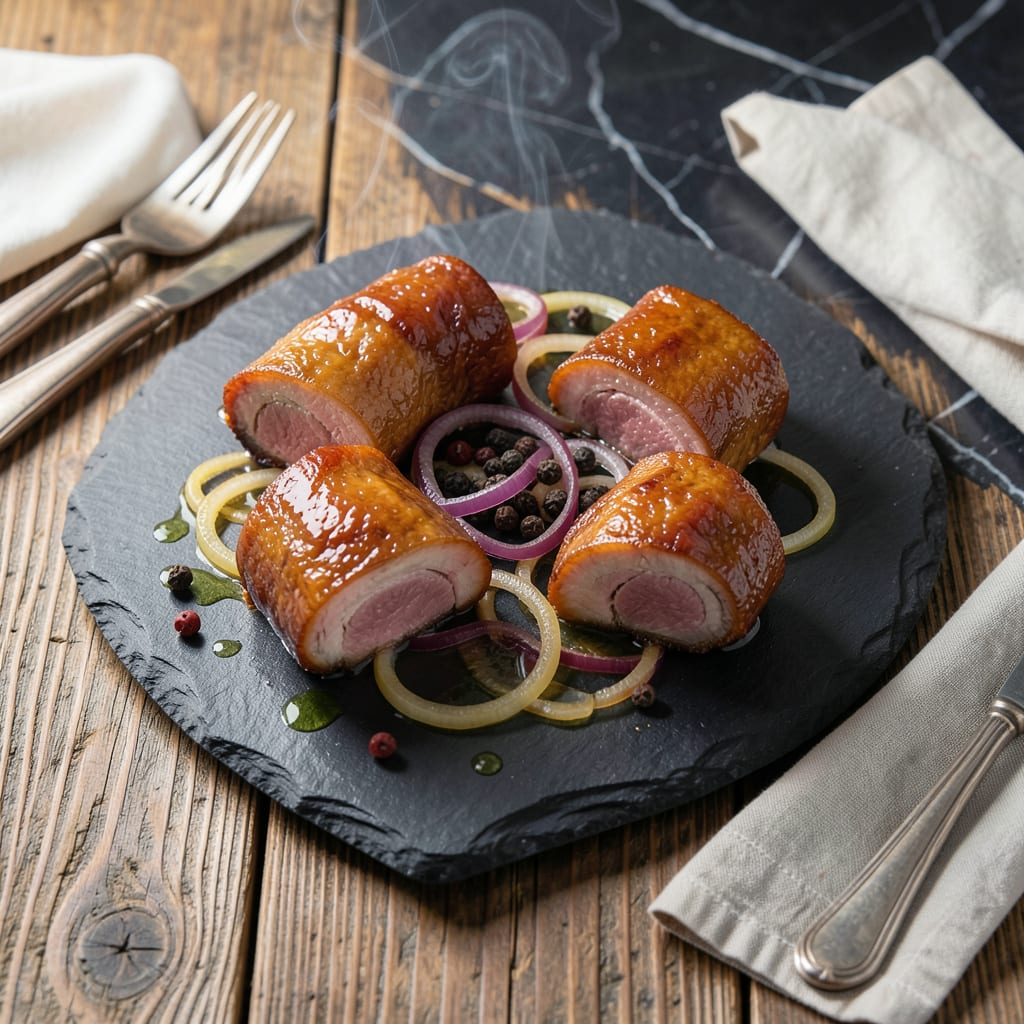
This dish brings together the rich traditions of Southern cooking with a technique I learned early in my pitmaster days. The brining process ensures every bite is packed with flavor.
The smoking step adds a deep, hickory-infused taste that complements the tangy pickling. It’s a method that transforms simple ingredients into something truly special.
Ingredients for Pickled Pork Hocks
These Southern staples transform into brined, smoked perfection with just a few hours of prep.
| Ingredient | Amount | Notes |
|---|---|---|
| Pork Hocks 🥓 | 4 whole | About 1.5 lb each, skin-on |
| Kosher Salt 🧂 | 1 cup | Diamond Crystal preferred for brining |
| Granulated Sugar 🍚 | ½ cup | Balances brine acidity |
| Apple Cider Vinegar 🍏 | 2 cups | 5% acidity for tang |
| Water 💧 | 8 cups | Filtered or distilled |
| Hickory Wood Chips 🪵 | 4 cups | Soaked in water 1 hour |
| Black Peppercorns 🌶️ | 2 tbsp | Lightly crushed for brine |
| Mustard Seeds 🟡 | 1 tbsp | Yellow or brown variety |
| Bay Leaves 🍃 | 4 whole | Dried, for brine infusion |
| Garlic Cloves 🧄 | 8 cloves | Smashed, peeled |
| Red Pepper Flakes 🌶️ | 1 tsp | Adjust for heat preference |
| Yellow Onion 🧅 | 1 whole | Thinly sliced for brine |
| Fresh Thyme Sprigs 🌿 | 4 whole | Optional for aromatic depth |
[recipe_ingredient_scaler]
The pork hocks are non-negotiable—source from a trusted butcher or Whole Foods for consistent quality. Look for skin-on pieces with good fat marbling (about 1.5 lb each). The brine relies on Diamond Crystal kosher salt for precise curing; table salt will over-season. For the vinegar, Bragg’s apple cider vinegar delivers the right acidity balance. Hickory chips should be food-grade, soaked thoroughly to prevent bitter smoke.
No pork hocks? Pork shoulders or picnic ham work in a pinch, though the texture differs. Swap apple cider vinegar for white vinegar at a 1:1 ratio, but expect a sharper tang. Out of mustard seeds? 1 tsp ground mustard per tbsp seeds works. For smoke, pecan or oak chips complement hickory nicely. The sugar can be reduced to 1/4 cup, but the pickling balance shifts slightly sweeter.
Brined hocks keep in the fridge for 5-7 days before smoking. Post-smoke, they’re best eaten within 3 days or frozen for 3 months. Store leftover brine in a sealed jar—it’s perfect for quick-pickling other veggies (carrots, cucumbers) to serve alongside.
Why You’ll Love This Recipe
- No Fuss Brine: I just dump salt, sugar, vinegar, and water in a pot—no fancy steps, and the pork hocks soak up all the flavor while I do something else.
- Tangy Crunch: That apple cider vinegar gives it this bright, zingy kick that cuts through the richness of the pork. Honestly, it’s the kind of taste that lingers in the best way.
- Feeds the Crew: I make a big batch for Sunday dinner, and it’s just as good cold in sandwiches the next day. My kids even sneak pieces straight from the fridge.
- Pantry Stretch: Pork hocks are cheap, and the brine ingredients are already in my cupboard. I’ll be real: it’s one of the most budget-friendly meals that still feels special.
Step-by-Step Instructions for Brined and Smoked Pork Hocks
Master the technique behind this traditional preparation with precision and patience.
Step 1: Create the Aromatic Brine Solution
In a large stockpot, combine the 8 cups water, 1 cup kosher salt, 0.5 cup granulated sugar, and 2 cups apple cider vinegar. Apply medium-high heat and stir until the salt and sugar dissolve completely, ensuring no granules remain at the bottom.
Add the 2 tbsp black peppercorns, 1 tbsp mustard seeds, 4 whole bay leaves, 1 tsp red pepper flakes, thinly sliced yellow onion, 8 cloves garlic cloves, and 4 whole fresh thyme sprigs. Simmer for 5 minutes to infuse the brine with layered flavors, then remove from heat and let cool to room temperature.
Step 2: Brine the Pork Hocks Overnight
Submerge the 4 whole pork hocks completely in the cooled brine. Use a weight or plate to keep them under the liquid. Refrigerate for 12-24 hours—this extended brine time ensures the meat absorbs the full depth of flavor and maintains moisture during smoking.
I always check after 6 hours to ensure the pork hocks remain fully immersed, as they tend to float. The brine should smell tangy and aromatic, with visible spices suspended throughout. This step is non-negotiable for achieving the signature pickled character.
Step 3: Soak Wood Chips and Prepare the Smoker
Place the 4 cups hickory wood chips in a large bowl and cover with water. Let them soak for 1 hour to prevent quick burning and ensure steady smoke production. Meanwhile, preheat your smoker to 225-250°F using indirect heat.
Drain the wood chips just before use and scatter them over the heat source. The goal is thin, blue smoke—not thick white smoke, which can impart a bitter flavor. Stability in temperature is critical; fluctuations can affect both cooking time and the final texture.
Step 4: Smoke the Brined Pork Hocks to Perfection
Remove the pork hocks from the brine, rinse briefly under cold water, and pat dry. This removes excess salt without diluting the infused flavors. Place them on the smoker grates, skin-side up, and smoke undisturbed for 4-5 hours.
Monitor the internal temperature with a probe thermometer. You’re aiming for 160-165°F in the thickest part. The skin should develop a deep mahogany color and a slightly tacky surface, signaling the formation of a flavorful bark. Spritz with water every 90 minutes to maintain moisture.
Pro Tips For Making Pickled Pork Hocks
- Brine Overnight: I learned this the hard way—give the pork hocks at least 12 hours in the salt-sugar-vinegar brine, or the flavor won’t penetrate the thick skin and meat.
- Score the Skin: Sounds weird, but it works: make shallow cuts in the pork hock skin before brining so the pickling liquid actually soaks in instead of just sitting on the surface.
- Use Raw Vinegar: Skip the pasteurized stuff and use raw, unfiltered apple cider vinegar—it has the mother culture that adds real depth to the pickle.
- Simmer, Don’t Boil: After brining, keep the cooking liquid at a gentle simmer, not a rolling boil, or the meat will toughen up and the vinegar will turn bitter.
Best Sauces and Condiments for pickled pork hocks
Tangy Mustard Sauce
This bold sauce cuts through the richness of the pork. Whisk ½ cup yellow mustard with ¼ cup apple cider vinegar, 2 tbsp honey, and 1 tsp smoked paprika for a sweet-spicy kick. I use French’s mustard for consistency. 💛
Spicy Vinegar Dip
Combine 1 cup reserved brine with 1 tbsp hot sauce and 1 tsp black pepper. The acidity enhances the pickled flavor while adding heat. Serve chilled for the best contrast against the smoked meat.
Creamy Horseradish
Mix ½ cup mayonnaise with 2 tbsp prepared horseradish and 1 tsp lemon juice. The sharpness complements the hickory smoke beautifully. I prefer Duke’s mayo for its tang.
Herb Butter Finish
Blend ½ cup softened butter with 2 tbsp fresh parsley and 1 tsp garlic powder. Spread on warm pork hocks just before serving. I often add a pinch of foraged wild thyme for extra depth.
Pickled Onion Topping
Thinly slice 1 red onion and soak in ½ cup apple cider vinegar with 1 tbsp sugar for 30 minutes. The crunch and tang add freshness to each bite.
BBQ Glaze Option
Simmer 1 cup BBQ sauce with ¼ cup brine until thickened. Brush on during the last 30 minutes of smoking for a sticky, flavorful crust. 🔥
Nutrition Facts

Trained in classic French technique but raised on slow-cooked ribs and spicy rubs, she blends culinary skill with smoke and soul.
- Recipe for Boneless Pork Chops in Cast Iron Skillet: Sear and Baste to Juicy Perfection - October 3, 2026
- Recipe for Boneless Cross Rib Roast: Slow-Roasted Beef with Herb Crust - October 3, 2026
- Hamburgers in Sauce Recipe Crock Pot: Slow-Cooked Savory Delight - October 3, 2026