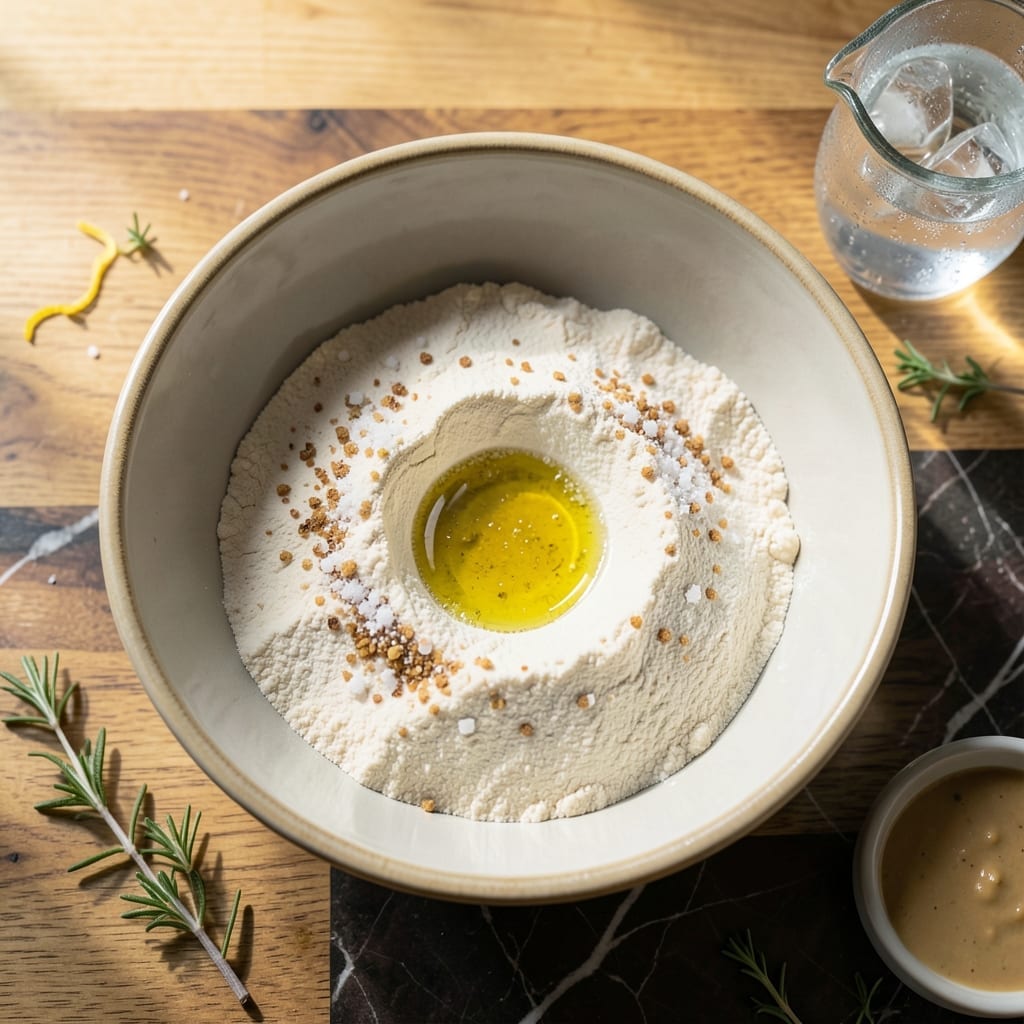
Achieving a flaky pie crust without butter is not only possible—it’s simple with this oil-based method.
This recipe delivers tender, layered results using just a few pantry staples and a straightforward technique. The oil creates the perfect texture without the need for chilled butter or special handling.
Ingredients for Pie Crust Recipe with Oil
Seven pantry staples transform into a flaky, butter-free crust with ease.
| Ingredient | Amount | Notes |
|---|---|---|
| All-Purpose Flour 🌾 | 2 ½ cups | Sifted for lighter texture |
| Vegetable Oil 🫒 | ¾ cup | Neutral flavor, cold-pressed |
| Ice Water 💧 | ⅓ cup | Chilled for flakiness |
| Salt 🧂 | 1 tsp | Fine sea salt preferred |
| Granulated Sugar 🍚 | 1 tbsp | Optional for sweet crusts |
| Baking Powder 🧂 | ½ tsp | For slight lift |
| Apple Cider Vinegar 🍏 | 1 tbsp | Enhances flakiness |
[recipe_ingredient_scaler]
The flour is foundational—King Arthur or Gold Medal deliver consistent results. For the oil, vegetable or canola oil works best (avoid olive oil’s strong flavor). Ice water must be genuinely cold—fill a glass with ice cubes and water, then measure from that. The apple cider vinegar might seem odd, but it tenderizes the gluten for that sought-after flakiness.
No apple cider vinegar? White vinegar or lemon juice works at the same ratio. Swap vegetable oil for melted coconut oil (solid at room temp) if you prefer. For a richer flavor, replace 2 tbsp of water with unflavored plant milk. The sugar is optional—omit for savory pies, or double for sweeter applications.
The dough keeps refrigerated for 2 days or frozen for 3 months. Wrap tightly in plastic to prevent drying. For best flakiness, let chilled dough rest at room temperature for 10 minutes before rolling (don’t skip this step).
Why You’ll Love This Recipe
- No-Roll Needed: I just stir the oil into the flour mixture—no chilling, no rolling pin, no fuss.
- Buttery Flavor: The oil gives it a rich, tender crumb that tastes just like Grandma’s, only easier.
- Sweet or Savory: I’ve used this for apple pie and quiche—works for both with just a pinch of sugar or without.
- Pantry Staples: Flour, oil, water, salt—everything’s already in my cupboard, so I can make it anytime.
Step-by-Step Instructions for Pie Crust with Oil
This method delivers consistent, flaky results with minimal effort and no butter required.
Step 1: Combine Dry Ingredients
In a large mixing bowl, whisk together the 2.5 cups all-purpose flour, 1 tsp salt, 1 tbsp granulated sugar, and 0.5 tsp baking powder until evenly distributed. Sifted flour works best here, as it aerates the mixture for a lighter texture in the final crust.
The sugar adds subtle sweetness that complements both fruit and custard fillings, while the baking powder provides a slight lift for extra flakiness. Ensure there are no visible clumps of baking powder, as they can create bitter pockets in the baked crust.
Step 2: Incorporate Oil and Vinegar
Create a well in the center of the dry ingredients and pour in the 0.75 cup vegetable oil and 1 tbsp apple cider vinegar. Use a fork to gently mix the liquid into the flour until the mixture resembles coarse crumbs with some pea-sized clumps.
The vinegar reacts with the baking powder to create tiny air pockets, which contributes to the flaky layers. The oil should coat the flour evenly, but avoid overmixing—this would develop gluten and make the crust tough rather than tender.
Step 3: Add Ice Water Gradually
Drizzle in the 0.33 cup ice water, 1 tablespoon at a time, mixing gently with the fork after each addition. The dough is ready when it just comes together and holds its shape when pressed. It should not be sticky or wet.
Chilled water keeps the oil from melting prematurely, which is crucial for maintaining distinct layers in the crust. If the dough seems too dry after adding all the water, sprinkle in additional cold water 1 teaspoon at a time until it reaches the right consistency.
Step 4: Shape and Chill the Dough
Turn the dough out onto a lightly floured surface and gently press it into a disk about 1 inch thick. Wrap the disk tightly in plastic wrap and refrigerate for at least 30 minutes, or up to 2 days for convenience.
This resting period allows the gluten to relax and the oil to solidify, making the dough easier to roll out and less likely to shrink during baking. The chilled dough should feel firm but pliable when ready to use.
Step 5: Roll and Fit into Pie Dish
On a lightly floured surface, roll the chilled dough into a circle about 12 inches in diameter and ⅛ inch thick. Transfer it to a 9-inch pie dish, pressing gently into the bottom and sides. Trim the excess dough, leaving a ½-inch overhang for crimping.
For a single-crust pie, prick the bottom all over with a fork to prevent air bubbles. For a double-crust pie, repeat the rolling process with the remaining dough. The crust is now ready for blind baking or filling, depending on your recipe requirements.
Pro Tips For Making Pie Crust Recipe With Oil
- Chill the Dough: After mixing, let the dough rest in the fridge for at least 30 minutes—this keeps the oil solid so it rolls out smoother and doesn’t stick.
- Use Ice-Cold Water: Sounds obvious, but I learned the hard way that lukewarm water makes the crust tough. Keep a bowl of ice water next to you and measure from that.
- Skip Overworking: Stir just until the dough comes together, even if it looks shaggy. Overmixing develops gluten, and you’ll end up with a chewy crust instead of a flaky one.
- Roll Between Parchment: No more torn crusts or stuck rolling pins—place the dough between two sheets of parchment and roll it out. Peels right off, ready for the pan.
Creative Variations of pie crust recipe with oil
Savory Herb Crust
Add 1 tbsp dried rosemary and 1 tsp dried thyme to the dry ingredients for a savory twist. This works beautifully for quiches or pot pies. I also like adding ½ tsp black pepper for extra depth of flavor. 🌿
Sweet Cinnamon Version
Increase the sugar to 2 tbsp and add 1 tsp ground cinnamon plus ¼ tsp nutmeg. This sweet variation is perfect for apple or pumpkin pies. The warm spices complement the flaky texture wonderfully.
Whole Wheat Option
Replace 1 cup of all-purpose flour with whole wheat flour for a nuttier flavor and added fiber. You may need an extra 1-2 tbsp ice water as whole wheat absorbs more liquid. The texture will be slightly denser but still flaky.
Cheesy Garlic Crust
Mix in ½ cup shredded cheddar and 1 tsp garlic powder with the dry ingredients. This creates a delicious crust for savory pies or as a base for cheese straws. The cheese adds a rich, golden color when baked.
Lemon Zest Variation
Add 1 tbsp lemon zest to brighten up the flavor. This pairs especially well with berry fillings. I recommend using a microplane to get the finest zest for even distribution throughout the crust.
Spiced Chocolate Crust
For a unique dessert crust, add 2 tbsp cocoa powder and ½ tsp espresso powder to the dry ingredients. This creates a rich, chocolatey base that’s perfect for cream pies or chocolate silk pie. 💫
Nutrition Facts
Frequently Asked Questions
Can I use melted coconut oil instead?
Yes, but ensure it’s cooled to liquid state. Coconut oil adds a subtle sweetness and works well in both sweet and savory crusts. The texture may be slightly denser than with vegetable oil.
Why does the dough need to chill?
Chilling solidifies the oil, making the dough easier to roll and preventing shrinkage during baking. It also relaxes the gluten for a more tender, flaky result.
Can I make this ahead of time?
The dough keeps refrigerated for 2 days or frozen for 3 months. Wrap tightly in plastic to prevent drying. Thaw in the fridge before using.
What if my crust turns out tough?
Overworking the dough is the likely culprit. Mix just until combined and avoid excessive handling. Using cold ingredients also helps maintain a tender texture.

Trained in classic French technique but raised on slow-cooked ribs and spicy rubs, she blends culinary skill with smoke and soul.
- Recipe for Boneless Pork Chops in Cast Iron Skillet: Sear and Baste to Juicy Perfection - October 3, 2026
- Recipe for Boneless Cross Rib Roast: Slow-Roasted Beef with Herb Crust - October 3, 2026
- Hamburgers in Sauce Recipe Crock Pot: Slow-Cooked Savory Delight - October 3, 2026