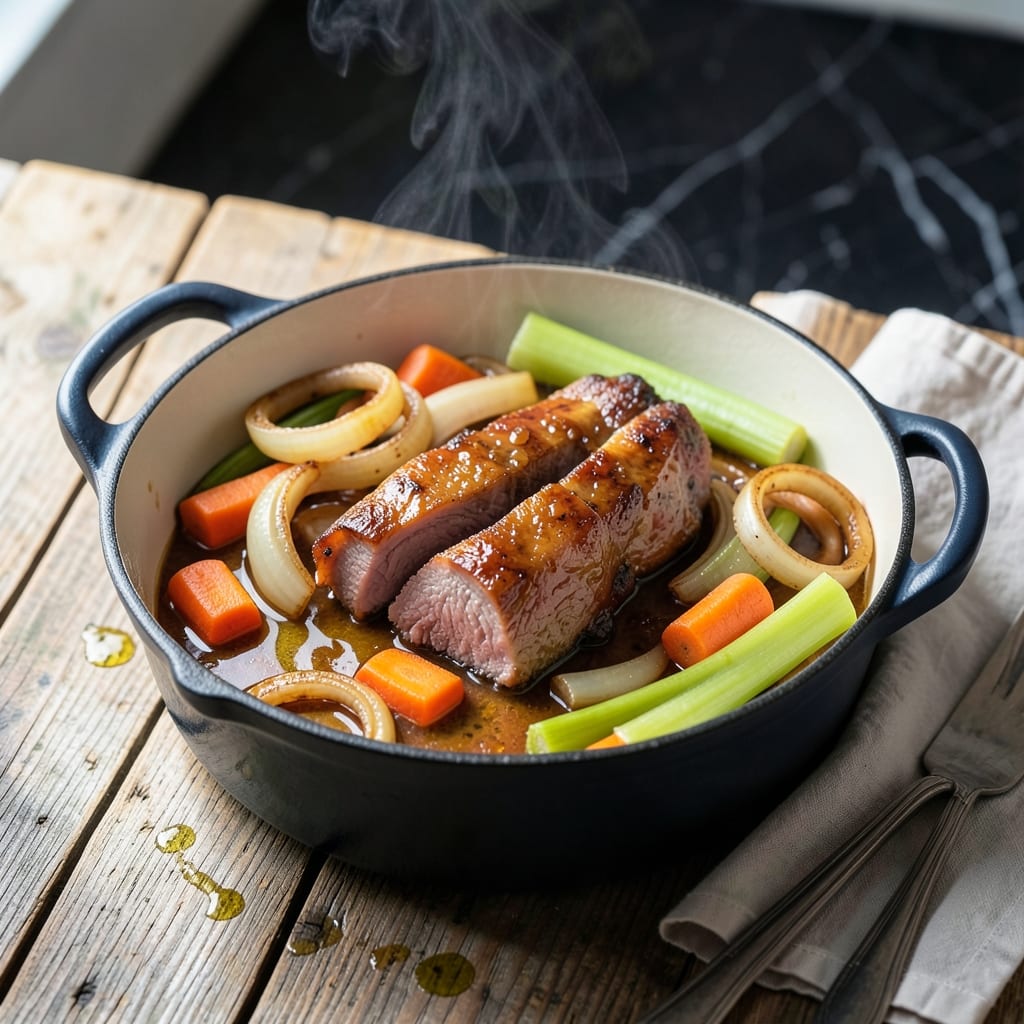
I get it—pig tongue sounds intimidating, but this slow-braised version converts skeptics into believers. The secret is patience, letting tough meat transform into something tender and rich.
My Nonna taught me this method after I nearly ruined a batch by rushing it. Low heat and time work magic on the tongue, breaking down fibers until they surrender to your fork.
What emerges is meat so tender it falls apart, with a depth of flavor that store-bought cuts can’t match. The braising liquid becomes a gravy so good you’ll want to drink it straight.
Serve it sliced over mashed potatoes or with crusty bread to soak up every drop. This is comfort food at its most honest and satisfying.
Ingredients for Pig Tongue
A few humble ingredients and time transform this into something extraordinary and deeply satisfying.
| Ingredient | Amount | Notes |
|---|---|---|
| Pig Tongue 🐷 | 2 lb | Fresh, cleaned and trimmed |
| Olive Oil 🫒 | 2 tbsp | For searing tongue |
| Yellow Onion 🧅 | 1 whole | Large, sliced into rings |
| Carrots 🥕 | 2 whole | Peeled, cut into chunks |
| Celery Stalks 🌿 | 2 whole | Cut into large pieces |
| Garlic Cloves 🧄 | 6 cloves | Smashed, peeled |
| Red Wine 🍷 | 2 cups | Dry variety preferred |
| Beef Stock 🥩 | 3 cups | Low-sodium recommended |
| Bay Leaves 🌿 | 2 pieces | Dried whole leaves |
| Fresh Thyme Sprigs 🍃 | 4 pieces | Tied with kitchen twine |
| Black Peppercorns 🌶️ | 1 tsp | Whole, lightly crushed |
| Kosher Salt 🧂 | 1 tbsp | Plus more to taste |
| All-Purpose Flour 🌾 | 2 tbsp | For thickening gravy |
| Unsalted Butter 🧈 | 2 tbsp | For finishing sauce |
[recipe_ingredient_scaler]
The pig tongue is everything here. Ask your butcher—they’ll often have it behind the counter. Look for firm, pink tongues without any gray discoloration. Latin markets are a great source too, usually at better prices. Don’t skip the cleaning step: rinse it under cold water, then peel off that outer skin (it’s tough). Takes two minutes, makes all the difference.
No red wine? Beef broth plus a tablespoon of vinegar mimics the acidity. Swap beef stock for chicken if that’s what you’ve got. The veggies are flexible—parsnips or turnips work alongside the carrots. Fresh thyme out of reach? Dried thyme at one-third the amount. Just don’t skip the bay leaves; they’re the quiet heroes of braising liquids.
This tastes even better the next day. Store in the fridge for up to 4 days, or freeze the tongue in its gravy for 3 months. Reheat gently on the stove—microwaving can make the meat dry out (worth the extra minute).
Why You’ll Love This Recipe
- One Pot Wonder: I just toss the tongue, onions, carrots, and celery in with some olive oil and let it simmer—hardly any cleanup.
- Rich and Hearty: The slow-cooked tongue soaks up the sweetness from the carrots and celery, and honestly, it’s ridiculously good.
- Feeds a Crowd: I made this for Sunday dinner, and between us, it stretched to feed six with leftovers for sandwiches the next day.
- Budget Friendly: Pig tongue is cheap, and with just a few veggies and olive oil, I get a meal that’s filling without breaking the bank.
Step-by-Step Instructions for Slow-Braised Pig Tongue
This method delivers the most tender results with rich, deeply flavored meat.
Step 1: Sear the Pig Tongue for Depth of Flavor
Pat the 2 lb Pig Tongue completely dry with paper towels. This ensures a good sear. Heat the 2 tbsp Olive Oil in a large Dutch oven over medium-high heat until it shimmers but doesn’t smoke.
Add the tongue and sear on all sides for 8-10 minutes total, turning occasionally, until deeply browned on all surfaces. The sear creates a flavorful crust and locks in juices. Remove the tongue and set it aside on a plate.
Step 2: Build the Aromatic Base
In the same pot, add the 1 whole Yellow Onion (sliced into rings), 2 whole Carrots (cut into chunks), 2 whole Celery Stalks (cut into large pieces), and 6 cloves Garlic Cloves (smashed). Cook for 5-7 minutes until the vegetables soften and the onion becomes translucent.
This vegetable mixture forms the flavor foundation. Stir occasionally to prevent burning, and scrape up any browned bits from the bottom of the pot—they’re packed with flavor. The kitchen should smell incredibly fragrant at this point.
Step 3: Deglaze and Braise to Tenderness
Pour in the 2 cups Red Wine and bring to a simmer, scraping the bottom of the pot to incorporate all the browned bits. Let it reduce by half, about 5 minutes. The wine should lose its raw alcohol smell.
Return the tongue to the pot. Add the 3 cups Beef Stock, 2 pieces Bay Leaves, 4 pieces Fresh Thyme Sprigs, 1 tsp Black Peppercorns, and 1 tbsp Kosher Salt. The liquid should cover about three-quarters of the tongue. Bring to a gentle simmer, then cover and transfer to a 325°F oven.
Step 4: Finish with a Silky Sauce
Braise for 2.5 to 3 hours until the tongue is fork-tender. Remove the tongue and strain the braising liquid into a saucepan, pressing the vegetables to extract all their flavor. Discard the solids.
Place the saucepan over medium heat and whisk in the 2 tbsp All-Purpose Flour. Simmer for 5 minutes until slightly thickened. Remove from heat, stir in the 2 tbsp Unsalted Butter, and adjust seasoning with more Kosher Salt if needed. The sauce should coat the back of a spoon.
Pro Tips For Making Pig Tongue
- Parboil First: Always simmer the pig tongue in water for 15-20 minutes before cooking—it removes impurities and tightens the skin so it doesn’t curl during braising.
- Score the Skin: Use a sharp knife to make shallow crosshatches on the tongue before cooking. I learned this the hard way—it prevents the skin from shrinking into a chewy knot.
- Low and Slow: Braise the tongue at 300°F for 2.5-3 hours in the onion, carrot, and celery broth. Any hotter and the meat turns dry, no matter how fatty it is.
- Rest Before Slicing: Let the cooked tongue rest 10 minutes under foil. Sounds weird, but it keeps the juices from leaking out when you slice it—your future self will thank you.
Common Mistakes When Making This Dish
Skipping the Cleaning
I learned this the hard way—never skip peeling that tough outer skin off the Pig Tongue. It’s inedible and will ruin the texture. Rinse under cold water first, then use a sharp knife to carefully remove it. Takes 2 minutes but makes all the difference in tenderness. 🔥
Rushing the Sear
Don’t rush searing the tongue. If you don’t get a deep brown crust on all sides, you’ll miss out on the Maillard reaction that builds complex flavors. Use medium-high heat and let it develop for 8-10 minutes total.
Boiling Instead of Simmering
A rolling boil will make the meat tough. Keep it at a gentle simmer in the 325°F oven. I check mine after 1 hour to ensure the liquid barely bubbles. This slow approach guarantees melt-in-your-mouth results.
Underseasoning the Braise
The 3 cups Beef Stock and 2 cups Red Wine need proper seasoning. Don’t be shy with the 1 tbsp Kosher Salt and 1 tsp Black Peppercorns. Taste the liquid before adding the tongue—adjust if needed.
Skipping the Rest
Let the tongue rest in its braising liquid for at least 15 minutes after cooking. This lets the juices redistribute. I often let it sit longer while I prep the sauce—patience rewards you with juicier meat.
Over-Reducing the Sauce
When thickening the sauce with 2 tbsp All-Purpose Flour, simmer just until it coats a spoon. Over-reducing makes it too thick and can mask the rich, balanced flavors you’ve built. 💡
Nutrition Facts
Frequently Asked Questions
Where can I find pig tongue for this dish?
Check with your local butcher first—they often keep it behind the counter. Latin markets are another great source, usually at lower prices.
How do I know when the tongue is done?
It’s ready when a fork slides in effortlessly, usually after 2.5 to 3 hours at 325°F. The meat should pull apart easily when tested.
Can I make this in a slow cooker?
Yes! Sear the tongue first, then transfer to a slow cooker with the braising liquid. Cook on low for 6-8 hours for the same tender results.
What’s the best way to slice it for serving?
After cooking, peel off the skin if not done earlier. Slice against the grain into 1/2-inch thick pieces for the most tender texture.

Trained in classic French technique but raised on slow-cooked ribs and spicy rubs, she blends culinary skill with smoke and soul.
- Recipe for Boneless Pork Chops in Cast Iron Skillet: Sear and Baste to Juicy Perfection - October 3, 2026
- Recipe for Boneless Cross Rib Roast: Slow-Roasted Beef with Herb Crust - October 3, 2026
- Hamburgers in Sauce Recipe Crock Pot: Slow-Cooked Savory Delight - October 3, 2026