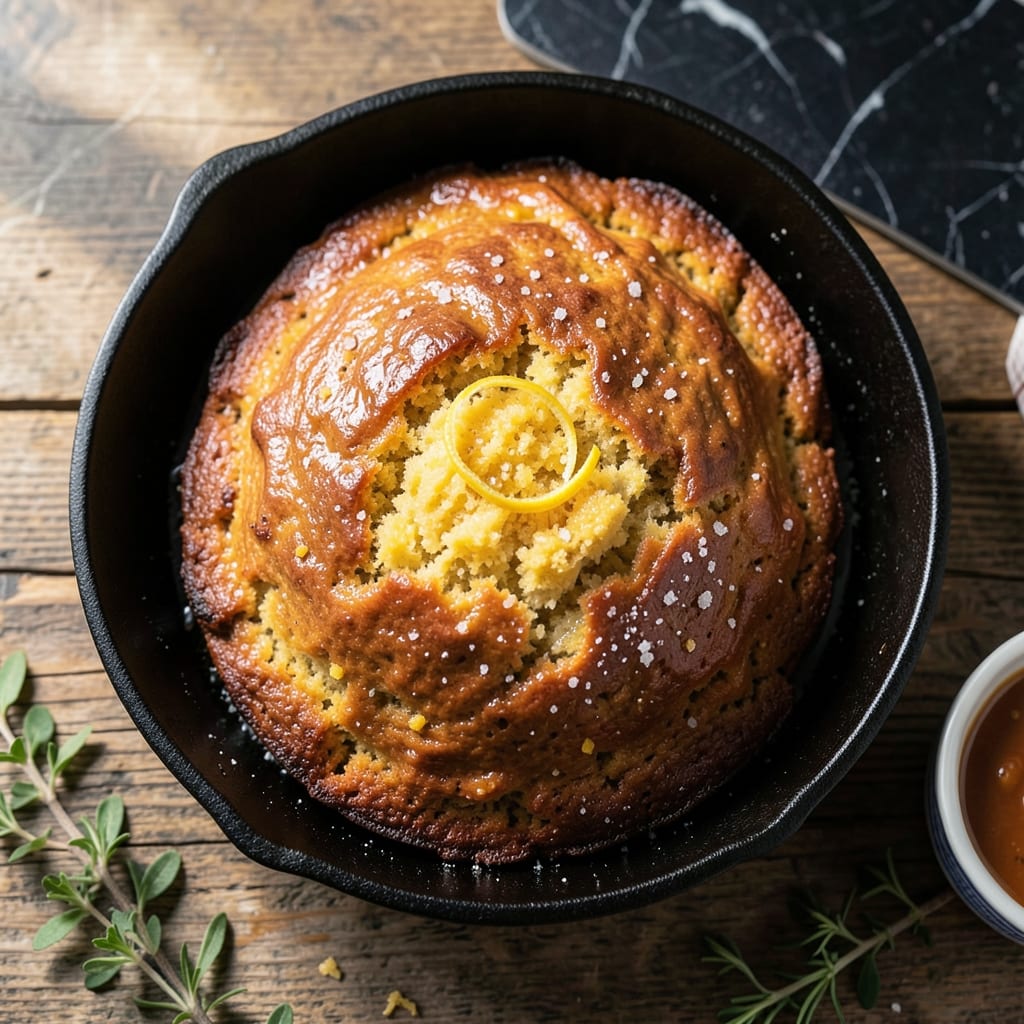
This cornbread delivers the signature Cracker Barrel experience with its golden crust and buttery sweetness in every bite. The secret lies in the perfect balance of cornmeal and flour, creating a texture that’s both tender and slightly crumbly.
I’ve tested this recipe countless times to achieve that restaurant-quality taste at home. The addition of buttermilk creates a moist crumb while sugar enhances the natural sweetness that makes this version so beloved.
You’ll love how the edges develop a crisp, caramelized crust while the center stays soft and rich. This recipe stays true to the original, using simple ingredients you likely already have in your pantry.
Serve warm with honey or butter for the full Cracker Barrel experience. Here’s how to make it perfectly every time.
Ingredients for Cracker Barrel Cornbread
Golden, buttery, sweet—this is the stuff Cracker Barrel dreams are made of.
| Ingredient | Amount | Notes |
|---|---|---|
| Yellow Cornmeal 🌽 | 1 ½ cups | Fine or medium grind |
| All-Purpose Flour 🌾 | 1 cup | Sifted for best texture |
| Granulated Sugar 🍚 | ⅓ cup | Adjust to taste preference |
| Baking Powder 🧂 | 1 tbsp | Ensures proper rise |
| Baking Soda 🧂 | ½ tsp | Balances acidity from buttermilk |
| Salt 🧂 | ½ tsp | Table salt or kosher |
| Buttermilk 🥛 | 1 ¼ cups | Room temperature preferred |
| Large Egg 🥚 | 1 whole | Beaten lightly for binding |
| Unsalted Butter 🧈 | ¼ cup | Melted, plus extra for pan |
| Vegetable Shortening 🧈 | 2 tbsp | For crispy edges (or more butter) |
[recipe_ingredient_scaler]
The cornmeal is non-negotiable here—stone-ground from a mill (like Bob’s Red Mill) gives that authentic texture. Buttermilk is key for the moist crumb, so don’t swap it for regular milk. I grab mine from Whole Foods or any grocery store with a good dairy section. The sugar amount is flexible (Cracker Barrel leans sweet), but stick to granulated white for that classic taste.
No buttermilk? Whole milk plus 1 tbsp lemon juice or vinegar per cup gets you close. For a denser texture, substitute plain yogurt at a 1:1 ratio. Egg-free? 1 flax egg (1 tbsp ground flax + 3 tbsp water) works in a pinch. And if you’re out of cornmeal entirely, fine semolina offers a similar crumb (though the flavor shifts slightly).
Baked cornbread keeps 3-4 days wrapped tight at room temp, but it’s best served warm. Freeze slices for up to 3 months—reheat in a toaster oven to revive that crisp crust. Leftovers? Make croutons or bread pudding.
Why You’ll Love This Recipe
- One Bowl Wonder: I just dump the cornmeal, flour, sugar, and levers in one bowl, stir, and it’s ready for the oven—no mixer, no mess.
- Sweet Corn Crunch: That perfect balance of sugary sweetness with the gritty texture of yellow cornmeal hits every time.
- Breakfast to Dinner: I serve it with eggs in the morning or alongside chili at night—my family never complains.
- Budget Stretcher: A bag of cornmeal and flour make two batches for pennies, and leftovers toast up like gold the next day.
Step-by-Step Instructions for Buttery Cornbread With a Golden Crust
Here’s the method I use to get that signature moist crumb and crisp edges.
Step 1: Prep Pan and Preheat Oven
Place the 2 tbsp Vegetable Shortening in a 9-inch cast iron skillet and set it in the oven. Preheat to 425°F while you prepare the batter. The hot shortening will create that coveted crispy crust.
I always use cast iron for this—it retains heat beautifully and gives you that perfect golden brown edge. The shortening should be smoking hot by the time you add the batter. Don’t substitute here; the shortening handles the high heat better than butter for this initial step.
Step 2: Mix Dry Ingredients Thoroughly
In a large bowl, whisk together the 1.5 cups Yellow Cornmeal, 1 cup All-Purpose Flour, 0.33 cup Granulated Sugar, 1 tbsp Baking Powder, 0.5 tsp Baking Soda, and 0.5 tsp Salt. Make sure there are no lumps in the cornmeal or flour.
The baking powder and baking soda work together to give you that perfect rise. I sift the flour first if it looks at all clumpy. This isn’t just about texture—it ensures the leavening agents distribute evenly for consistent lift throughout the cornbread.
Step 3: Combine Wet Ingredients and Create Batter
In another bowl, whisk the 1.25 cups Buttermilk, 1 whole Large Egg, and 0.25 cup Unsalted Butter (melted and cooled slightly) until smooth. Pour this into the dry ingredients and stir just until combined. The batter will be thick but pourable.
Here’s the thing—don’t overmix. A few lumps are fine; overmixing develops gluten and makes the cornbread dense. The buttermilk’s acidity reacts with the baking soda, so you’ll see tiny bubbles forming immediately. That’s how you know the leavening is working.
Step 4: Bake to Golden Perfection
Carefully remove the hot skillet from the oven and pour the batter directly over the melted shortening. You’ll hear a satisfying sizzle—that’s the sound of crispy edges forming. Return the skillet to the oven immediately.
Bake for 20-25 minutes until the top is golden brown and a toothpick inserted in the center comes out clean. The edges should pull away from the sides of the skillet slightly. If the top browns too quickly, tent with foil for the remaining time.
Step 5: Cool Slightly and Serve Warm
Let the cornbread cool in the skillet for 5-10 minutes before slicing. This allows it to set slightly so it doesn’t crumble when you cut it. The interior should be moist but not wet, with a tender crumb.
I always serve it straight from the skillet while still warm. The contrast between the crisp, buttery crust and the soft, slightly sweet interior is what makes this so special. Leftovers reheat beautifully in the skillet or wrapped in foil in the oven.
Pro Tips For Making Cracker Barrel Cornbread
- Preheat the Pan: Heat your cast iron skillet in the oven with about 2 tablespoons of oil for 5-10 minutes before adding the batter—I learned this the hard way after pulling out pale, greasy cornbread more than once.
- Use Fine Cornmeal: Skip the coarse grind; fine yellow cornmeal gives that classic Cracker Barrel texture that’s smooth but still hearty.
- Don’t Overmix: Stir the batter just until the flour disappears—after my first few dense, tough loaves, I finally realized less mixing means lighter cornbread.
- Add Buttermilk: Sounds weird, but it works: swap the regular milk for buttermilk to get that tangy richness the original recipe is known for.
Health Benefits of This Dish
Rich in Complex Carbs
This dish provides sustained energy through its cornmeal base, offering a hearty dose of complex carbohydrates that digest slowly. A single serving delivers about 30g of carbs, perfect for fueling your day without blood sugar spikes. 💪
Essential B Vitamins
The enriched cornmeal and flour in this recipe are excellent sources of B vitamins, including thiamine and folate. These nutrients support metabolism and brain function, making this a smart choice for your daily nutrition.
Calcium Boost
Thanks to the buttermilk, each serving provides about 15% of your daily calcium needs. This mineral is crucial for bone health and proper muscle function. I always use full-fat buttermilk for the best texture and nutritional benefits.
Iron Content
The combination of cornmeal and flour contributes a modest amount of iron, about 1.2mg per serving. While not a primary source, it helps support oxygen transport in your body.
Healthy Fats
The butter and shortening provide healthy fats that aid in vitamin absorption and add richness. While moderation is key, these fats help create that signature moist texture we all love. 💛
Protein Source
With about 6g of protein per serving, this dish contributes to your daily needs. The egg and buttermilk work together to provide complete proteins that support muscle maintenance and repair.
Nutrition Facts
Frequently Asked Questions
Can I use a different pan instead of cast iron?
A 9×9-inch baking dish works, but preheat it with shortening for similar crust. Cast iron gives the best results for that signature crispy edge.
Why is my cornbread dry?
Overmixing the batter or baking too long can cause this. Check at 20 minutes and remove when a toothpick comes out clean. Buttermilk keeps it moist.
How do I make it less sweet?
Reduce the sugar to 1/4 cup or omit it entirely. The buttermilk adds natural sweetness, so taste the batter before baking to adjust.

Trained in classic French technique but raised on slow-cooked ribs and spicy rubs, she blends culinary skill with smoke and soul.
- Recipe for Boneless Pork Chops in Cast Iron Skillet: Sear and Baste to Juicy Perfection - October 3, 2026
- Recipe for Boneless Cross Rib Roast: Slow-Roasted Beef with Herb Crust - October 3, 2026
- Hamburgers in Sauce Recipe Crock Pot: Slow-Cooked Savory Delight - October 3, 2026