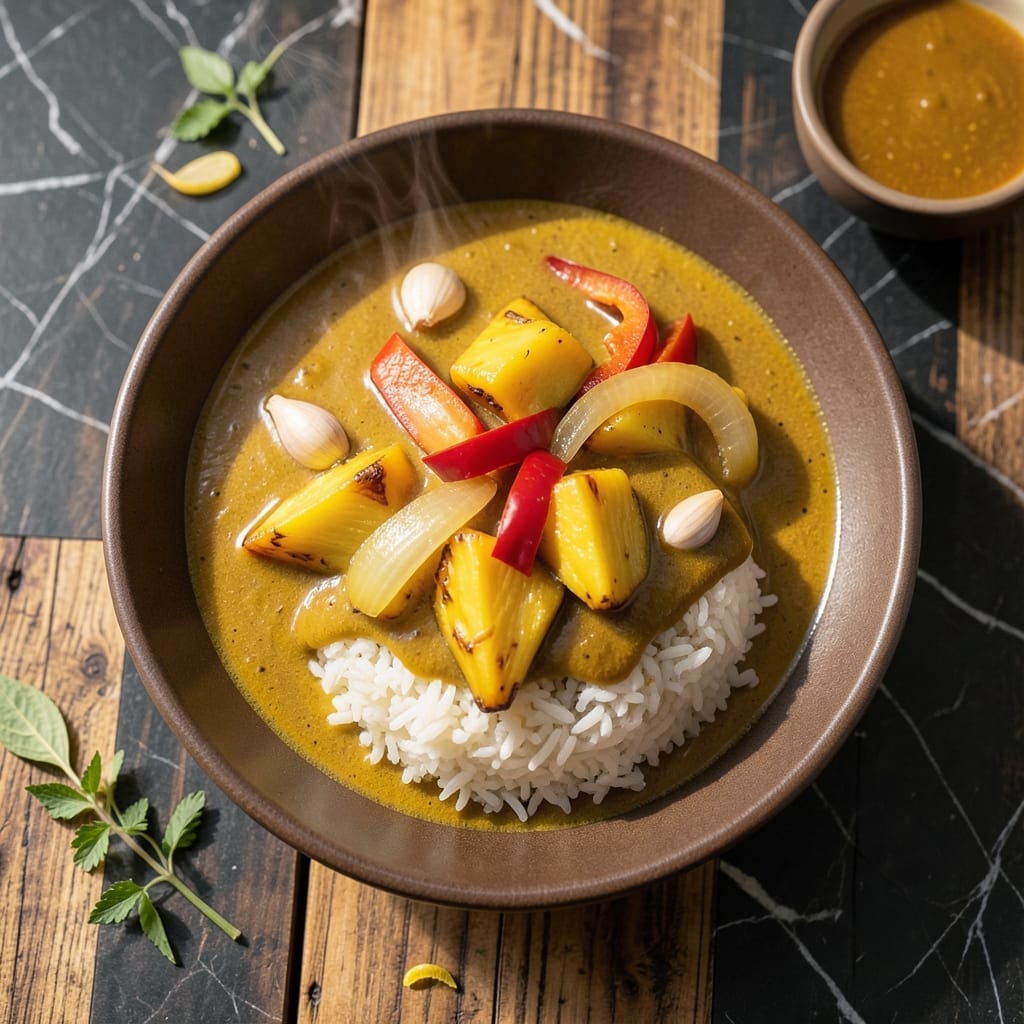
This Thai-inspired curry balances sweet pineapple with spicy heat in a creamy coconut milk base. The dish brings authentic flavors without complicated techniques.
I developed this recipe to capture the essence of Thai street food—aromatic, balanced, and deeply satisfying. The pineapple adds natural sweetness that contrasts beautifully with the curry’s warmth.
You’ll achieve restaurant-quality results with simple ingredients and 20 minutes of active cooking. The coconut milk creates a velvety sauce that coats every bite.
The final dish offers tender vegetables, juicy pineapple, and a sauce that’s rich yet perfectly balanced. Serve with steamed jasmine rice for the complete experience.
Ingredients for Pineapple Curry Recipe Thai
Pineapple, coconut milk, and bold Thai flavors come together in this vibrant dish.
| Ingredient | Amount | Notes |
|---|---|---|
| Jasmine Rice 🍚 | 1 ½ cups | Uncooked, for serving |
| Coconut Milk 🥥 | 2 cans | Full-fat, 13.5 oz cans |
| Fresh Pineapple 🍍 | 3 cups | Cubed, ripe but firm |
| Red Bell Pepper 🌶️ | 1 whole | Thinly sliced |
| Yellow Onion 🧅 | 1 whole | Medium, thinly sliced |
| Garlic Cloves 🧄 | 4 cloves | Minced |
| Fresh Ginger 🌿 | 1 tbsp | Peeled and grated |
| Red Curry Paste 🌶️ | 3 tbsp | Thai, vegan variety |
| Vegetable Broth 🥕 | 1 cup | Low-sodium preferred |
| Soy Sauce 🫒 | 2 tbsp | Or tamari for gluten-free |
| Brown Sugar 🍚 | 2 tbsp | Light or dark |
| Lime Juice 🍋 | 2 tbsp | Freshly squeezed |
| Fresh Cilantro 🌿 | ¼ cup | Chopped, for garnish |
| Salt 🧂 | 1 tsp | To taste |
| Black Pepper 🌶️ | ½ tsp | Freshly ground |
[recipe_ingredient_scaler]
The coconut milk is non-negotiable here—full-fat cans from Thai Kitchen or Chaokoh deliver that velvety texture. Fresh pineapple (not the pre-cut kind) makes a difference in both flavor and texture. Asian markets often carry the best variety at peak ripeness. For the red curry paste, Maesri or Thai Kitchen brands are widely available and reliably vegan. Check the label though—some contain shrimp paste.
No fresh pineapple? Frozen works in a pinch (thaw and drain well). Swap red bell pepper for baby eggplant or zucchini—they hold up well to simmering. For a milder curry, reduce curry paste to 2 tbsp. The soy sauce can be coconut aminos if you’re avoiding gluten. Fresh cilantro is traditional, but Thai basil adds an authentic twist if you can find it.
Leftovers keep beautifully—actually taste better the next day. Store in the fridge for up to 4 days or freeze for 3 months. The sauce thickens as it cools, so thin with a splash of water when reheating (don’t skip this).
Why You’ll Love This Recipe
- One Pot Wonder: I love that everything—jasmine rice, pineapple, and veggies—simmer together in one pan while I do something else.
- Sweet Heat Balance: The fresh pineapple’s juiciness cuts through the creamy coconut milk in the most addictive way.
- Weeknight Hero: Honestly, it’s my go-to for busy evenings when I need something fast but still flavorful.
- Leftovers for Days: The flavors deepen overnight, and it reheats like a dream for lunch the next day.
Step-by-Step Instructions for Thai Pineapple Curry
Master the balance of sweet and spicy with this systematic approach to building layer upon layer of flavor.
Step 1: Build the Aromatic Foundation
In a large, heavy-bottomed pot, combine the 3 tbsp red curry paste with 2 cans coconut milk over medium heat. I always whisk vigorously for 2-3 minutes until the paste fully dissolves and the mixture begins to simmer gently. This step is crucial—it blooms the spices in the fat, creating a rich, complex base.
Add the 1 tbsp fresh ginger, 4 cloves garlic cloves, 1 whole yellow onion, and 1 whole red bell pepper. Sauté for 5-7 minutes until the onion turns translucent and the pepper softens slightly. You’ll notice the aroma transform from sharp to deeply fragrant—that’s your signal the vegetables are ready.
Step 2: Develop the Sauce and Balance Flavors
Pour in the 1 cup vegetable broth, 2 tbsp soy sauce, and 2 tbsp brown sugar. Stir well and bring to a gentle boil. Reduce heat to medium-low and let the sauce simmer for 5 minutes to meld the flavors. The sauce should thicken slightly and take on a glossy sheen.
Here’s where precision matters: taste and adjust the seasoning with 1 tsp salt and 0.5 tsp black pepper. The balance should lean slightly sweet with a subtle saltiness, but the heat from the curry paste will still linger in the background. This harmony is key to authentic Thai flavor.
Step 3: Incorporate the Pineapple and Finish
Add all 3 cups fresh pineapple to the pot, stirring gently to coat the chunks evenly in the sauce. Simmer for 8-10 minutes until the pineapple softens just enough to absorb some of the curry but still retains a slight bite. Overcooking the pineapple will turn it mushy, so keep an eye on it.
The pineapple’s natural sugars will caramelize slightly at the edges, adding depth to the dish. You’ll see the sauce thicken further as the fruit releases its juices.
Step 4: Final Touches and Serving
Remove the pot from heat and stir in the 2 tbsp lime juice. The acidity cuts through the richness of the coconut milk, brightening the entire dish. Taste once more and adjust with additional lime juice or brown sugar if needed—this final tweak ensures the flavors are perfectly balanced.
Ladle the curry over steamed 1.5 cups jasmine rice and garnish generously with 0.25 cup fresh cilantro. The cilantro adds a fresh, herbal note that complements the sweetness of the pineapple and the heat of the curry. Serve immediately while the flavors are at their peak.
Pro Tips For Making Pineapple Curry Recipe Thai
- Simmer the Coconut Milk: Let the coconut milk reduce for 5-7 minutes before adding pineapple—this thickens the sauce and deepens the flavor, rather than tasting like sweetened broth.
- Char the Pineapple: I learned this the hard way—tossing fresh pineapple chunks in a dry pan for 2 minutes before adding to the curry caramelizes the edges and balances the sweetness.
- Skip Pre-Cut Onion: Sounds weird, but it works: slice the yellow onion yourself instead of buying pre-diced, which can be bitter and watery in the curry base.
- Use Full-Fat Coconut Milk: After burning three batches with light versions, I finally figured out that full-fat coconut milk is non-negotiable for that creamy, rich texture in Thai curries.
Health Benefits of pineapple curry recipe thai
Immune-Boosting Power
This dish packs a serious vitamin C punch from the 3 cups fresh pineapple, providing over 100% of your daily needs in a single serving. Pineapple also contains bromelain, an enzyme that aids digestion and reduces inflammation. I notice I feel less bloated after meals that include fresh pineapple. 💪
Rich in Antioxidants
The red curry paste is loaded with antioxidants from spices like turmeric, cumin, and coriander. These compounds help combat oxidative stress in your body. The fresh ginger and garlic add additional anti-inflammatory benefits that support overall health.
Heart-Healthy Fats
The full-fat coconut milk provides medium-chain triglycerides, which your body metabolizes differently than other fats. These can boost energy levels and support heart health. While high in calories, these fats are essential for absorbing the fat-soluble vitamins in the vegetables.
Digestive Support
Between the fiber-rich vegetables and the pineapple’s natural enzymes, this curry supports healthy digestion. The 1 cup vegetable broth helps maintain hydration, which is crucial for digestive regularity. I find this dish particularly satisfying without feeling heavy afterward.
Vegan Nutrition
As a plant-based dish, it delivers complete protein when served with jasmine rice. The combination provides all nine essential amino acids. The 2 tbsp soy sauce adds a boost of umami and additional protein, making this a nutritionally balanced vegan meal. 🌱
Low Glycemic Impact
Despite its sweetness, the pineapple’s fiber content helps regulate blood sugar spikes. The 2 tbsp brown sugar is balanced by the healthy fats and protein in the dish, preventing rapid glucose absorption. This makes it a smarter choice than many other sweet-savory dishes.
Nutrition Facts
Frequently Asked Questions
Can I use canned pineapple instead?
Fresh is ideal, but canned works in a pinch. Drain well and pat dry to prevent excess liquid from thinning the sauce.
How do I adjust the spice level?
Start with 2 tbsp curry paste for mild heat. Add more gradually to taste. Coconut milk naturally tempers the spice.
What’s the best rice to serve with this?
Jasmine rice is traditional—its floral aroma complements the curry. For variety, try basmati or brown rice.
Can I make this ahead of time?
Yes! Flavors deepen after 24 hours in the fridge. Store in an airtight container for up to 4 days.

Trained in classic French technique but raised on slow-cooked ribs and spicy rubs, she blends culinary skill with smoke and soul.
- Recipe for Boneless Pork Chops in Cast Iron Skillet: Sear and Baste to Juicy Perfection - October 3, 2026
- Recipe for Boneless Cross Rib Roast: Slow-Roasted Beef with Herb Crust - October 3, 2026
- Hamburgers in Sauce Recipe Crock Pot: Slow-Cooked Savory Delight - October 3, 2026